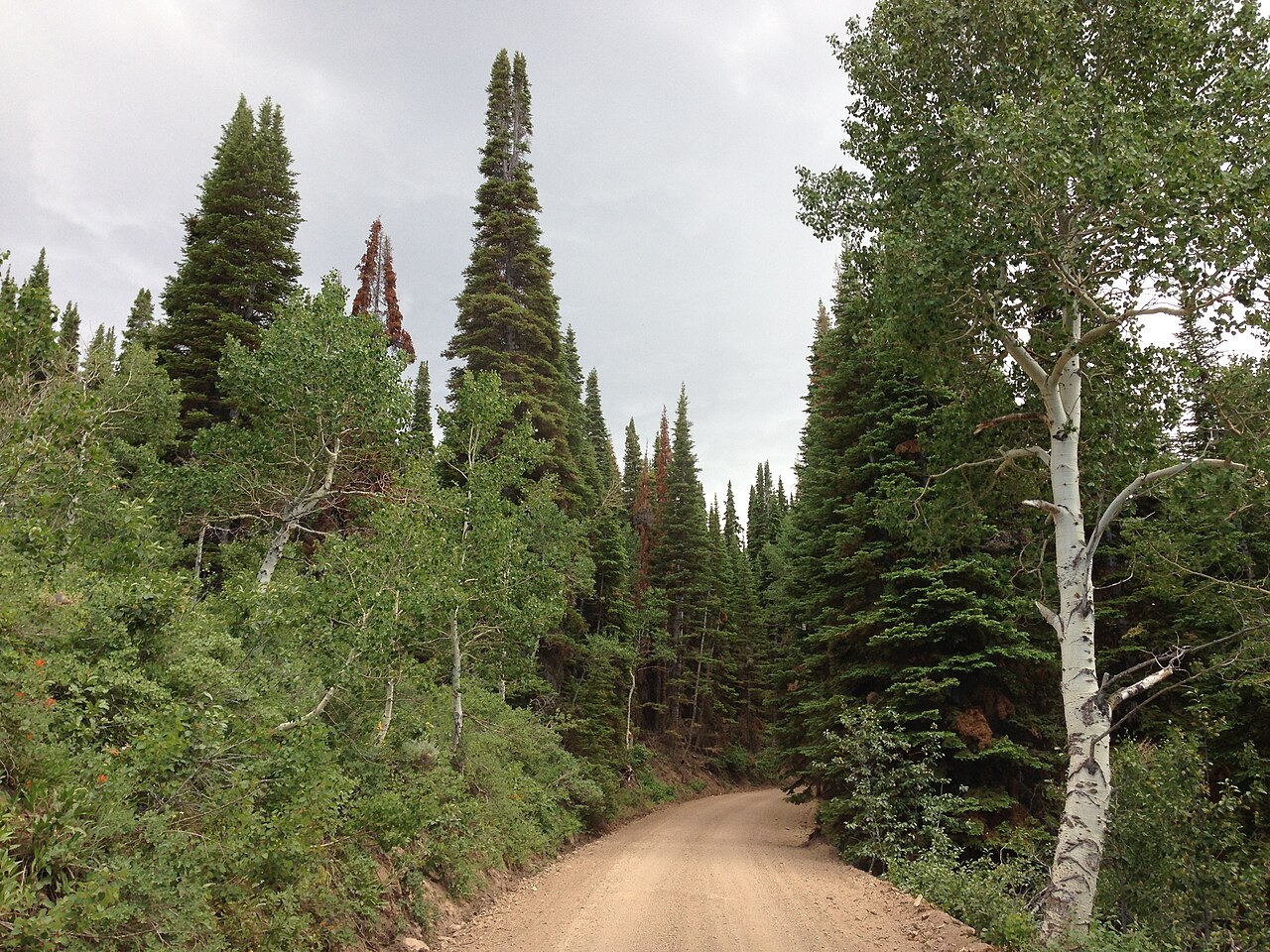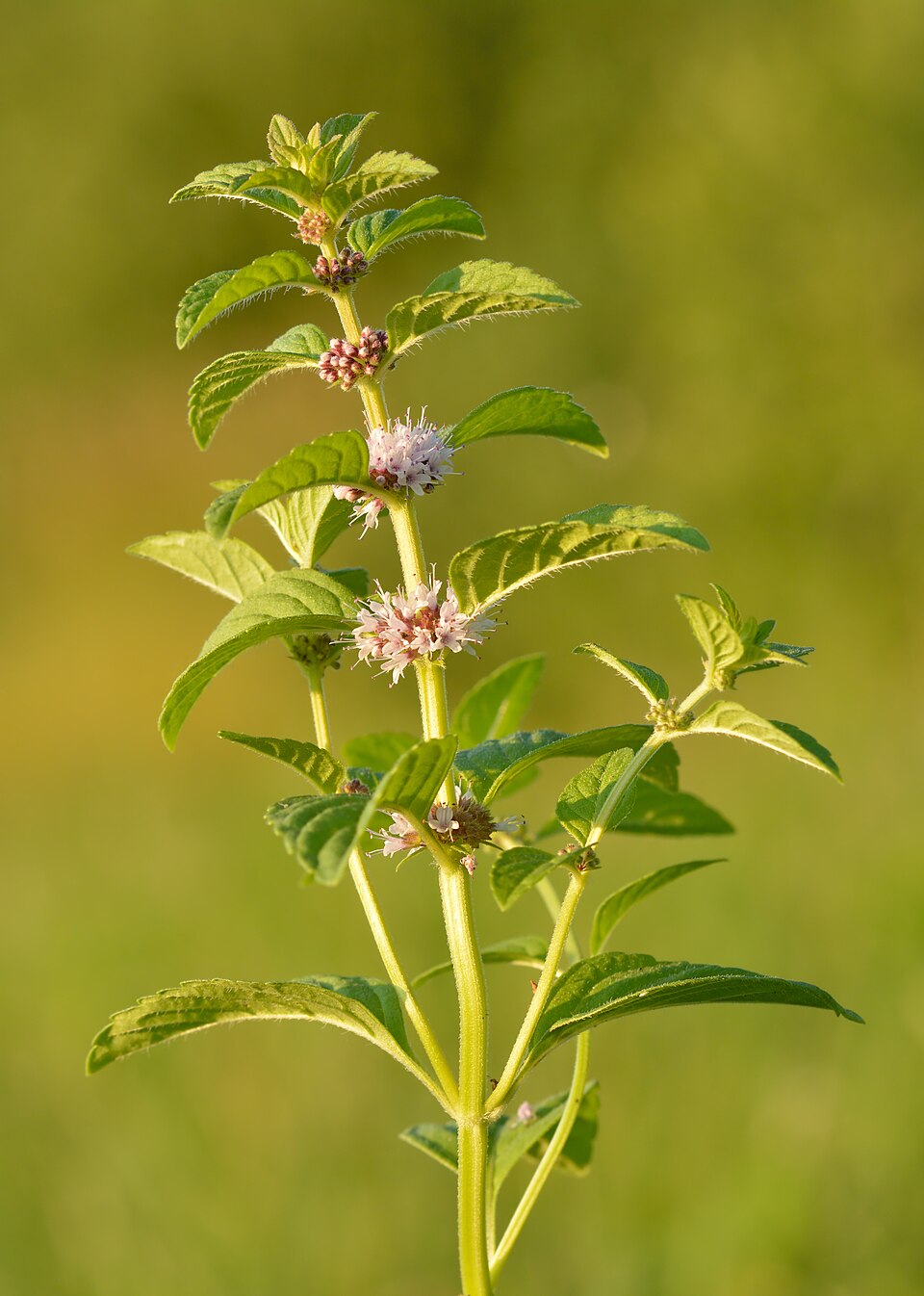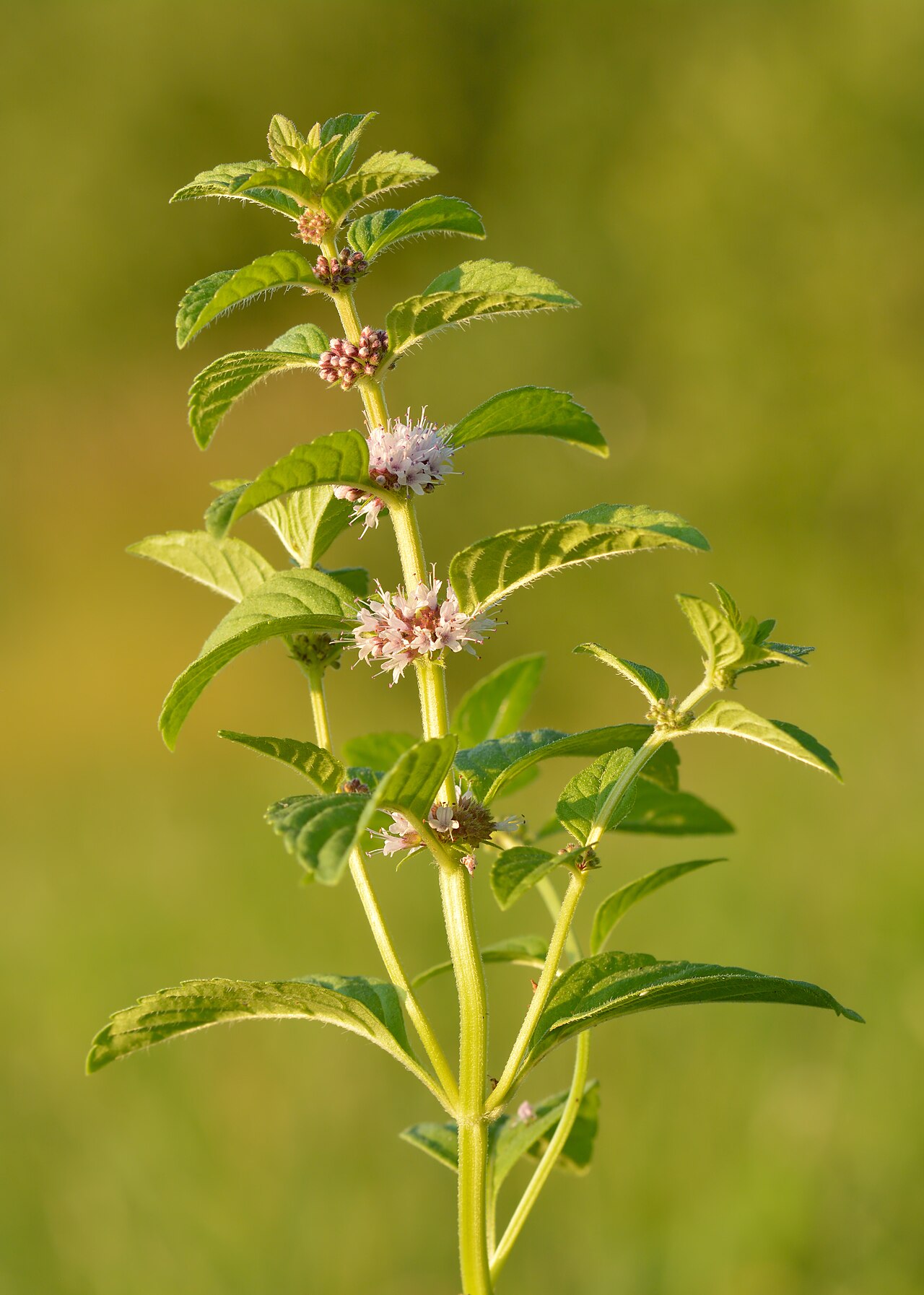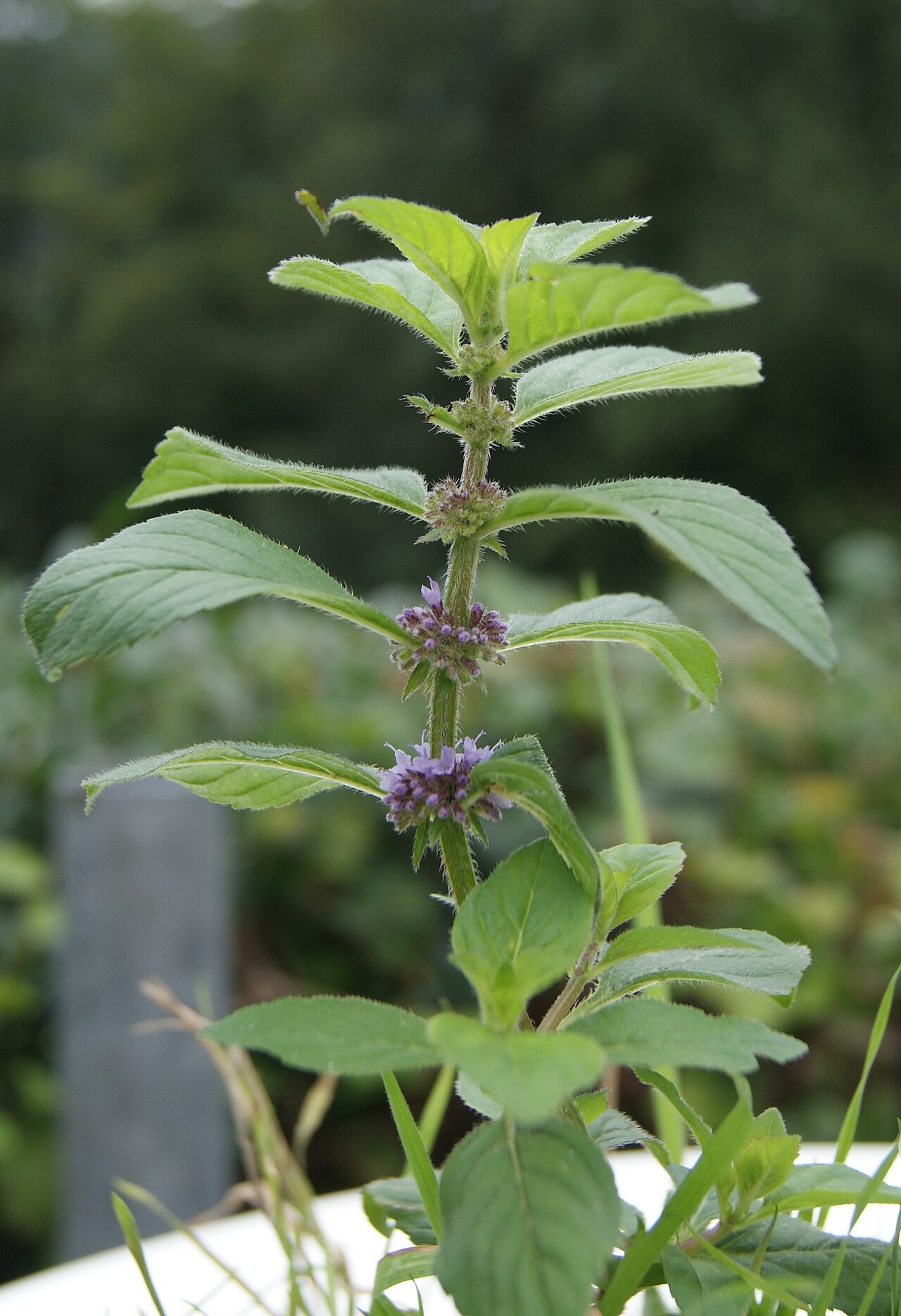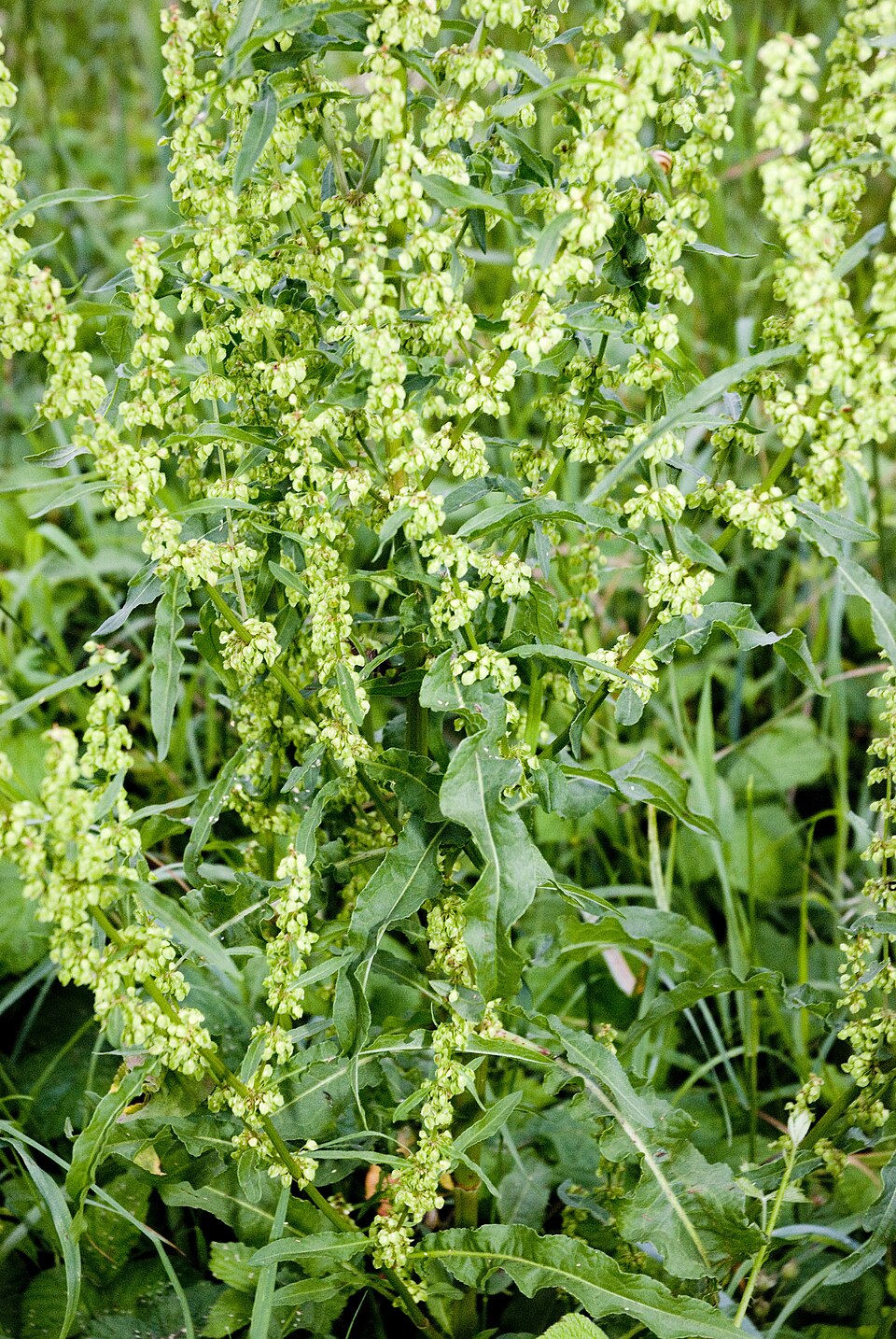
A deeper field guide to the plants of the East Idaho mountains, the high country of the Caribou-Targhee, the Teton and Big Hole ranges, Island Park, and the canyons above the Snake River Plain. Every plant is collapsed to a quick snippet; tap it to open the full profile with photos, how to tell it apart, where and when you will find it, whether you can eat it, and the dangerous plants it can be confused with. Tap any photo to enlarge it.
Before you eat anything. This guide is for identification and education, not a substitute for expert instruction. Several plants here are deadly, and a few are near-perfect twins of edible ones. Positively identify a plant with an expert or regional field guide before eating it, never by photo alone. When in doubt, leave it out.
Trees
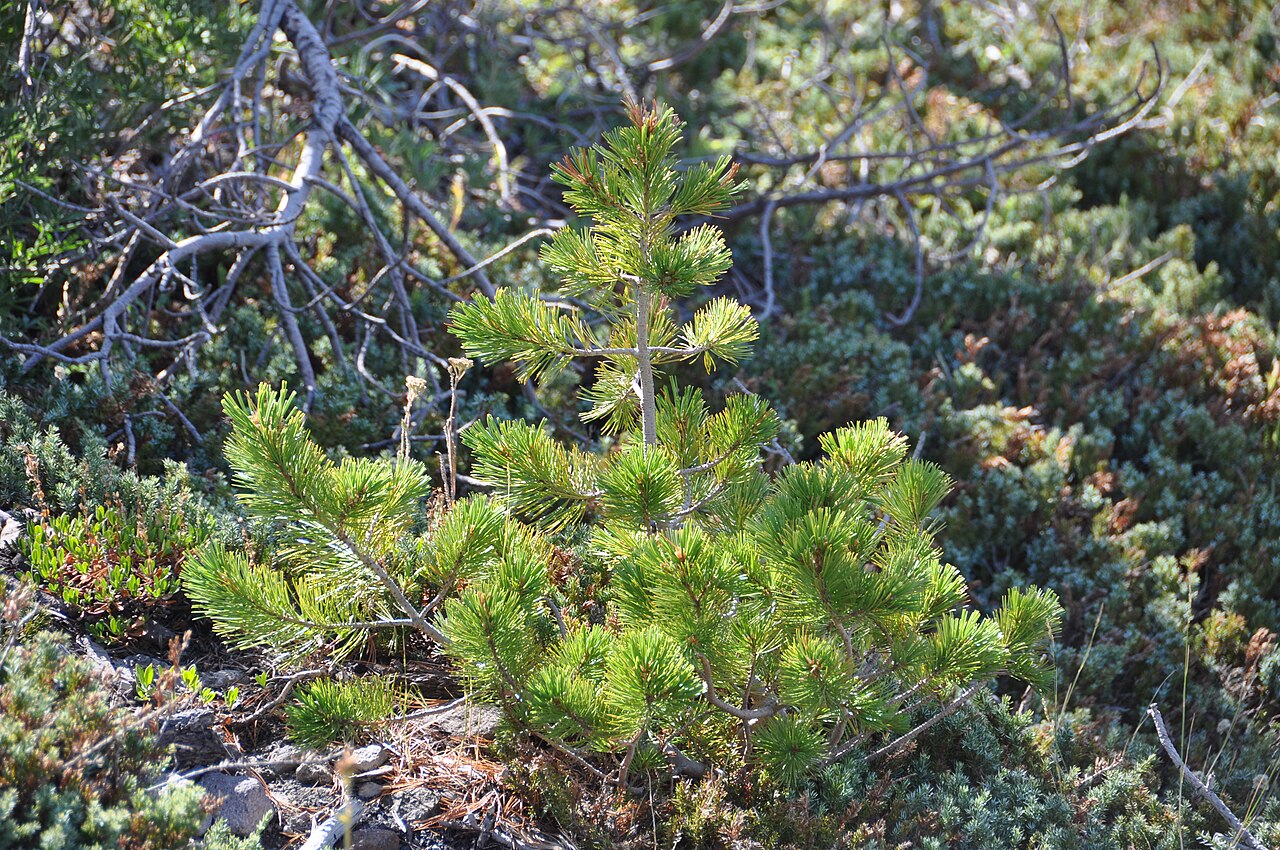
Lodgepole Pine ⚠️ Survival food & tea
Pinus contorta · Pine family
The tall, straight pine that carpets the high forest; survival bark and a vitamin-C needle tea.
Lodgepole Pine ⚠️ Survival food & tea
The tall, straight pine that carpets the high forest; survival bark and a vitamin-C needle tea.
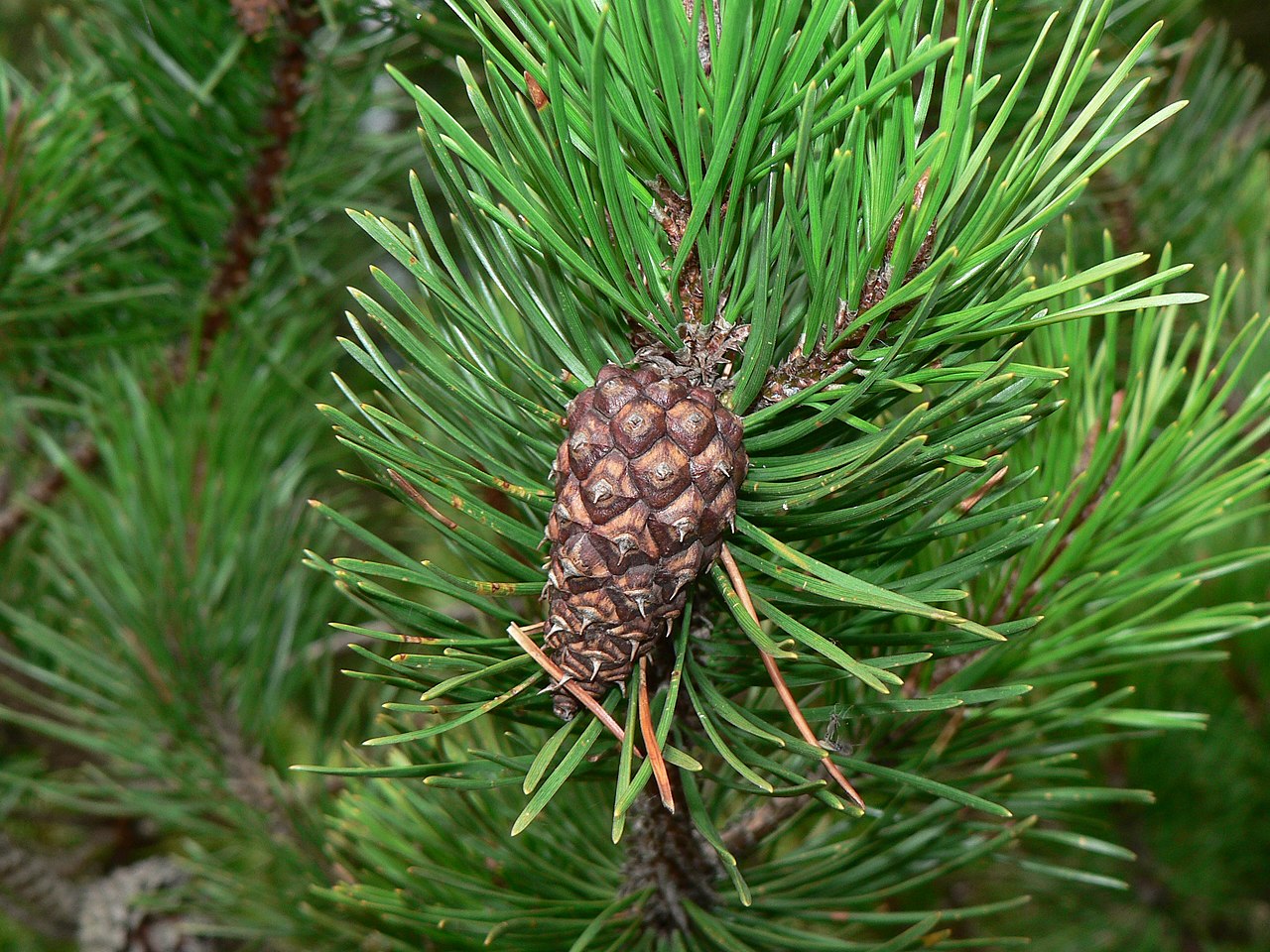
What it is
The tall, skinny, dead-straight pine that carpets huge stretches of the East Idaho high forest, named for the poles Native peoples used to frame their lodges.
How to identify
- Slender, straight tree with a narrow crown; bark thin, gray-brown, and flaky, not deeply furrowed.
- Needles in bundles of two, 1 to 2.5 in long, often slightly twisted (contorta means twisted).
- Cones small, egg-shaped, often curved and prickle-tipped; many stay closed on the tree for years and open after fire.
- Often grows in dense, even-aged stands, especially after burns.
Where & when
Mid to high elevation forest across the region, especially post-fire; visible year-round.
⚠️ Edibility
Not a meal, but useful: the soft inner bark is edible survival food (scrape in spring), the young needles make a pleasant vitamin-C tea, and the small seeds are edible. Skip the needle tea if pregnant.
Lookalikes & cautions
Told from limber and whitebark pine (needles in fives) by its two-needle bundles. No toxic conifer lookalikes here, but never confuse a pine with the unrelated, poisonous ornamental yew.
Field notes
The fire-opened cones make lodgepole a fire-follower, which is why you see it blanketing old burns in solid stands.
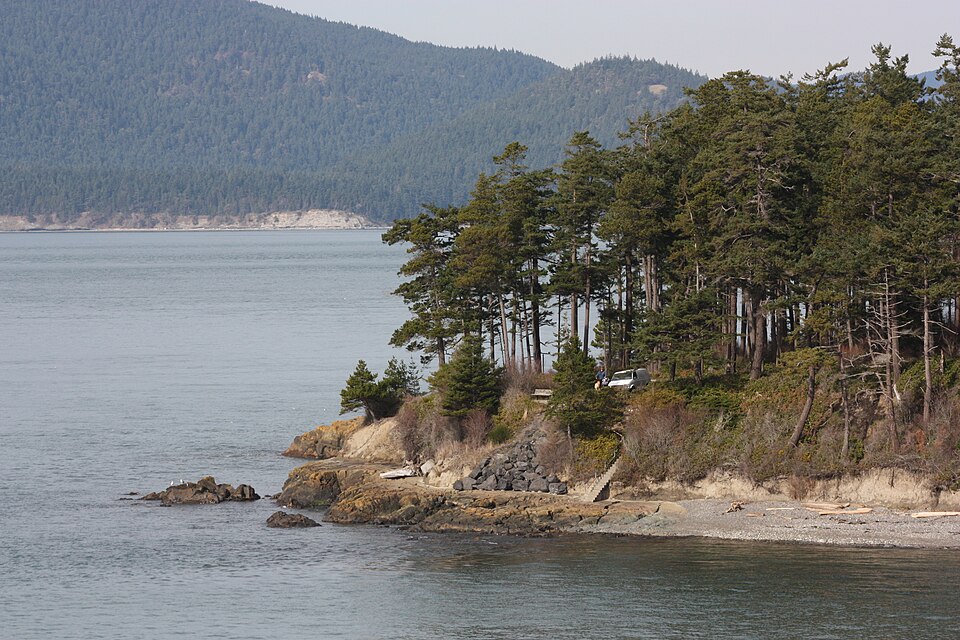
Douglas-fir ✅ Needle tea
Pseudotsuga menziesii · Pine family
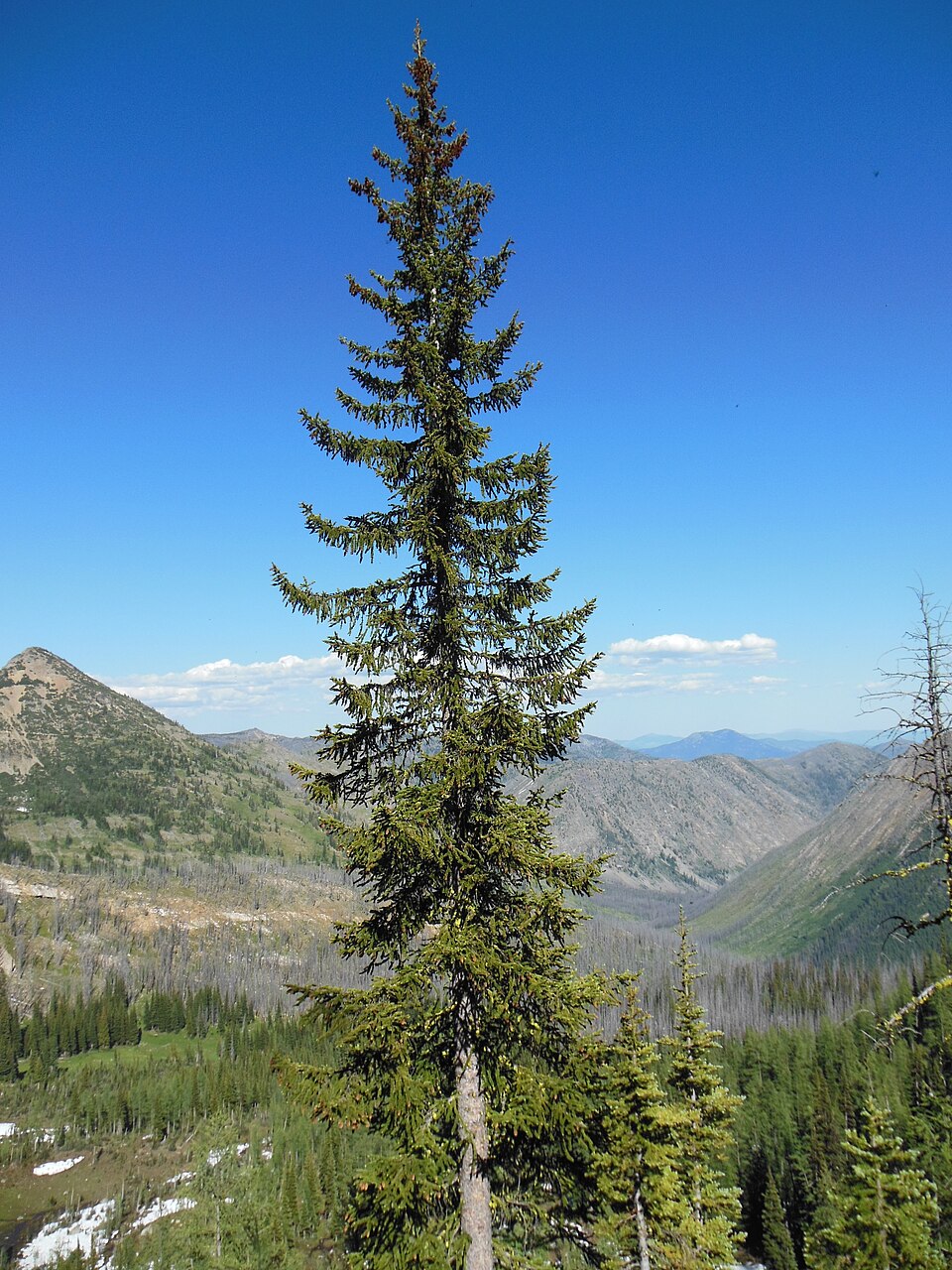
A towering conifer with soft flat needles and citrusy spring tips that make an excellent tea.
Douglas-fir ✅ Needle tea
A towering conifer with soft flat needles and citrusy spring tips that make an excellent tea.


What it is
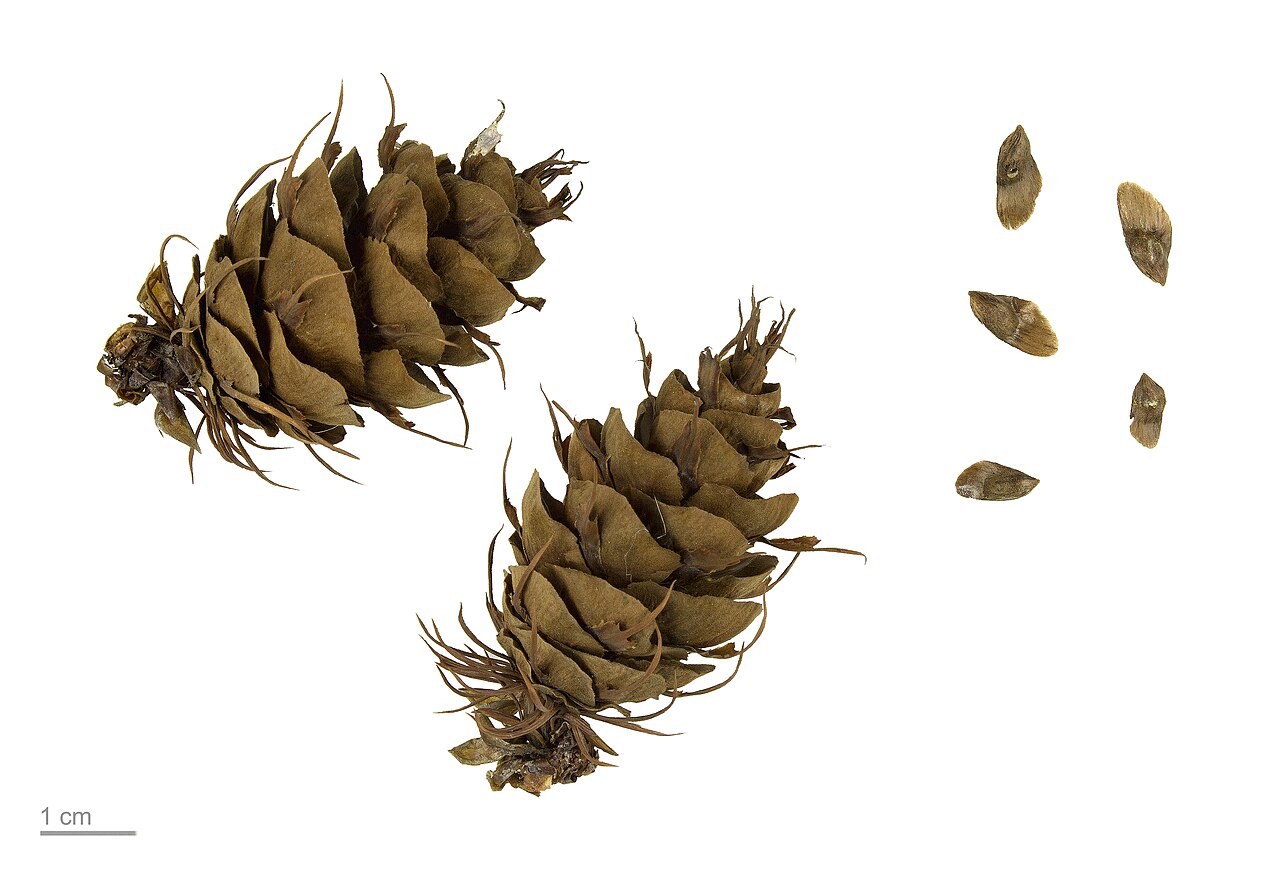
A towering conifer of the mountain forest, not a true fir, known for soft flat needles and distinctive cones with little three-pronged bracts.
How to identify
- Large tree with soft, flat, single (not bundled) needles that spray all around the twig.
- Cones hang down and show unmistakable three-pronged “mouse-tail” bracts sticking out between the scales.
- Buds at the branch tips are sharply pointed and reddish-brown.
- Bark thick, corky, and deeply furrowed on old trees.
Where & when
Mid-elevation slopes and canyons, often mixed with pine and fir; year-round.
✅ Edibility
Bright green spring needle tips are edible and citrusy, and the needles make an excellent vitamin-C tea. The wood and bark are not food.
Lookalikes & cautions
The three-pronged cone bracts separate it from true firs and spruces. No toxic conifer lookalikes, but do not confuse any conifer with the toxic yew.
Field notes
One of the most important timber trees in the West; the spring tips are a forager favorite for tea and seasoning.
Engelmann Spruce ✅ Spring tips & tea
Picea engelmannii · Pine family
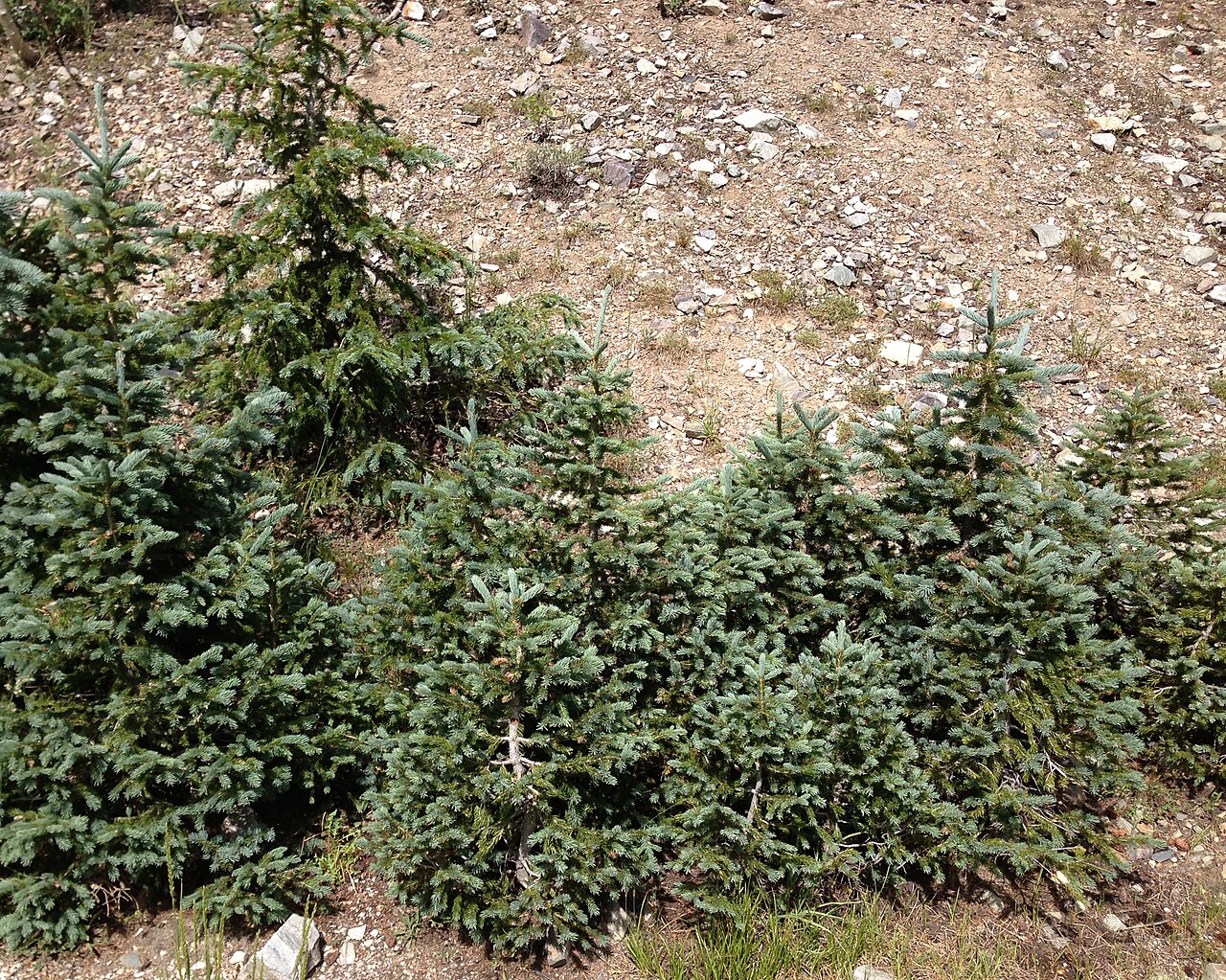
A high-country spruce with square, sharp needles; new tips and needle tea are edible.
Engelmann Spruce ✅ Spring tips & tea
A high-country spruce with square, sharp needles; new tips and needle tea are edible.
What it is
A narrow, spire-shaped spruce of the high country, with square, sharp needles that roll easily between your fingers.
How to identify
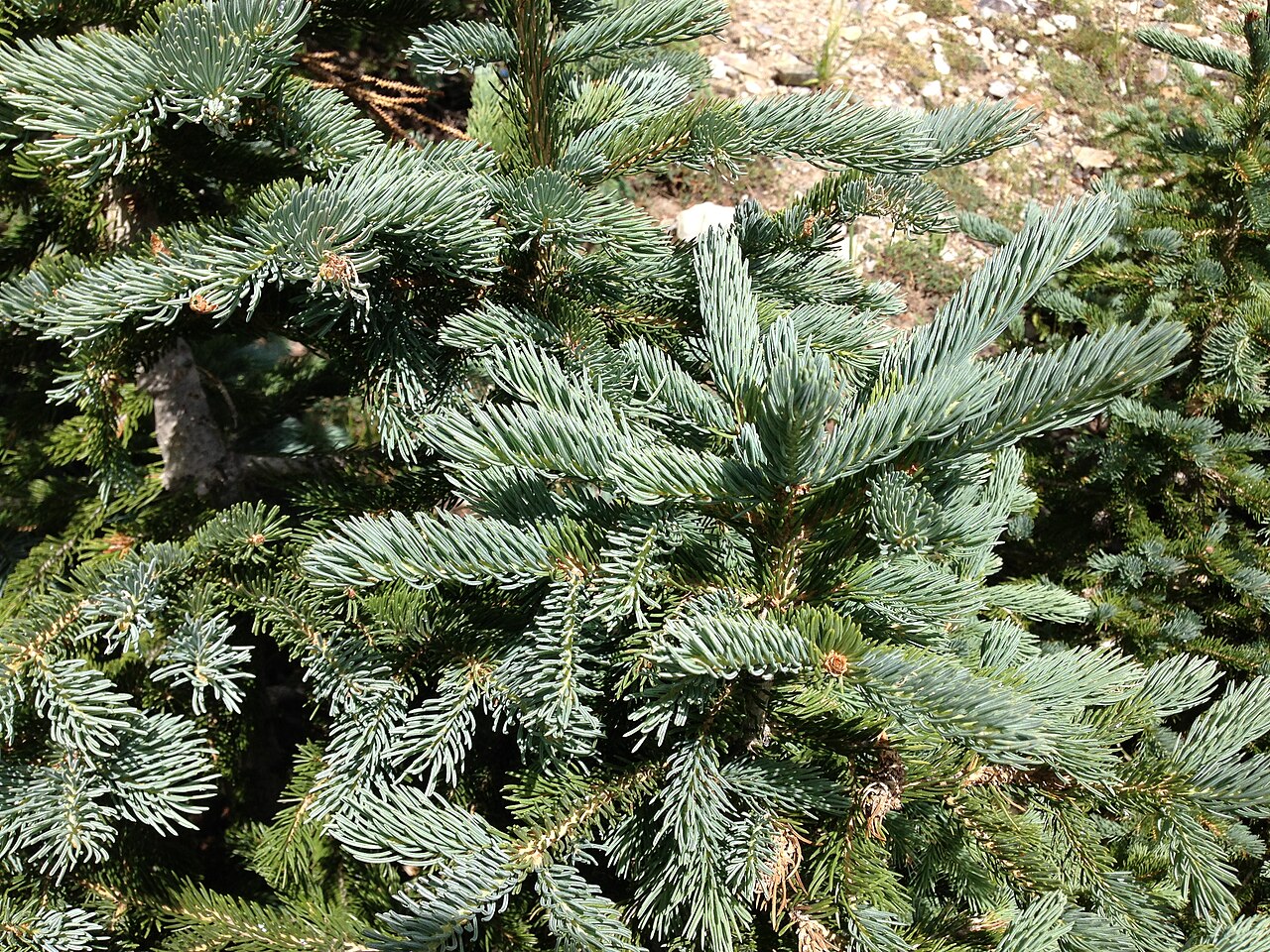
- Needles single, four-sided (square in cross-section), sharp, and roll between the fingers, unlike flat fir needles.
- Needles attach to tiny peg-like bases that stay on the twig, making old twigs feel rough.
- Cones hang down, papery, with thin flexible scales.
- Narrow, steeple-like crown; common at high elevation.
Where & when
Cool, moist high-elevation forest, often near timberline and along streams; year-round.
✅ Edibility
Tender new growth tips in spring are edible and tangy, and the needles make a good tea. Inner bark is survival food only.
Lookalikes & cautions
Square rolling needles separate spruce from the flat needles of fir and Douglas-fir. No toxic conifer lookalikes; avoid the unrelated yew.
Field notes
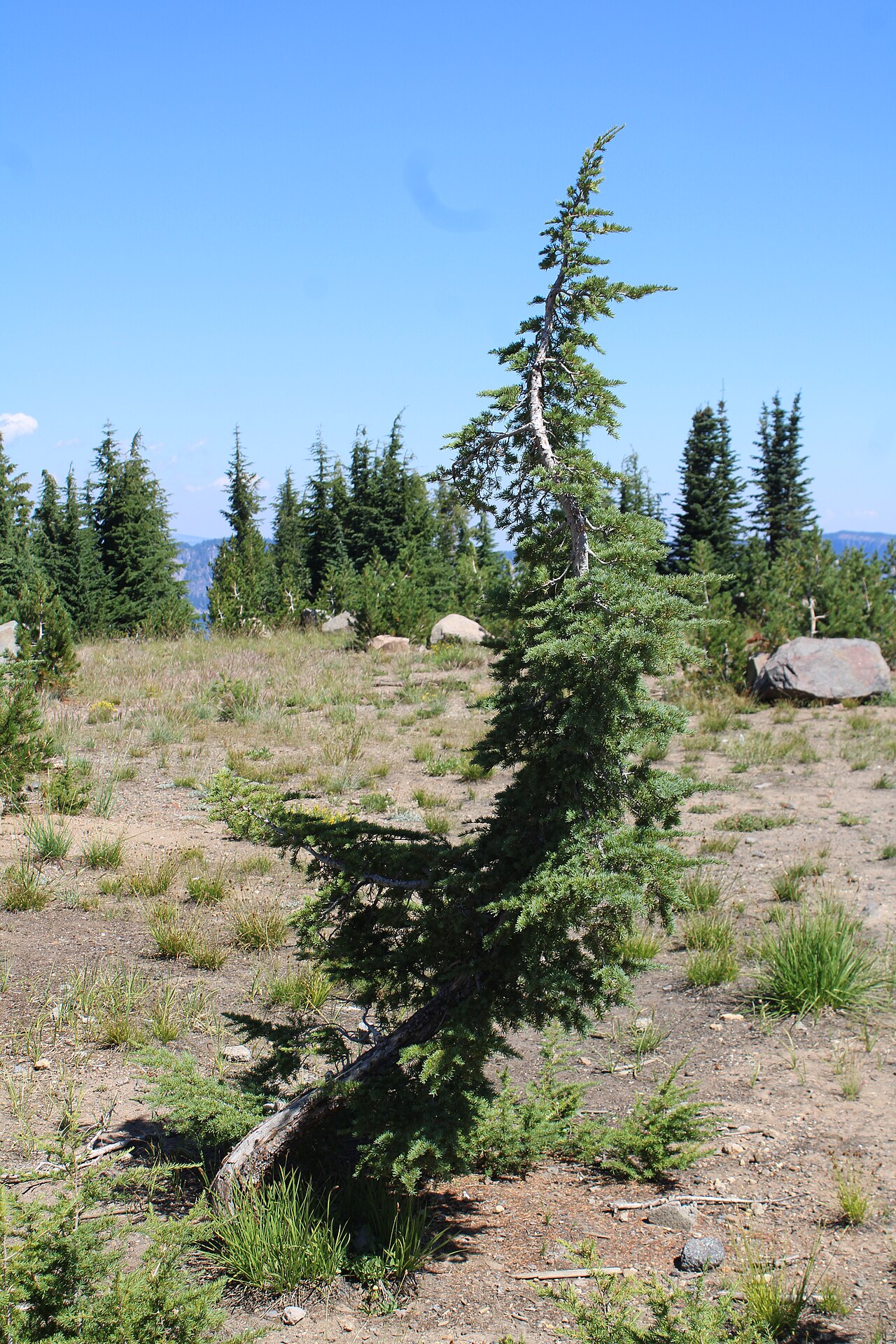
A timberline tree; at the highest elevations it grows stunted and wind-flagged (krummholz).
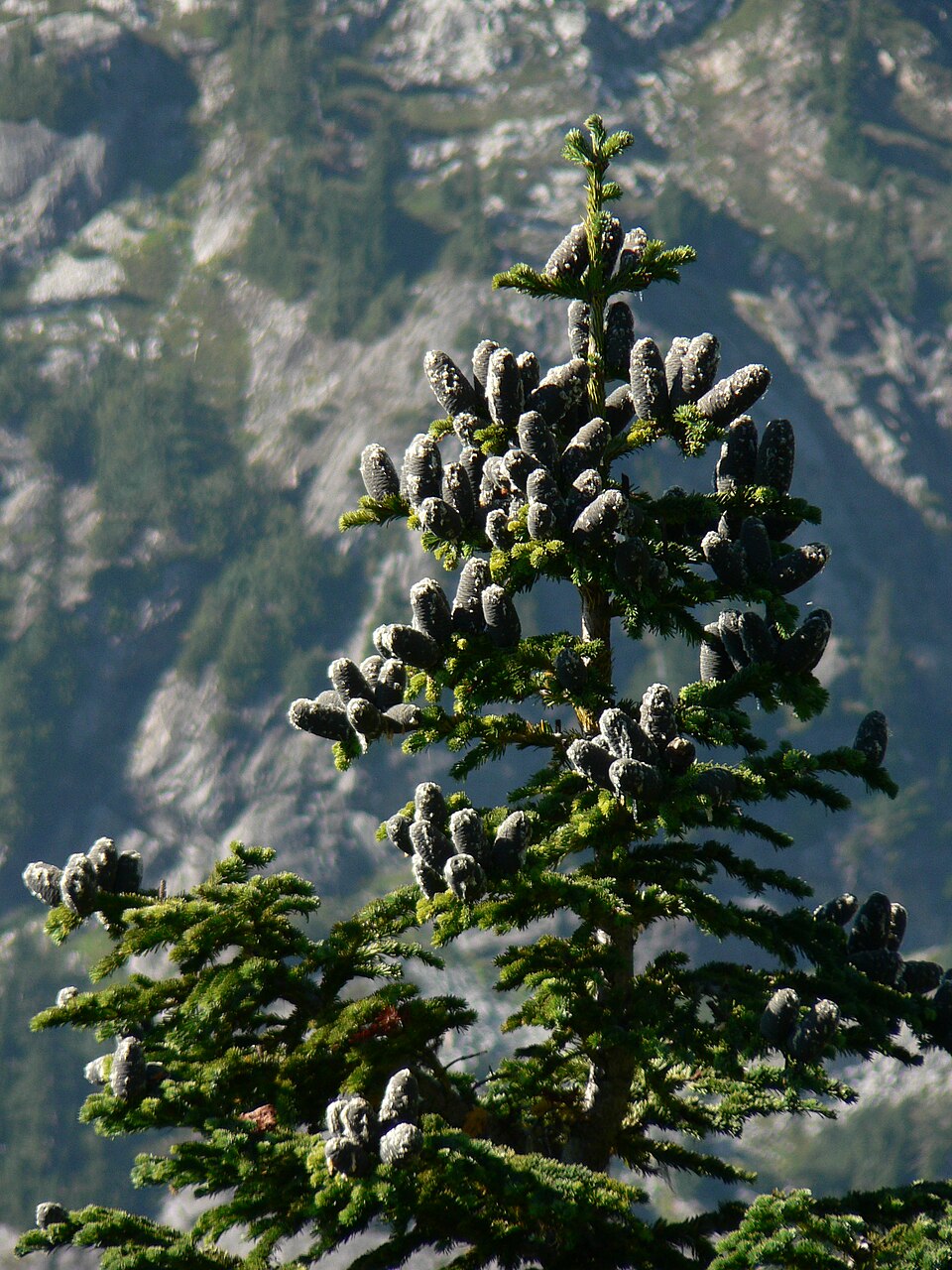
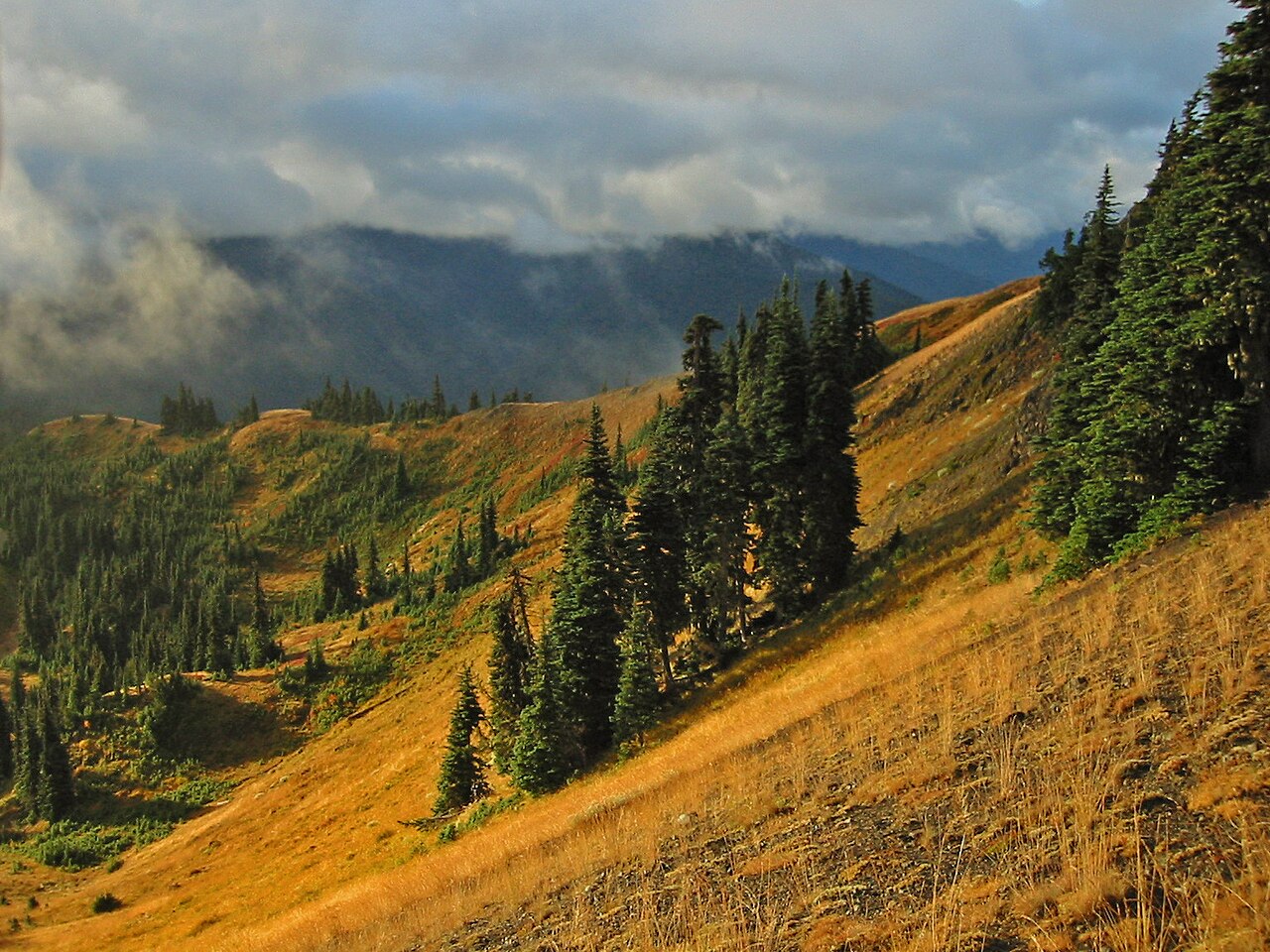
Subalpine Fir ⚠️ Tea only
Abies lasiocarpa · Pine family
The classic narrow spire of the high country; aromatic needle tea, but not a food tree.
Subalpine Fir ⚠️ Tea only
The classic narrow spire of the high country; aromatic needle tea, but not a food tree.
What it is
The classic narrow “spire” evergreen of the subalpine, with soft flat needles and upright cones near the very top.
How to identify
- Very narrow, steeple-shaped crown that sheds snow.
- Needles flat, soft, blunt, blue-green, curving upward off the twig.
- Cones sit upright on the top branches and disintegrate in place (you rarely find whole ones on the ground).
- Smooth gray bark with resin blisters when young.
Where & when
High-elevation forest to timberline, often with Engelmann spruce; year-round.
⚠️ Edibility
The needles make an aromatic tea and the resin has folk-medicine use, but it is not a food tree.
Lookalikes & cautions
Flat, upward-curving needles and upright cones separate true firs from spruces. Never confuse a conifer with the toxic yew.
Field notes
Its narrow shape is an adaptation to heavy mountain snow, which slides off rather than breaking the branches.
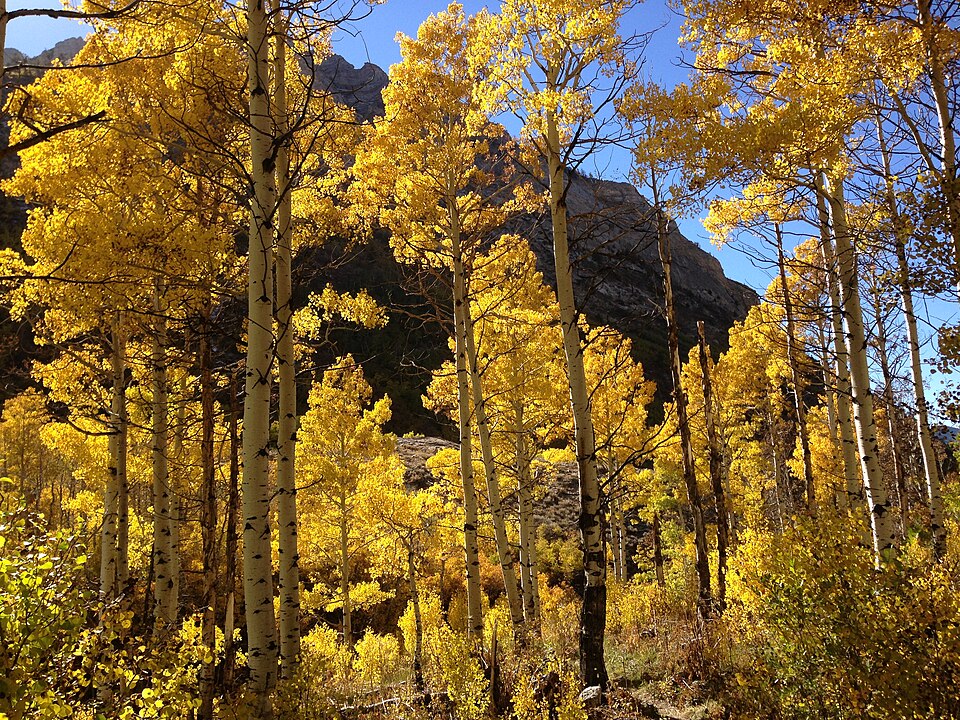
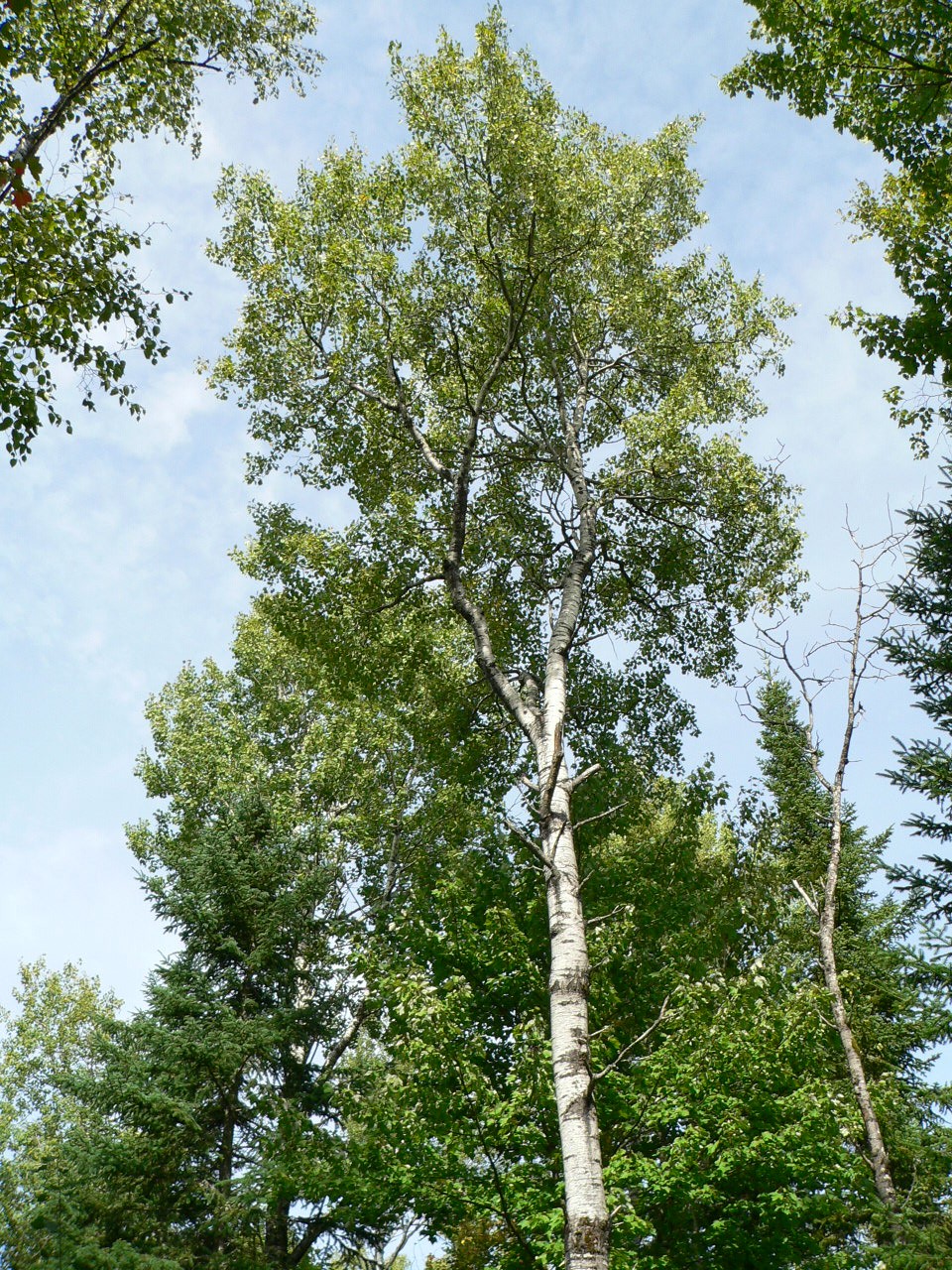
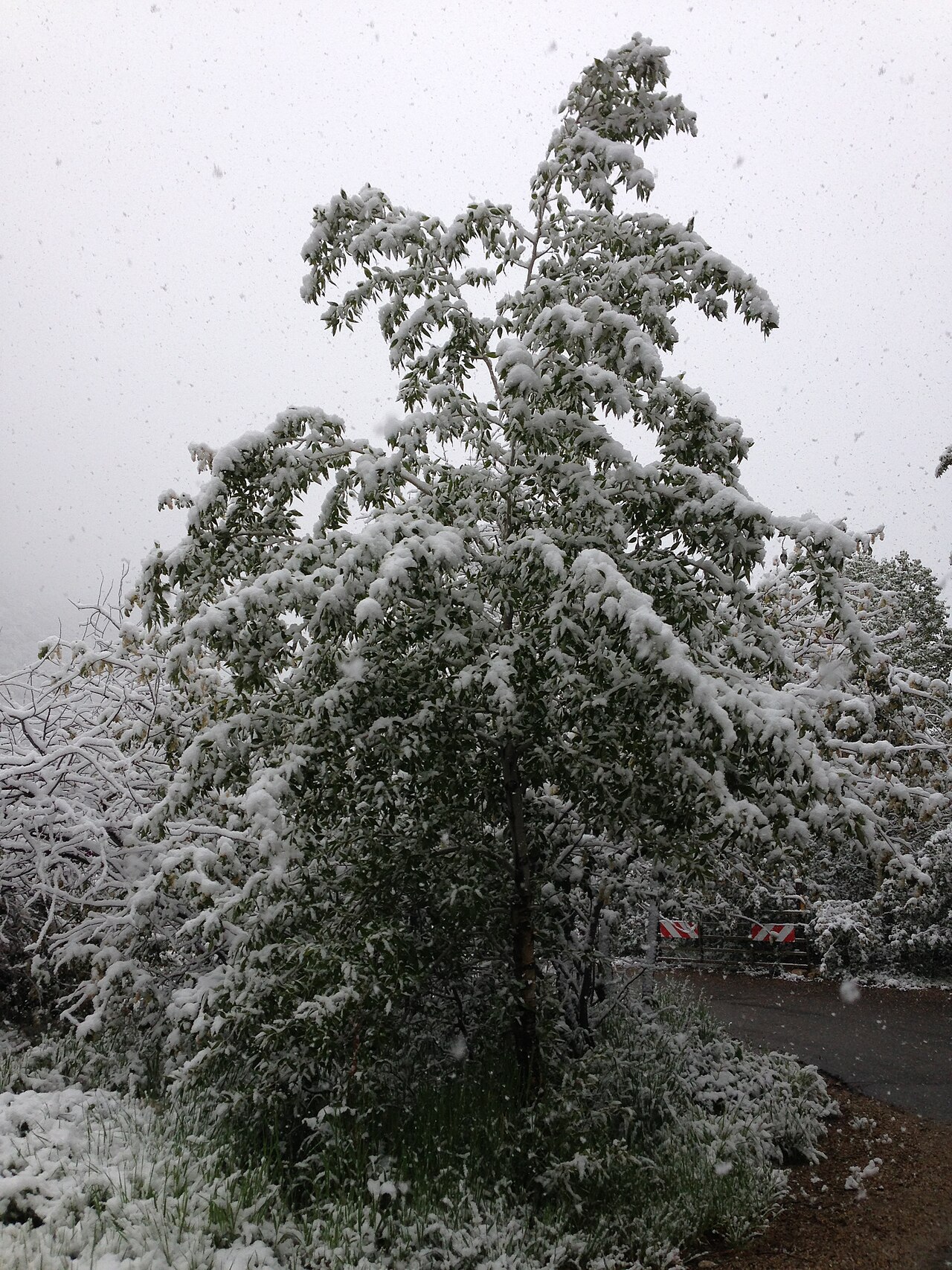
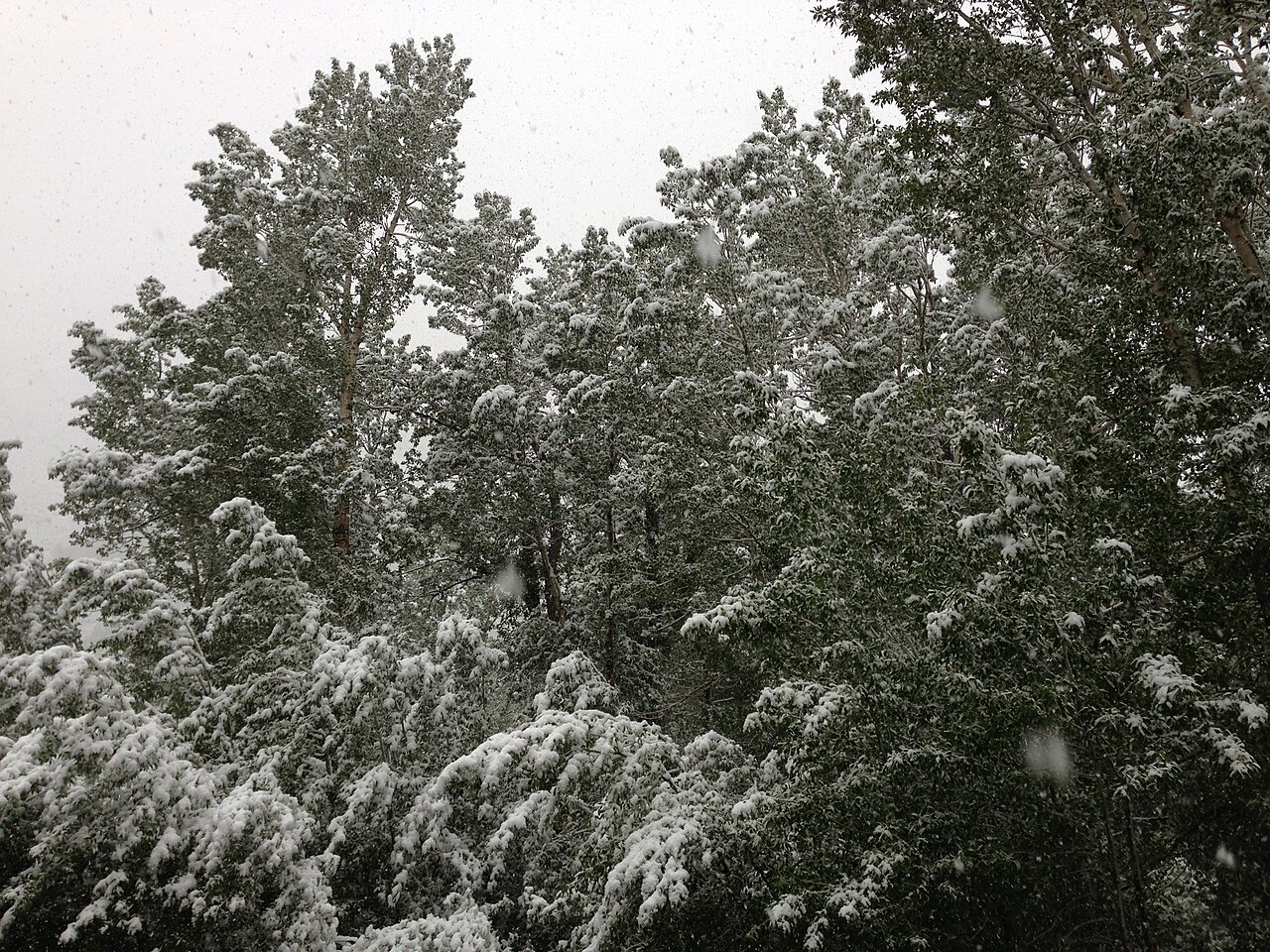
Quaking Aspen ⚠️ Survival edible
Populus tremuloides · Willow family
White-barked tree whose leaves tremble in any breeze; sweet inner bark is survival food.
Quaking Aspen ⚠️ Survival edible
White-barked tree whose leaves tremble in any breeze; sweet inner bark is survival food.
What it is
The white-barked tree whose flat-stemmed leaves tremble in the slightest breeze and turn whole mountainsides gold in fall.
How to identify
- Smooth, chalky white-to-greenish bark, often marked with dark scars and eyes.
- Round leaves on flattened stalks that make them “quake” in the wind.
- Grows in clones, whole groves are often one connected organism sharing roots.
- Golden fall color, brilliant against the conifers.
Where & when
Moist slopes, meadow edges, and along water at low to mid elevation; leaves spring to fall.
⚠️ Edibility
The sweetish inner bark (cambium) is edible raw or dried, and spring catkins are edible. Emergency food, not a meal.
Lookalikes & cautions
Hard to confuse; the trembling round leaves and white bark are distinctive. Bark has a white powder that works as sunscreen.
Field notes
Aspen clones are among the largest and oldest living organisms on Earth; the trees green up early and feed wildlife heavily.
Rocky Mountain Maple ⚠️ Sap & seeds
Acer glabrum · Soapberry family
A shrubby canyon maple with classic lobed leaves and paired winged seeds.
Rocky Mountain Maple ⚠️ Sap & seeds
A shrubby canyon maple with classic lobed leaves and paired winged seeds.
What it is
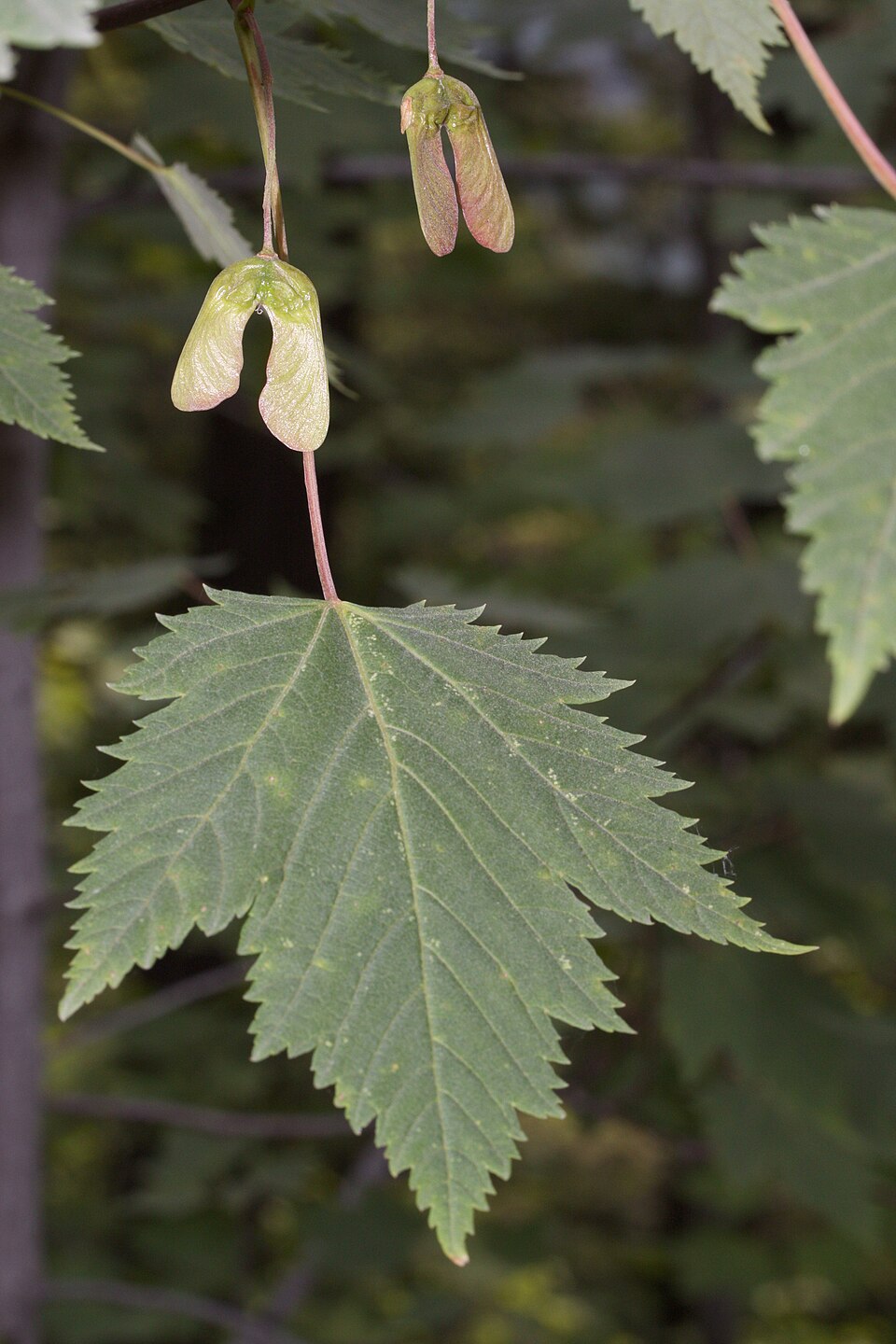
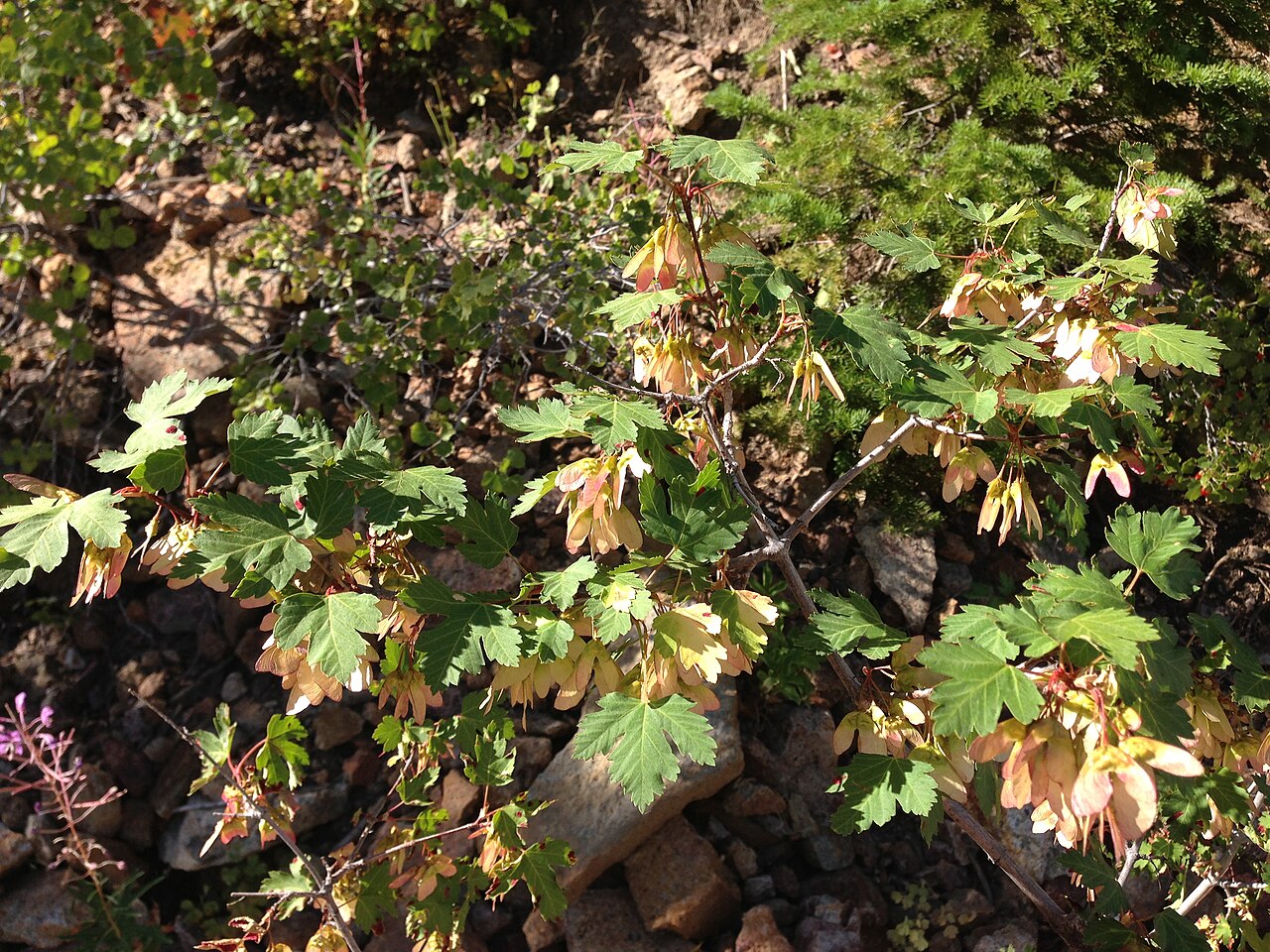
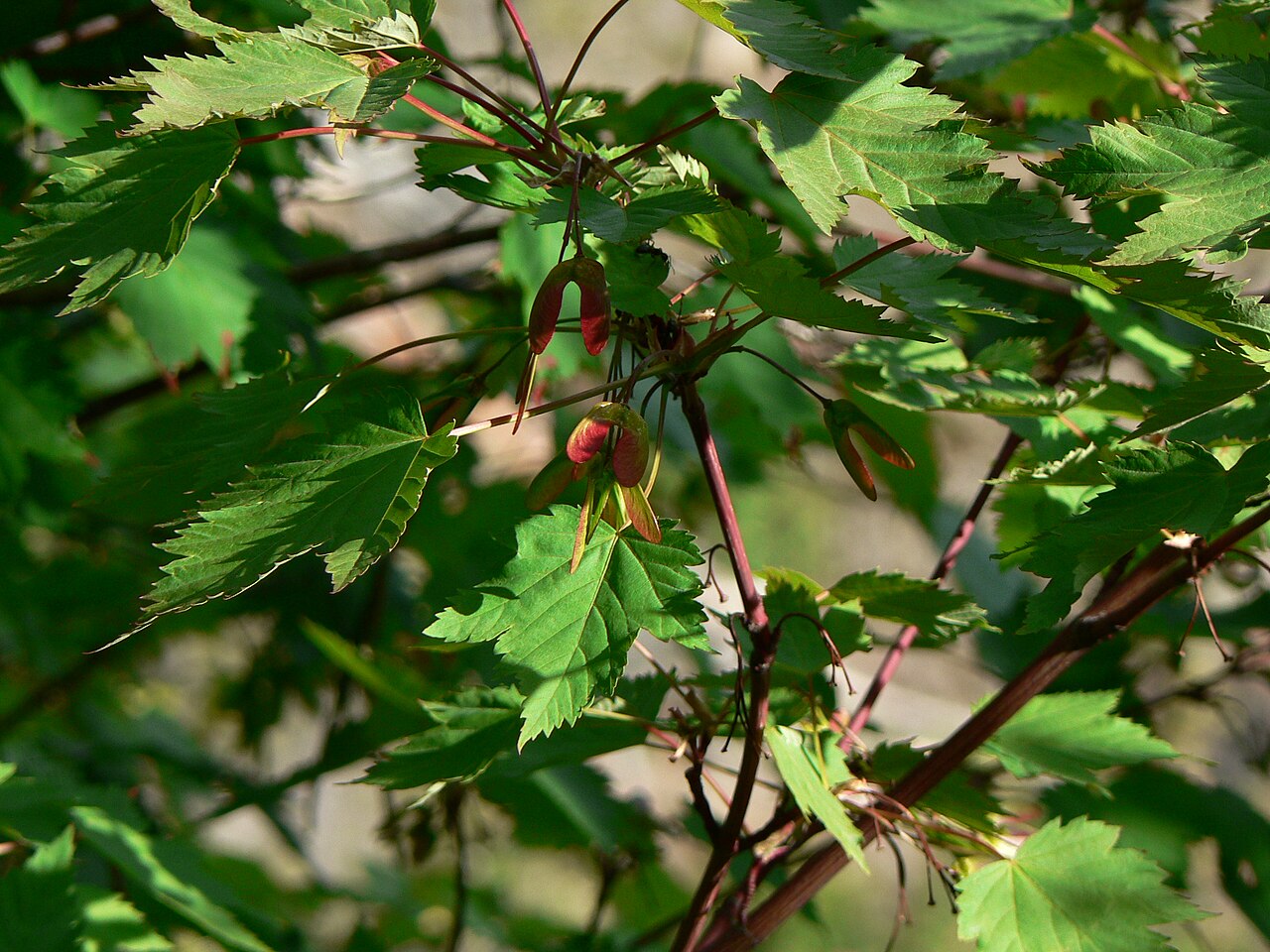
A small, shrubby maple of canyon slopes and streamsides, with the classic lobed maple leaf and paired winged seeds.
How to identify
- Small tree or large shrub, often multi-stemmed, with reddish young twigs.
- Leaves opposite, palmately lobed (usually 3 to 5 lobes) with toothed edges.
- Paired winged seeds (samaras, “helicopters”) joined at a narrow angle.
- Turns yellow to red-orange in fall.
Where & when
Canyon bottoms, moist slopes, and streamsides, low to mid elevation.
⚠️ Edibility
The sap can be boiled into a mild syrup and young seeds are edible. Not a significant food source here.
Lookalikes & cautions
The only native mountain maple in the region; opposite lobed leaves and paired samaras are diagnostic.
Field notes
Important browse for deer and elk; the tough, straight young stems were used for tool handles and bows.
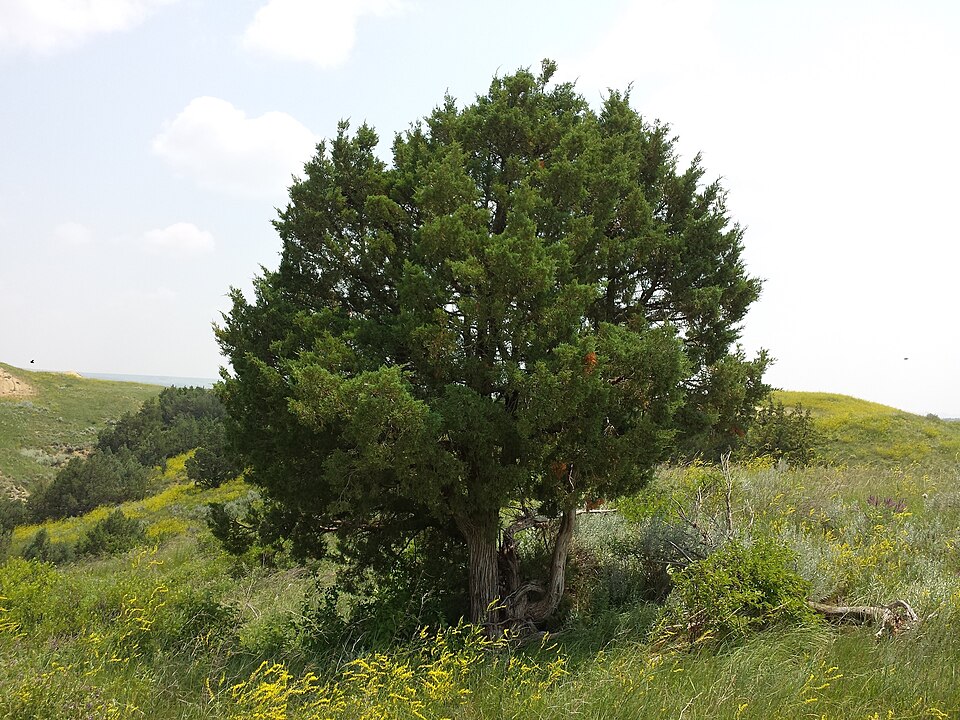
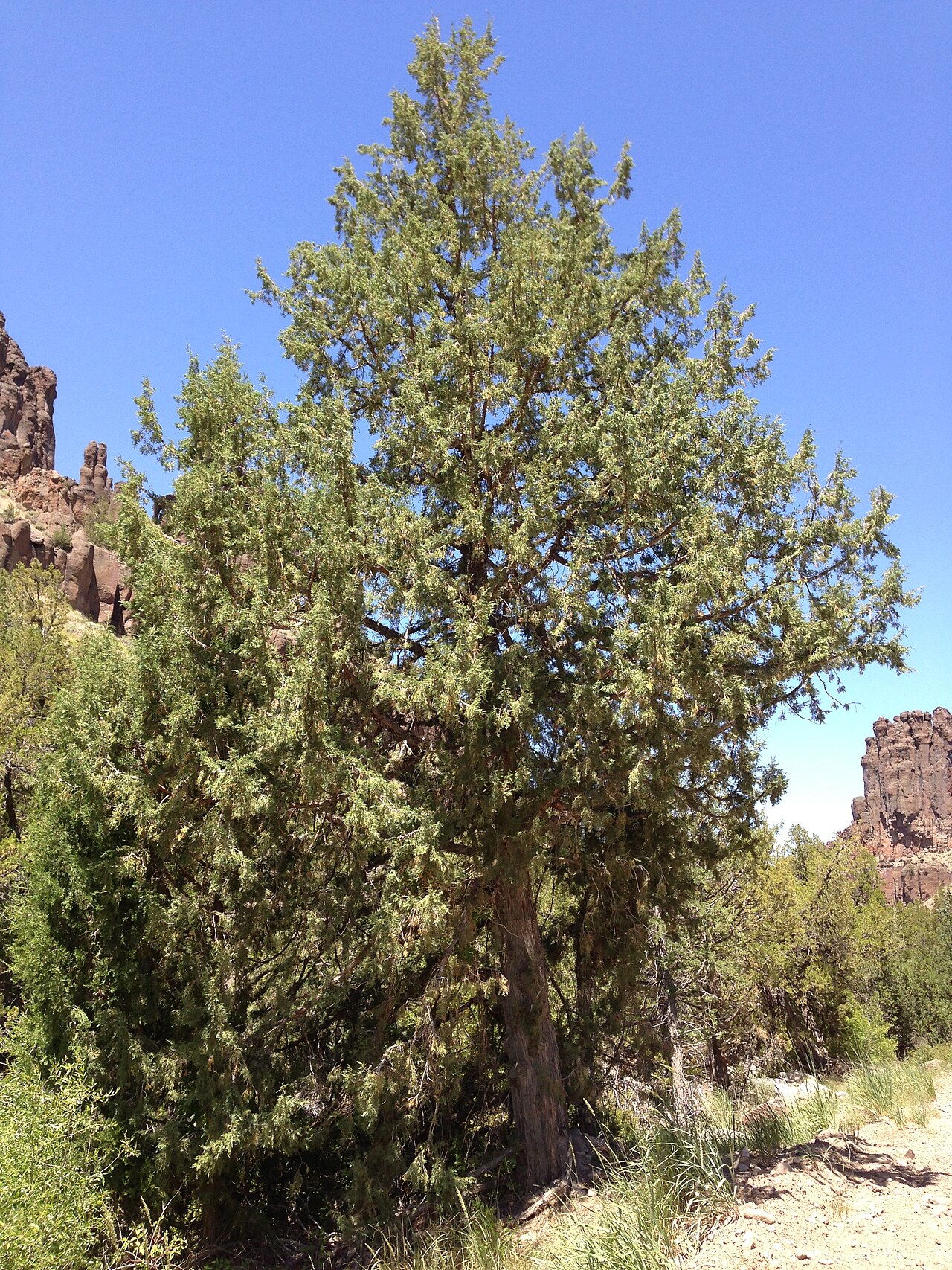
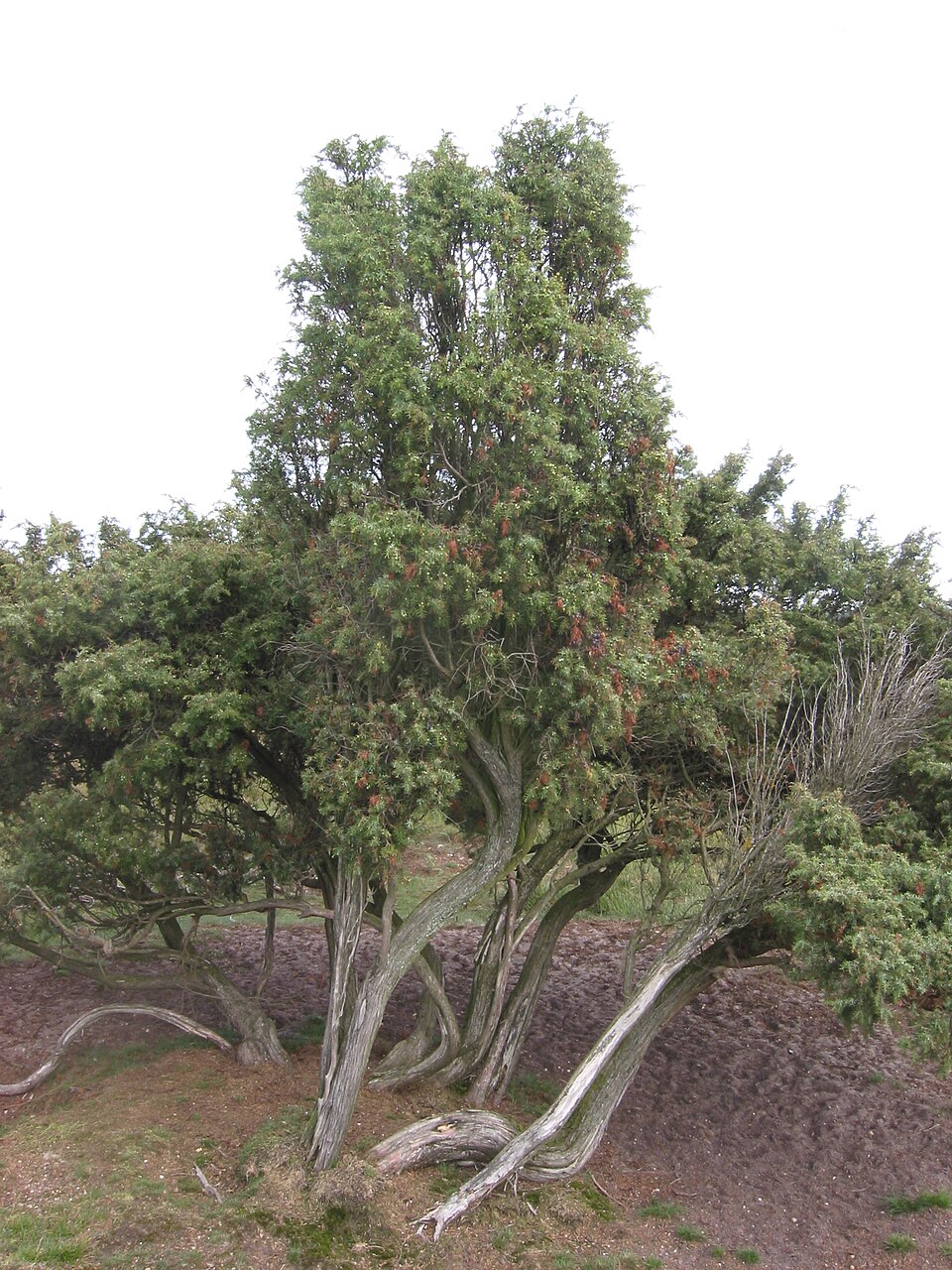
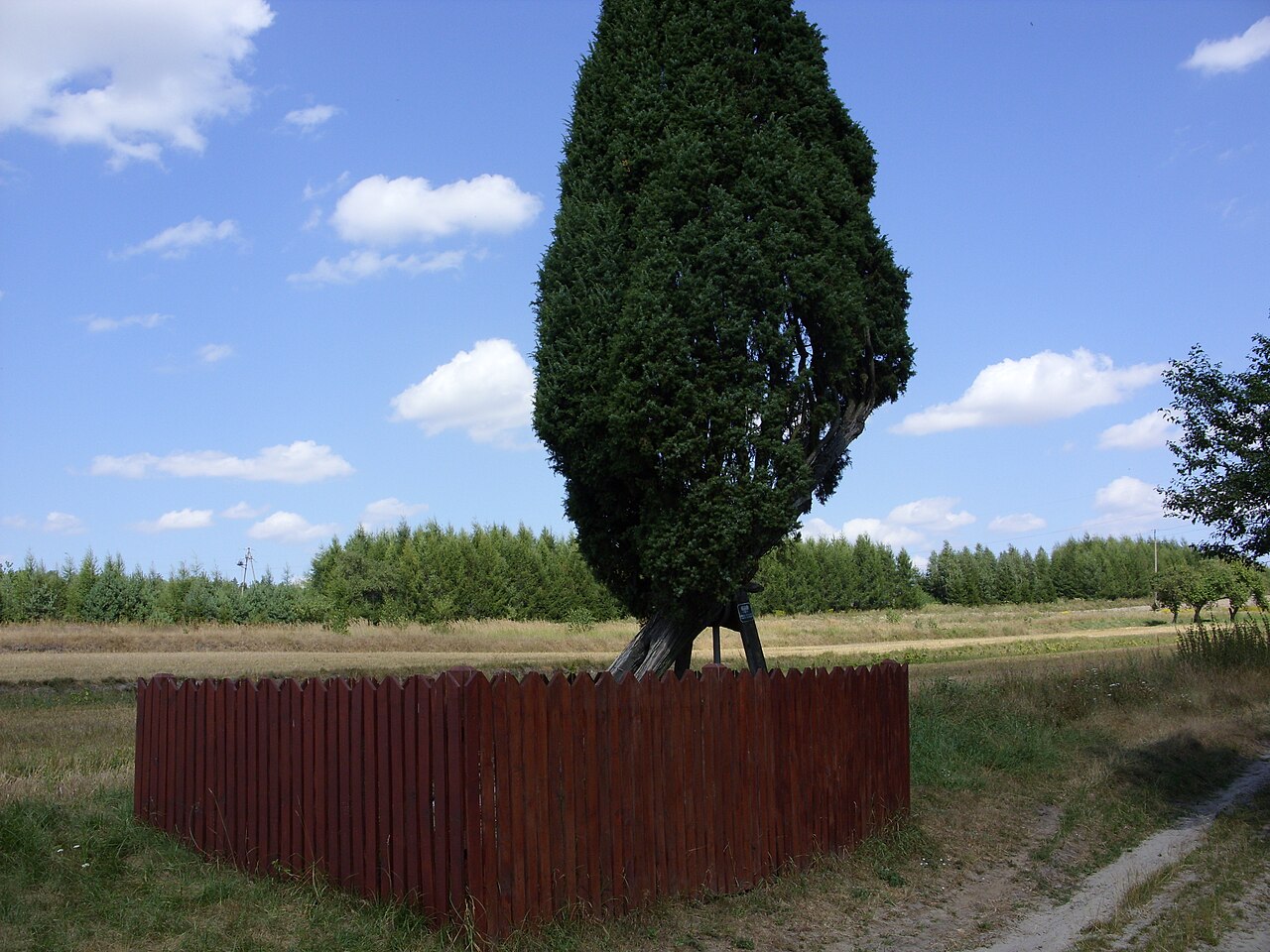
Rocky Mountain Juniper ⚠️ Seasoning only
Juniperus scopulorum · Cypress family
A scaly evergreen of dry ridges with dusty-blue “berries” used sparingly as seasoning.
Rocky Mountain Juniper ⚠️ Seasoning only
A scaly evergreen of dry ridges with dusty-blue “berries” used sparingly as seasoning.
What it is
A scaly-leaved evergreen of dry, rocky slopes with dusty-blue berry-like cones and prized aromatic wood.
How to identify
- Small evergreen tree, often gnarled and open-crowned on dry ground.
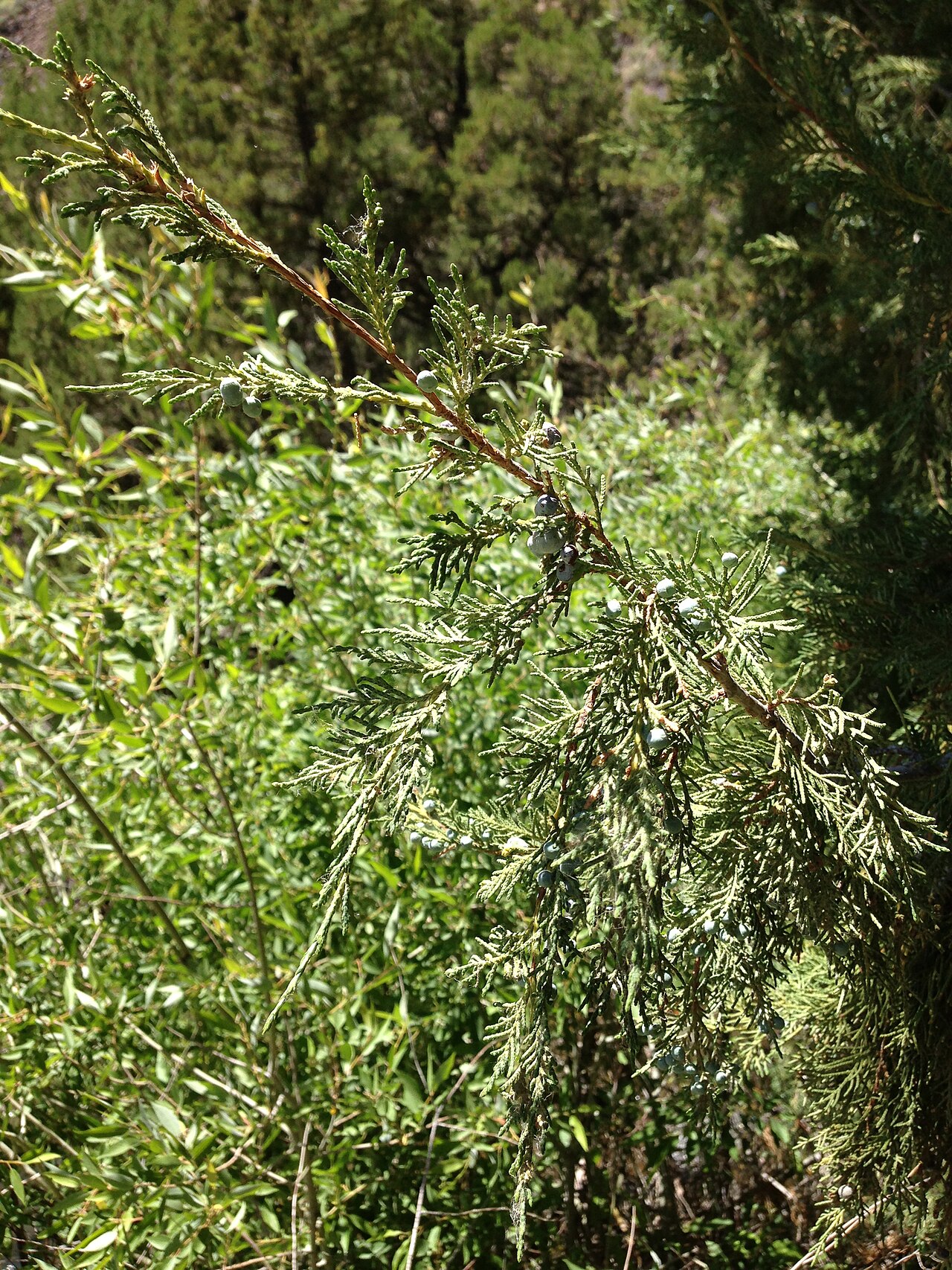
- Leaves tiny, scale-like, pressed flat against the twig (not sharp needles on mature growth).
- “Berries” are actually small fleshy cones, dusty blue with a waxy bloom, taking two years to ripen.
- Reddish, shreddy, fibrous bark.
Where & when
Dry, rocky slopes, ridges, and foothills, low to mid elevation; year-round.
⚠️ Edibility
The “berries” are used sparingly as a seasoning, like store-bought juniper. Eating them in quantity is toxic to the kidneys, so treat as a spice, not a snack.
Lookalikes & cautions
Distinguished from common juniper by its scale-like (not needle) leaves and tree form. Some junipers are more toxic than others, so use any sparingly.
Field notes
The rot-resistant wood was used for fence posts and bows; the aromatic foliage was burned as a cleansing smudge.
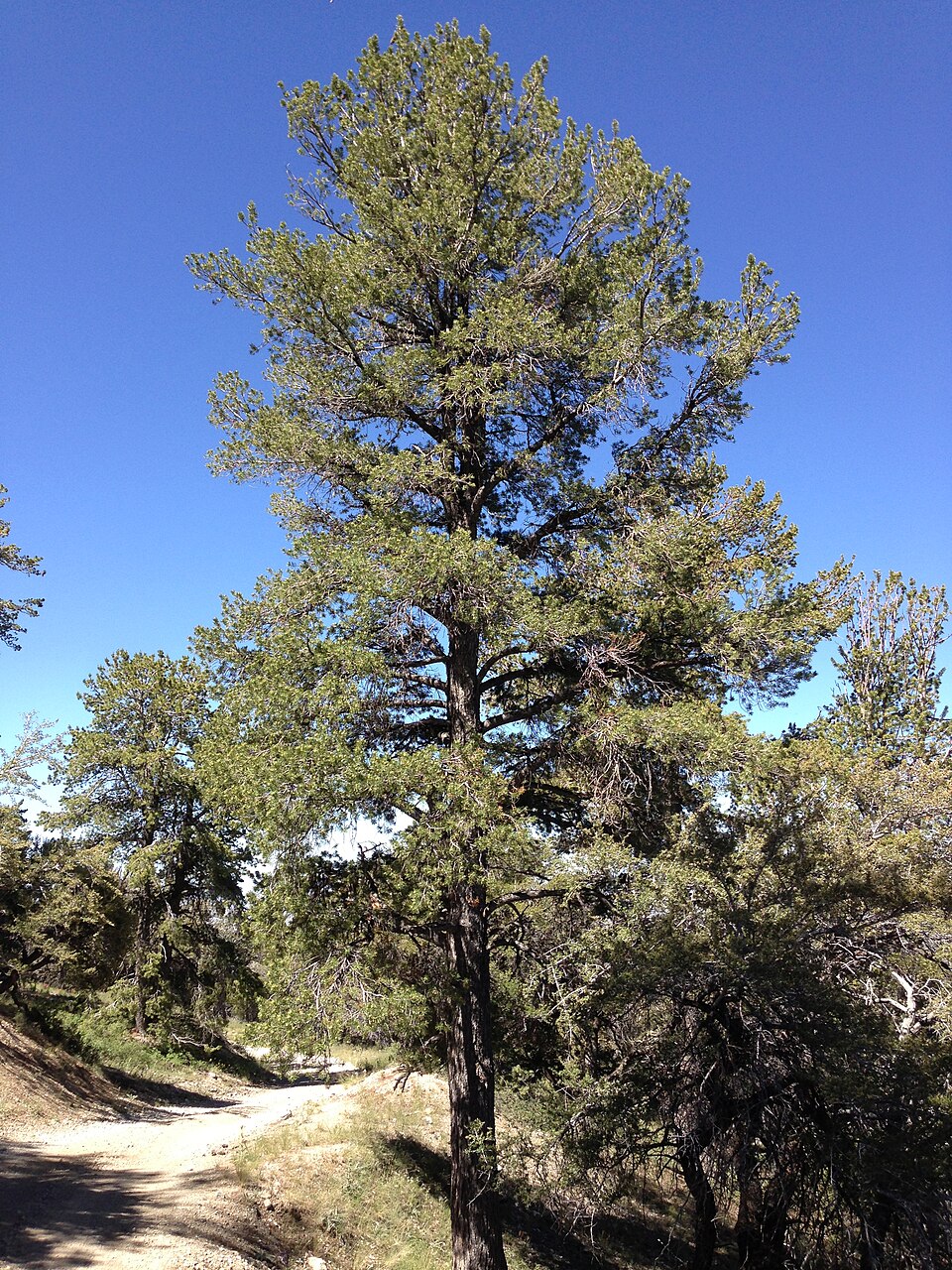
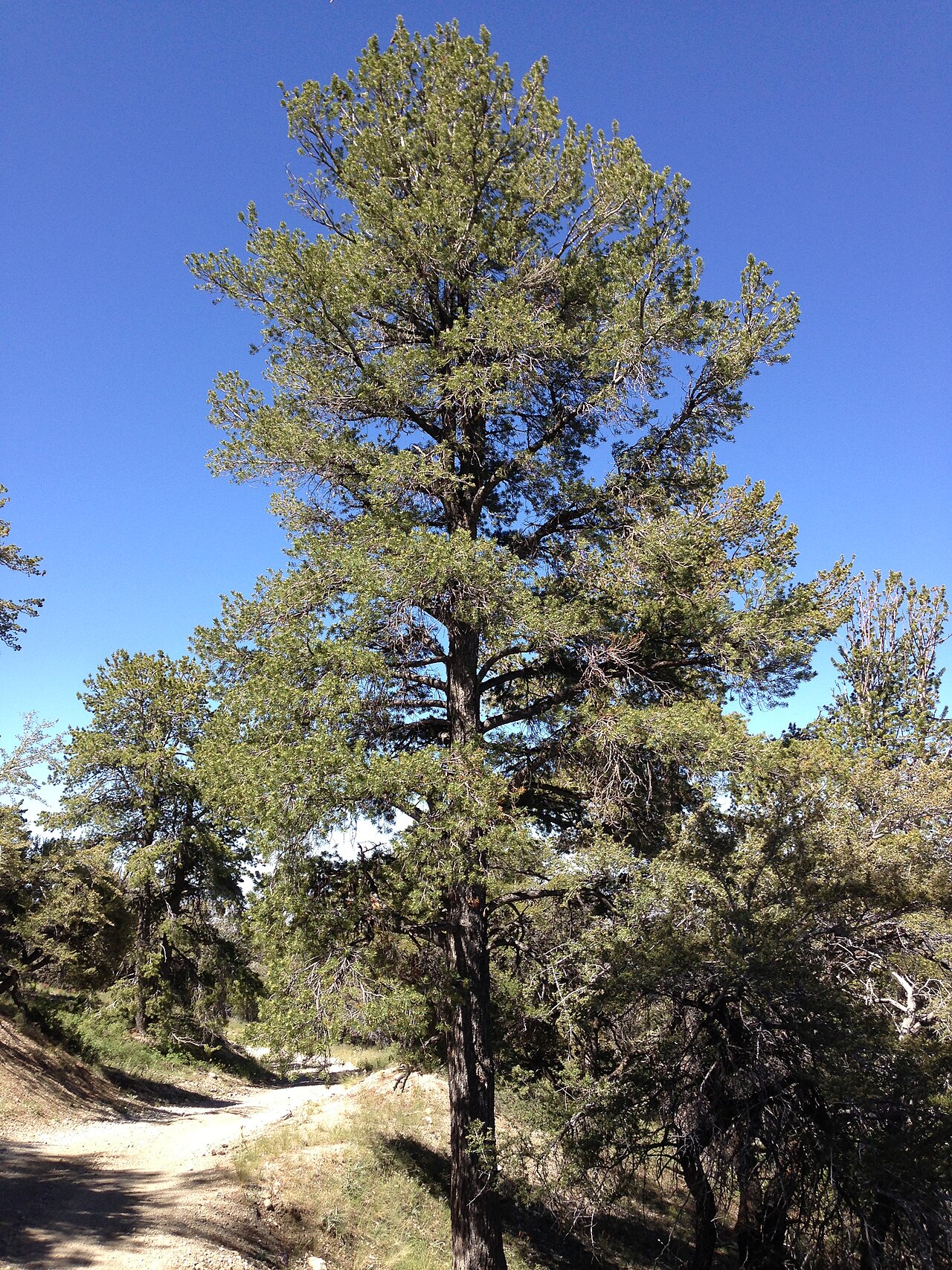
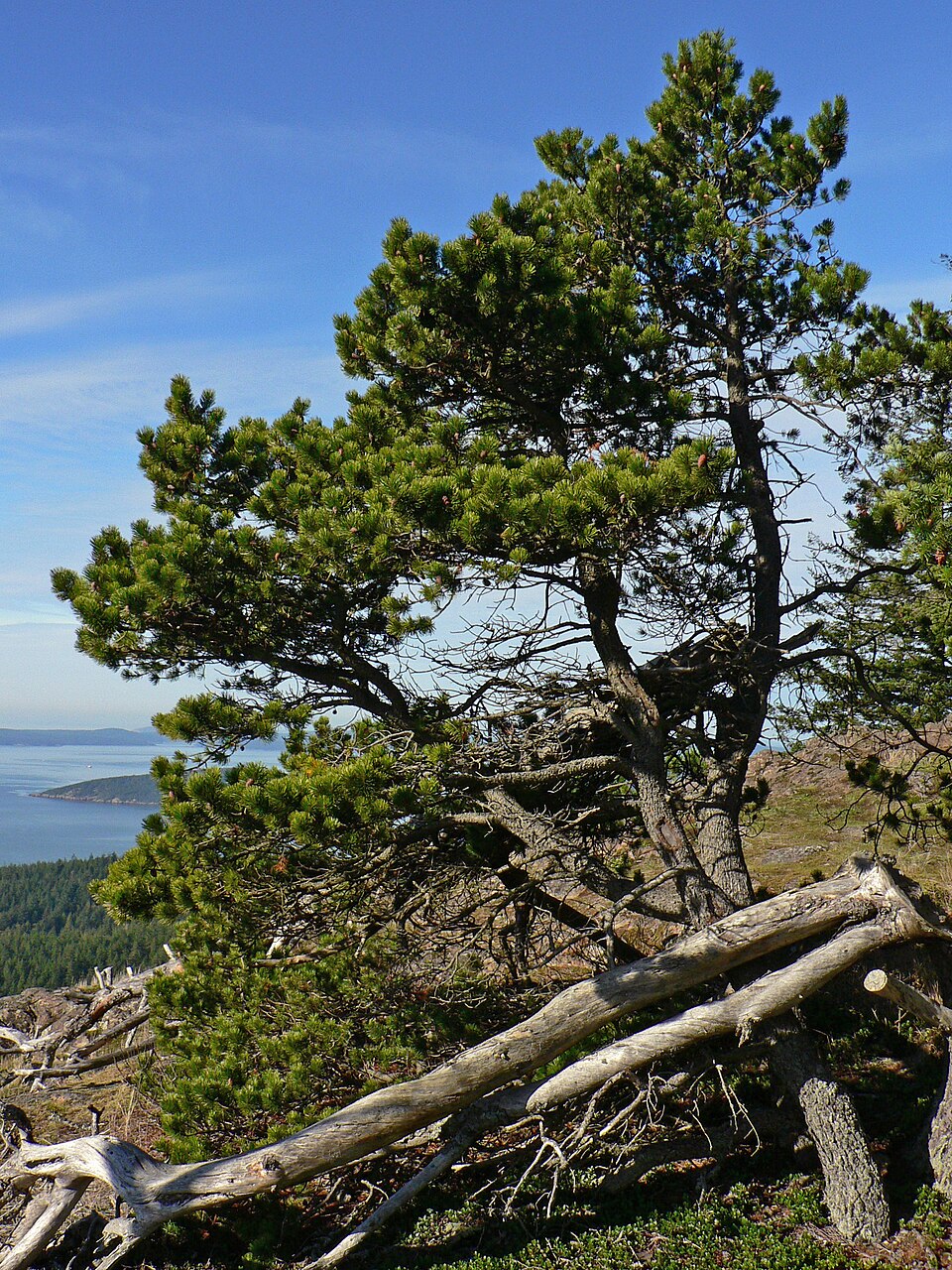
Limber Pine ✅ Edible pine nuts
Pinus flexilis · Pine family
A rugged, twisted high pine with branches you can tie in a knot; genuinely tasty pine nuts.
Limber Pine ✅ Edible pine nuts
A rugged, twisted high pine with branches you can tie in a knot; genuinely tasty pine nuts.
What it is
A rugged, often twisted high-elevation pine with branches so flexible you can tie them in a knot, growing on windswept ridges.
How to identify
- Needles in bundles of five, stiff and clustered toward the branch tips.
- Young branches are famously flexible and bend without snapping.
- Cones large, egg-shaped, with thick scales; open to drop big wingless seeds.
- Often stunted and picturesque on exposed rock.
Where & when
Dry, rocky, high-elevation ridges and exposed slopes; year-round.
✅ Edibility
Produces large, genuinely tasty edible seeds (pine nuts). A real wild food, though the cones can be hard to reach.
Lookalikes & cautions
Five needles per bundle separate it from two-needle lodgepole; distinguished from whitebark pine by cones that open on their own (whitebark cones stay closed and are torn apart by birds).
Field notes
Clark’s nutcrackers cache the seeds and plant future trees; a single bird may hide tens of thousands of seeds a year.
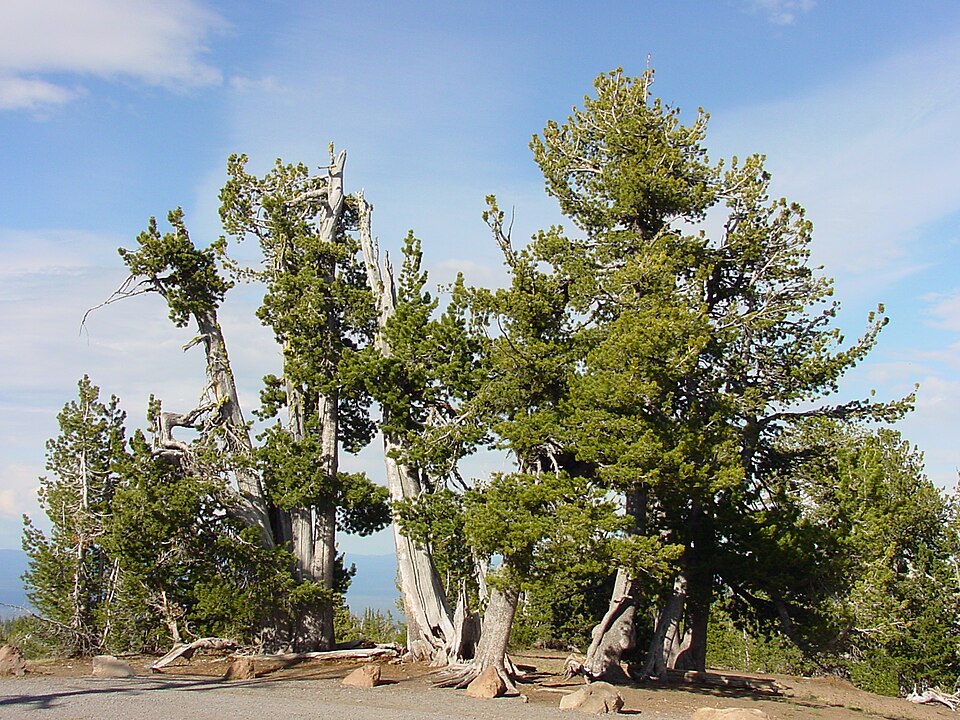
Whitebark Pine ⚠️ Edible but protected
Pinus albicaulis · Pine family
A gnarled tree of the highest ridges; edible seeds, but threatened, so leave them for wildlife.
Whitebark Pine ⚠️ Edible but protected
A gnarled tree of the highest ridges; edible seeds, but threatened, so leave them for wildlife.


What it is
A gnarled tree of the highest, harshest ridgelines whose seeds are a keystone food for grizzlies and Clark’s nutcrackers.
How to identify
- Needles in bundles of five, stiff, tufted at the branch ends.
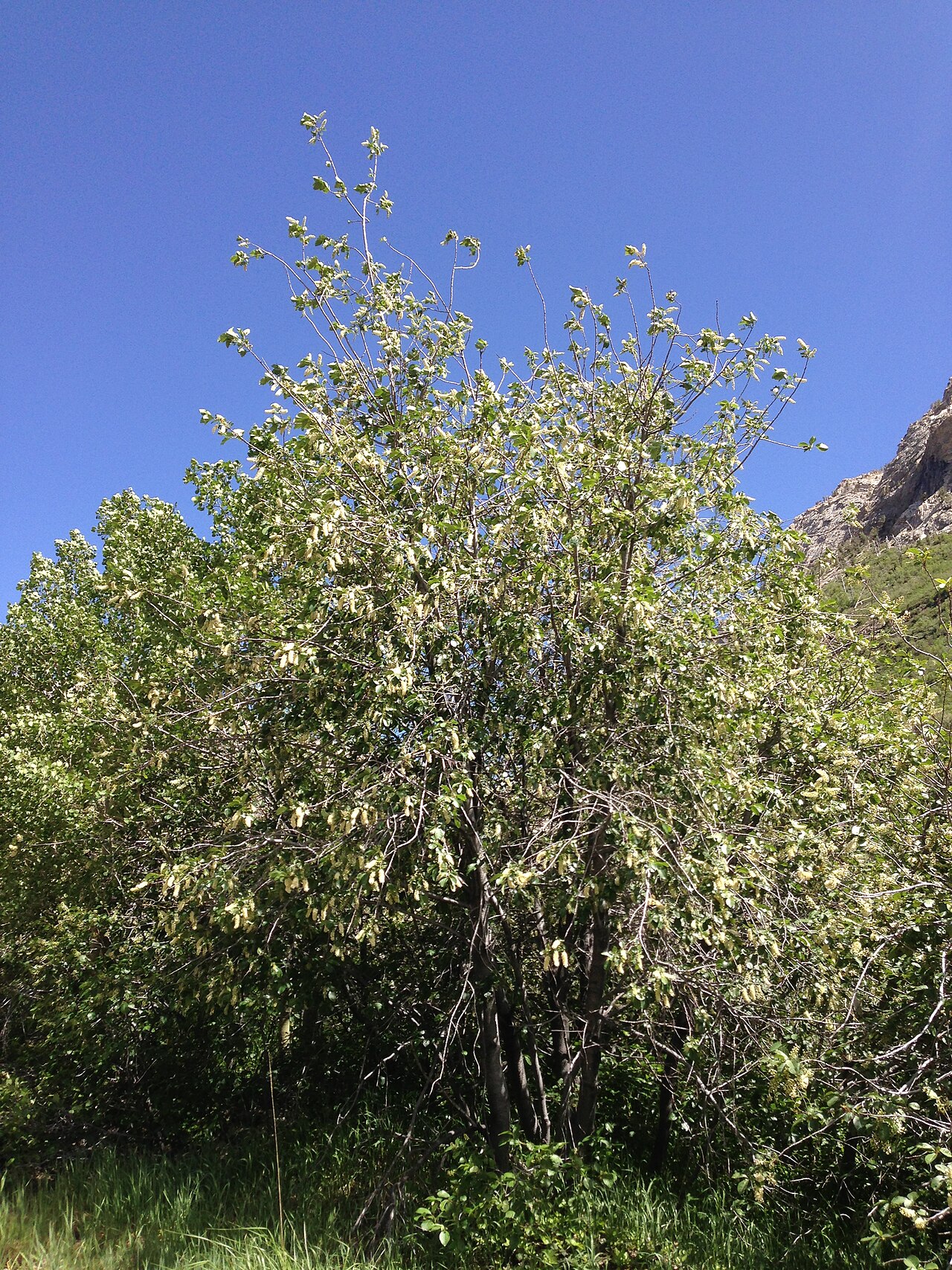
- Cones purple, egg-shaped, and stay closed on the tree, they do not open on their own.
- Often multi-stemmed and krummholz (shrubby, wind-beaten) near timberline.
- Whitish, smooth young bark.
Where & when
The highest subalpine ridges and timberline, the harshest sites; year-round.
⚠️ Edibility
Seeds are edible and nutritious, but the tree is threatened by blister rust and beetles. Please do not harvest; leave them for the wildlife.
Lookalikes & cautions
Closed cones separate it from limber pine (whose cones open). Both have five needles.
Field notes
A candidate for endangered-species protection; Clark’s nutcrackers are its main seed disperser, and grizzlies rely on its fat-rich seeds.
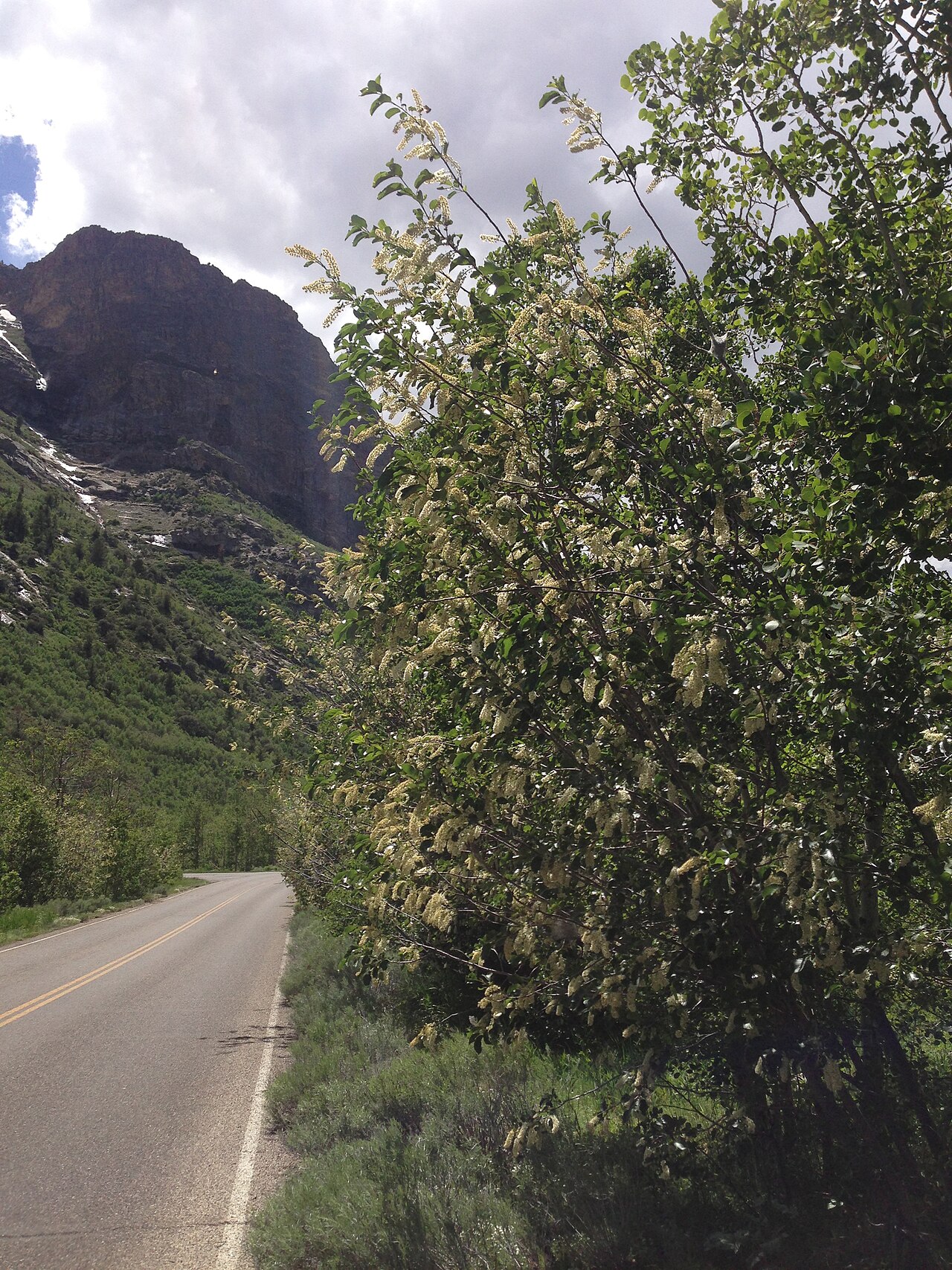
Narrowleaf Cottonwood ⚠️ Survival edible
Populus angustifolia · Willow family
A streamside tree with willow-like leaves that drifts cottony seed fluff in early summer.
Narrowleaf Cottonwood ⚠️ Survival edible
A streamside tree with willow-like leaves that drifts cottony seed fluff in early summer.
What it is
A streamside tree with narrow, willow-like leaves that releases drifts of cottony seed fluff in early summer.
How to identify
- Leaves narrow and lance-shaped, willow-like but alternate, finely toothed.
- Female trees release masses of white, cottony seed fluff in early summer.
- Furrowed gray bark on older trunks; smooth and greenish when young.
- Almost always right along water.
Where & when
Stream banks, river bottoms, and springs, low to mid elevation.
⚠️ Edibility
Inner bark and spring catkins are edible in a pinch. Mainly useful as a sign of water nearby.
Lookalikes & cautions
Narrow leaves separate it from the broad-leaved cottonwoods; it hybridizes with them where ranges overlap.
Field notes
A pioneer of new gravel bars and a key streamside (riparian) tree for shade, bank stability, and wildlife.
Bushes
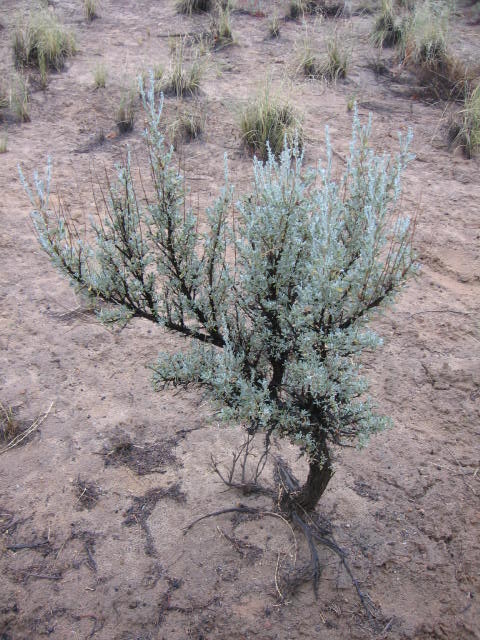
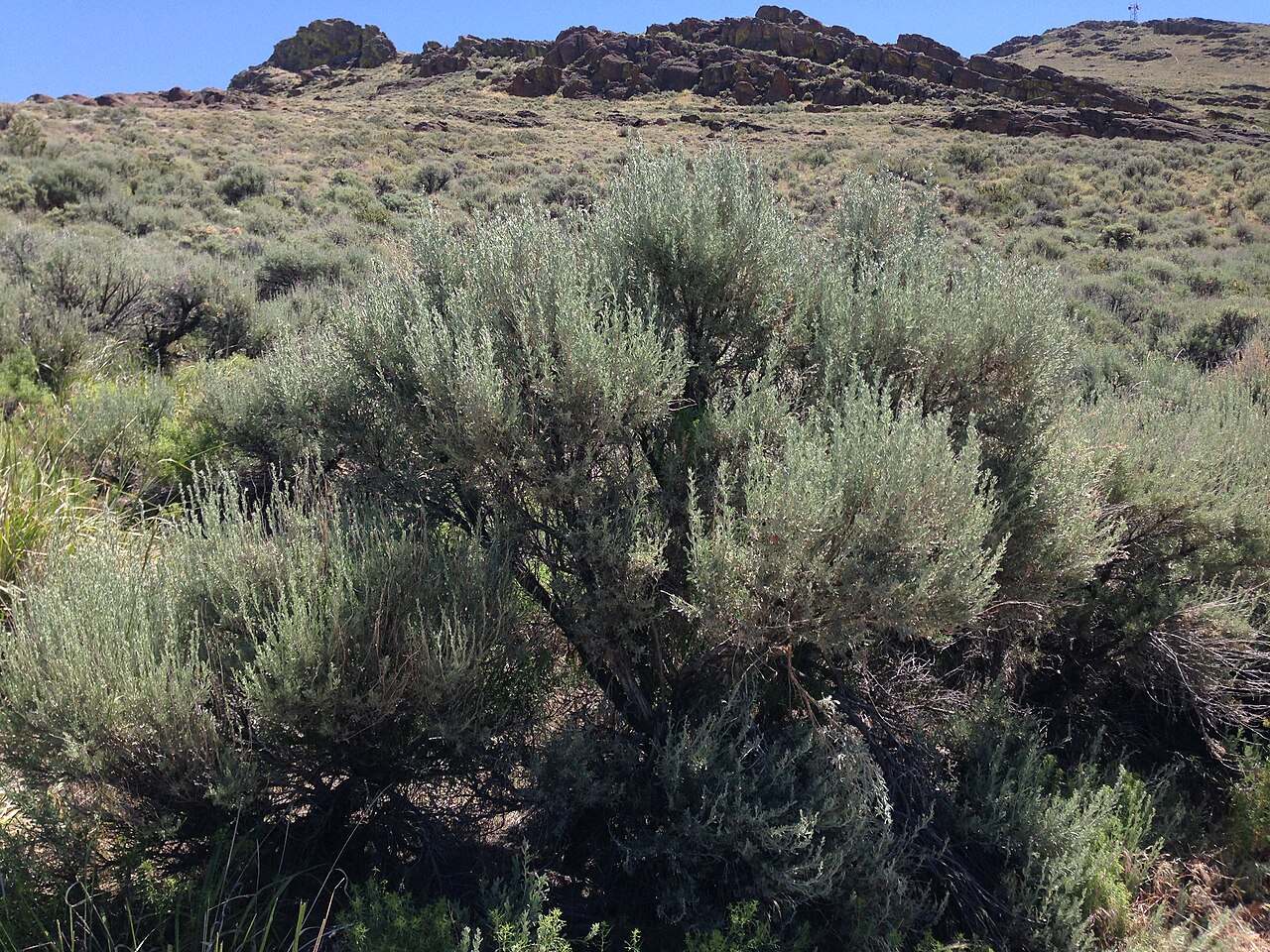
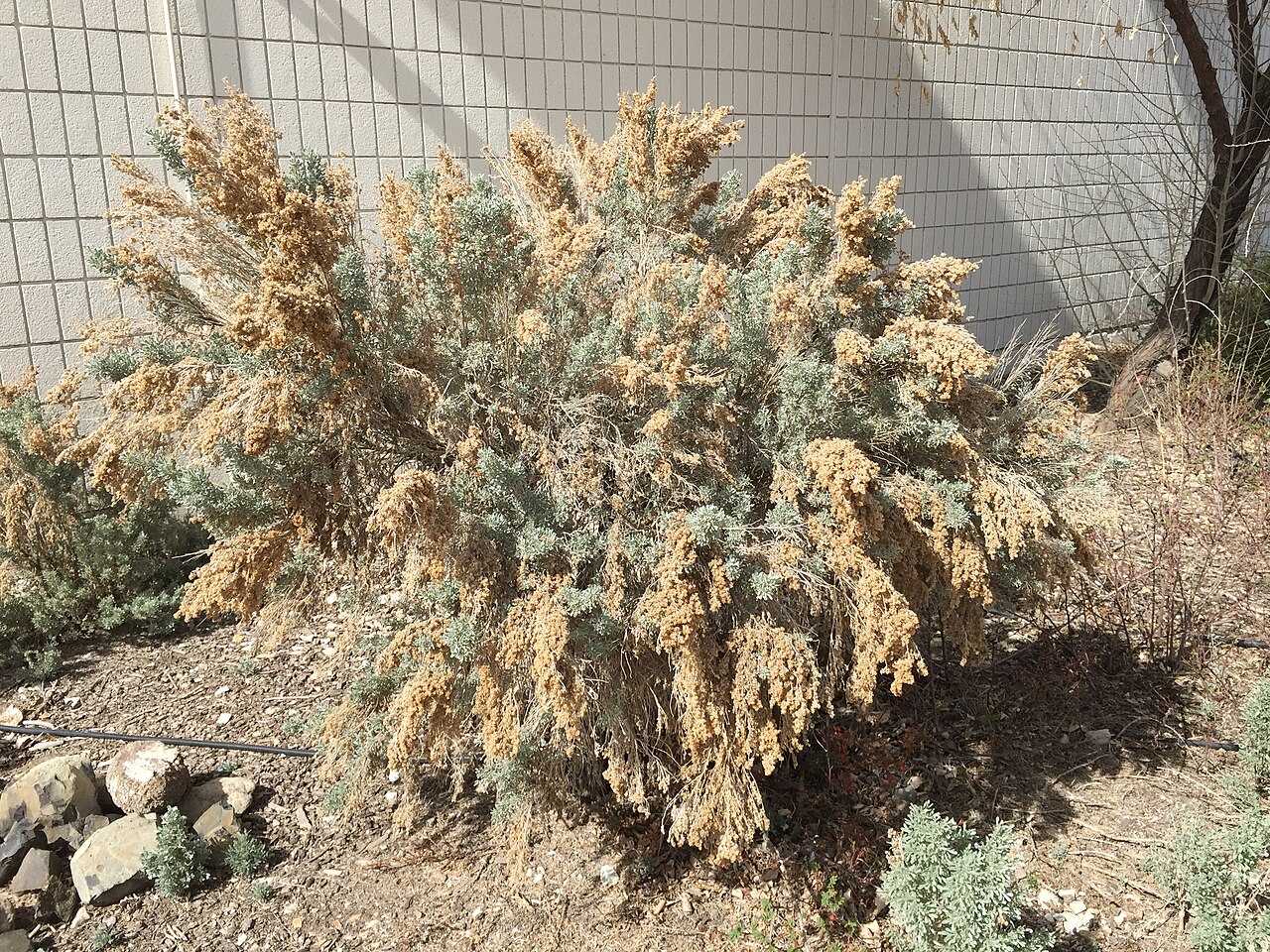
Big Sagebrush 🚫 Not edible
Artemisia tridentata · Sunflower family
The defining silver-green, sharp-smelling shrub of the West. Aromatic, but not food.
Big Sagebrush 🚫 Not edible
The defining silver-green, sharp-smelling shrub of the West. Aromatic, but not food.
What it is
The defining smell of the West: silvery, three-toothed leaves on a gray shrub that scents the whole desert after rain.
How to identify
- Gray-green, evergreen shrub with a strong, clean sage aroma when crushed.
- Small wedge-shaped leaves with three teeth at the blunt tip (tridentata).
- Shreddy gray bark on twisted woody stems.
- Tiny yellowish flower heads on tall spikes in late summer.
Where & when
Dry flats, foothills, and open slopes across the sagebrush steppe, low to mid elevation.
🚫 Edibility
Intensely bitter and toxic in quantity. Used historically as smudge and medicine, never as food.
Lookalikes & cautions
The three-toothed leaf tip and strong sage smell are distinctive; do not confuse the aroma with culinary garden sage, which is a different plant.
Field notes
The backbone of sage-grouse country; its deep and shallow roots let it survive brutal drought.
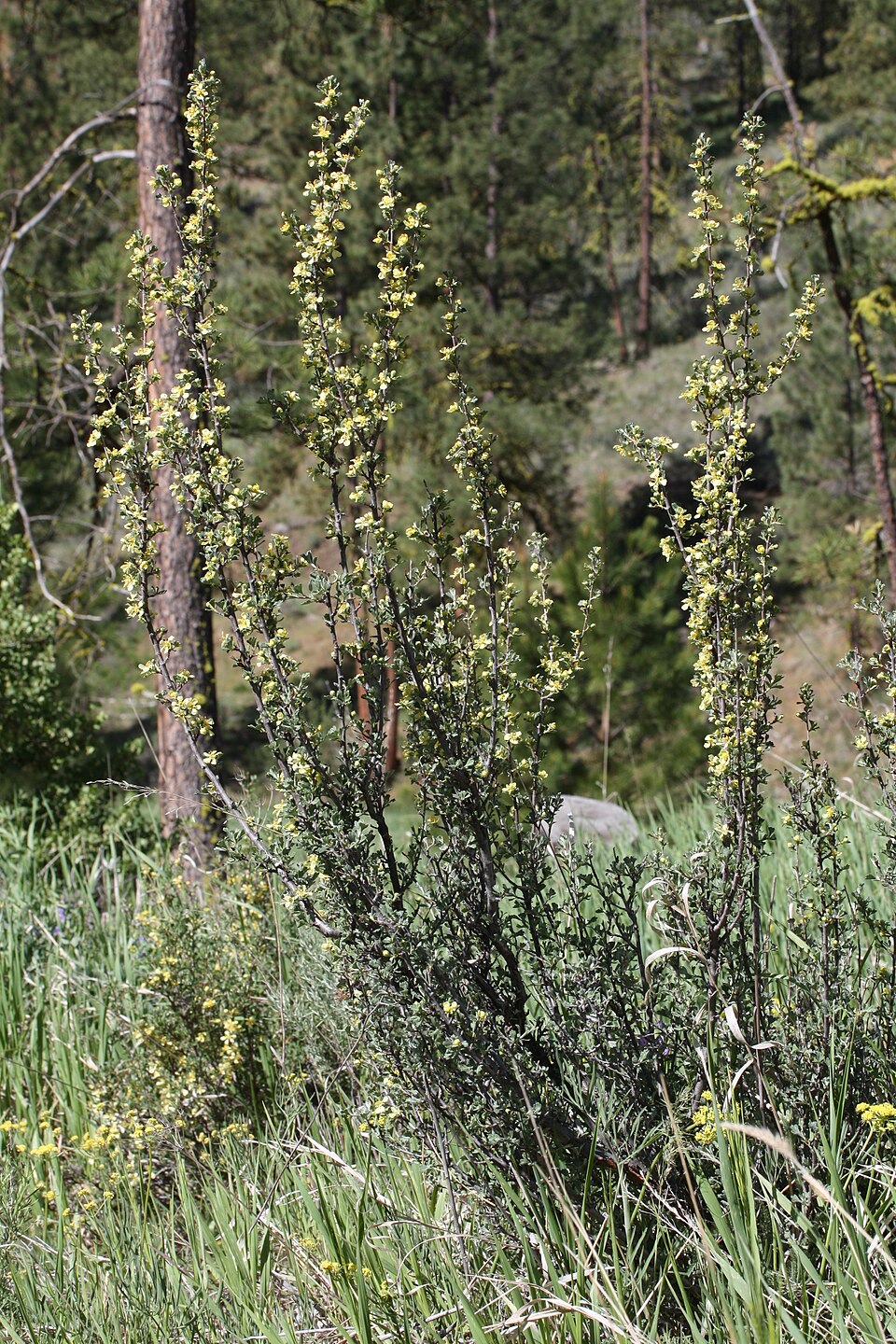
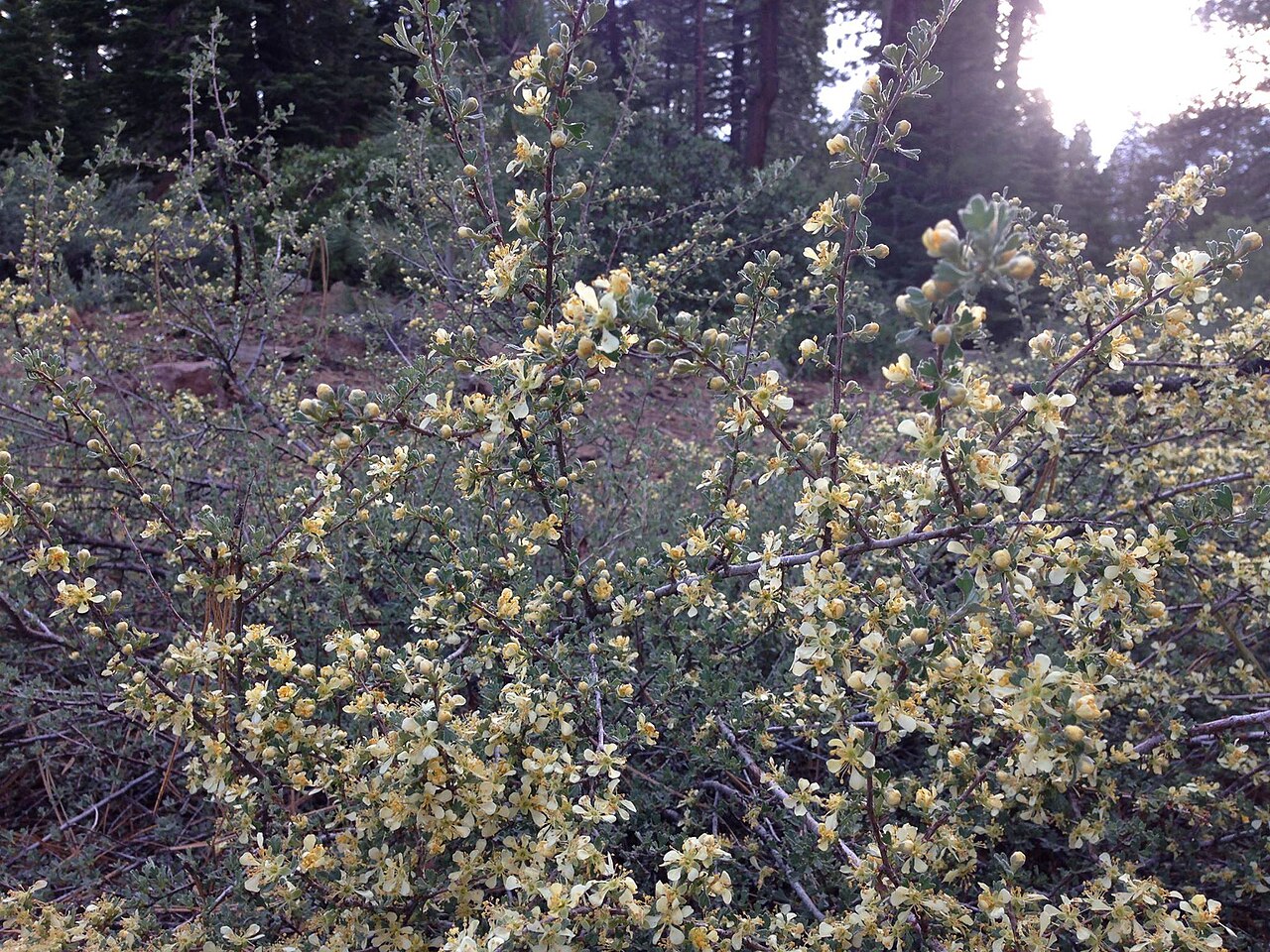
Antelope Bitterbrush 🚫 Not edible
Purshia tridentata · Rose family
A wedge-leaved shrub often mistaken for sagebrush; vital winter food for deer and elk.
Antelope Bitterbrush 🚫 Not edible
A wedge-leaved shrub often mistaken for sagebrush; vital winter food for deer and elk.


What it is
A wedge-leaved shrub often mistaken for sagebrush, covered in small yellow flowers in spring and critical winter browse for deer and elk.
How to identify
- Spreading shrub with small three-toothed wedge leaves, dark green above and pale beneath.
- Leaves do NOT have the strong sage smell of sagebrush.
- Small yellow five-petaled rose-family flowers in late spring.
- Grows intermixed with sagebrush on dry ground.
Where & when
Dry sagebrush flats, foothills, and open pine forest, low to mid elevation.
🚫 Edibility
Not a human food. Important wildlife forage, so leave it be.
Lookalikes & cautions
Sagebrush look-alike, but bitterbrush lacks the sage aroma and has yellow rose-type flowers rather than sagebrush spikes.
Field notes
One of the most important winter browse plants for mule deer in the Intermountain West.
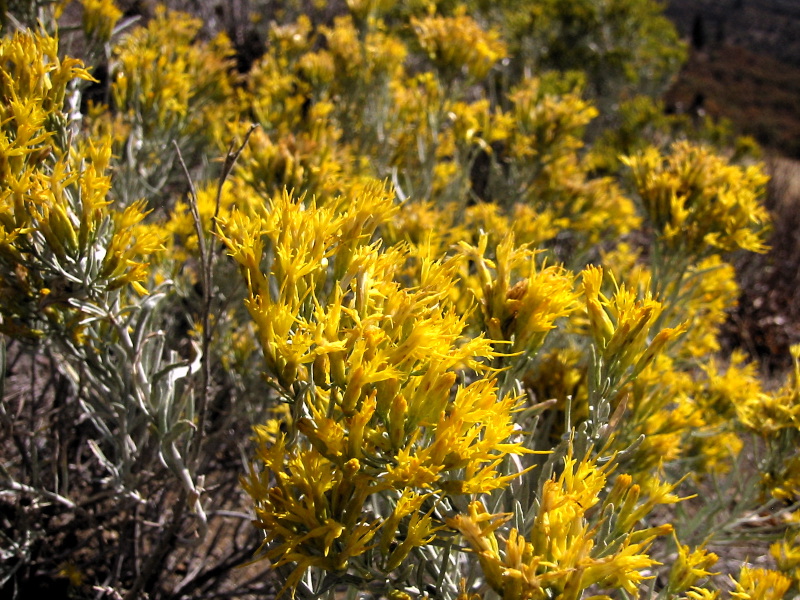
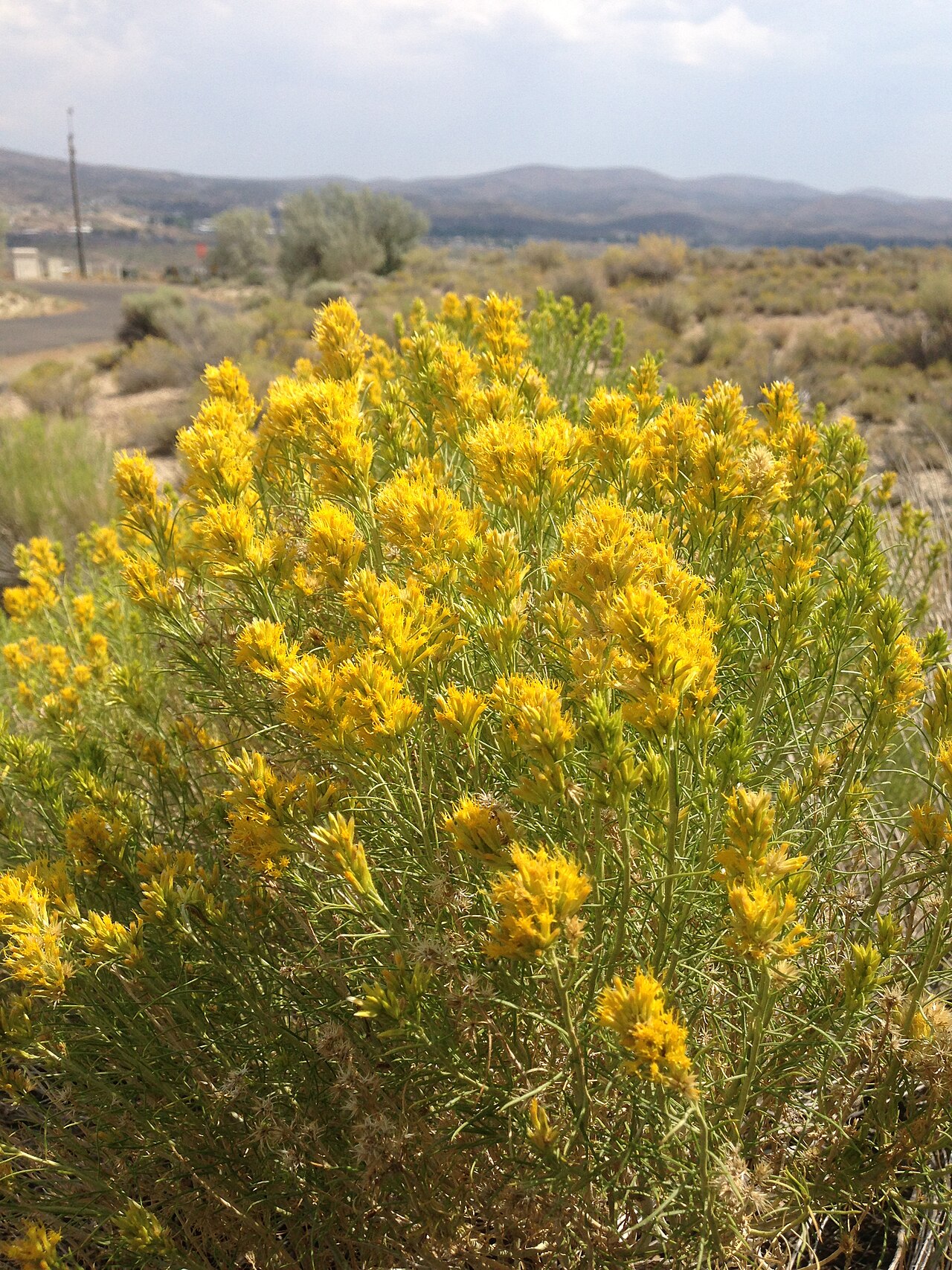
Rubber Rabbitbrush 🚫 Not edible
Ericameria nauseosa · Sunflower family
A rounded gray shrub that erupts in brilliant golden flowers in late summer.
Rubber Rabbitbrush 🚫 Not edible
A rounded gray shrub that erupts in brilliant golden flowers in late summer.
What it is
A rounded gray shrub that erupts in brilliant golden-yellow flowers in late summer and fall, often alongside sagebrush.
How to identify
- Rounded, gray-green shrub with flexible, felt-covered twigs.
- Narrow, thread-like gray leaves.
- Masses of small golden-yellow flower clusters in late summer and fall.
- Faintly rubbery or unpleasant smell when crushed.
Where & when
Dry, disturbed, and open ground, roadsides, and sagebrush flats, low to mid elevation.
🚫 Edibility
Not edible. The species name “nauseosa” is a fair warning.
Lookalikes & cautions
Told from sagebrush by its bright fall flowers and rubbery smell; the plant does contain natural rubber in its tissues.
Field notes
A tough pioneer of disturbed soil and a valuable late-season nectar source for pollinators.
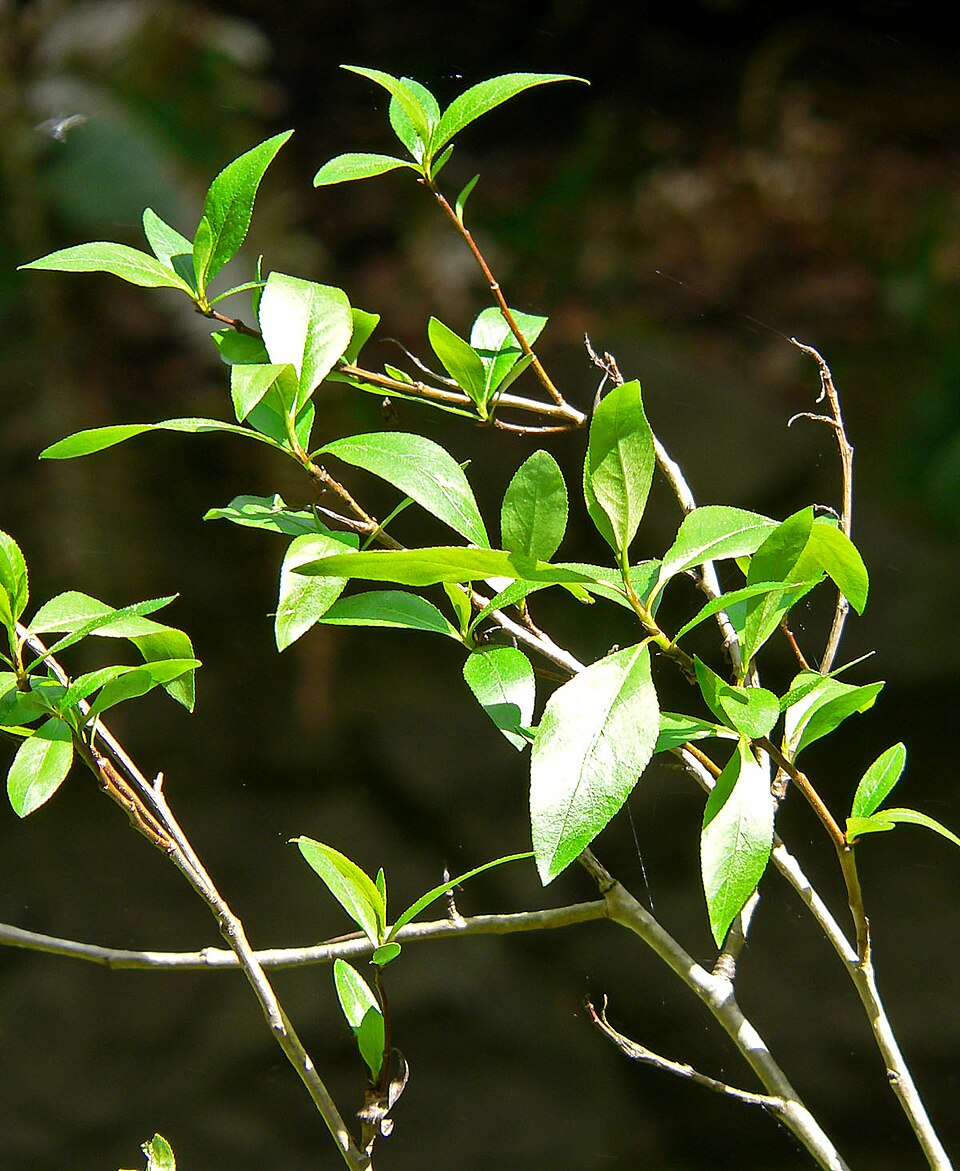
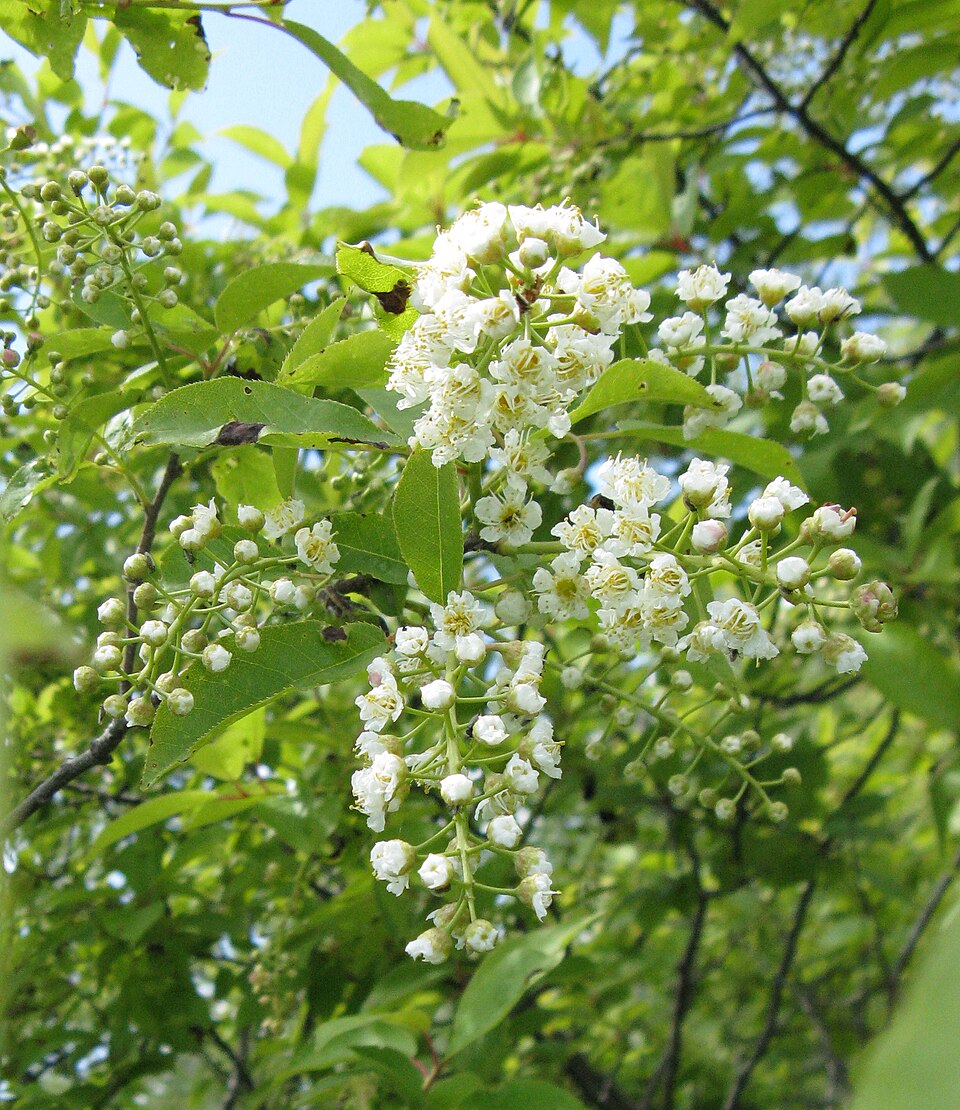
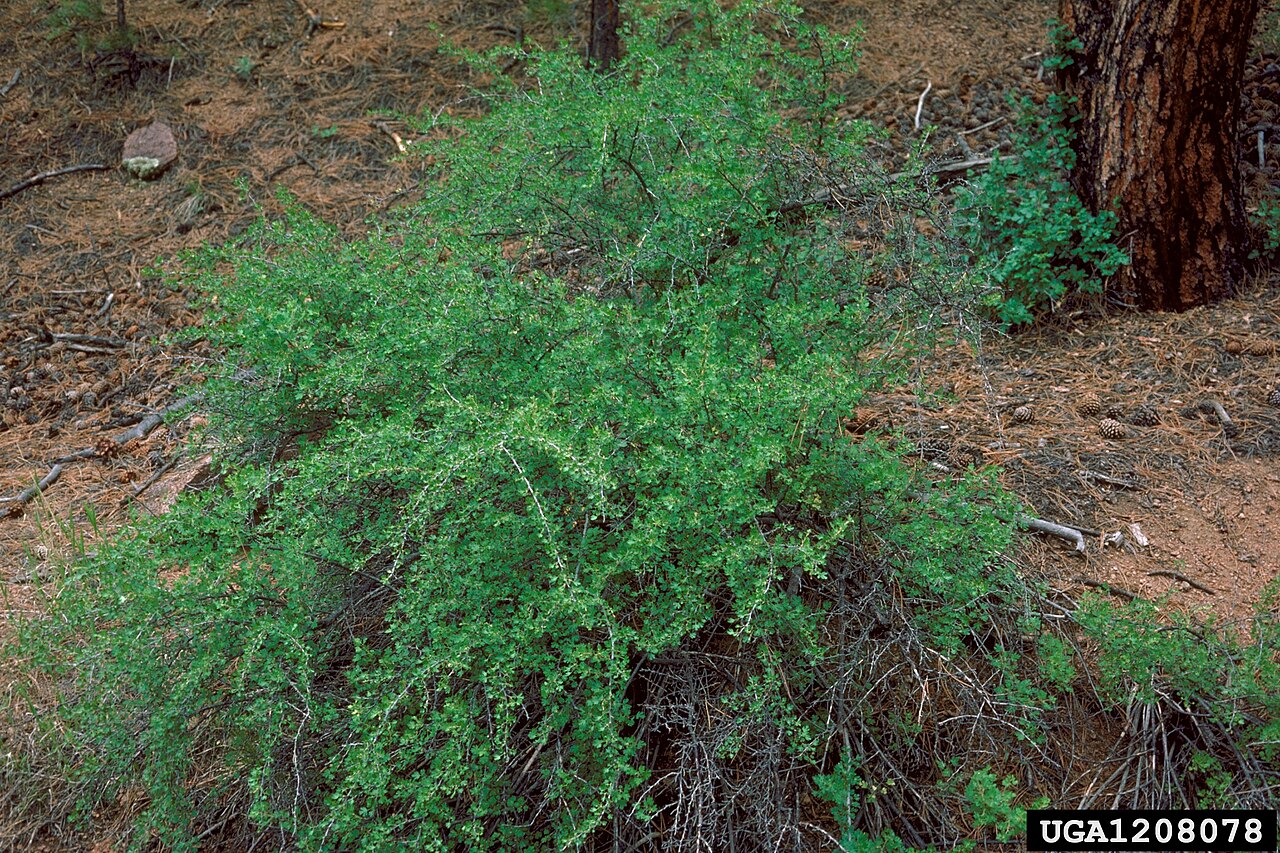
Chokecherry ⚠️ Fruit yes, pits NO
Prunus virginiana · Rose family
Famous jelly fruit, but the pits, leaves, and twigs carry cyanide. Never eat the crushed pits.
Chokecherry ⚠️ Fruit yes, pits NO
Famous jelly fruit, but the pits, leaves, and twigs carry cyanide. Never eat the crushed pits.
What it is
A tall shrub with long white flower spikes in spring and dark cherries in late summer, a classic of Western canyons.
How to identify
- Large shrub or small tree with oval, finely toothed leaves that have two tiny glands where the leaf meets the stalk.
- Long, bottlebrush spikes of small white flowers in spring.
- Clusters of pea-sized cherries ripening dark red to nearly black in late summer.
- Crushed leaves and twigs smell faintly of almond (a cyanide clue).
Where & when
Canyon bottoms, moist draws, fence lines, and forest edges, low to mid elevation.
⚠️ Edibility
The fruit pulp is edible and makes famous jelly and syrup, but the pits, leaves, and twigs contain cyanide. Never eat the crushed pits and never let livestock or kids chew the leaves.
Lookalikes & cautions
Distinguished from the toxic-only buckthorns by the almond smell and rose-family flowers. Always spit or strain the pits; only the flesh is safe.
Field notes
A traditional ingredient in pemmican, where the whole crushed cherries were dried, which destroys the cyanide, then mixed with meat and fat.
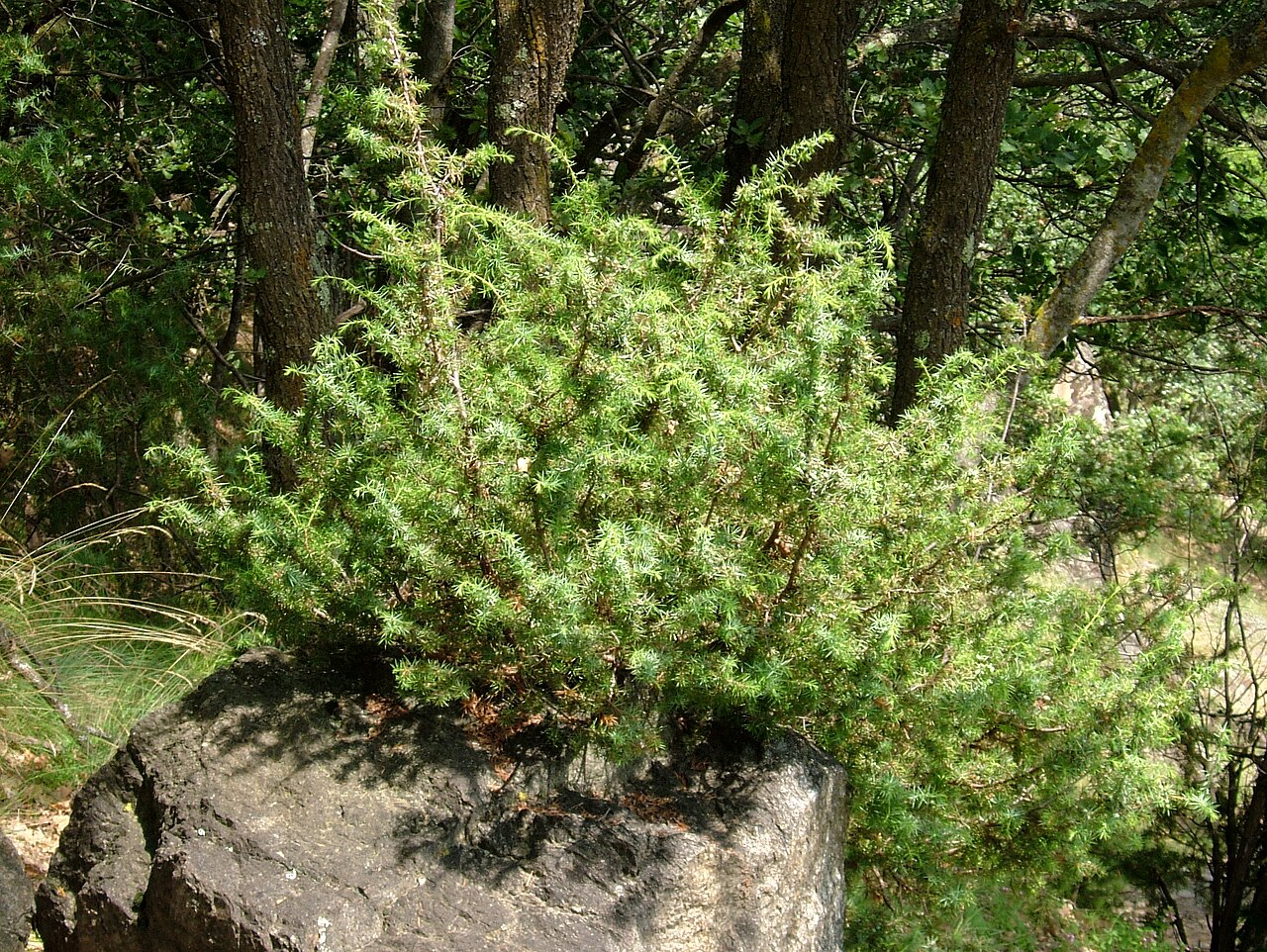
Common Juniper ⚠️ Seasoning only
Juniperus communis · Cypress family
The low, prickly juniper whose berries are the classic gin flavoring. A spice, not a snack.
Common Juniper ⚠️ Seasoning only
The low, prickly juniper whose berries are the classic gin flavoring. A spice, not a snack.
What it is
A low, spreading juniper with sharp needle-like leaves and blue-black berries, the classic gin flavoring.
How to identify
- Low, spreading, mat-forming shrub (not a tree).
- Leaves are sharp, awl-shaped needles in whorls of three, with a white band on top.
- “Berries” are fleshy blue-black cones with a waxy bloom, ripening over two to three years.
- Prickly to handle, unlike the scaly Rocky Mountain juniper.
Where & when
Rocky slopes, ridges, and open forest, mid to high elevation.
⚠️ Edibility
Berries are the true culinary juniper, used a few at a time to flavor game and sauces. Toxic in quantity, and not for pregnant women.
Lookalikes & cautions
Sharp three-part needles and low mat form separate it from the scale-leaved, tree-form Rocky Mountain juniper.
Field notes
The most widely distributed woody plant in the world, circling the entire Northern Hemisphere.
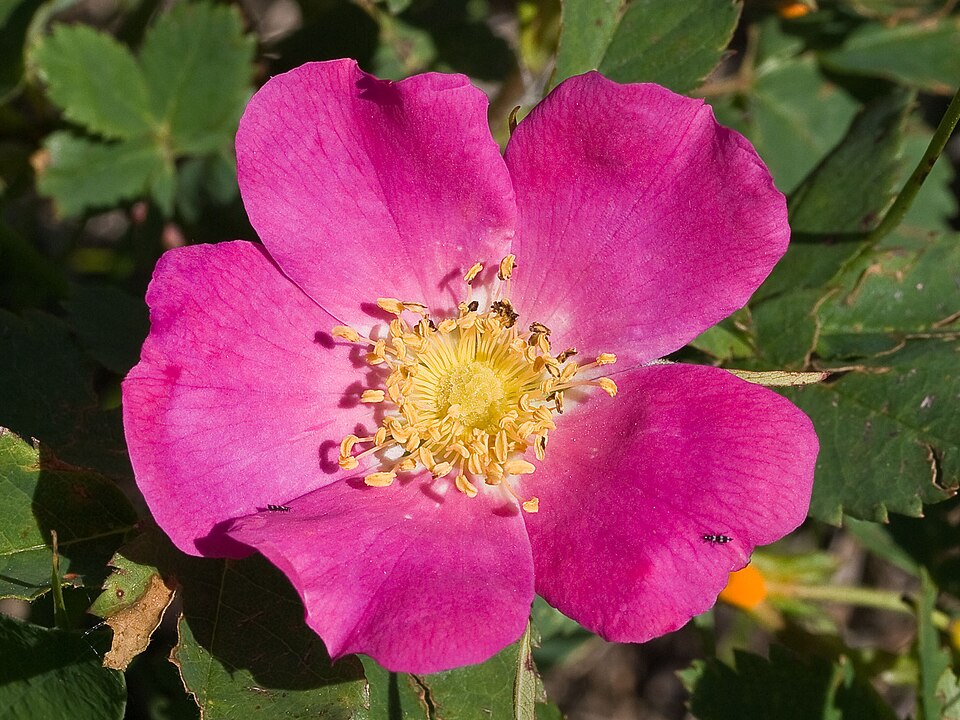
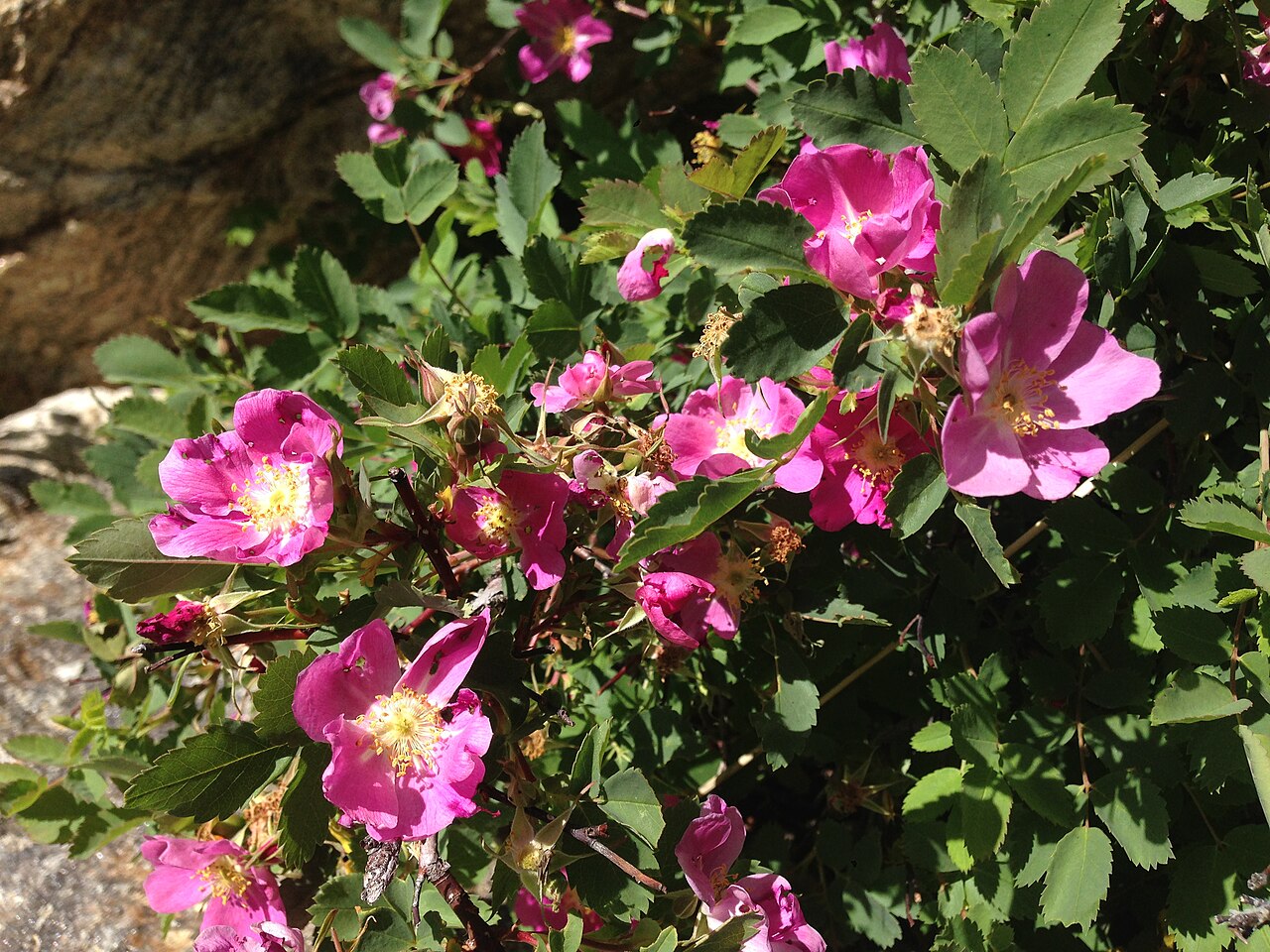
Woods’ Rose ✅ Hips & petals edible
Rosa woodsii · Rose family
The common wild rose; superb vitamin-C rose hips for tea and jam, plus edible petals.
Woods’ Rose ✅ Hips & petals edible
The common wild rose; superb vitamin-C rose hips for tea and jam, plus edible petals.


What it is
The common wild rose of the region, with pink five-petaled flowers in summer and red-orange hips that hang on through winter.
How to identify
- Thicket-forming shrub with straight or slightly curved thorns.
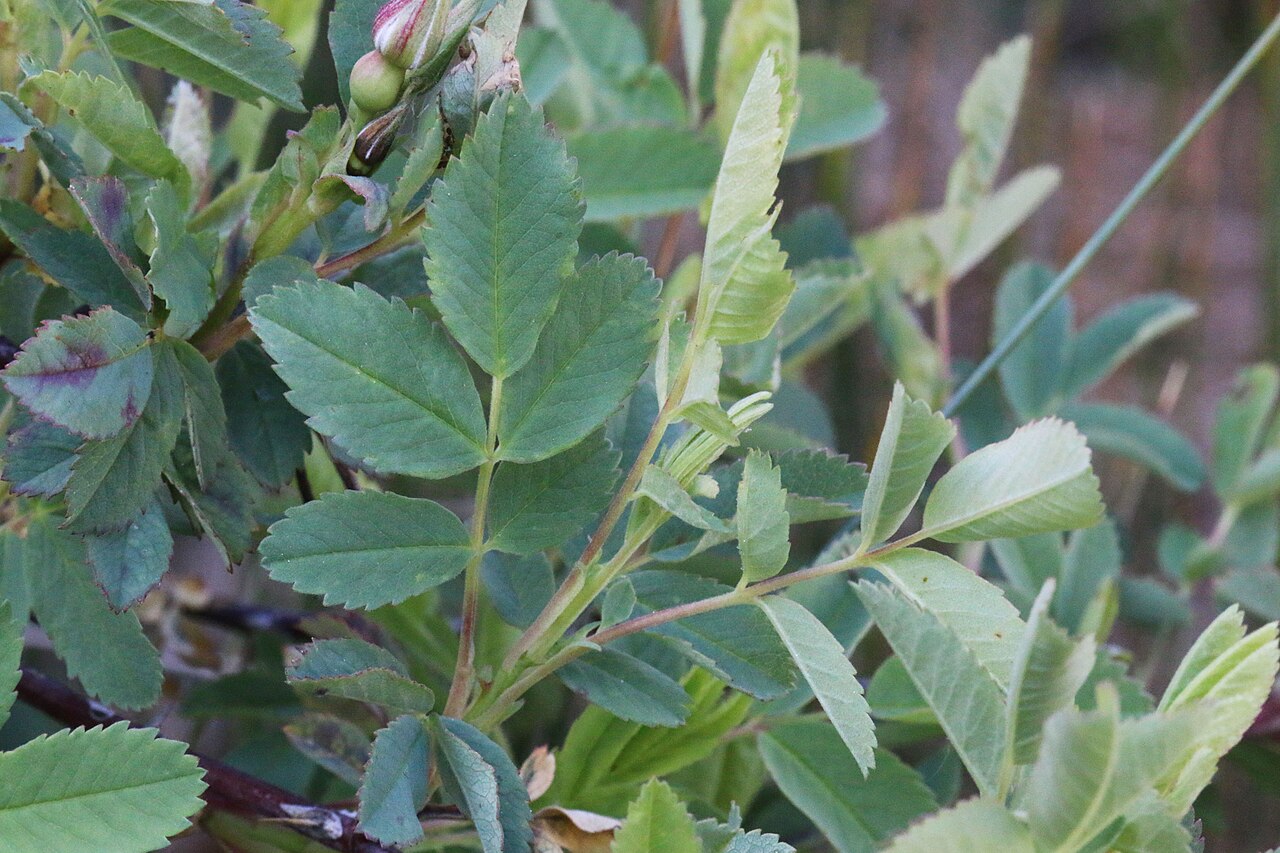
- Leaves pinnately compound, with 5 to 9 toothed leaflets.
- Fragrant pink five-petaled flowers in early to mid summer.
- Round to oval red-orange hips that persist into winter.
Where & when
Streamsides, moist slopes, thickets, and forest edges, low to mid elevation.
✅ Edibility
Rose hips are a superb source of vitamin C for tea or jam (strain out the irritating inner seed hairs); the petals are edible too.
Lookalikes & cautions
All wild roses are safe; just distinguish the plant from thorny non-roses by its compound leaves and five-petaled flowers.
Field notes
The hips hold their vitamin C through winter, making them a valuable cold-season wild food and wildlife staple.
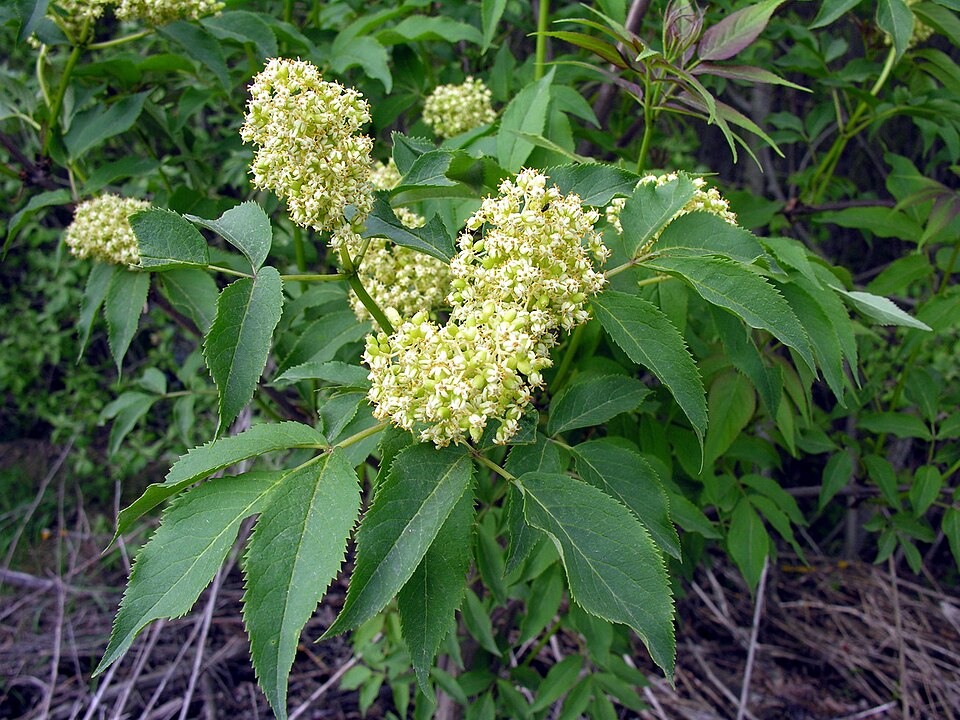
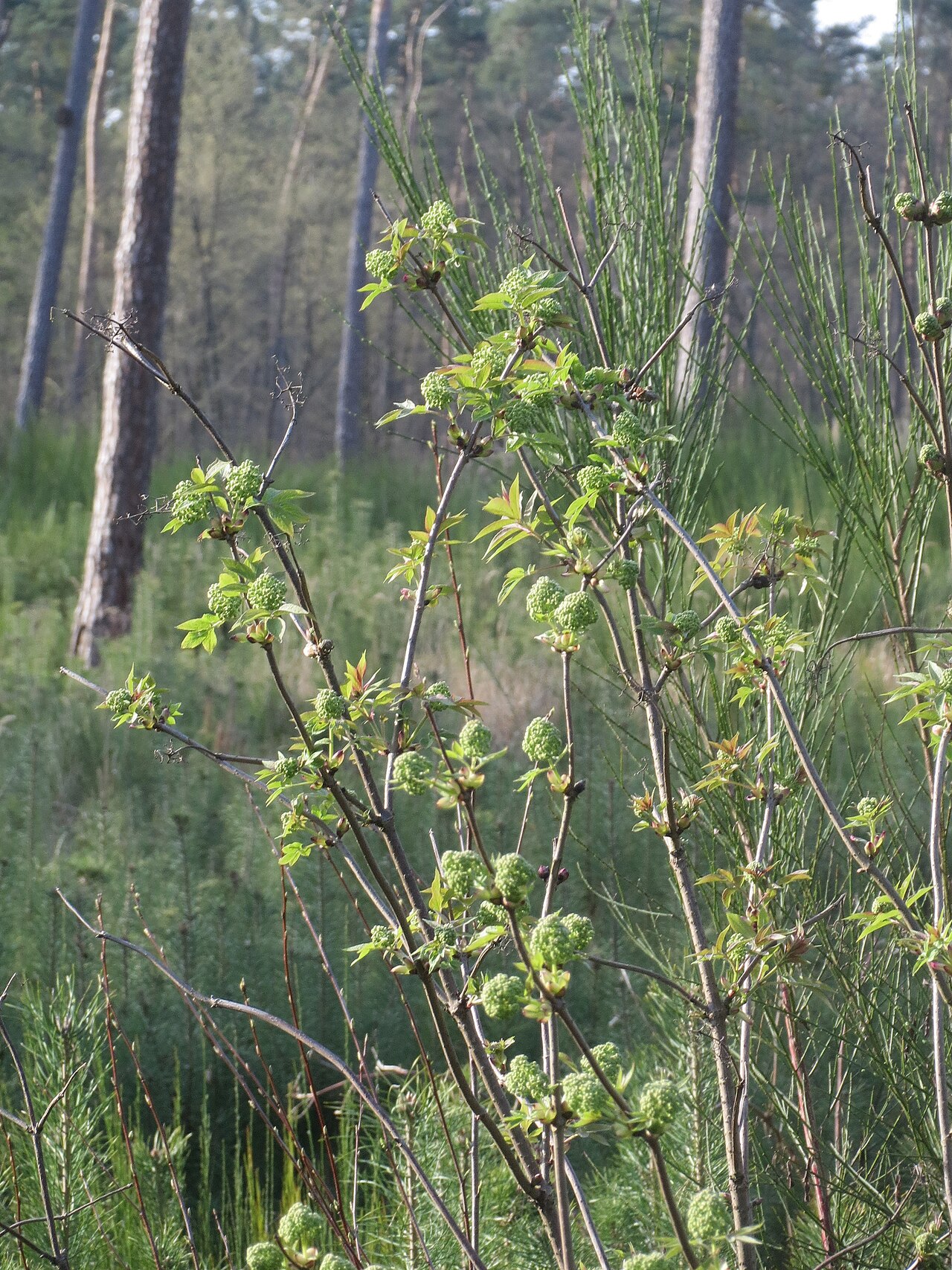
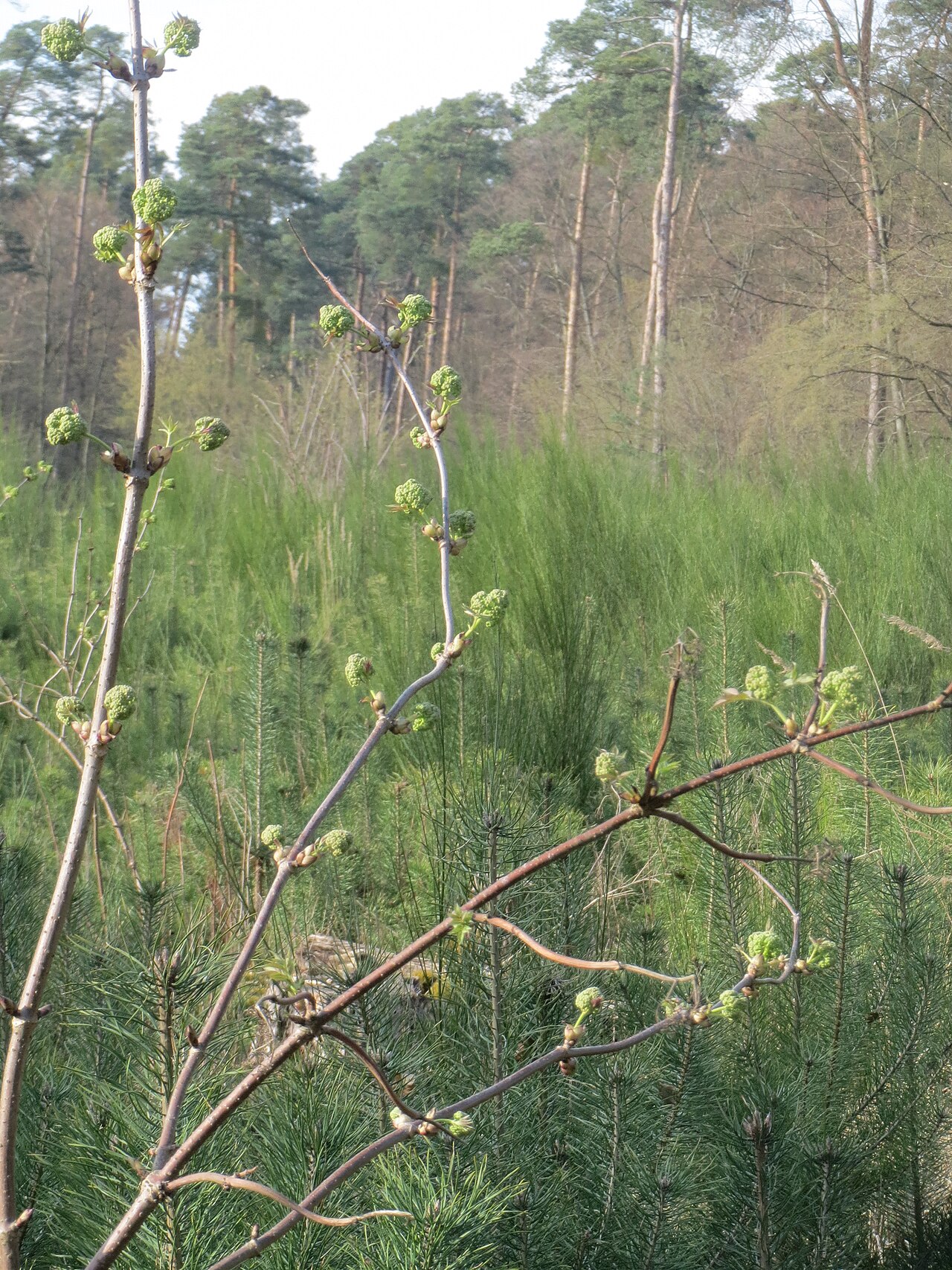
Red Elderberry ☠️ Avoid
Sambucus racemosa · Moschatel family
The RED-berried elder is toxic; seeds, stems, and leaves are poisonous. Do not confuse with blue.
Red Elderberry ☠️ Avoid
The RED-berried elder is toxic; seeds, stems, and leaves are poisonous. Do not confuse with blue.
What it is
A shrub with feather-like compound leaves and dome-shaped clusters of bright red berries in summer.
How to identify
- Shrub with opposite, pinnately compound leaves of 5 to 7 toothed leaflets.
- Creamy flowers in a rounded, dome or pyramid-shaped cluster (not flat-topped).
- Berries bright red, in dense domed clusters.
- Soft pithy stems with an unpleasant smell when broken.
Where & when
Moist forest, streamsides, and clearings, mid to high elevation.
☠️ Edibility
The RED-berried elder is toxic raw, and the seeds, stems, and leaves are poisonous. Best avoided entirely; do not confuse with the blue elderberry.
Lookalikes & cautions
The key split: red, dome-shaped clusters here vs the blue, flat-topped clusters of edible blue elderberry. When in doubt, skip red.
Field notes
Birds eat the red berries safely, but they are not a safe human food.
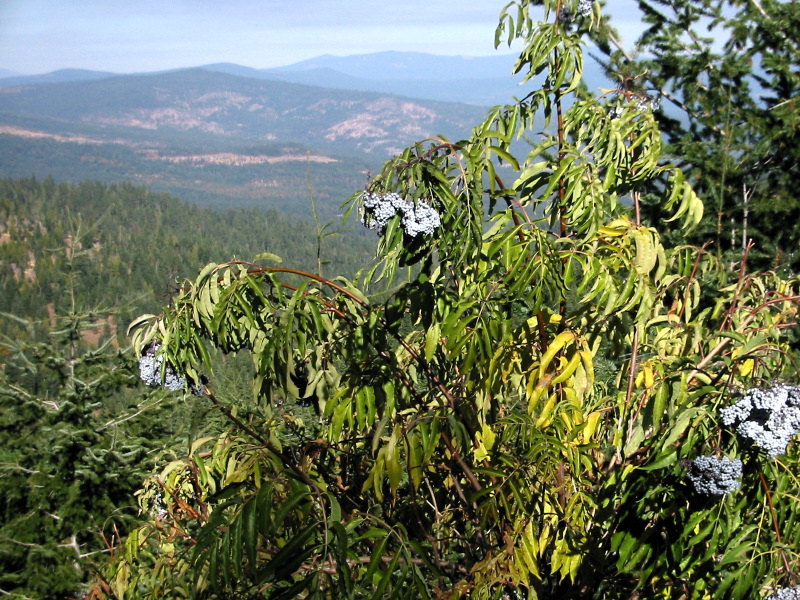
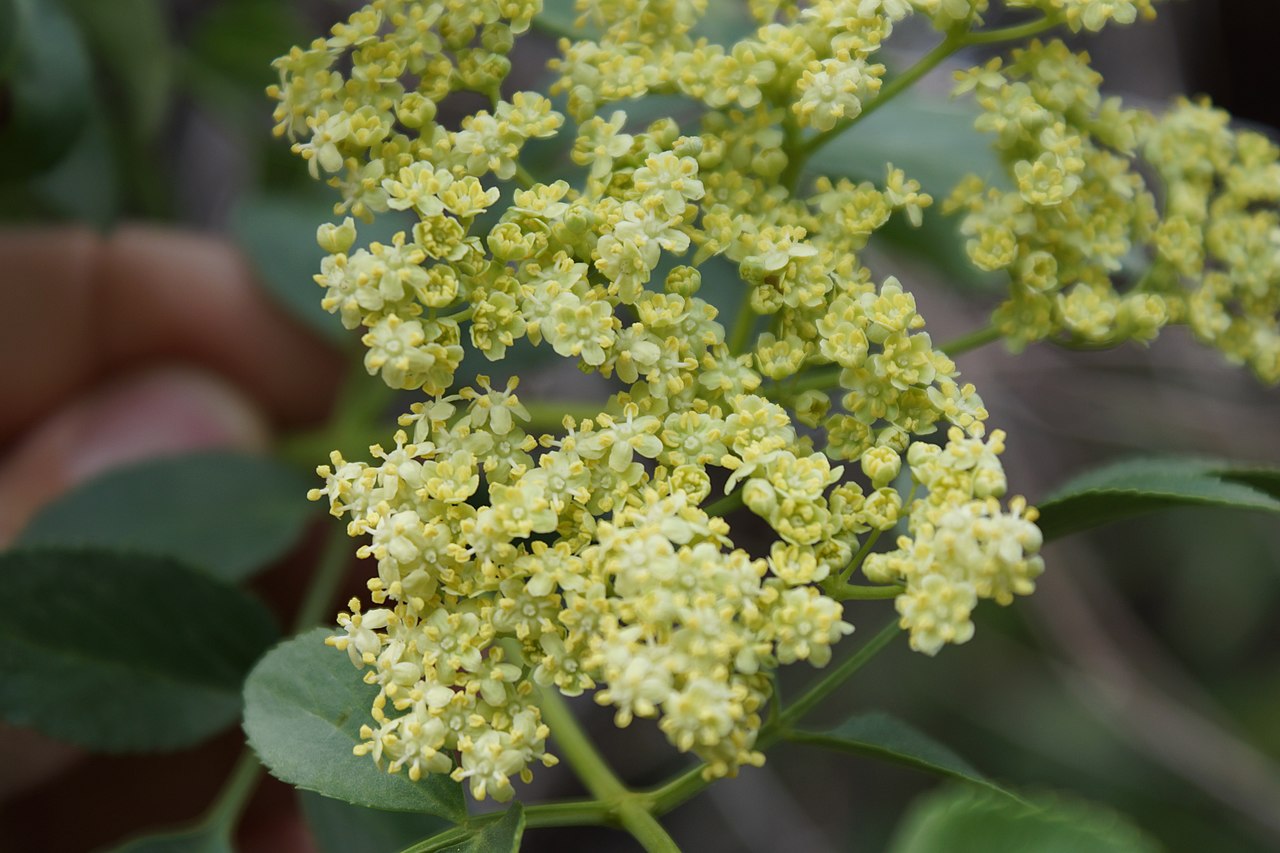
Blue Elderberry ⚠️ Cook the ripe berries
Sambucus cerulea · Moschatel family
Cherished pie and syrup fruit, but only cooked; raw berries and all green parts are toxic.
Blue Elderberry ⚠️ Cook the ripe berries
Cherished pie and syrup fruit, but only cooked; raw berries and all green parts are toxic.
What it is
A shrub with flat-topped cream flower clusters, then powdery blue berries, a cherished pie, syrup, and wine fruit and different from the red kind.
How to identify
- Shrub to small tree with opposite, pinnately compound leaves.
- Flowers cream-white in a flat-topped cluster.
- Berries ripen powdery blue to nearly black, in flat-topped clusters, with a waxy bloom.
- Pithy stems.
Where & when
Open slopes, streamsides, and forest edges, low to mid elevation.
⚠️ Edibility
Ripe blue and purple berries are edible only when cooked; raw berries, plus all stems, leaves, and unripe fruit, cause nausea and are toxic.
Lookalikes & cautions
Flat-topped, blue berry clusters separate it from the toxic red elderberry’s domed red clusters. Always cook, and never eat the green parts.
Field notes
A traditional and modern favorite for jelly, syrup, and wine; the hollow stems were used for flutes and were carefully cleared of their toxic pith.
Curl-leaf Mountain Mahogany 🚫 Not edible
Cercocarpus ledifolius · Rose family
A gnarled evergreen of dry ridges with feathery corkscrew seed tails and iron-hard wood.
Curl-leaf Mountain Mahogany 🚫 Not edible
A gnarled evergreen of dry ridges with feathery corkscrew seed tails and iron-hard wood.
What it is
A gnarled evergreen shrub-tree of dry rocky ridges, known for feathery corkscrew seed tails and extremely hard, dense wood.
How to identify
- Small evergreen tree or shrub, often twisted and picturesque on rocky ground.
- Leaves narrow, leathery, dark green, with edges rolled under (like a small Labrador-tea leaf).
- Seeds carry a long, feathery, corkscrew-twisted tail that catches the light.
- Wood so dense it barely floats.
Where & when
Dry, rocky ridges, slopes, and canyon rims, mid elevation.
🚫 Edibility
Not a food plant. Valued as fuel wood and wildlife browse.
Lookalikes & cautions
The rolled-edge evergreen leaves and feathery seed tails are distinctive; not to be confused with true mahogany, to which it is unrelated.
Field notes
Among the hardest, hottest-burning firewoods in the West; slow-growing plants can be centuries old.
Shrubs
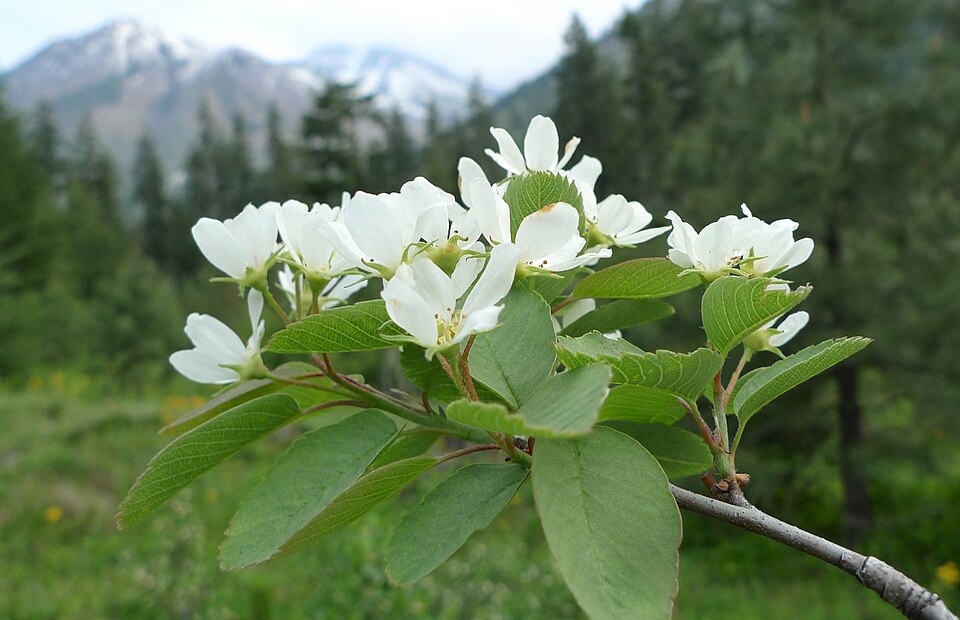
Serviceberry (Saskatoon) ✅ Easily edible
Amelanchier alnifolia · Rose family
One of the best wild fruits here: sweet, nutty blue berries, eaten fresh or dried.
Serviceberry (Saskatoon) ✅ Easily edible
One of the best wild fruits here: sweet, nutty blue berries, eaten fresh or dried.


What it is
A shrub with showy white flowers in spring and blue-purple, blueberry-like fruit in mid-summer, a cornerstone of Native diets.
How to identify
- Shrub to small tree with smooth gray bark and oval leaves toothed mainly on the top half.
- Showy white five-petaled flowers with narrow, strappy petals in early spring, before most shrubs leaf out.
- Fruit blue-purple with a waxy bloom, crowned by a tiny five-pointed star at the tip (like a mini apple).
- Fruit is a pome, not a true berry.
Where & when
Open slopes, forest edges, canyons, and streamsides, low to mid elevation.
✅ Edibility
One of the best wild fruits here: sweet, nutty, eaten fresh or dried. A true easy edible.
Lookalikes & cautions
The star-tipped blue fruit and early strappy-petaled white flowers are distinctive; all serviceberries are edible.
Field notes
Called Saskatoon in Canada; the dried fruit was pounded into pemmican and is still prized for pies and jam.
Snowbrush Ceanothus 🚫 Not edible
Ceanothus velutinus · Buckthorn family
A glossy, balsam-scented evergreen with frothy white flower clusters that lather into soap.
Snowbrush Ceanothus 🚫 Not edible
A glossy, balsam-scented evergreen with frothy white flower clusters that lather into soap.


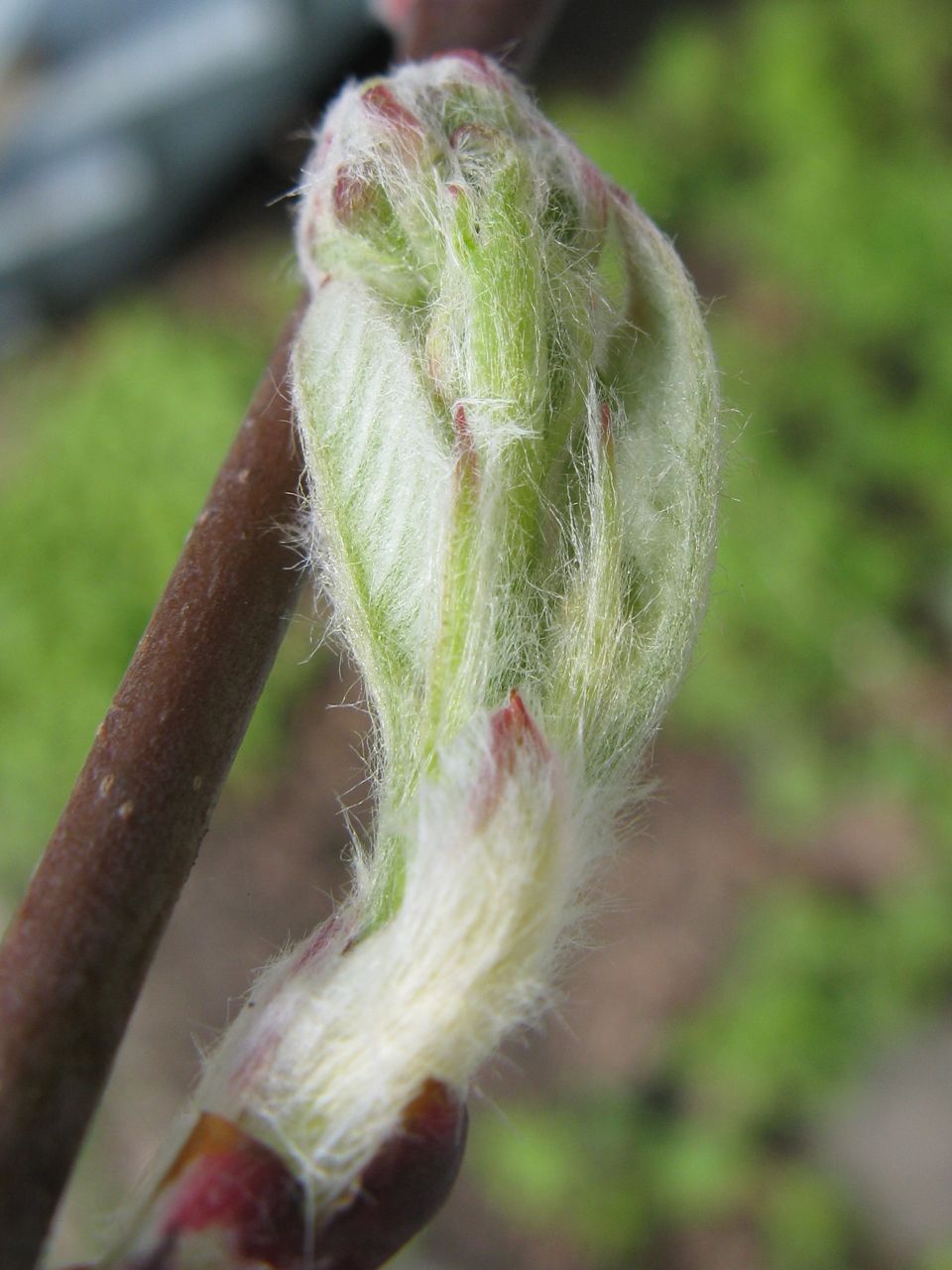
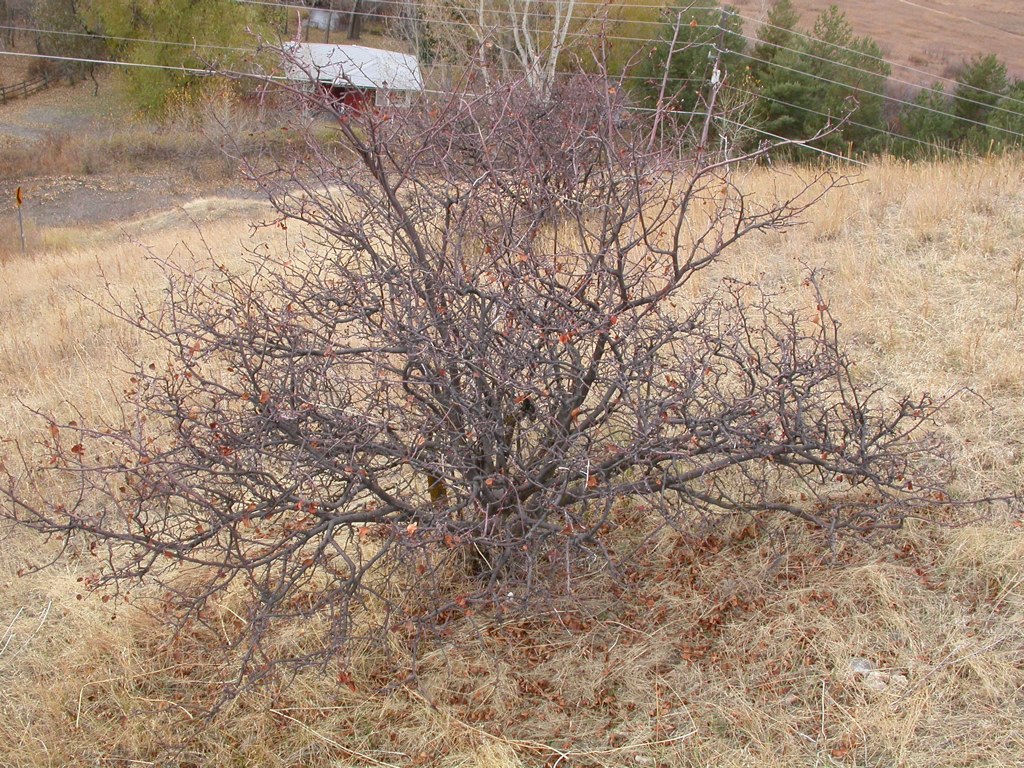
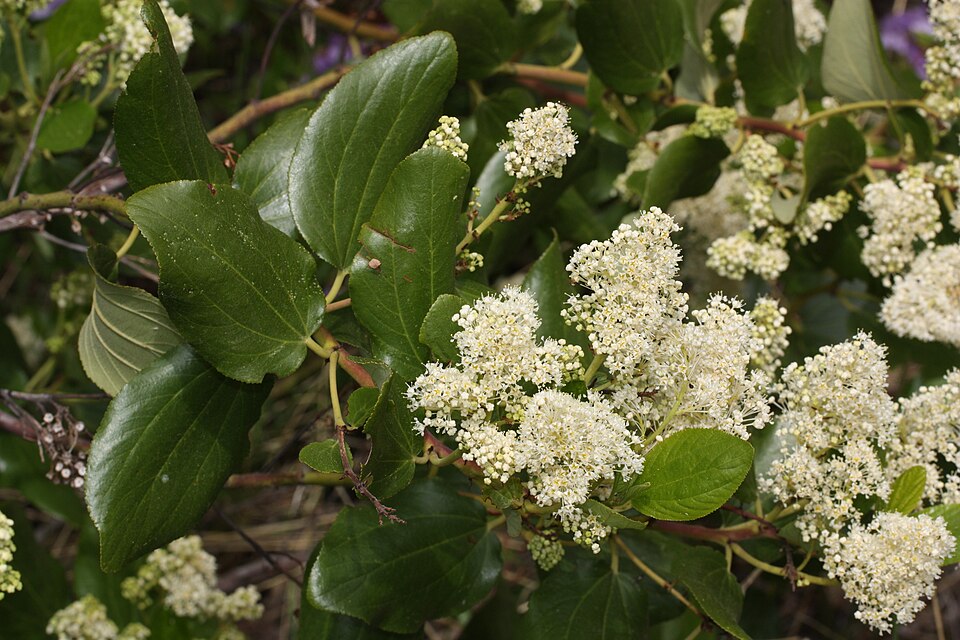
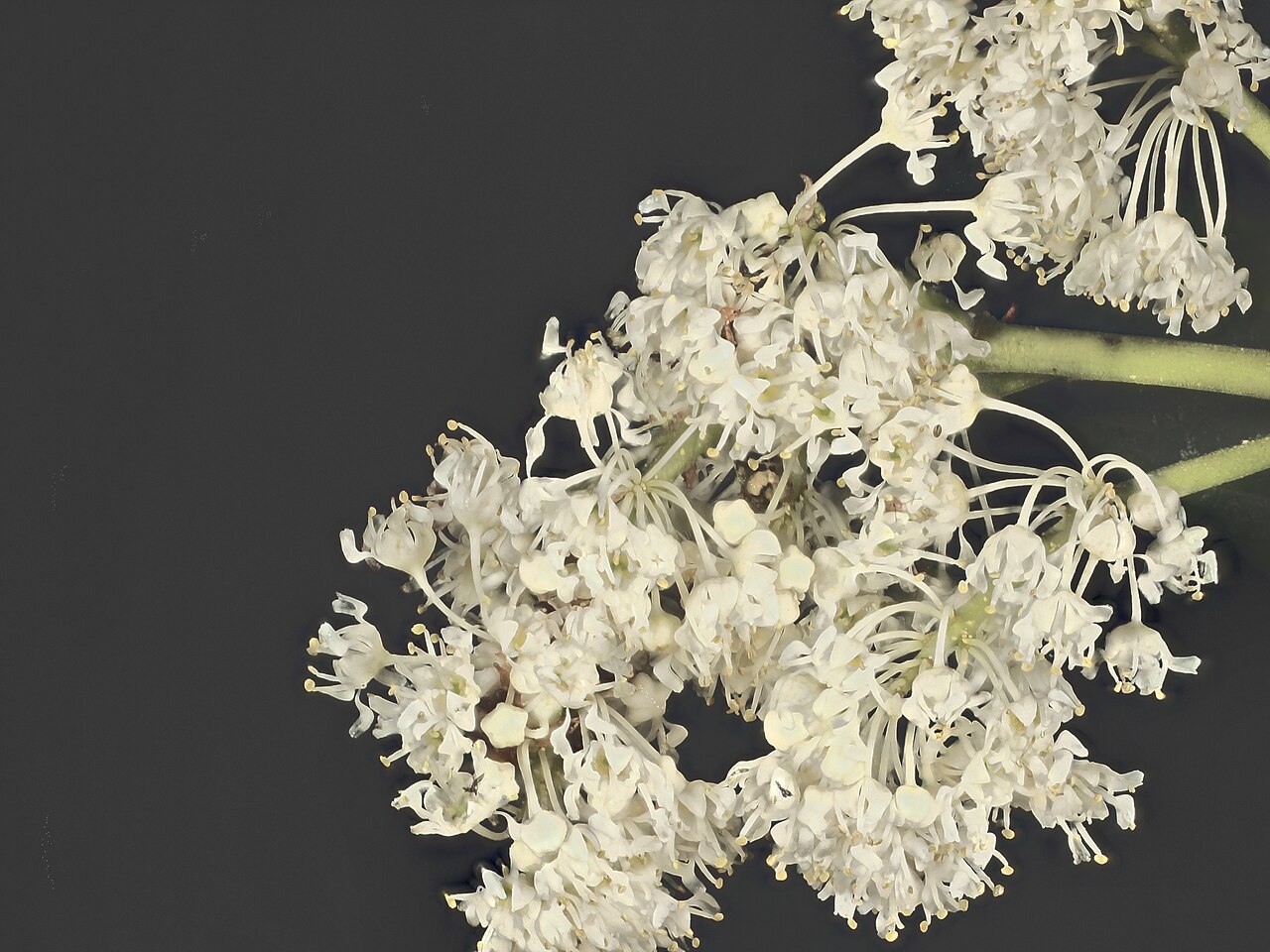
What it is
A glossy-leaved evergreen shrub with a sticky, balsam smell and frothy clusters of tiny white flowers that fixes nitrogen and thrives after fire.
How to identify
- Rounded evergreen shrub with shiny, sticky, aromatic leaves (three main veins from the base).
- Leaves dark green and varnished-looking above, pale and felty beneath.
- Frothy clusters of tiny white flowers in early summer.
- Strong balsam or bay-rum smell, especially in heat.
Where & when
Open slopes, burns, and clearings, mid elevation; often carpets recently burned ground.
🚫 Edibility
Not a food, though the flowers lather into a soap and the leaves make a tea.
Lookalikes & cautions
The varnished, three-veined aromatic leaves are distinctive; not to be eaten despite the pleasant smell.
Field notes
A fire-follower whose seeds can lie dormant in the soil for decades and sprout after a burn; it enriches soil by fixing nitrogen.
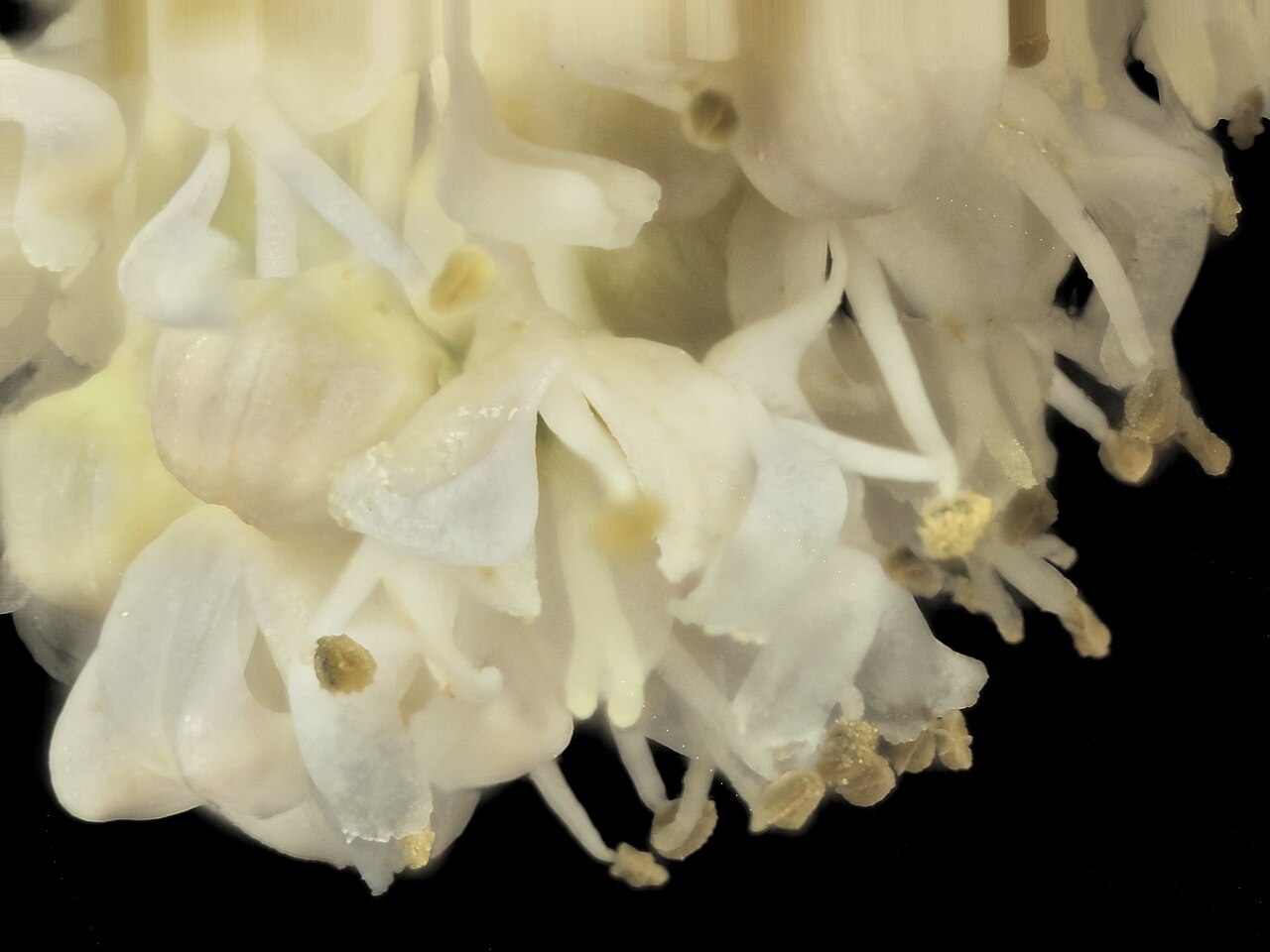
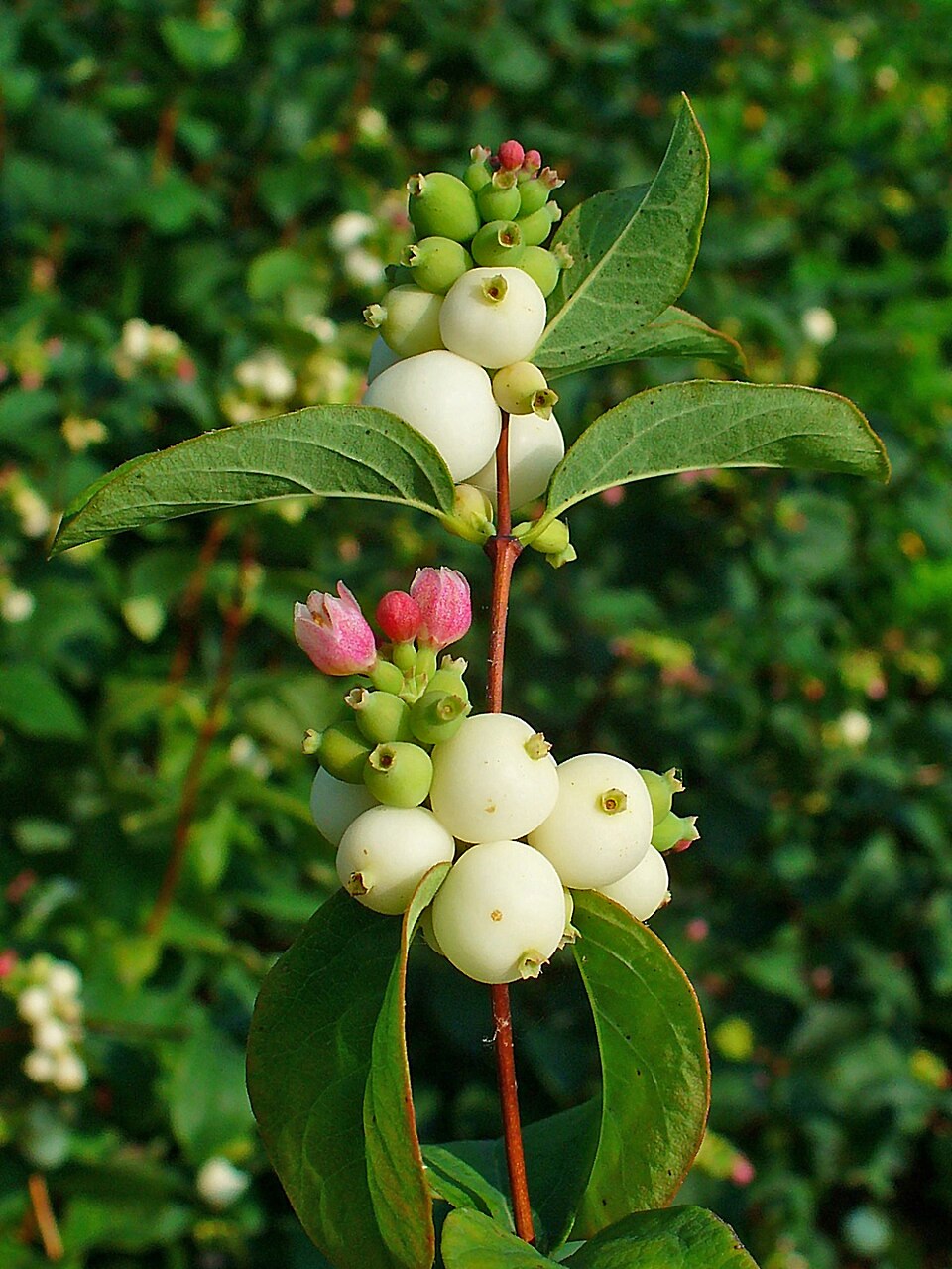
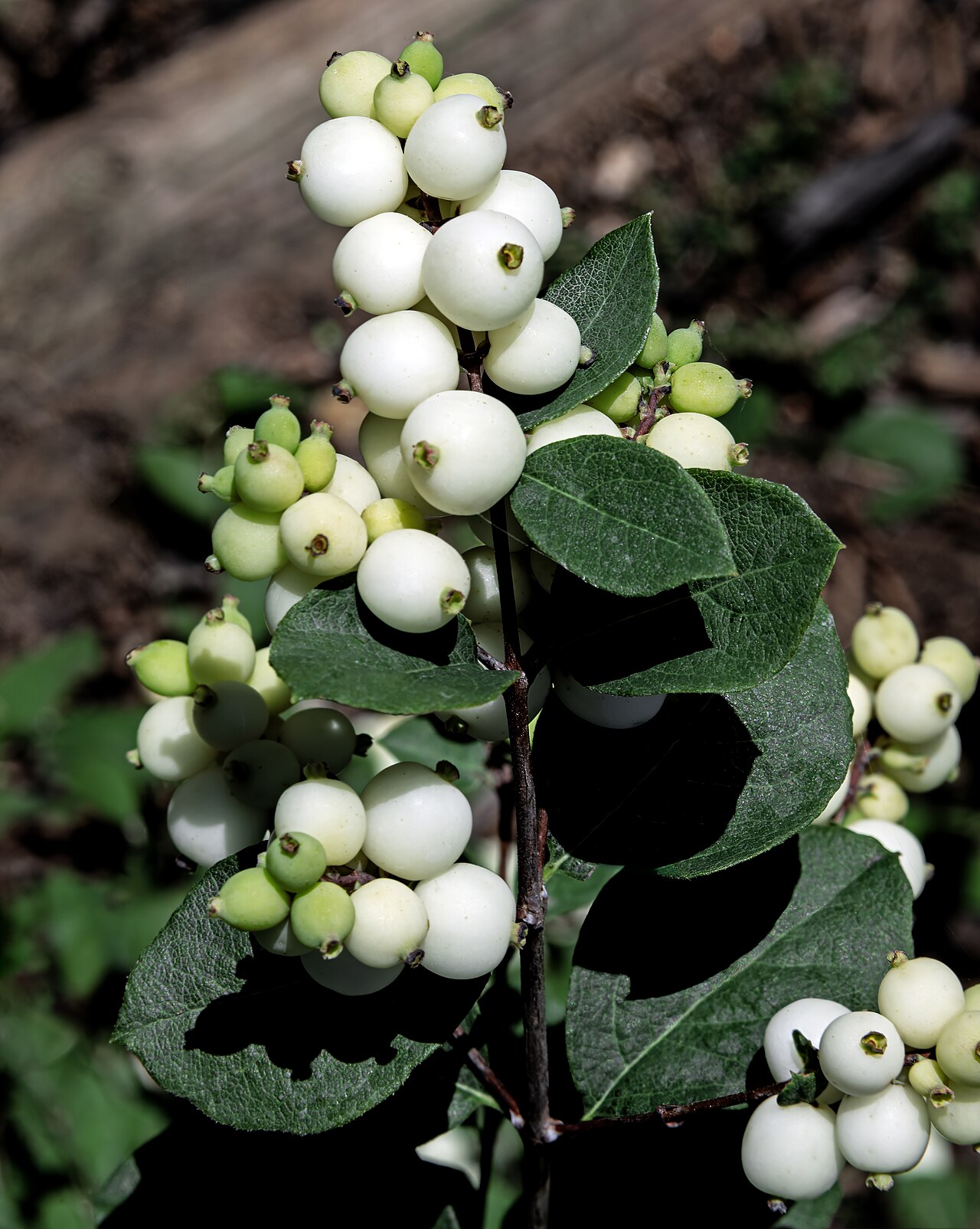
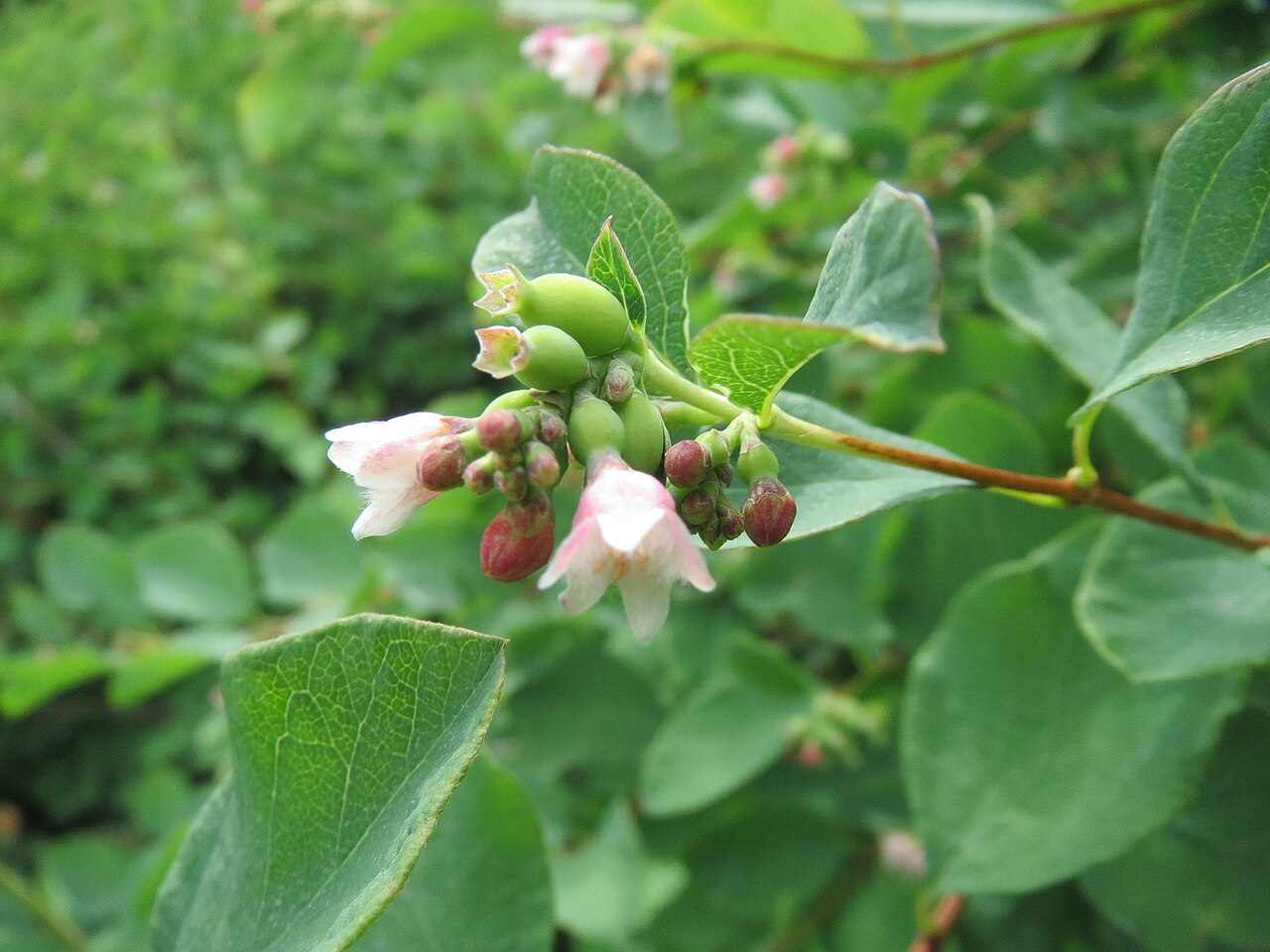
Common Snowberry ☠️ Poisonous
Symphoricarpos albus · Honeysuckle family
Tempting waxy WHITE berries that persist into winter, and they are poisonous. Do not eat.
Common Snowberry ☠️ Poisonous
Tempting waxy WHITE berries that persist into winter, and they are poisonous. Do not eat.
What it is
A thin-stemmed shrub with pinkish bell flowers and clusters of distinctive waxy white berries that persist into winter.
How to identify
- Slender, twiggy shrub, often forming thickets.
- Small oval opposite leaves, sometimes lobed on young shoots.
- Tiny pink bell-shaped flowers in summer.
- Clusters of soft, waxy, pure white berries that last into winter.
Where & when
Forest edges, streamsides, slopes, and thickets, low to mid elevation.
☠️ Edibility
The white berries are poisonous and cause vomiting and dizziness. Tempting-looking and common on trails; do not eat.
Lookalikes & cautions
The waxy white berries are unmistakable; no edible native berry here is chalk-white in soft clusters like this.
Field notes
Birds eat the berries in late winter, but they cause gastrointestinal distress in people; some tribes used them as a soap or medicine, not food.
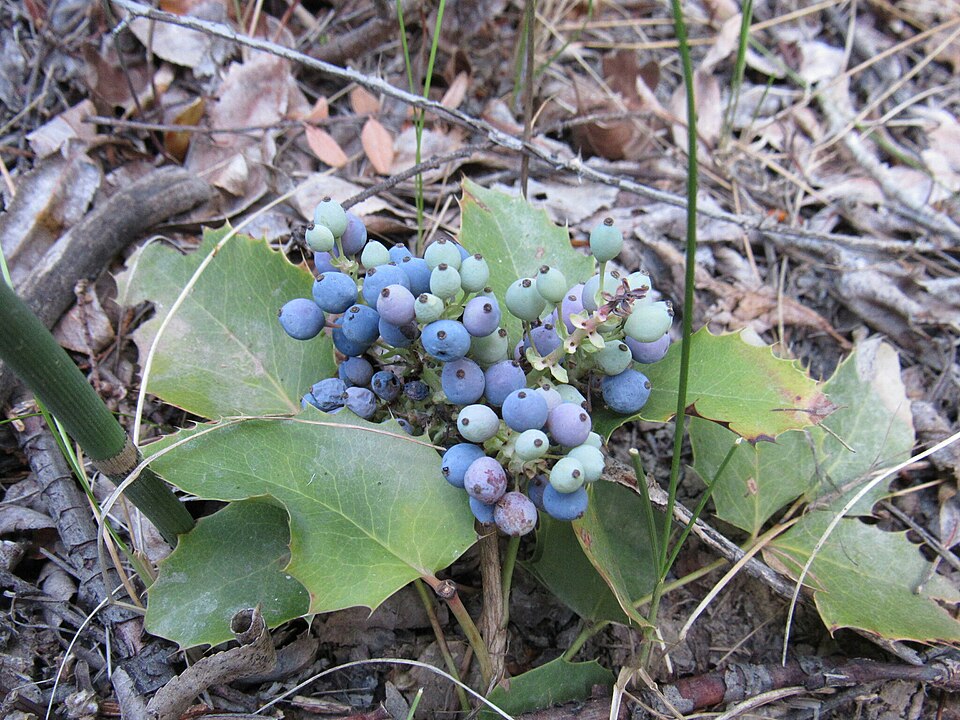
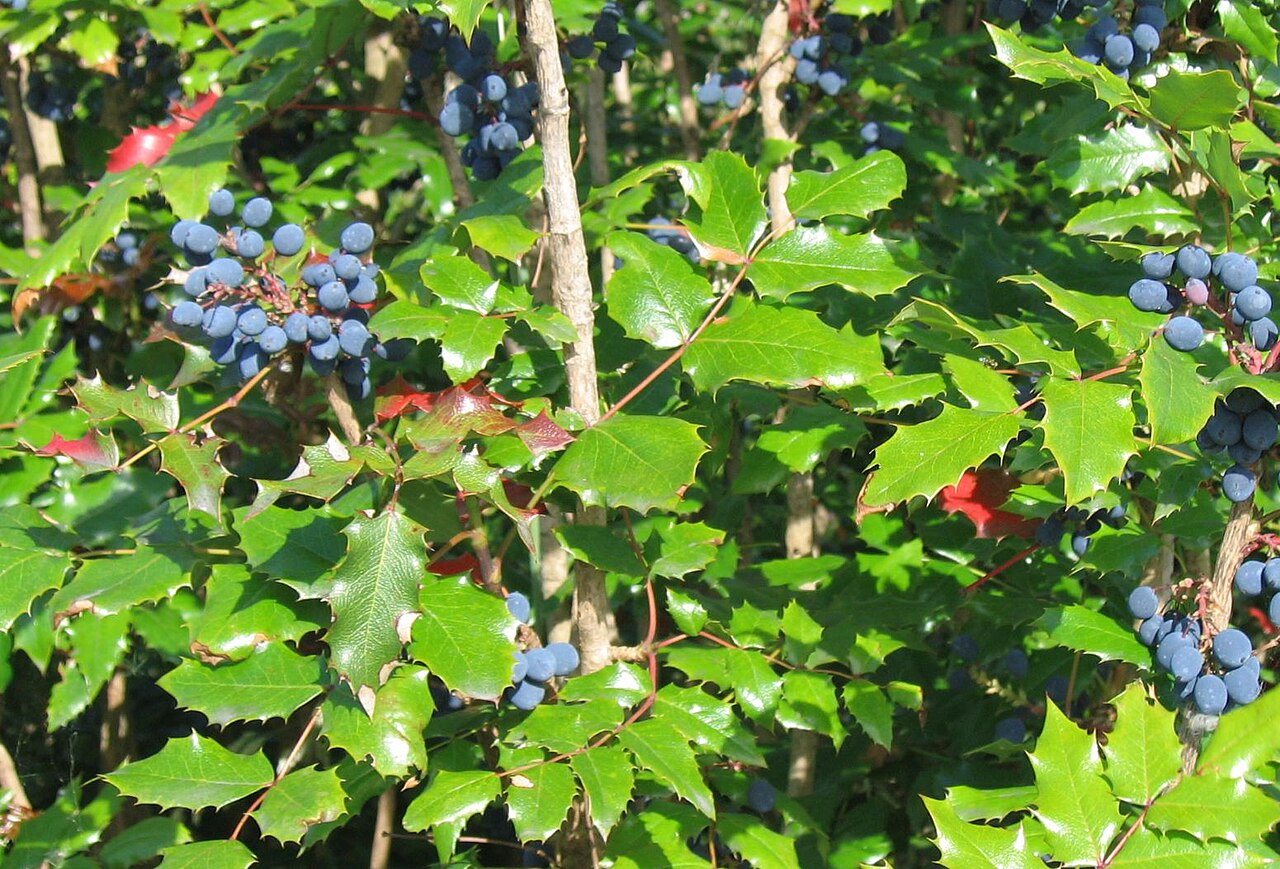
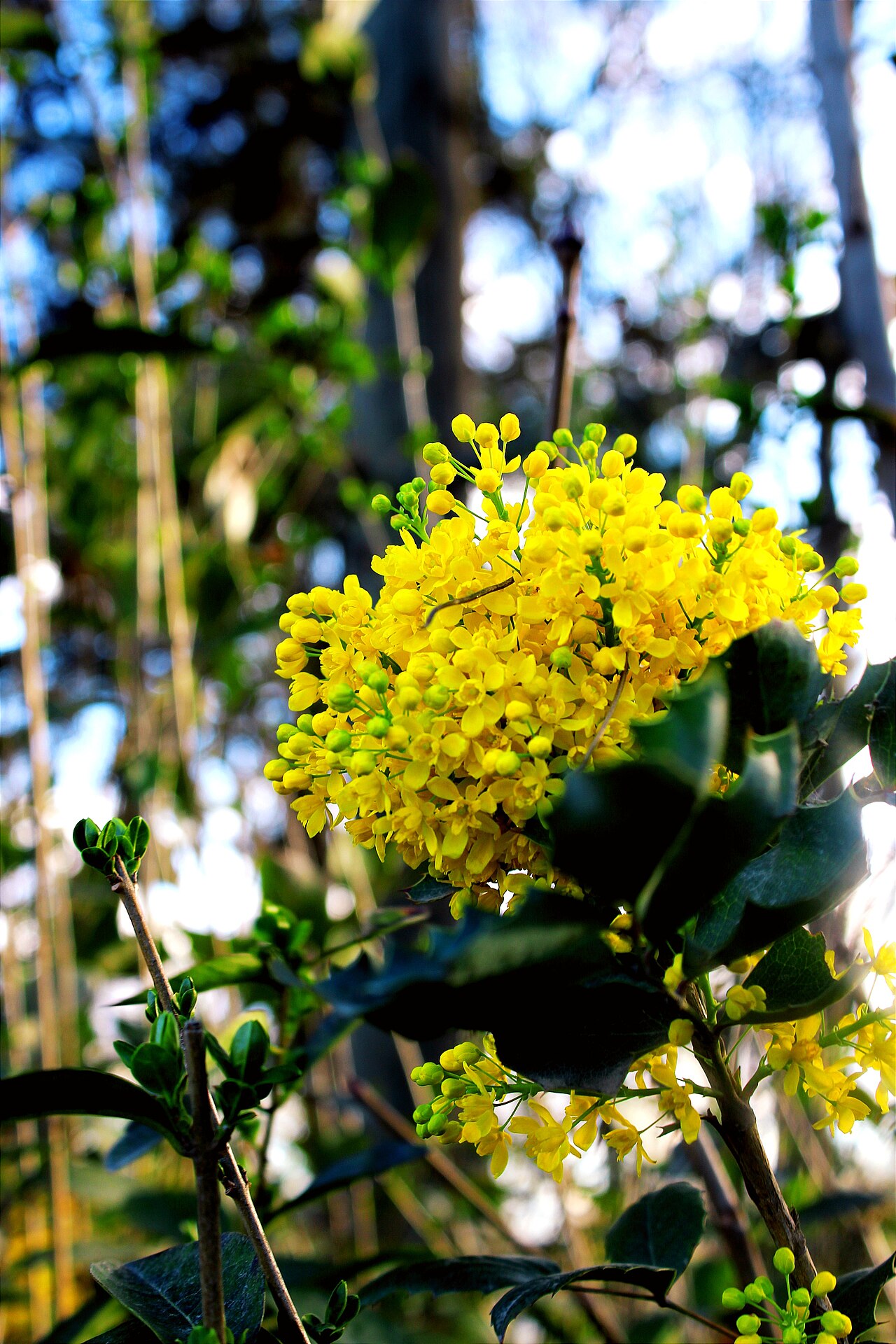
Creeping Oregon Grape ✅ Tart but edible
Mahonia repens · Barberry family
A low holly-like shrub with tart blue berries (great jelly) and a bright yellow root.
Creeping Oregon Grape ✅ Tart but edible
A low holly-like shrub with tart blue berries (great jelly) and a bright yellow root.


What it is
A low, holly-like shrub with spiny evergreen leaflets, yellow flowers, and clusters of dusty-blue berries, with a bright yellow inner root.
How to identify
- Low, creeping evergreen, usually under a foot tall.
- Leaves pinnately compound with 5 to 7 stiff, spiny-toothed, holly-like leaflets that often turn purplish-red.
- Clusters of bright yellow flowers in spring.
- Dusty-blue, grape-like berries; the root and inner bark are vivid yellow.
Where & when
Dry forest floors, foothills, and open slopes, low to mid elevation.
✅ Edibility
Berries are edible, very tart, and make excellent jelly and lemonade. The root is a well-known folk medicine.
Lookalikes & cautions
The holly-like spiny leaflets and yellow inner wood are diagnostic; the tart blue berries are safe.
Field notes
The bright yellow root contains berberine and was widely used as a medicinal and a natural dye.
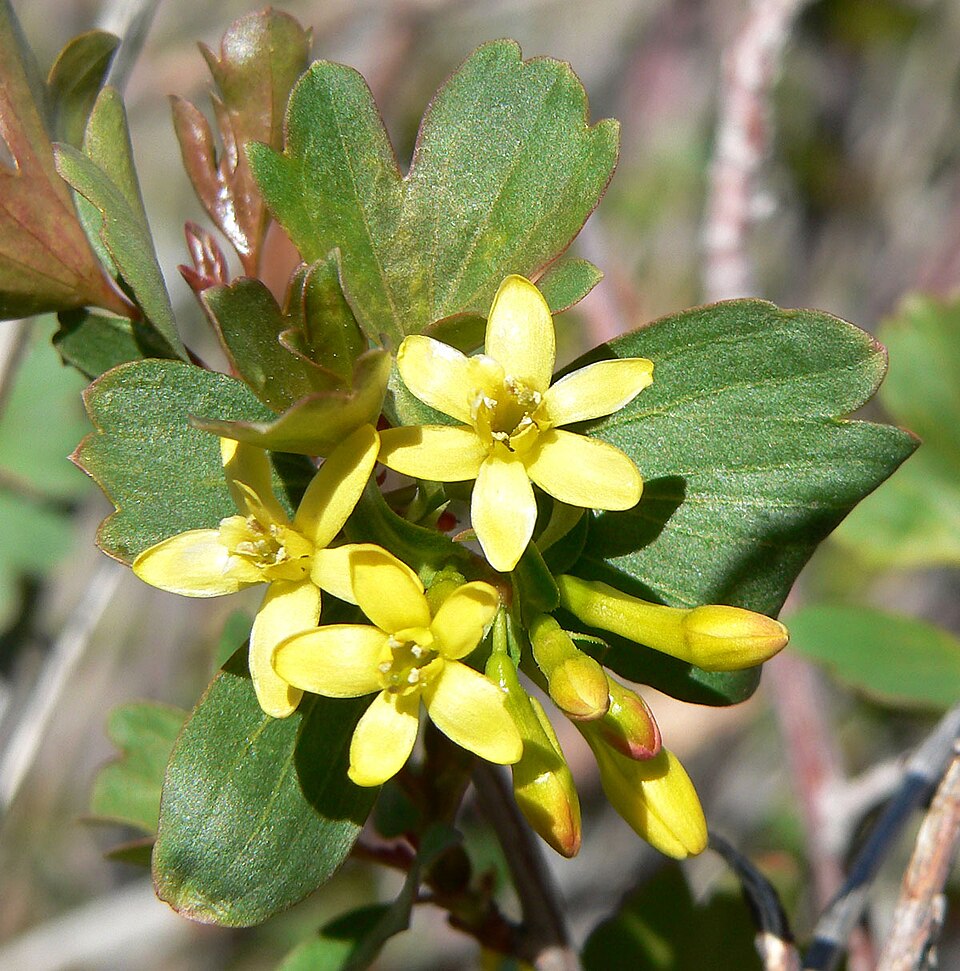
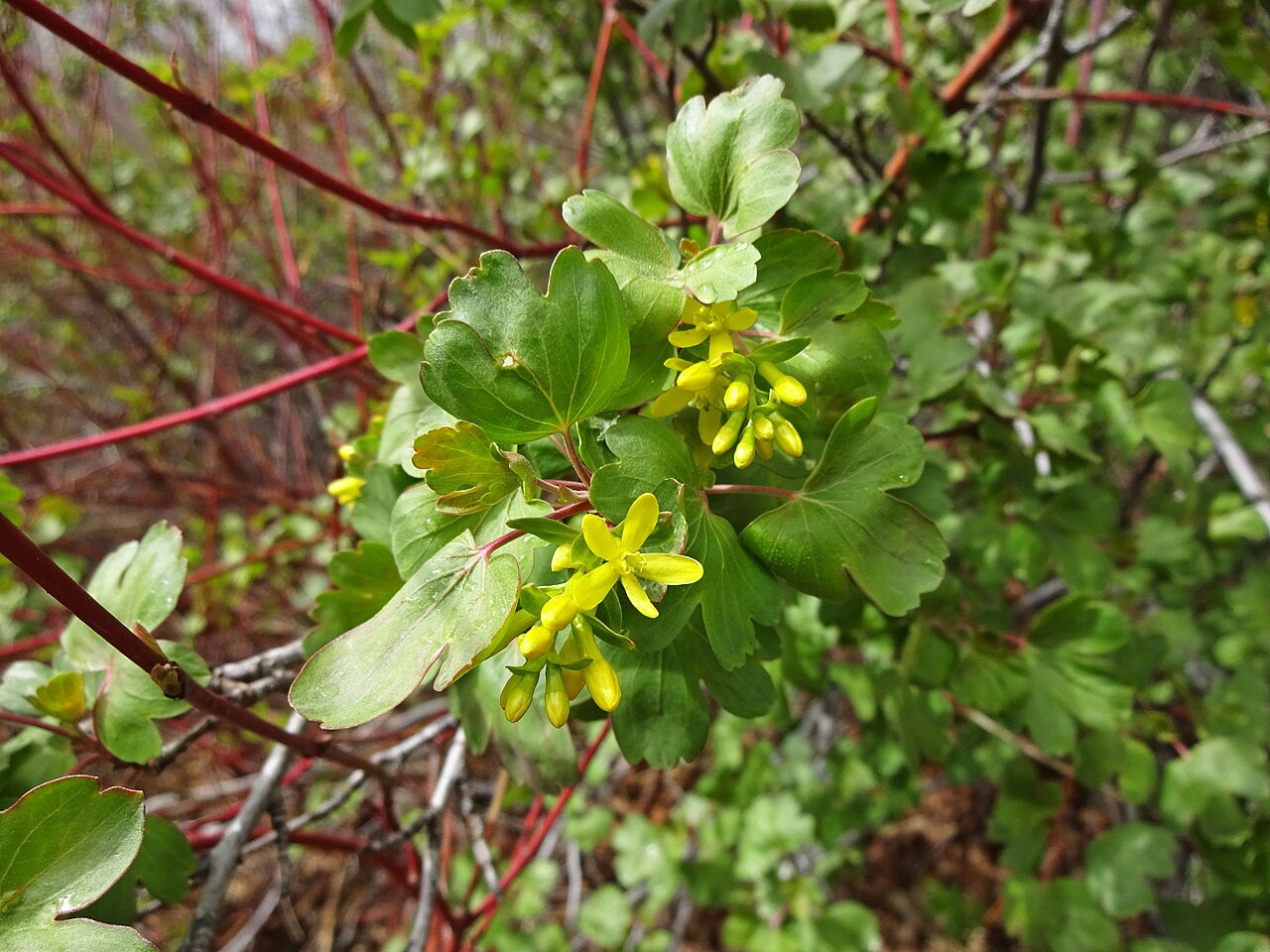
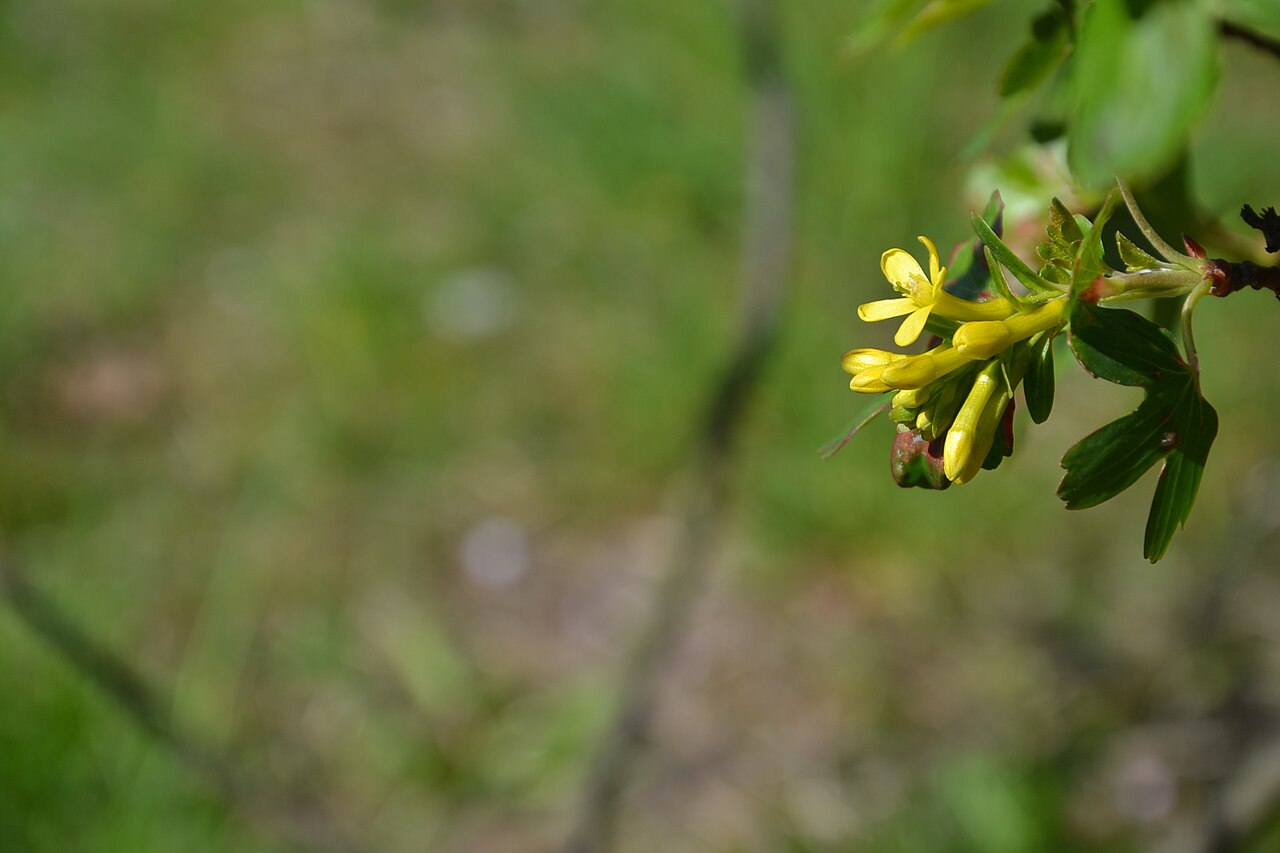
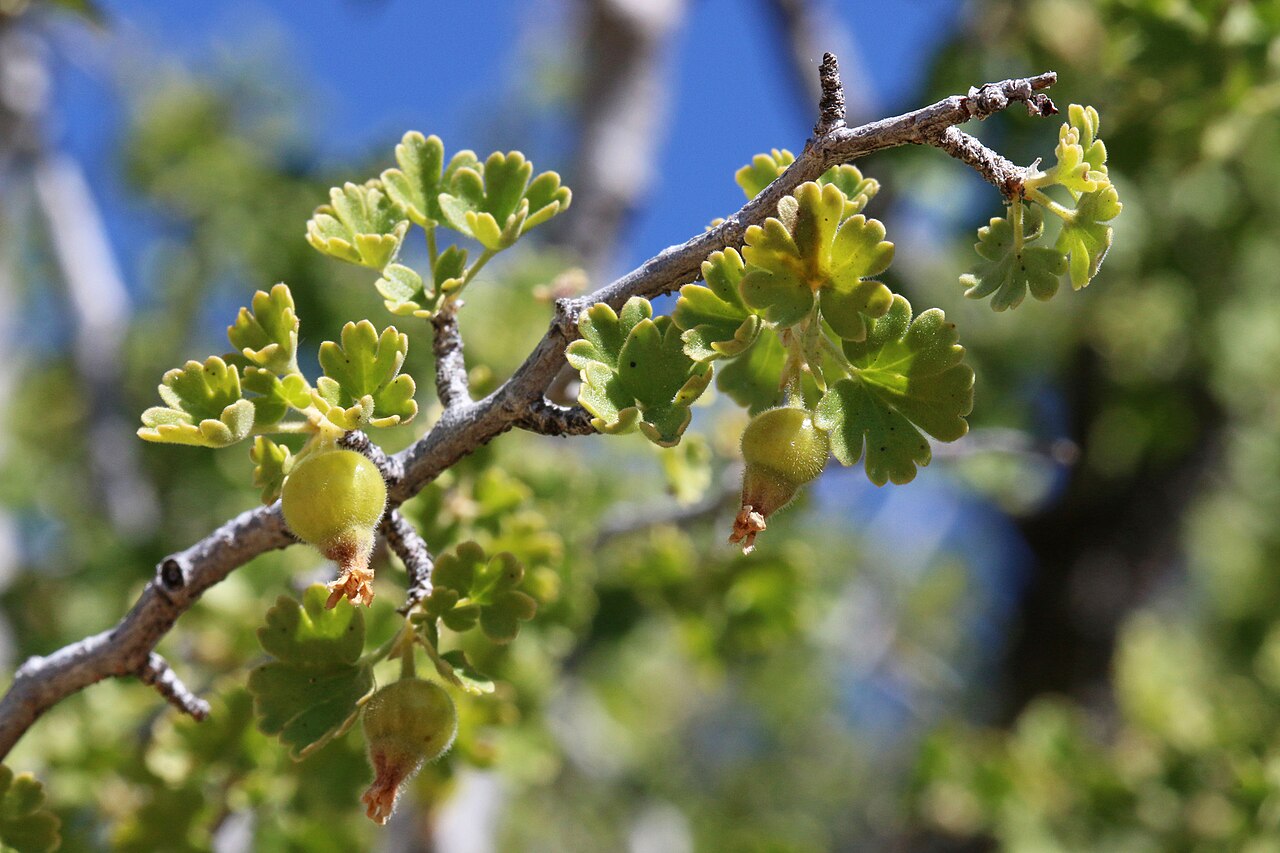
Golden Currant ✅ Easily edible
Ribes aureum · Gooseberry family
A thornless currant with clove-scented golden flowers and sweet edible berries.
Golden Currant ✅ Easily edible
A thornless currant with clove-scented golden flowers and sweet edible berries.


What it is
A smooth, thornless currant with clove-scented golden-yellow flowers in spring and amber-to-black berries in summer.
How to identify
- Thornless (unarmed) shrub, unlike the spiny gooseberries.
- Small three-lobed maple-like leaves.
- Golden-yellow tubular flowers with a spicy clove scent in spring.
- Smooth round berries ripening amber, red, to black.
Where & when
Streamsides, moist draws, and open slopes, low to mid elevation.
✅ Edibility
Berries are sweet and edible fresh or in jam. One of the nicer wild currants.
Lookalikes & cautions
Thornless stems and clove-scented yellow flowers separate it from the spiny gooseberries; all native currants and gooseberries are edible.
Field notes
The clove-like fragrance makes it a favorite native landscaping shrub as well as a wild food.
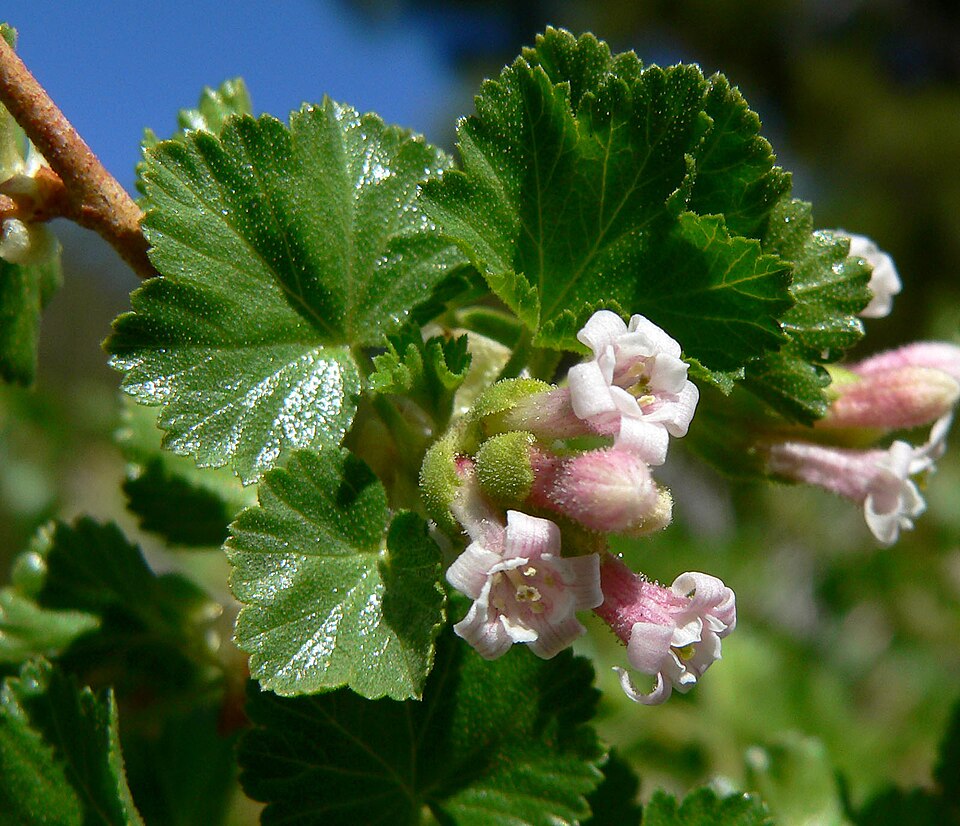
Wax Currant ✅ Edible
Ribes cereum · Gooseberry family
A compact dry-slope currant with scalloped leaves and translucent red berries.
Wax Currant ✅ Edible
A compact dry-slope currant with scalloped leaves and translucent red berries.


What it is
A compact shrub of dry, rocky slopes with small round scalloped leaves and translucent red berries.
How to identify
- Low, densely branched, thornless shrub of dry ground.
- Small round leaves with scalloped edges, slightly sticky and aromatic.
- Small pinkish-white tubular flowers.
- Translucent red berries, a bit seedy.
Where & when
Dry, rocky slopes and open forest, mid elevation.
✅ Edibility
Berries are edible but bland-to-tart and a bit seedy. Fine for jelly or trail nibbling.
Lookalikes & cautions
The small scalloped aromatic leaves and dry-slope habit separate it from moist-site currants; all are edible.
Field notes
A tough, drought-hardy shrub; the berries are more valued by wildlife than by most foragers.
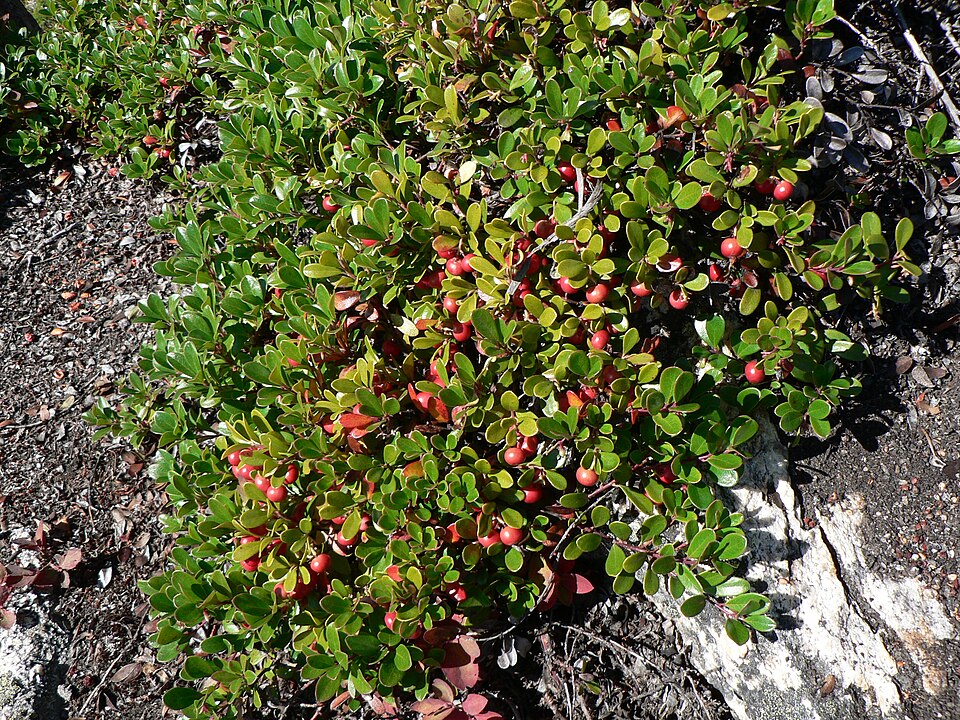
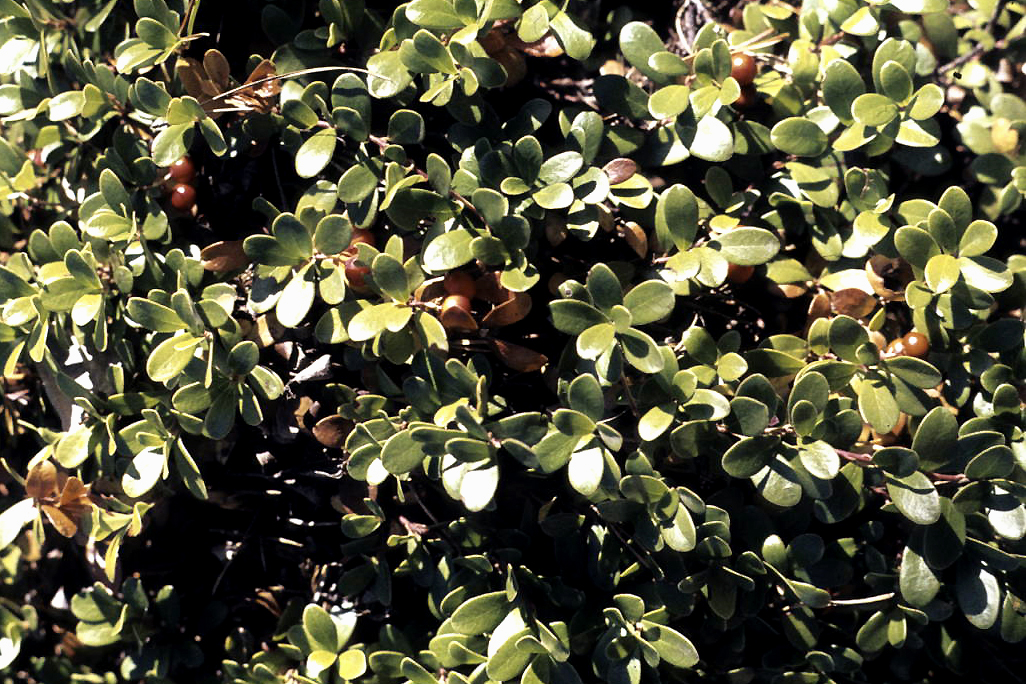
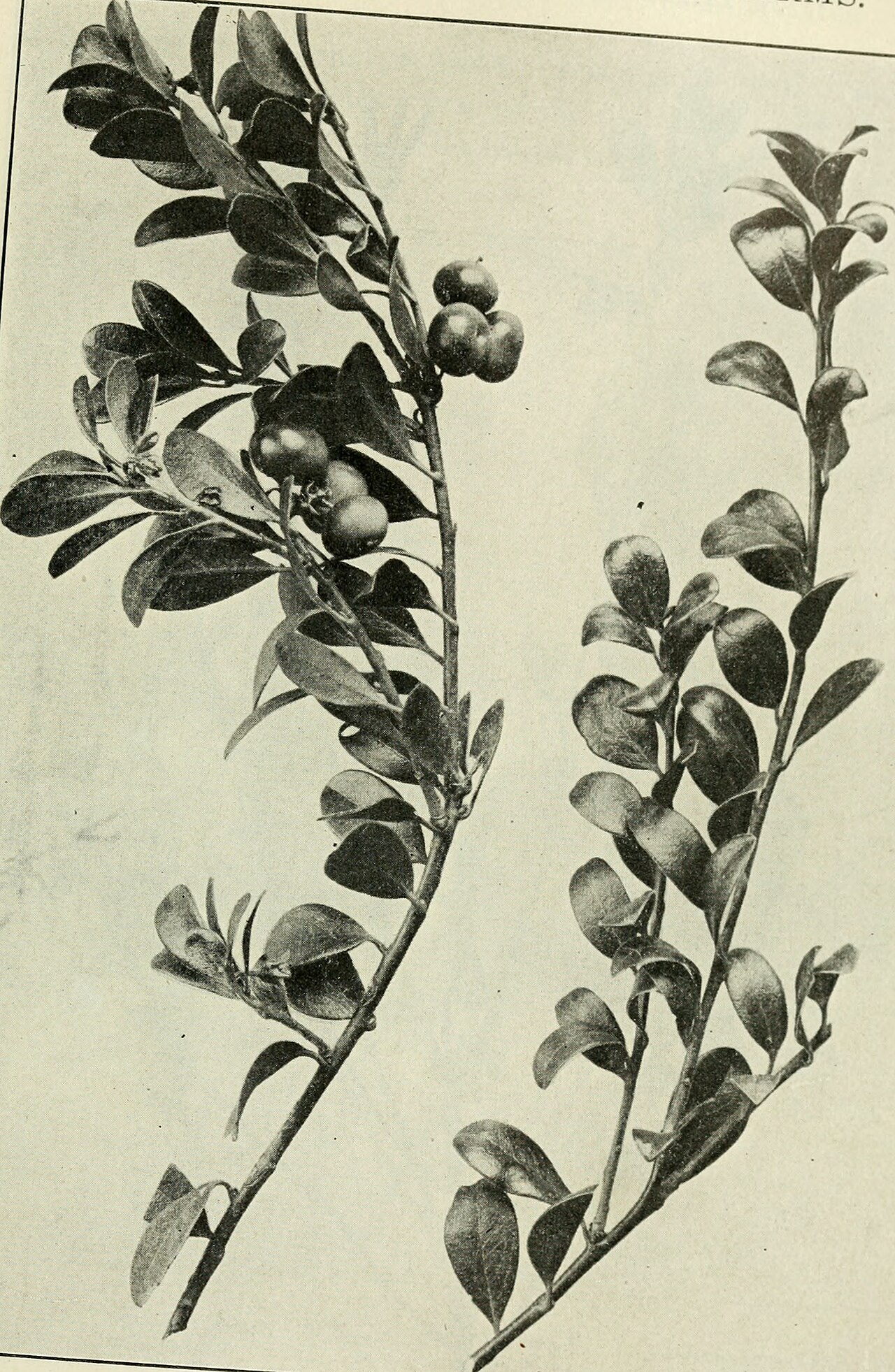
Kinnikinnick (Bearberry) ⚠️ Edible, dry & bland
Arctostaphylos uva-ursi · Heath family
A trailing evergreen mat with red berries (mealy) and famous medicinal leaves.
Kinnikinnick (Bearberry) ⚠️ Edible, dry & bland
A trailing evergreen mat with red berries (mealy) and famous medicinal leaves.


What it is
A trailing evergreen groundcover with small paddle-shaped leaves, pink urn flowers, and mealy red berries that carpets pine forest floors.
How to identify
- Low, trailing, mat-forming evergreen with reddish peeling stems.
- Small, thick, spoon-shaped leaves, glossy dark green.
- Pink to white urn-shaped (blueberry-family) flowers in spring.
- Bright red, dry, mealy berries.
Where & when
Dry, sandy, open pine forest and rocky slopes, low to high elevation.
⚠️ Edibility
Berries are edible but dry and mealy, better cooked. The leaves are a famous medicinal and smoking-mix tea, but hard on the kidneys in excess.
Lookalikes & cautions
The trailing evergreen mat with urn flowers and red berries is distinctive; do not confuse the leaf tea with true tobacco.
Field notes
“Kinnikinnick” was a widespread Native smoking blend; the leaves (uva-ursi) remain a known herbal remedy for the urinary tract.
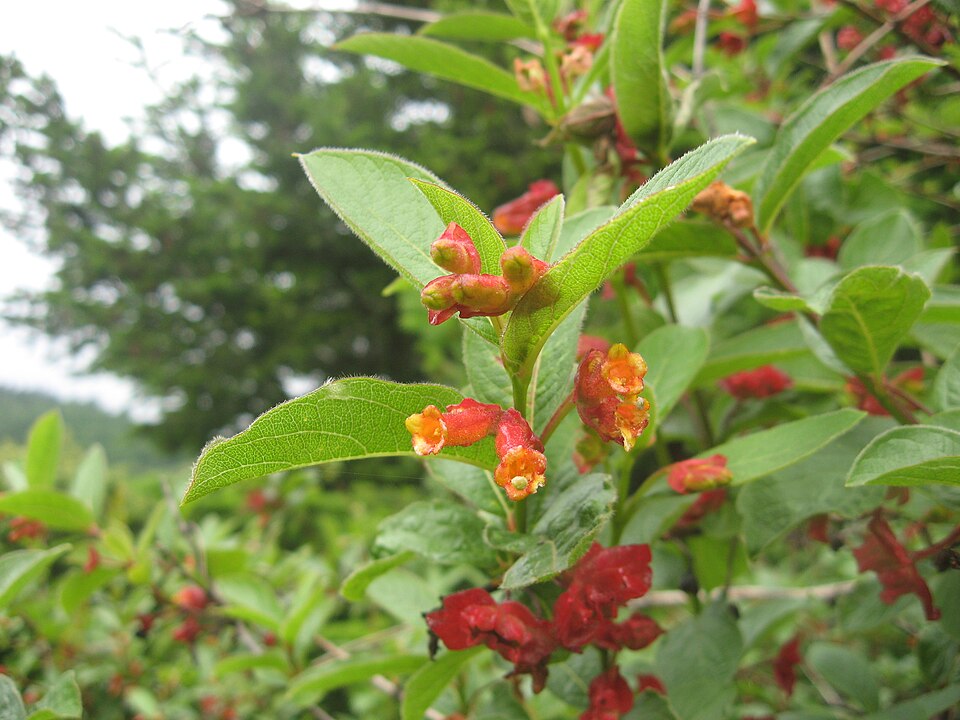
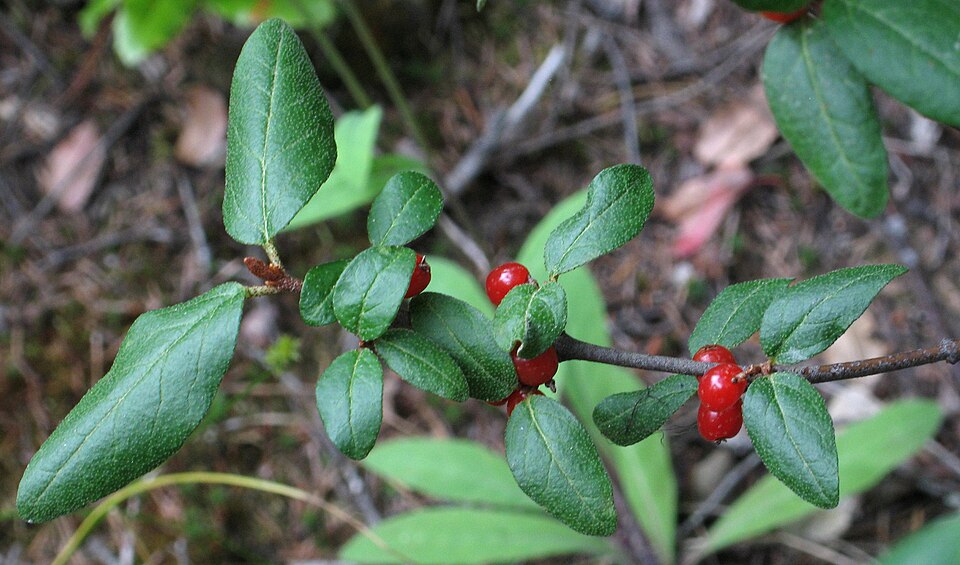
Twinberry Honeysuckle ☠️ Avoid
Lonicera involucrata · Honeysuckle family
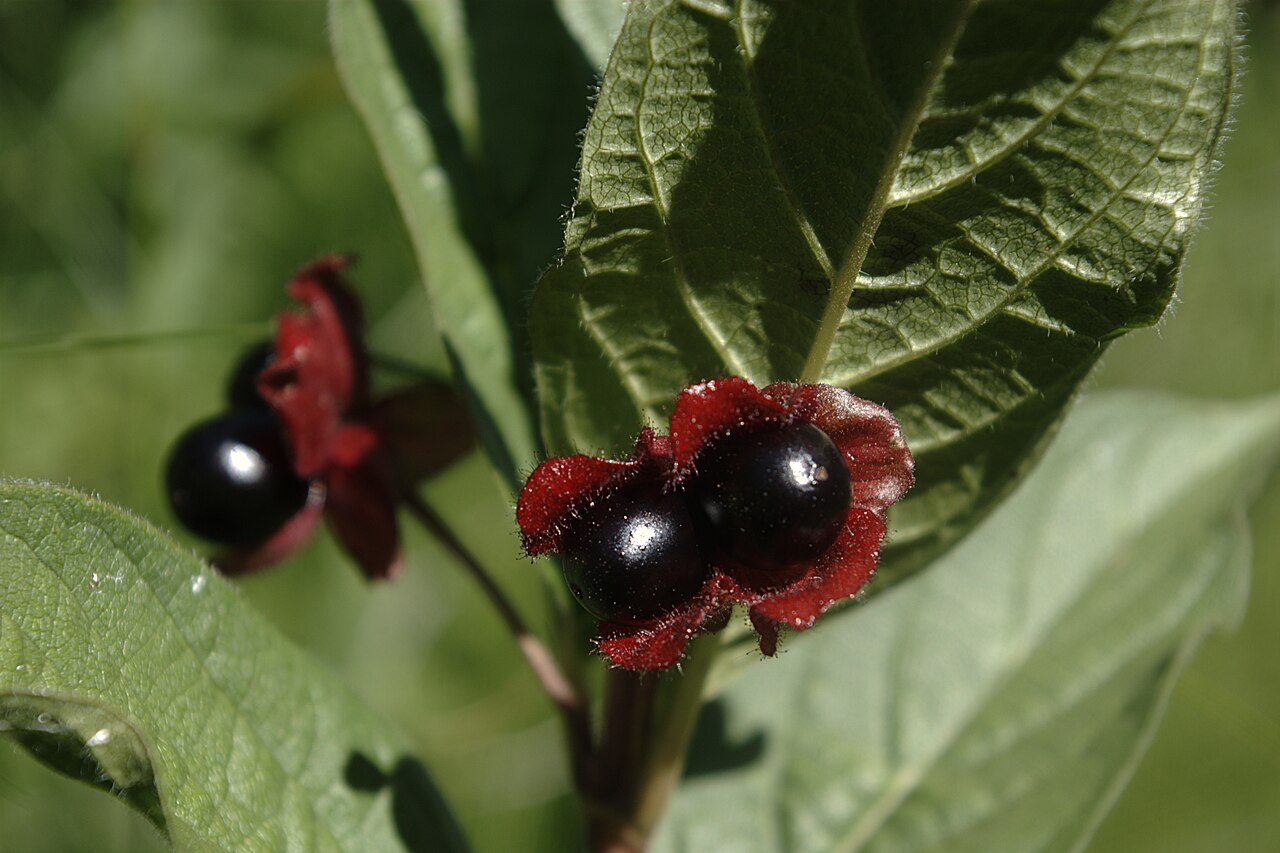
Shiny black berry pairs cupped by showy maroon bracts, bitter and best avoided.
Twinberry Honeysuckle ☠️ Avoid
Shiny black berry pairs cupped by showy maroon bracts, bitter and best avoided.


What it is
A streamside shrub with paired yellow tube flowers and shiny black berry pairs cupped by showy maroon-red bracts.
How to identify
- Upright shrub with opposite, oval, pointed leaves.
- Flowers in pairs, yellow and tubular, backed by leafy bracts.
- Berries in shiny black pairs sitting in a cup of showy maroon-purple bracts.
- Streamside and moist-forest habit.
Where & when
Streamsides, wet meadows, and moist forest, mid to high elevation.
☠️ Edibility
The black berries are bitter and widely considered inedible to mildly toxic. Do not eat.
Lookalikes & cautions
The paired black berries in maroon bracts are unmistakable and are a signal NOT to eat, unlike the blue and red edible-when-cooked elderberries.
Field notes
Also called bearberry honeysuckle or black twinberry; birds and bears eat the fruit, but people should not.
Red-osier Dogwood 🚫 Not edible
Cornus sericea · Dogwood family
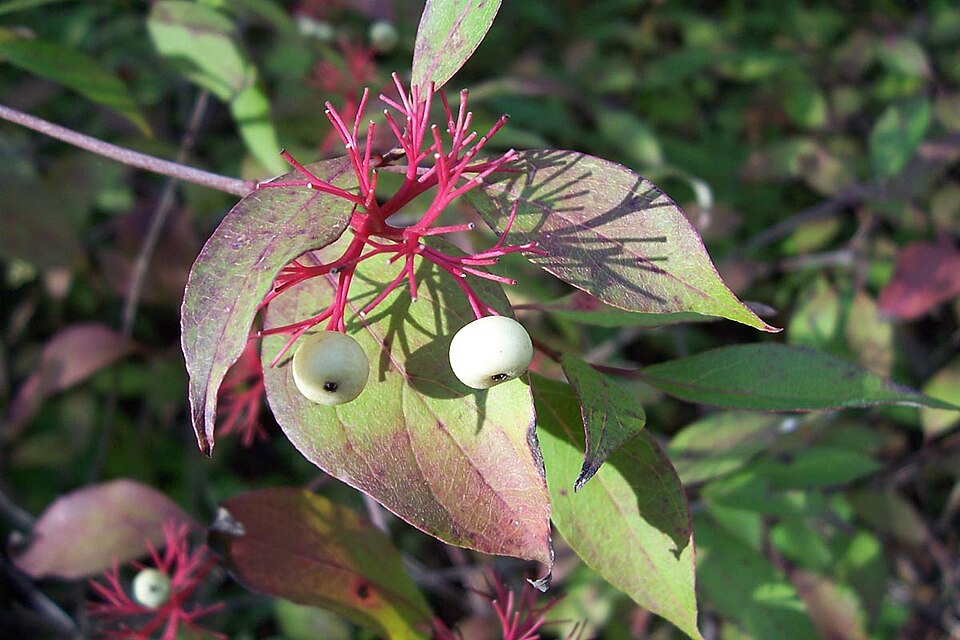
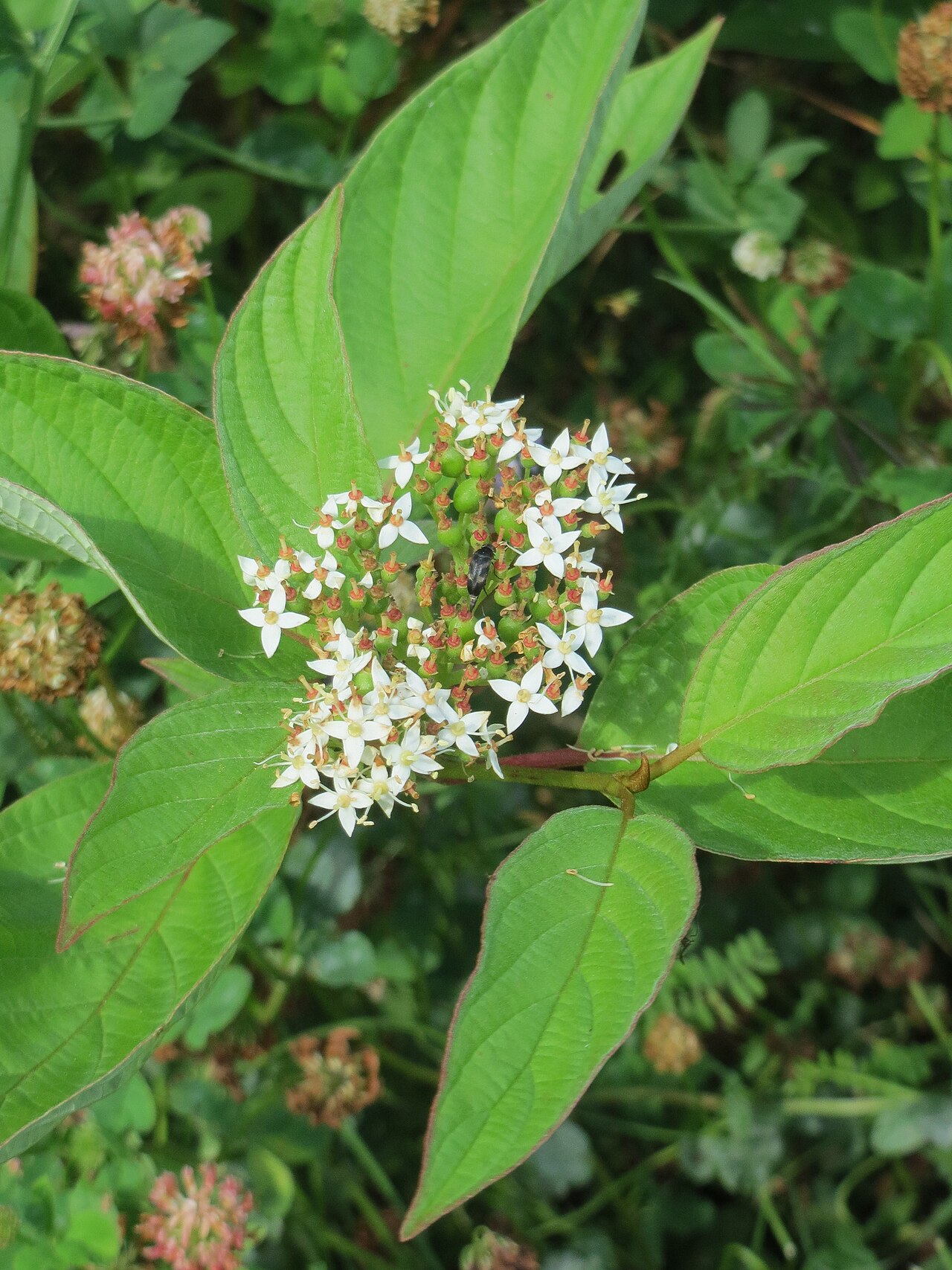
Bright red winter stems, flat white flower clusters, and bitter chalky-white berries.
Red-osier Dogwood 🚫 Not edible
Bright red winter stems, flat white flower clusters, and bitter chalky-white berries.
What it is
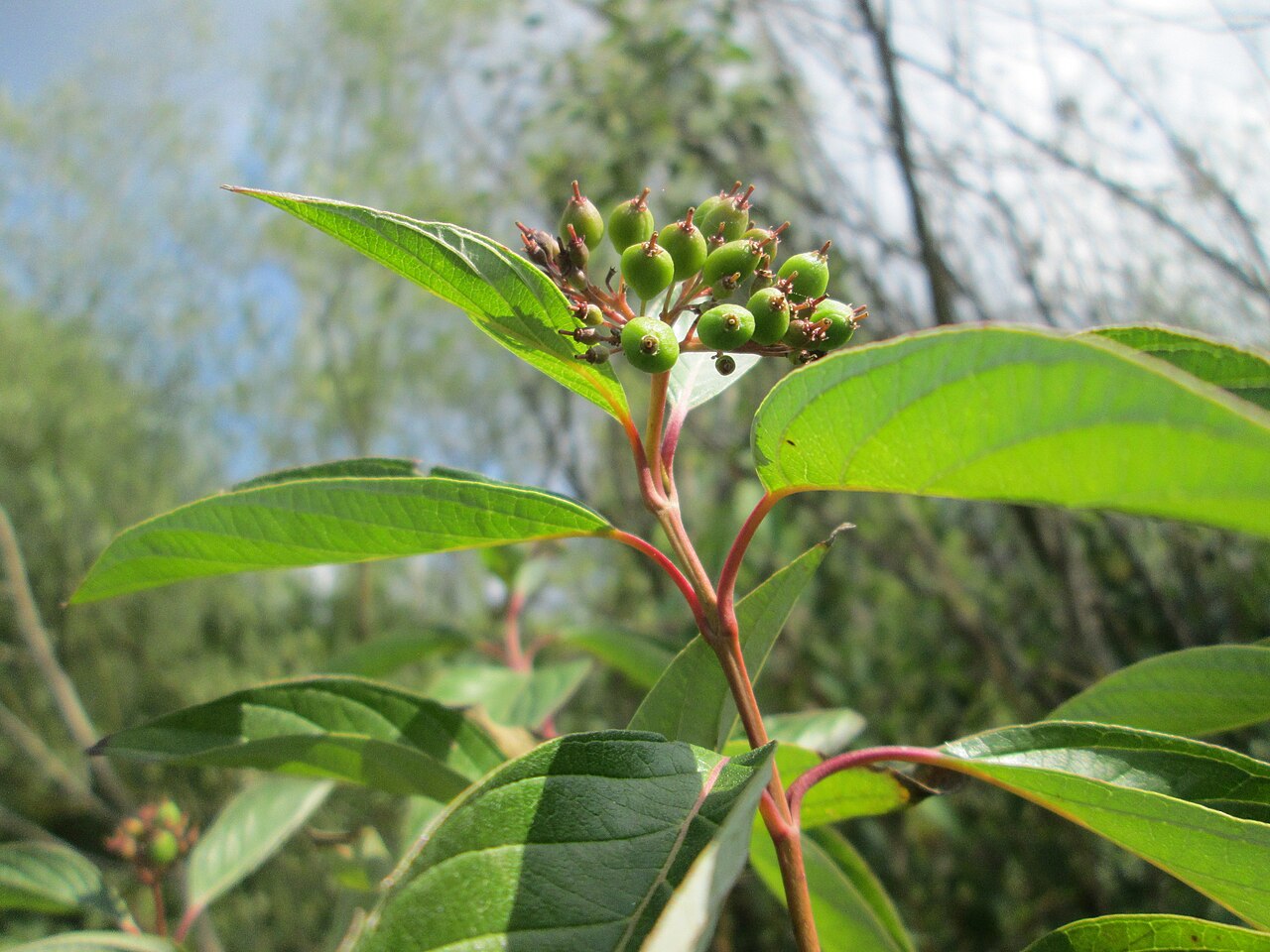
A shrub instantly known by its bright red winter stems, flat white flower clusters, and clusters of chalky white berries along creeks.
How to identify
- Thicket-forming shrub with bright red stems, most vivid in winter.
- Opposite oval leaves with curved veins that follow the leaf edge; leaves tear to show stringy latex.
- Flat-topped clusters of small white flowers in early summer.
- Clusters of chalky white (sometimes bluish) berries.
Where & when
Streamsides, wet meadows, and ditches, low to mid elevation.
🚫 Edibility
The white berries are intensely bitter and not considered edible. The bark was a traditional smoking herb.
Lookalikes & cautions
The red stems and curved leaf veins are diagnostic; the white berries are not the edible flat-topped blue elderberry.
Field notes
The red stems make it a popular native landscaping plant; the inner bark was a common ingredient in kinnikinnick smoking mixes.
Shrubby Cinquefoil 🚫 Not edible
Dasiphora fruticosa · Rose family
A tidy mounded shrub covered all summer in bright yellow flowers; a mild leaf tea at most.
Shrubby Cinquefoil 🚫 Not edible
A tidy mounded shrub covered all summer in bright yellow flowers; a mild leaf tea at most.


What it is
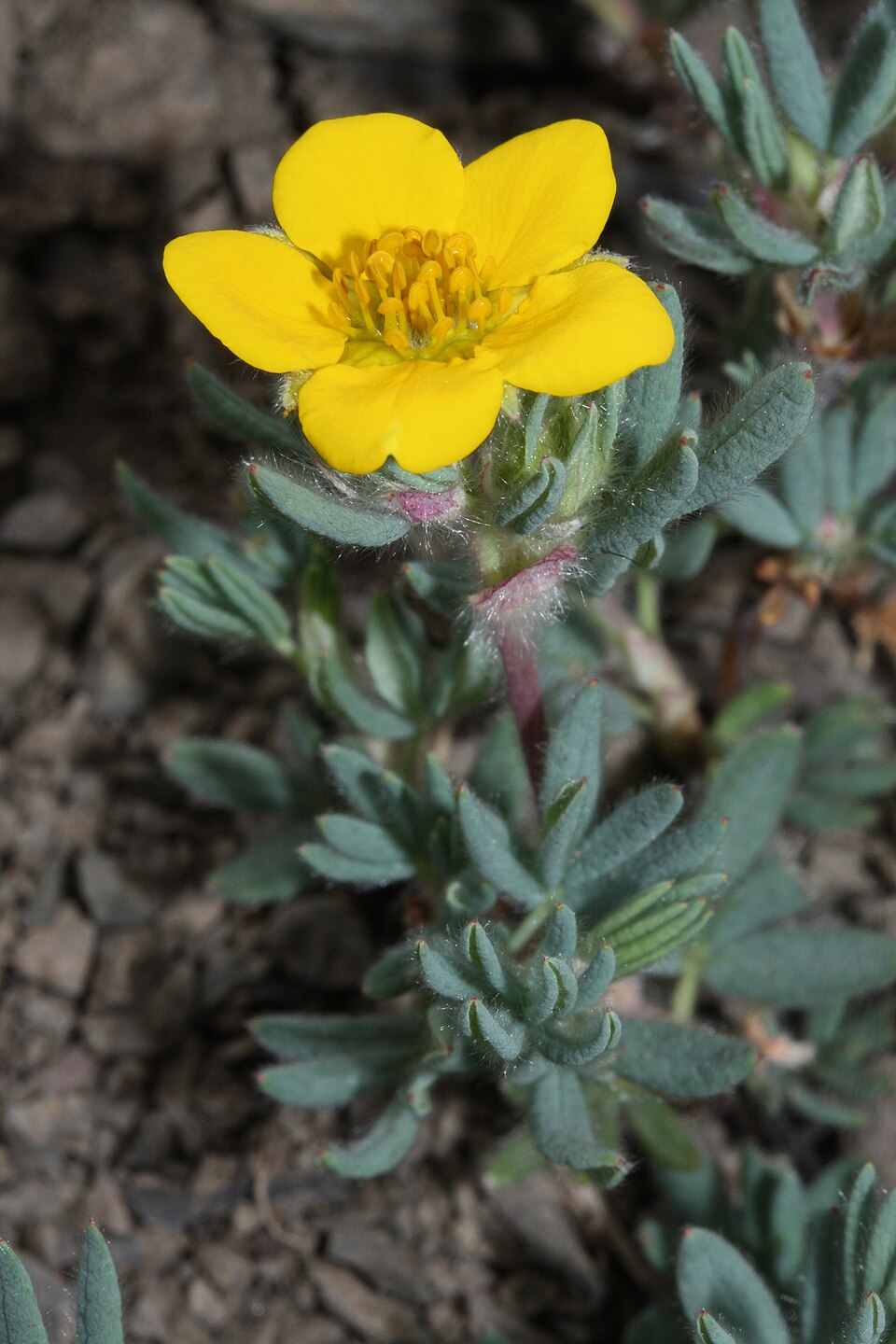
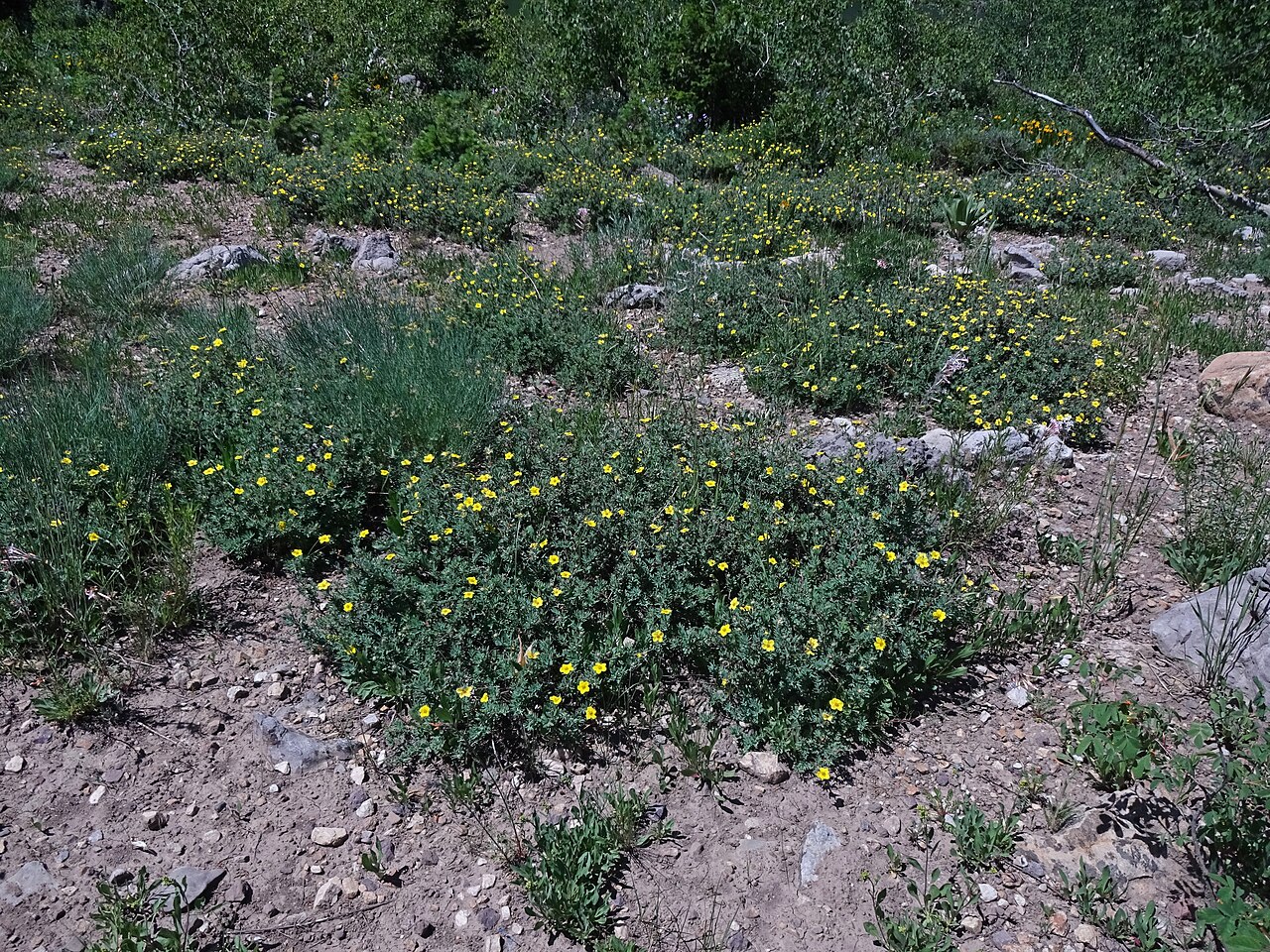
A tidy mounded shrub covered all summer in bright yellow five-petaled flowers, common in wet meadows and a popular landscaping plant.
How to identify
- Low, mounded, densely branched shrub with shreddy brown bark.
- Small gray-green leaves divided into 5 to 7 narrow leaflets.
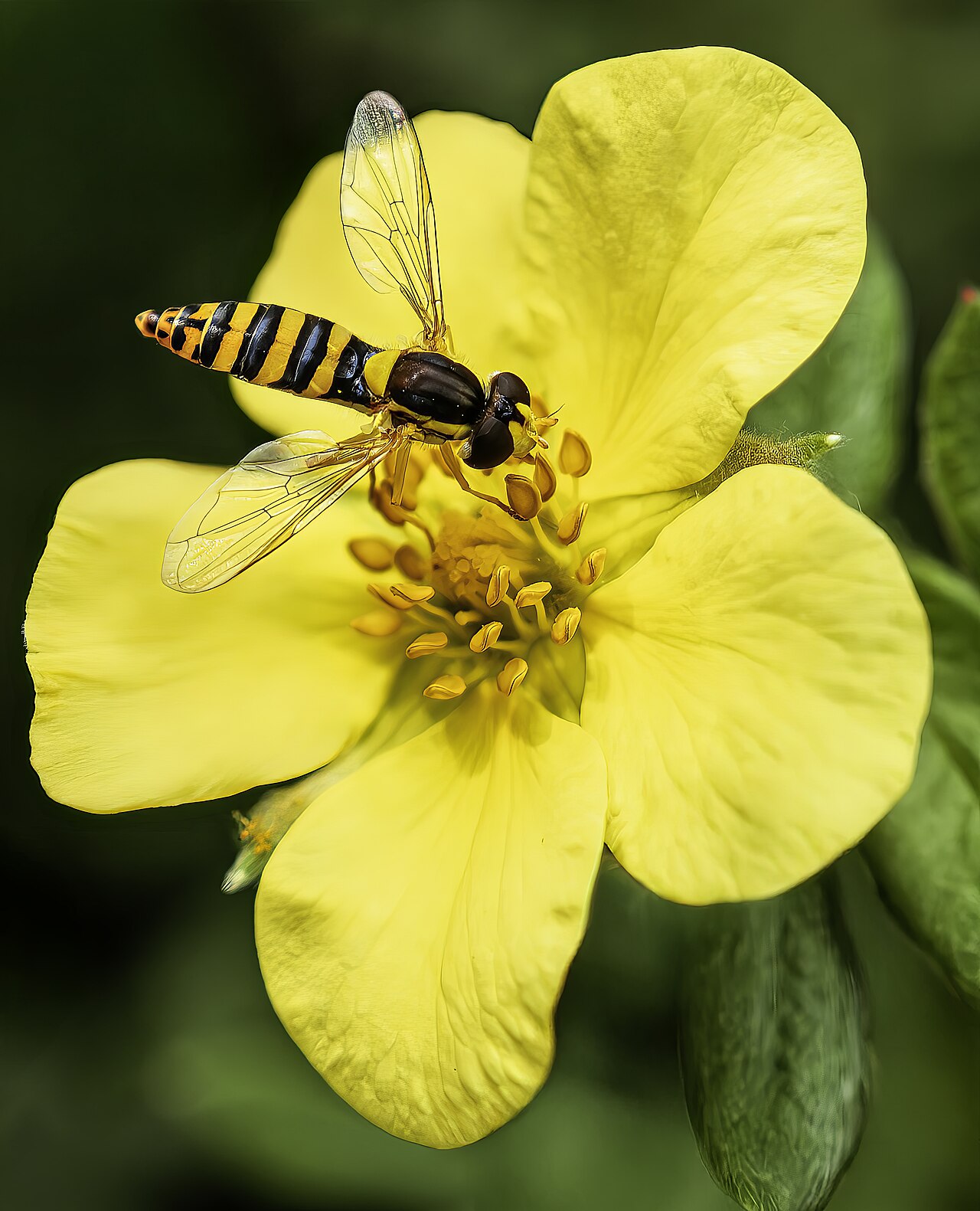
- Bright yellow, five-petaled, buttercup-like flowers all summer long.
- Grows in wet meadows and along high-country streams.
Where & when
Wet meadows, streamsides, and open slopes, mid to high elevation.
🚫 Edibility
Not a food plant, though the leaves have been used for a mild tea.
Lookalikes & cautions
The shrubby form with yellow rose-family flowers and divided leaves is distinctive; the yellow flowers are harmless but not food.
Field notes
Sold widely as the ornamental “potentilla”; a hardy native that blooms for months.
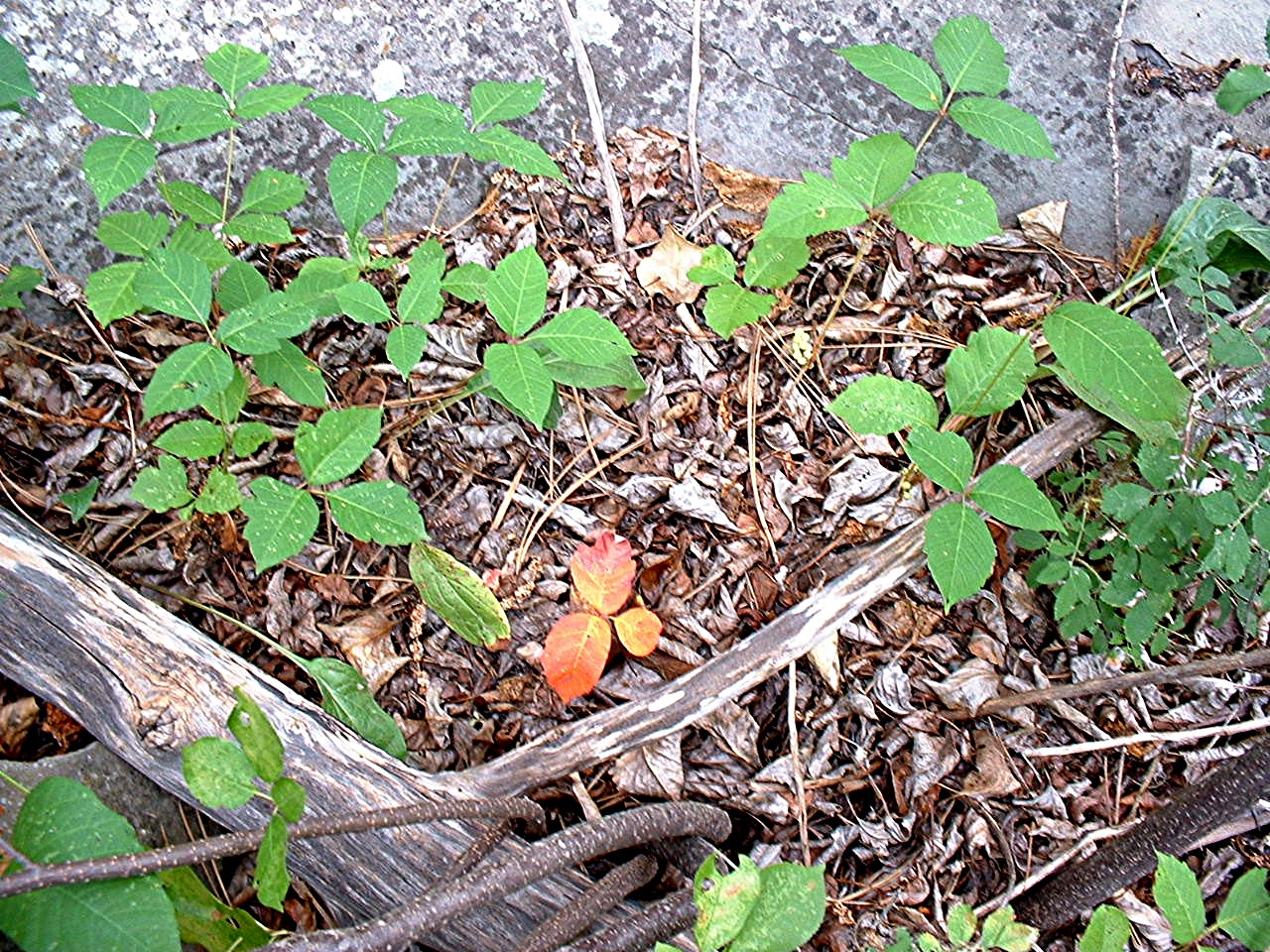
Western Poison Ivy ☠️ Do not touch
Toxicodendron rydbergii · Cashew family
Leaves of three, let it be. Touching any part, any season, can raise a blistering, itchy rash.
Western Poison Ivy ☠️ Do not touch
Leaves of three, let it be. Touching any part, any season, can raise a blistering, itchy rash.


What it is
A low, root-spreading shrub of canyon bottoms and riverbanks whose oil (urushiol) causes an intense, blistering skin rash. In the West it is usually a knee-high shrub rather than the climbing vine of the East.
How to identify
- Compound leaves of three leaflets, the middle one on a longer stalk (“leaves of three, let it be”).
- Leaflets pointed and often with a few coarse teeth or lobes; glossy green, turning brilliant red in fall.
- Usually a low shrub 1 to 3 ft tall, spreading in patches (rarely climbs here).
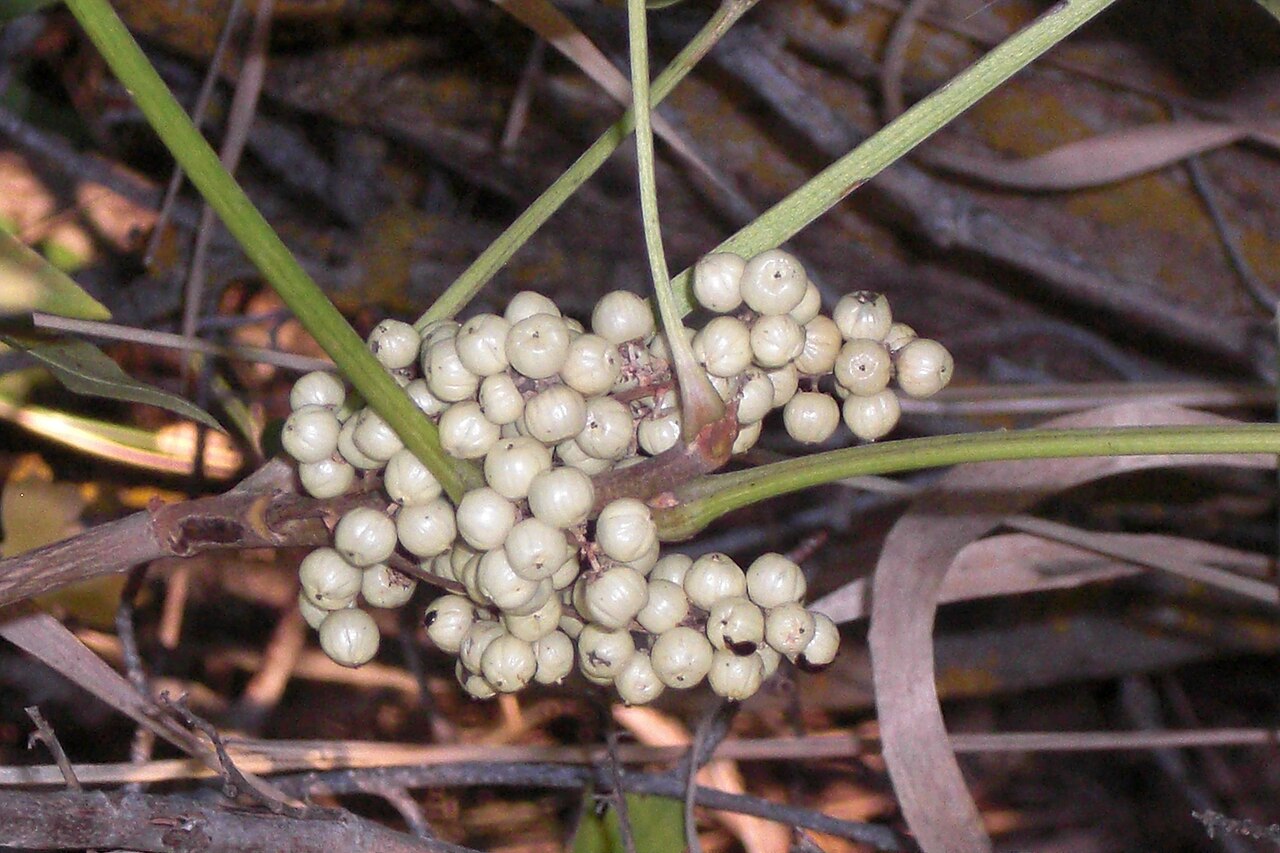
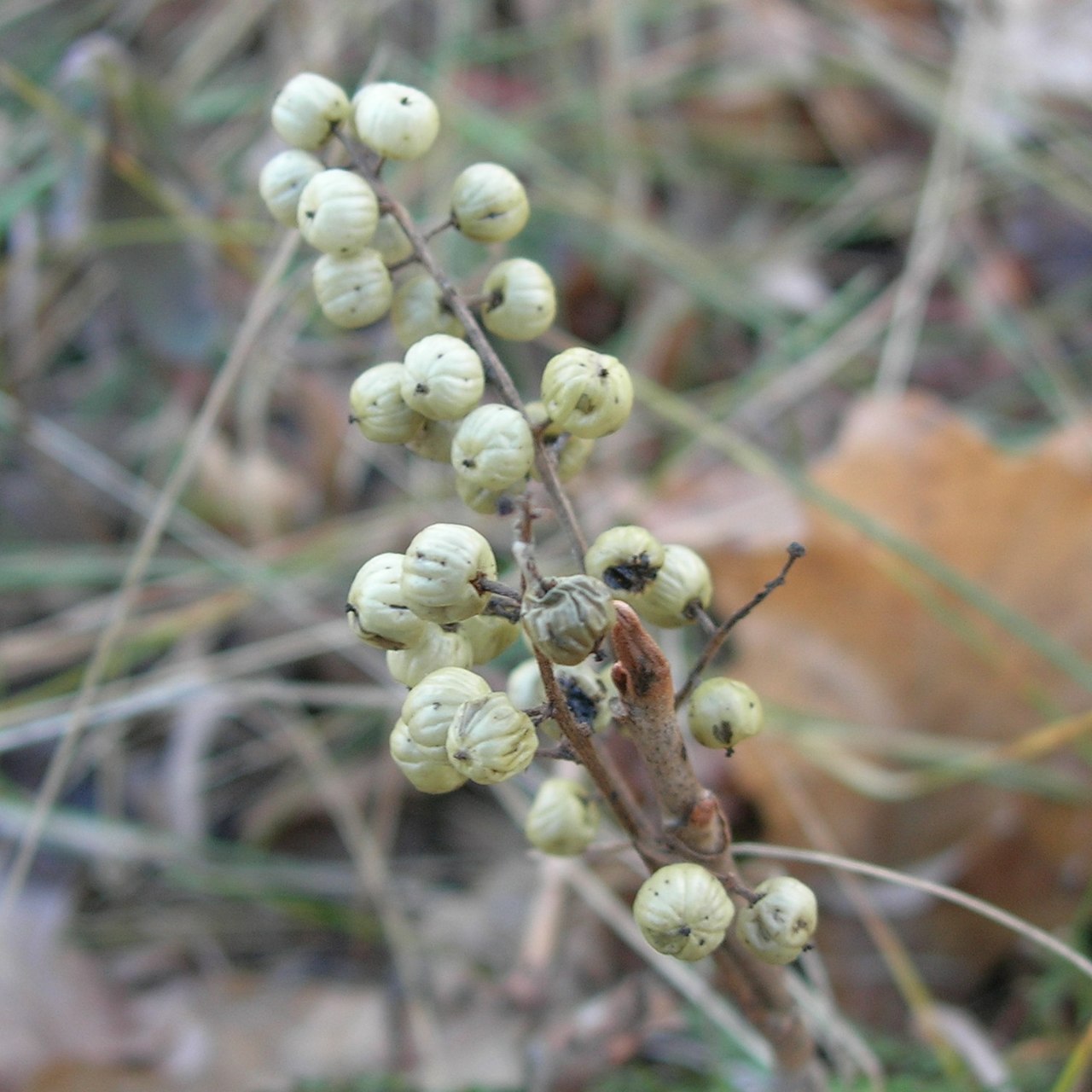
- Small greenish flowers, then clusters of whitish, waxy berries.
Where & when
Canyon bottoms, riverbanks, moist draws, and disturbed thickets, low to mid elevation.
☠️ Edibility
Do not eat, and more importantly do not touch any part, in any season, even bare winter stems. The oil (urushiol) causes a blistering, intensely itchy rash that can last two to three weeks. The rash itself is not contagious, but the invisible oil spreads from tools, clothes, gloves, and pets. Never burn it, the smoke can severely injure the lungs.
Lookalikes & cautions
“Leaves of three” separate it from harmless Virginia creeper (five leaflets) and from young box elder (which has opposite leaves, while poison ivy is alternate). When you are not sure, do not touch it.
Field notes
If you brush it: wash the skin as soon as you can (ideally within 30 minutes) with soap or dish soap and cool water to lift the oil, and wash everything the plant touched. Cool compresses and over-the-counter anti-itch creams ease the rash; see a doctor for severe, spreading, or facial reactions. Jewelweed is a traditional field remedy.
Berries
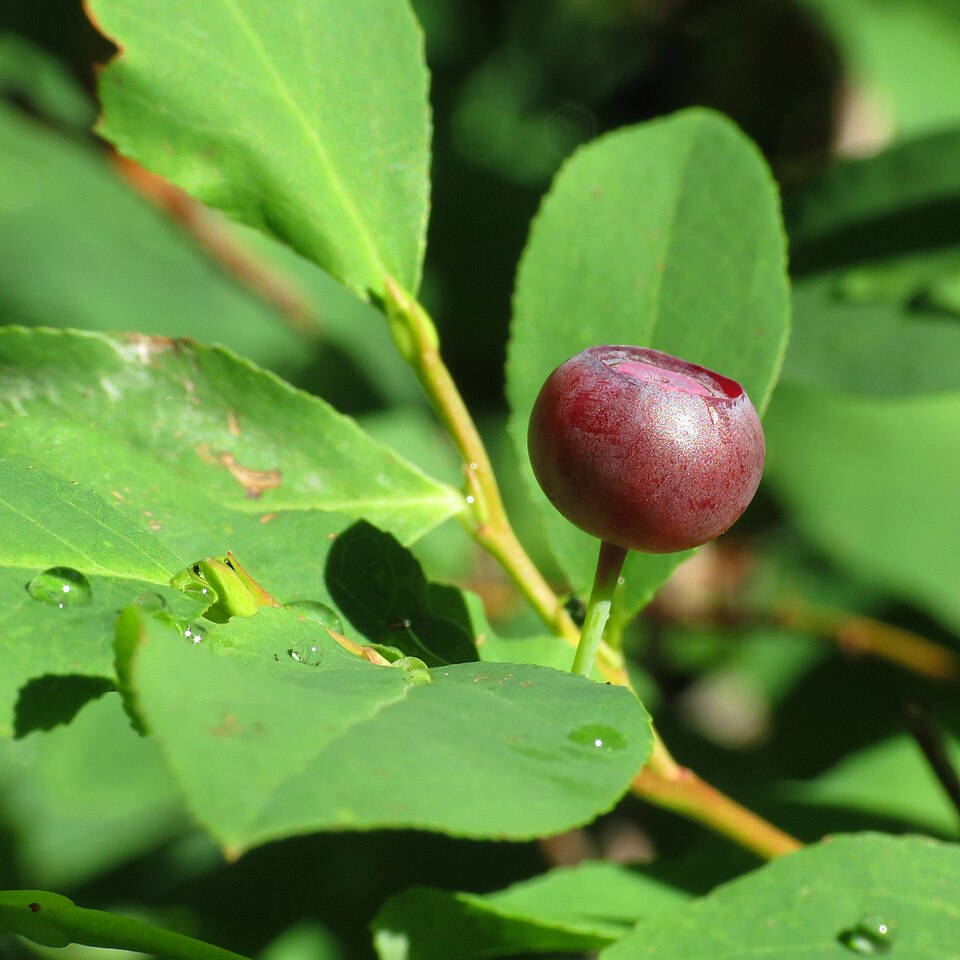
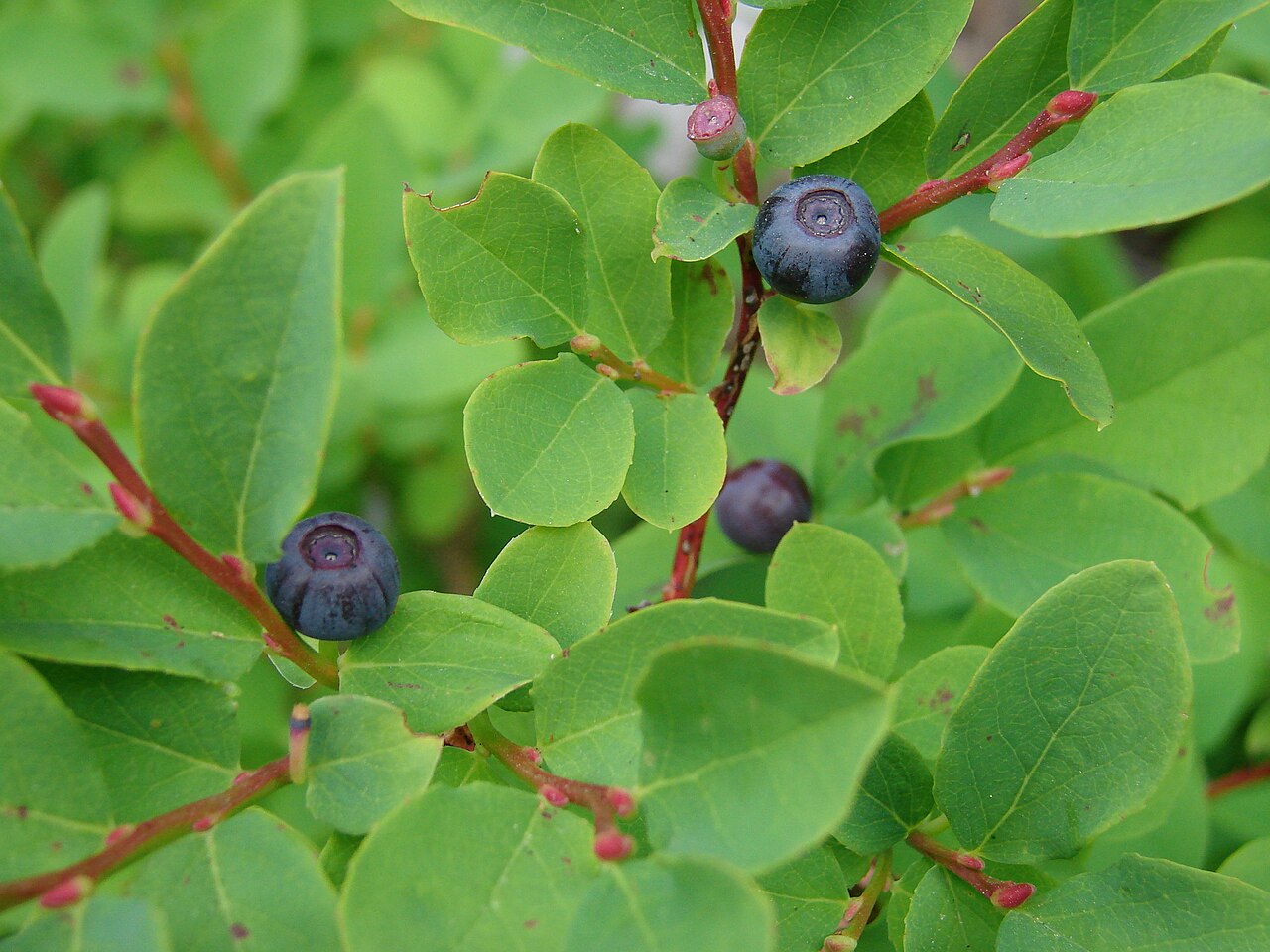
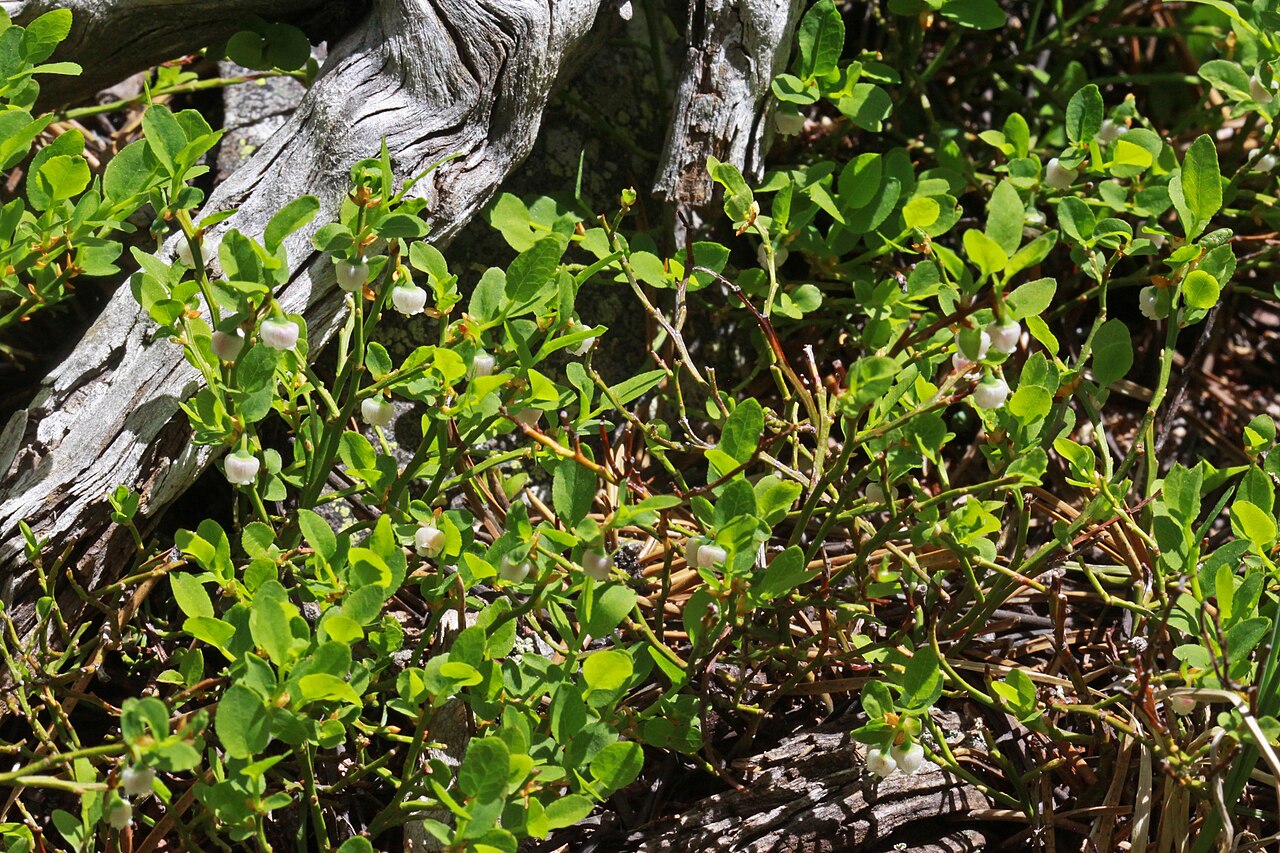
Mountain Huckleberry ✅ Prized edible
Vaccinium membranaceum · Heath family
The Rockies’ prized wild purple berry, safe and delicious and easy to learn. (Bear country.)
Mountain Huckleberry ✅ Prized edible
The Rockies’ prized wild purple berry, safe and delicious and easy to learn. (Bear country.)


What it is
The famous wild purple berry of the Northern Rockies, a knee-high shrub of mid-to-high mountain forest and a wild cousin of the blueberry.
How to identify
- Low deciduous shrub, usually 1 to 2 ft, with green, slightly angled young twigs.
- Leaves alternate, thin, oval with a pointed tip and finely toothed edges; they turn red in fall.
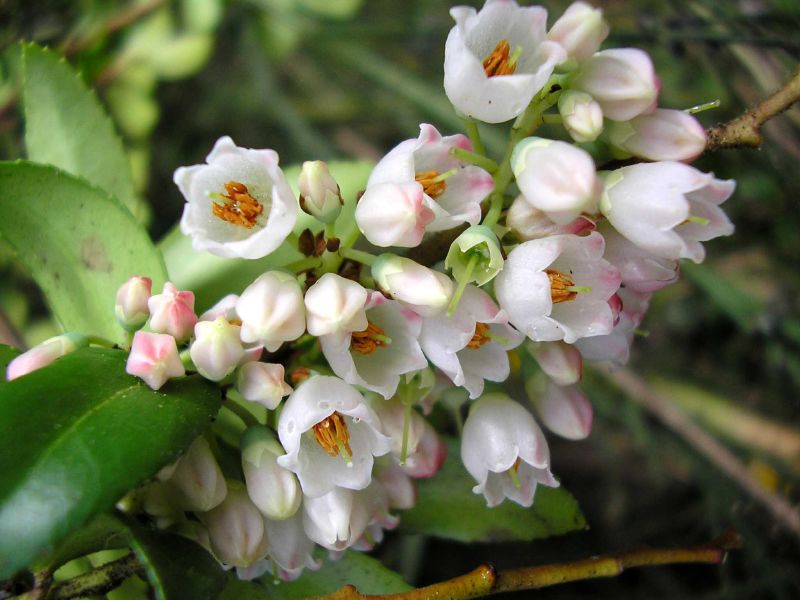
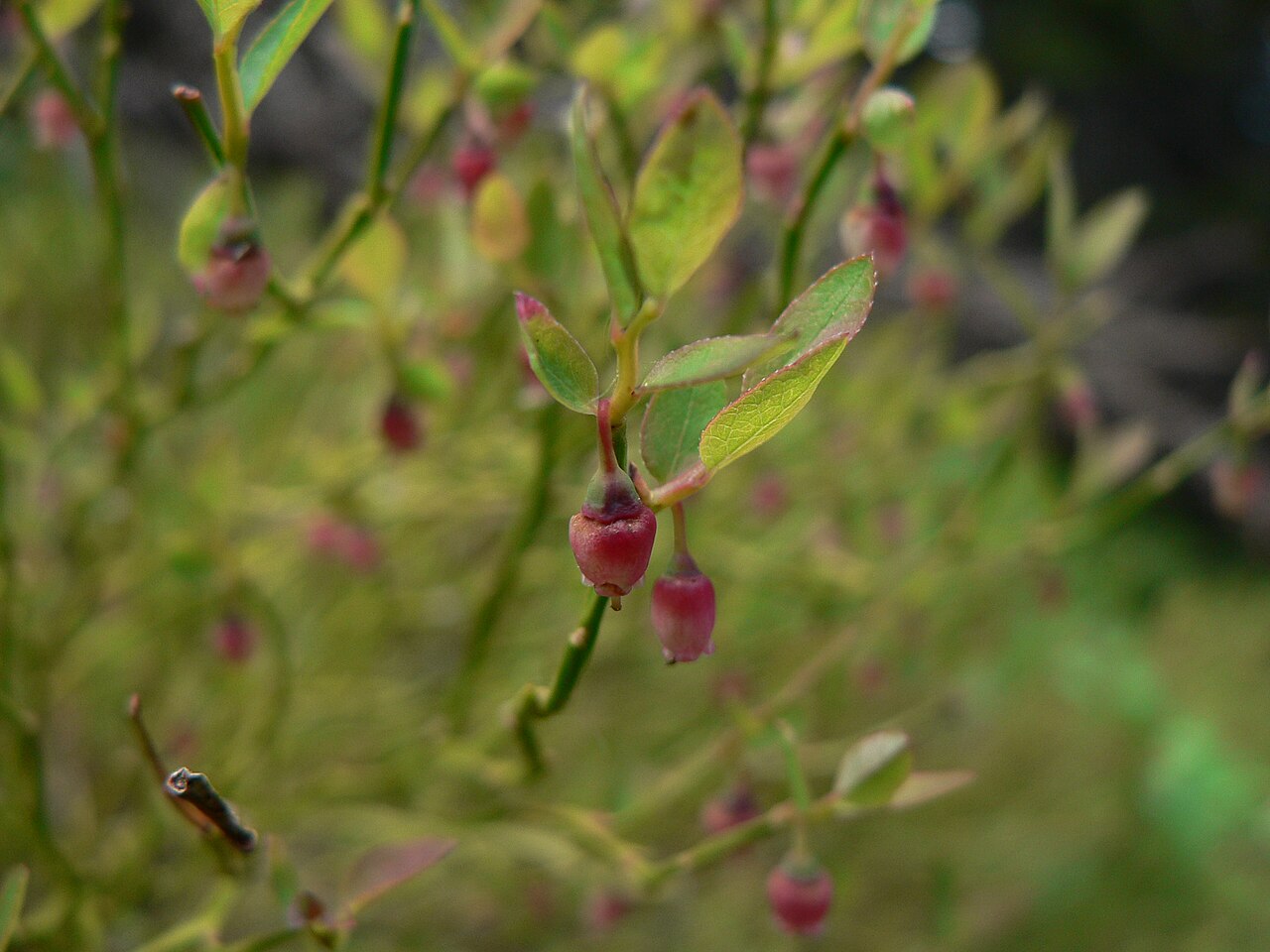
- Flowers single, small, urn or bell-shaped, pale pink, hanging under the leaves.
- Berries borne singly (not in clusters), round, deep purple to nearly black, with a tiny crown at the tip.
Where & when
Coniferous forest, old burns, and open slopes, mid to high elevation. Ripe late July into September.
✅ Edibility
Excellent and completely safe once you know it. Eat fresh, or use for pie, jam, syrup, and pancakes. No toxic lookalikes in its niche, only smaller edible cousins.
Lookalikes & cautions
Several Vaccinium species share these slopes (grouse whortleberry is tinier); all are edible. The real caution is bears feeding in the same patches.
Field notes
Idaho’s signature wild fruit. A personal handful needs no permit on most national forest land, but check local rules before any large harvest.
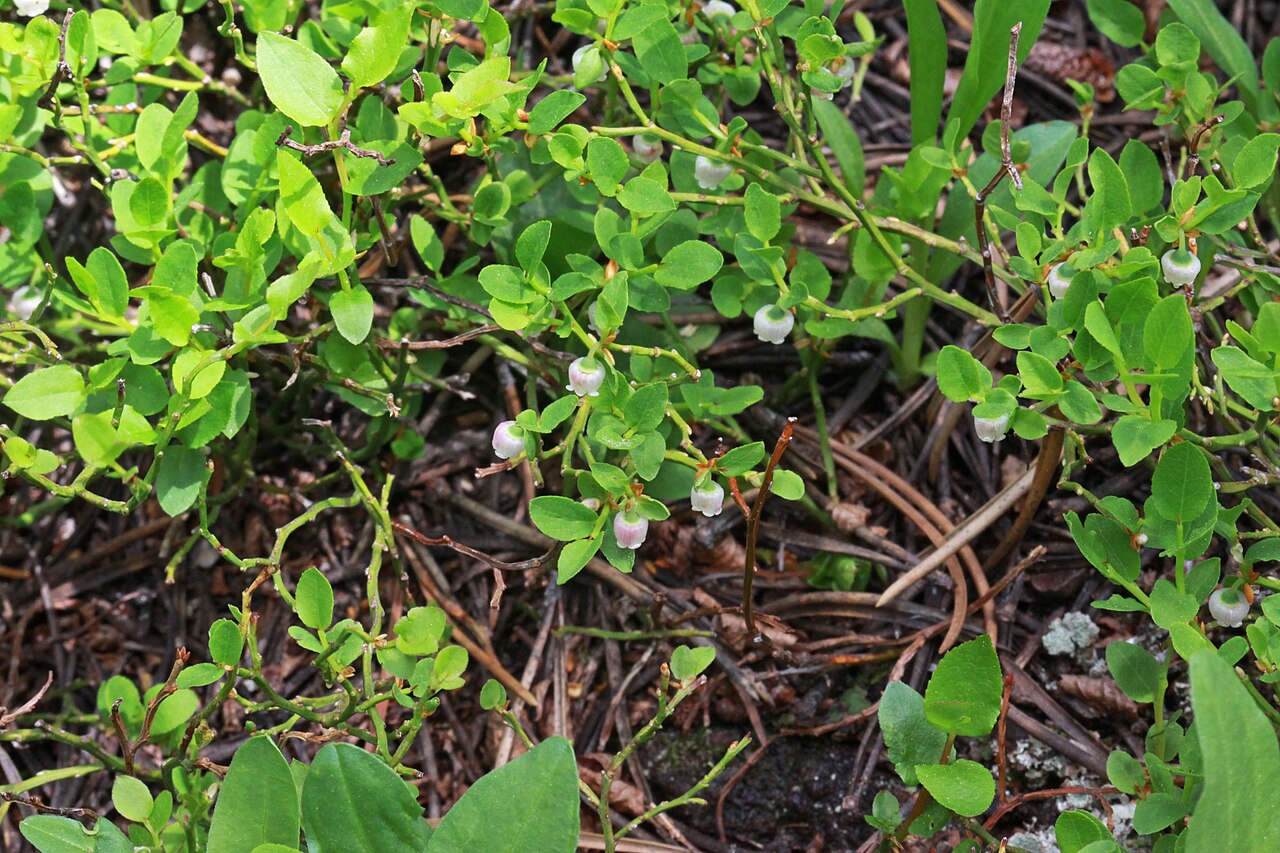
Grouse Whortleberry ✅ Edible
Vaccinium scoparium · Heath family
A tiny broom-like huckleberry that mats the high-forest floor with minuscule sweet red berries.
Grouse Whortleberry ✅ Edible
A tiny broom-like huckleberry that mats the high-forest floor with minuscule sweet red berries.


What it is
A tiny, broom-like relative of the huckleberry that forms low green mats under high-elevation conifers, dotted with minuscule red berries.
How to identify
- Very low (a few inches), dense, broom-like green shrub carpeting the forest floor.
- Green, sharply angled, broom-twiggy stems (stays green in winter).
- Tiny oval leaves.
- Minuscule bright red berries, easy to miss.
Where & when
Shady high-elevation conifer forest, often under spruce and fir; berries mid to late summer.
✅ Edibility
The tiny berries are sweet and edible, just very small and tedious to gather. Excellent flavor.
Lookalikes & cautions
The green broom-like mats are distinctive; all these dwarf Vaccinium are edible.
Field notes
A favorite of grouse (hence the name); the dense green mats are a signature of cool subalpine forest floors.
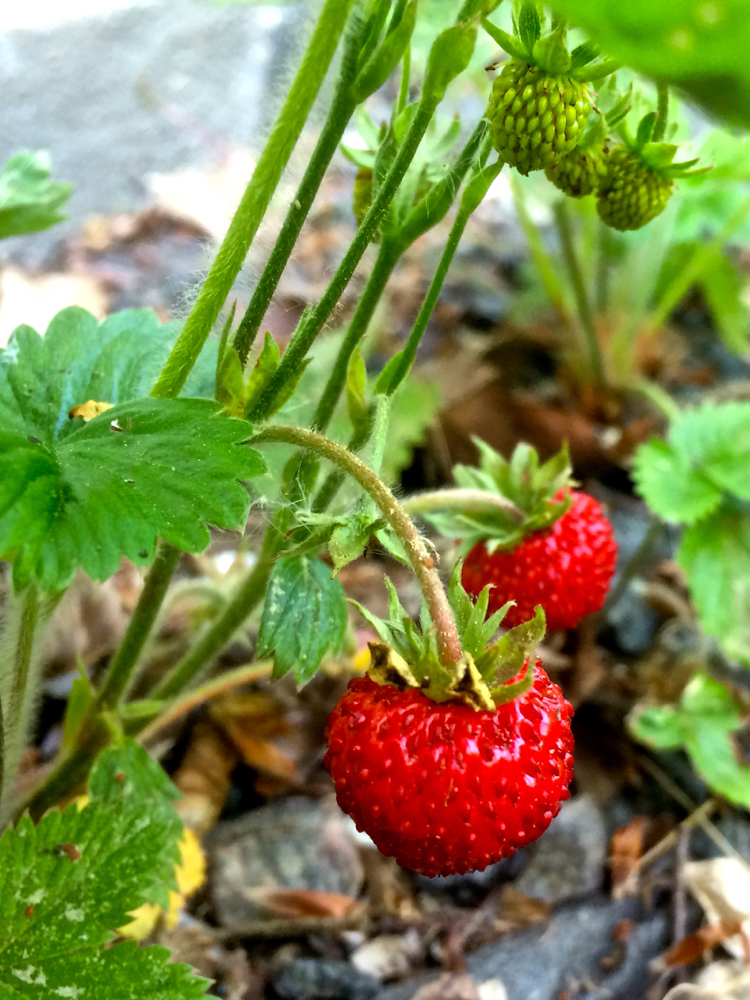
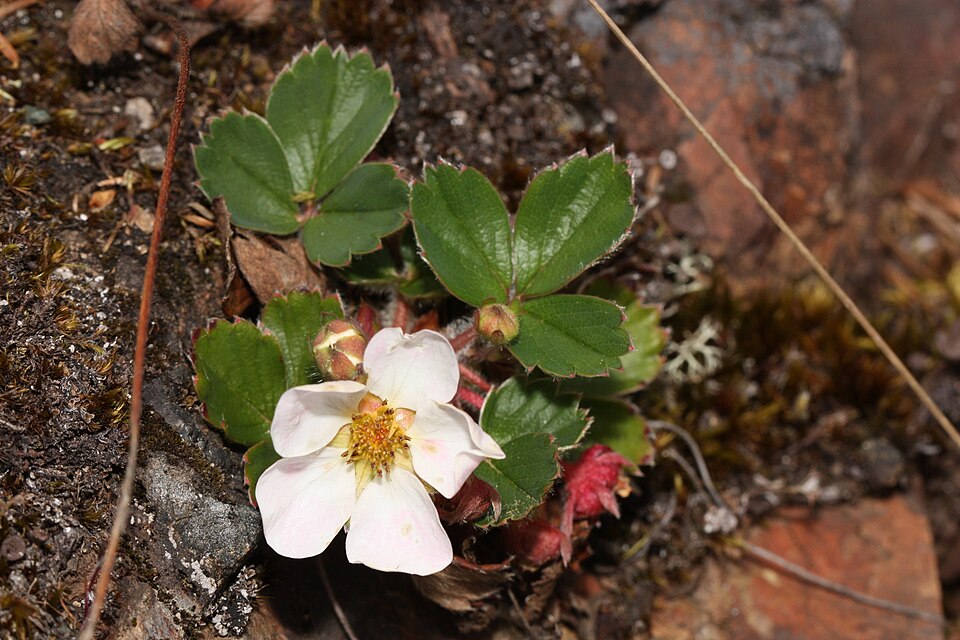
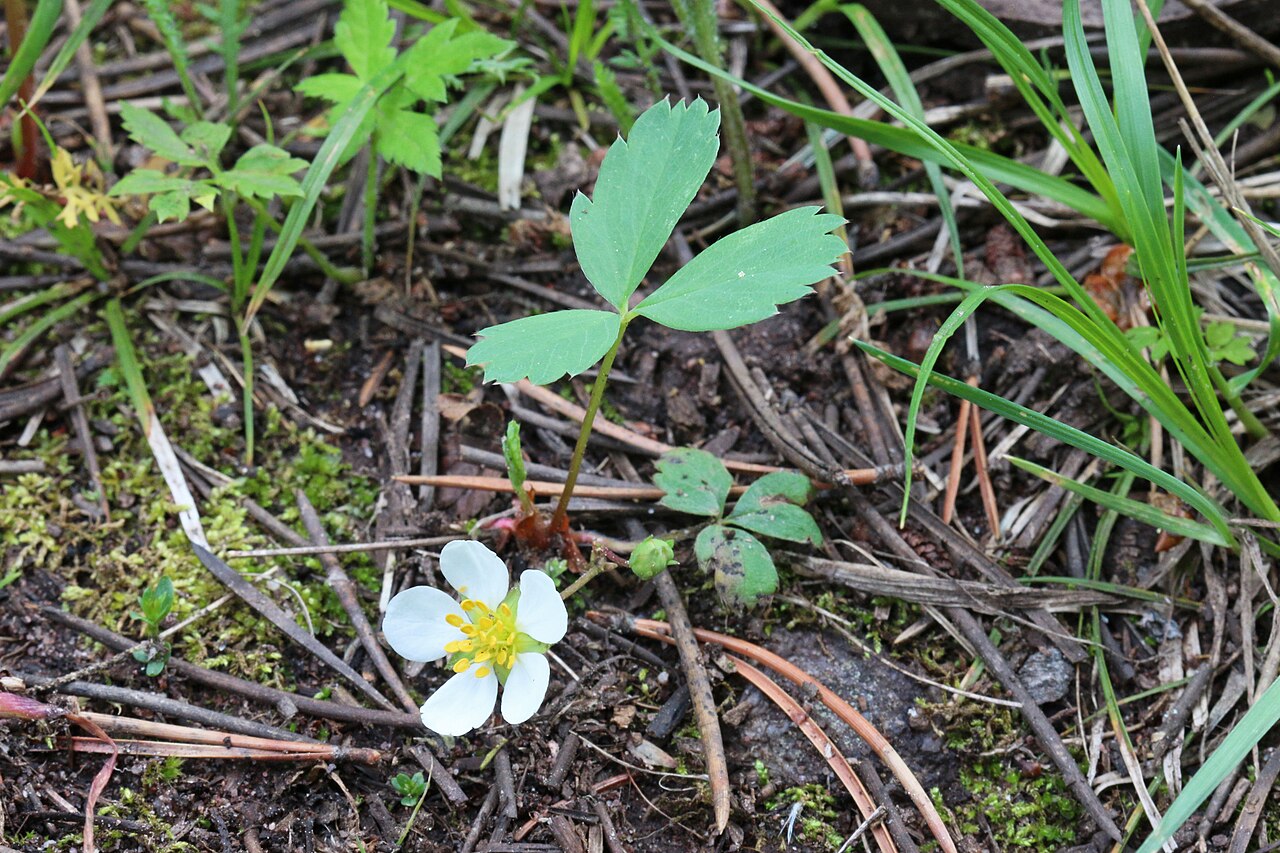
Wild Strawberry ✅ Easily edible
Fragaria virginiana · Rose family
Tiny wild strawberries, far more intense than any store berry, and completely safe.
Wild Strawberry ✅ Easily edible
Tiny wild strawberries, far more intense than any store berry, and completely safe.


What it is
A low groundcover with three-part leaves, white flowers, and tiny red strawberries in meadows and forest edges.
How to identify
- Low groundcover spreading by runners.
- Leaves in threes, toothed, blue-green.
- White five-petaled flowers with a yellow center.
- Tiny true strawberries with seeds set into the surface.
Where & when
Meadows, open forest, and trail edges, low to high elevation.
✅ Edibility
Small but intensely flavored, far better than any grocery strawberry. Completely safe. The leaves also make a fine tea.
Lookalikes & cautions
The lookalike “mock strawberry” has yellow flowers and bland fruit but is not toxic; true wild strawberry has white flowers and superb flavor.
Field notes
The garden strawberry was bred partly from this species; wild plants reward patient picking with unmatched flavor.
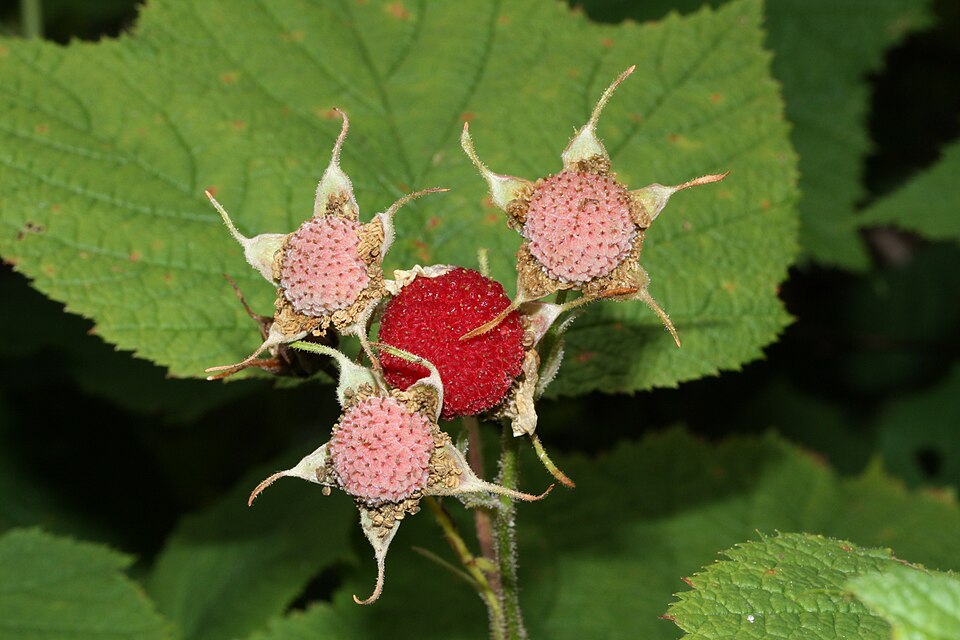
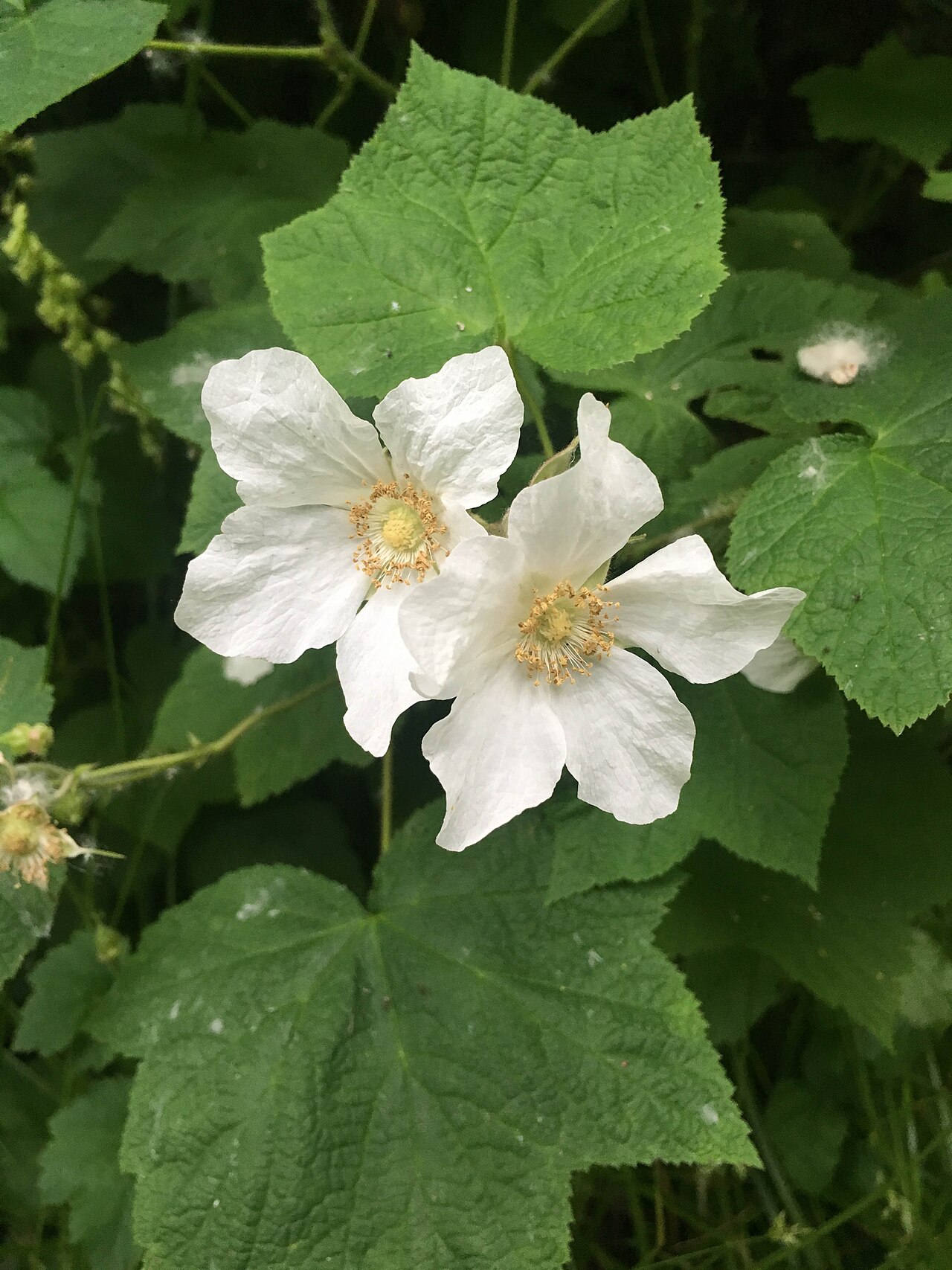
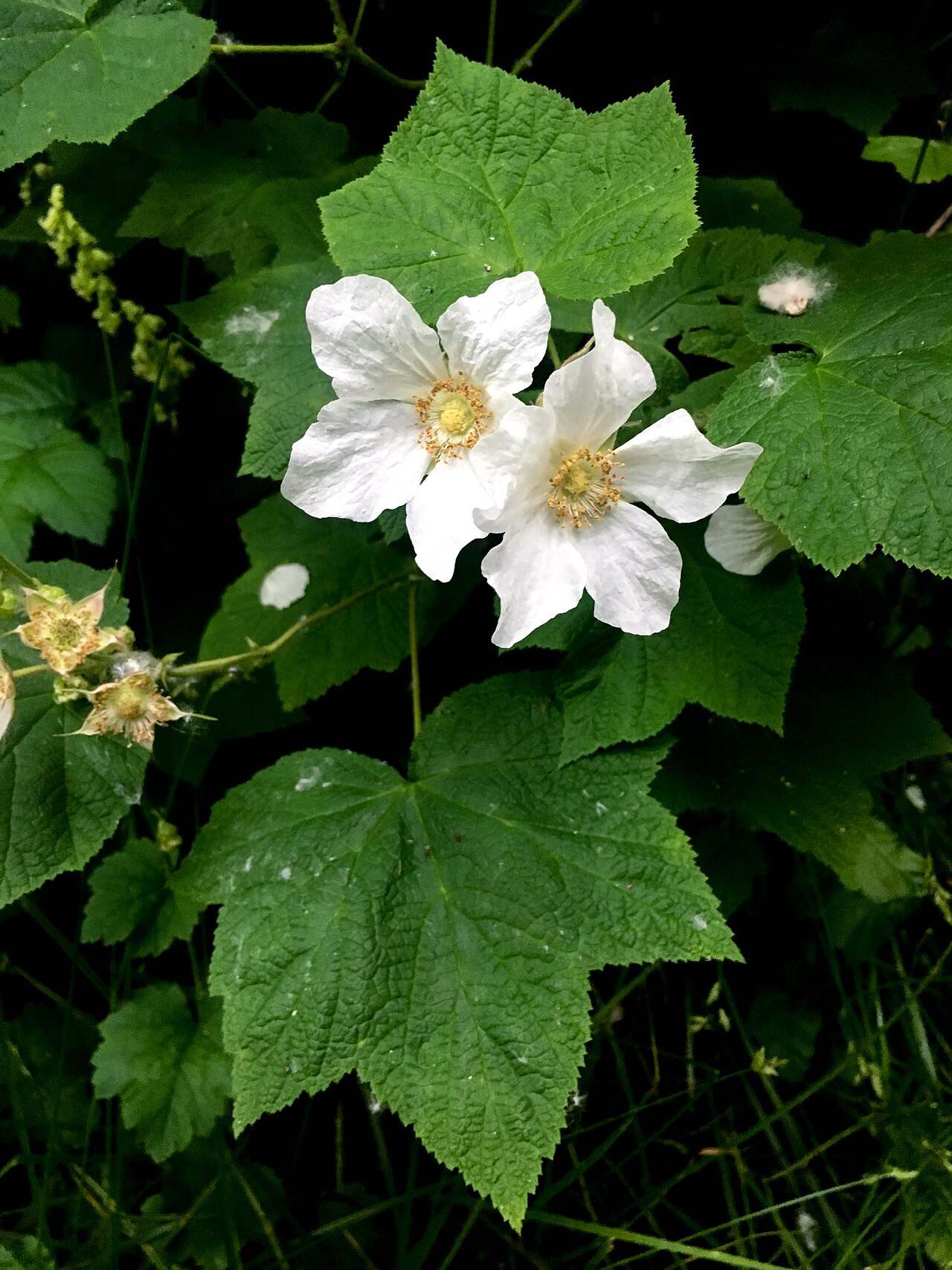
Thimbleberry ✅ Easily edible
Rubus parviflorus · Rose family
A thornless bramble with big soft maple-shaped leaves and shallow, cap-like red berries.
Thimbleberry ✅ Easily edible
A thornless bramble with big soft maple-shaped leaves and shallow, cap-like red berries.
What it is
A thornless bramble with big soft maple-shaped leaves, white flowers, and shallow, cap-like red berries you pick like a thimble.
How to identify
- Thornless (unarmed) shrub with large, soft, fuzzy, maple-shaped leaves.
- Large white five-petaled flowers.
- Berries shallow, domed, and hollow like a thimble, bright red when ripe, falling apart easily.
- Forms colonies in moist ground.
Where & when
Moist forest, streamsides, and clearings, low to mid elevation.
✅ Edibility
Soft, tart-sweet, and safe. Delicate and doesn’t keep, so eat them on the spot.
Lookalikes & cautions
No thorns and big maple-like leaves separate it from raspberries; all these Rubus are edible.
Field notes
The berries are too soft to ship, which is why you only ever taste them in the wild.
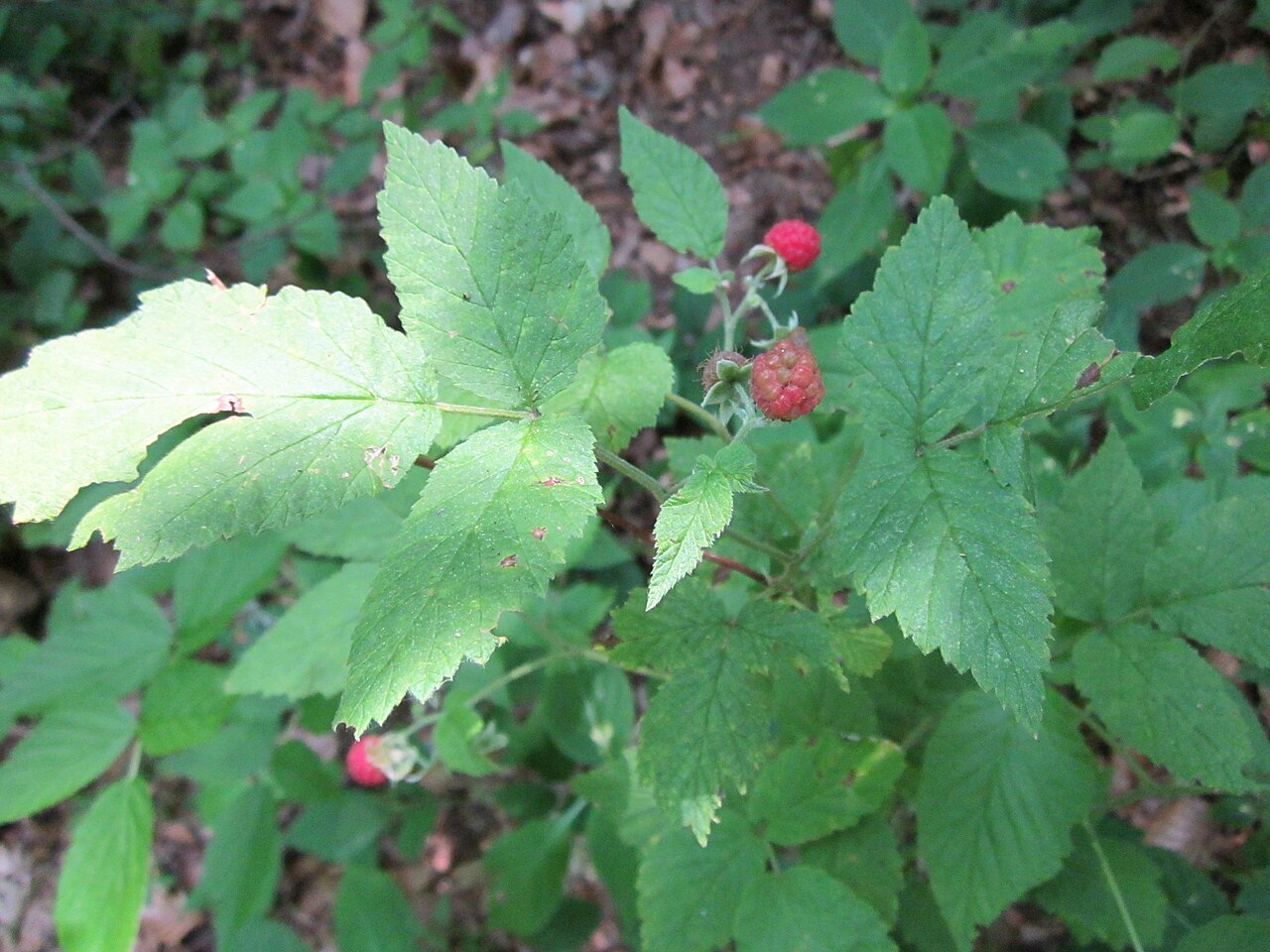
Wild Red Raspberry ✅ Easily edible
Rubus idaeus · Rose family
The wild ancestor of the garden raspberry, unmistakable and delicious.
Wild Red Raspberry ✅ Easily edible
The wild ancestor of the garden raspberry, unmistakable and delicious.
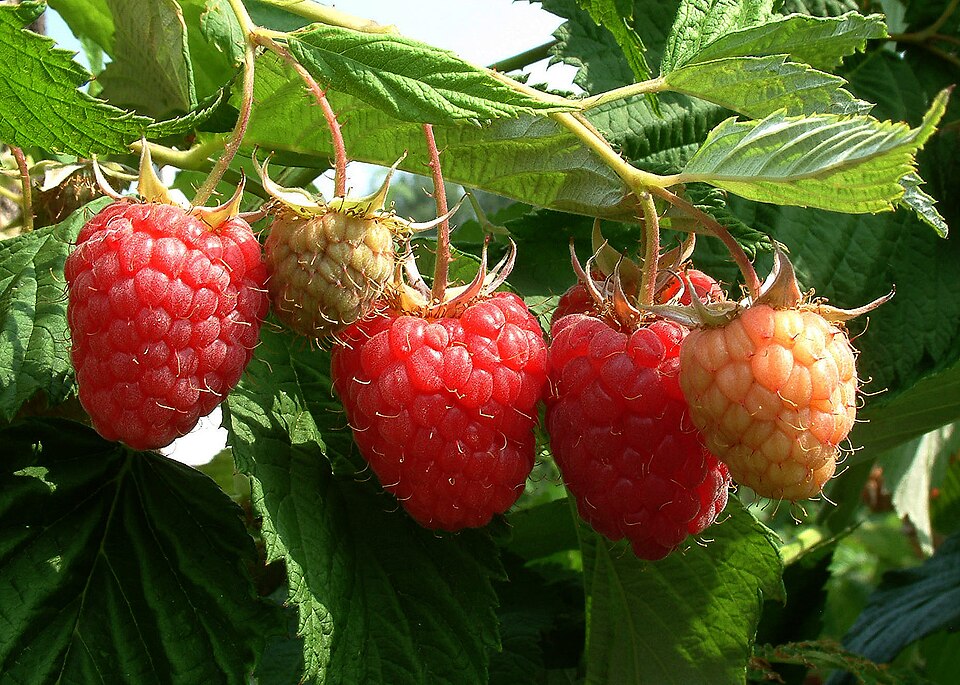
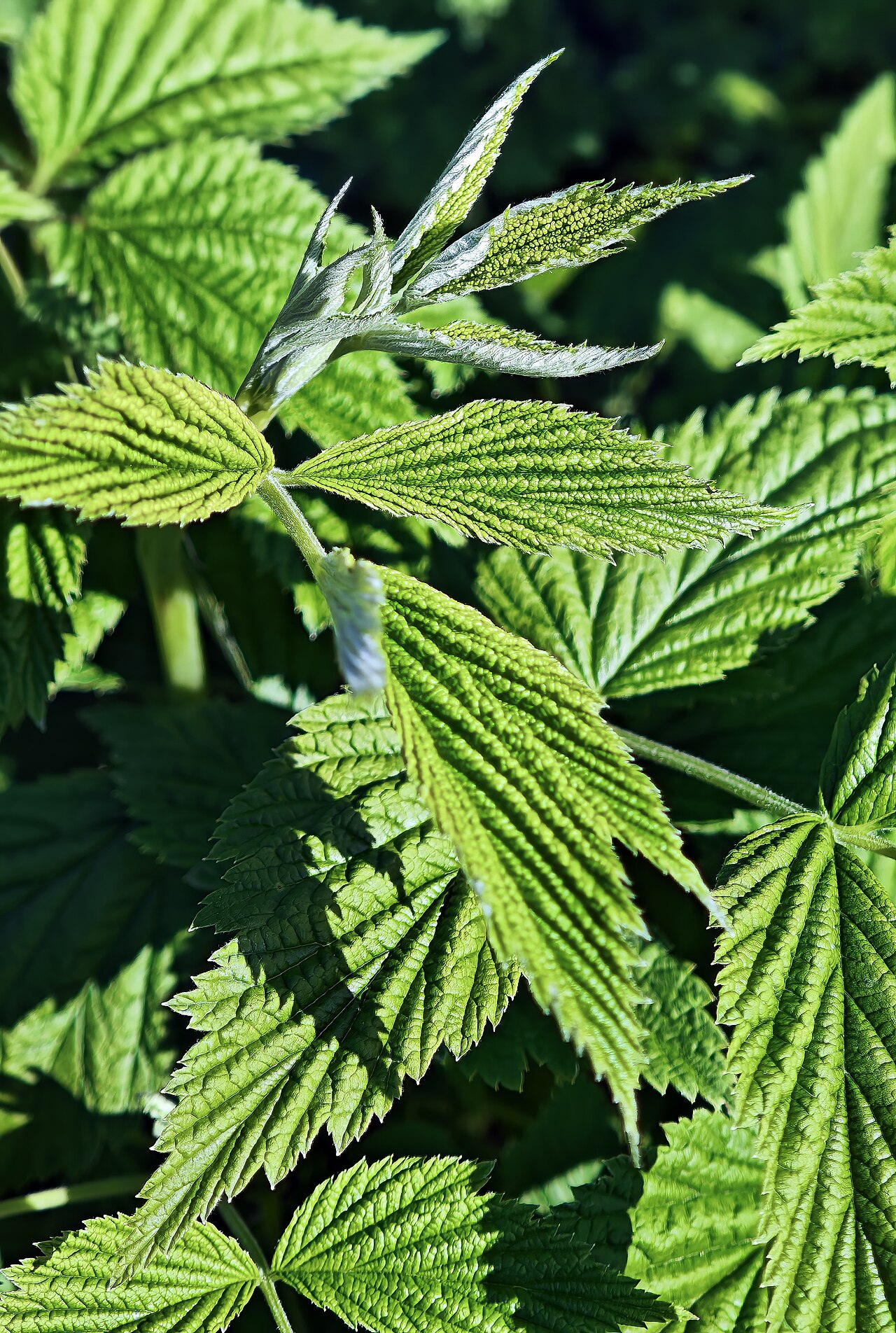
What it is
The wild ancestor of the garden raspberry, with arching prickly canes and true red raspberries in rocky, disturbed ground.
How to identify
- Arching canes with slender prickles.
- Compound leaves of 3 to 5 toothed leaflets, white-woolly beneath.
- White flowers, then true raspberries.
- Berry pulls off its core hollow, exactly like a store raspberry.
Where & when
Rocky slopes, burns, clearings, and roadsides, low to high elevation.
✅ Edibility
Unmistakable and delicious, exactly like a small store raspberry. One of the safest wild fruits to learn.
Lookalikes & cautions
The hollow-picking red berry and prickly canes are diagnostic; all wild raspberries and blackberries are edible.
Field notes
Thrives on disturbed and burned ground, so recent burns can produce spectacular raspberry crops.
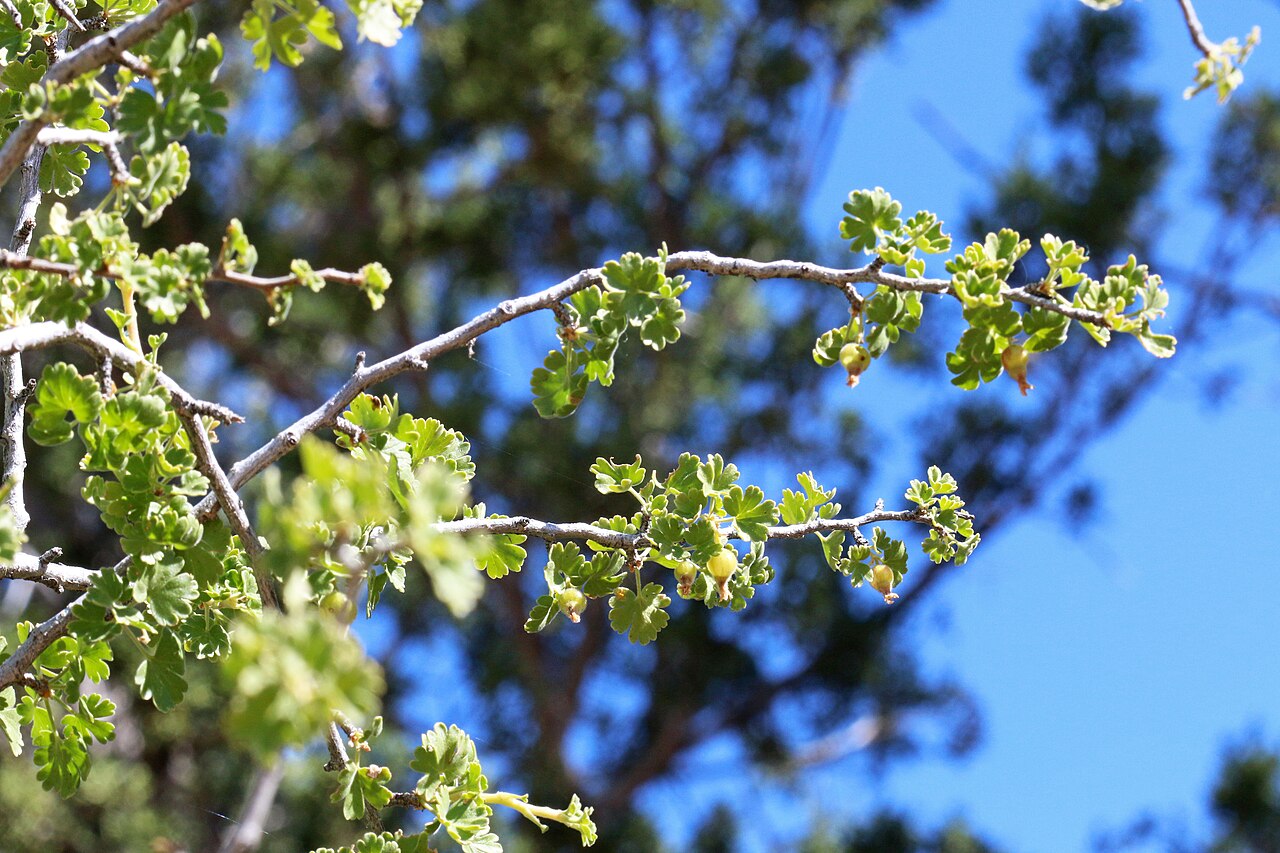
Wild Gooseberry ✅ Edible
Ribes inerme · Gooseberry family
A spiny currant relative with striped, tart berries marked by a dried flower tail.
Wild Gooseberry ✅ Edible
A spiny currant relative with striped, tart berries marked by a dried flower tail.


What it is
A currant relative armed with spines, bearing striped green-to-purple berries marked with the dried flower tail at the tip.
How to identify
- Shrub armed with spines at the leaf nodes (unlike the thornless currants).
- Small maple-like lobed leaves.
- Small greenish to pink dangling flowers.
- Round berries with faint stripes and a dried flower “tail” at the tip.
Where & when
Streamsides, moist slopes, and thickets, low to mid elevation.
✅ Edibility
Berries are edible raw when ripe and excellent cooked into pie or jam, tart with a bit of prickle to navigate.
Lookalikes & cautions
Spines separate gooseberries from the thornless currants; all native Ribes are edible.
Field notes
Gooseberries and currants were once banned in parts of the U.S. because they host white pine blister rust.
Russet Buffaloberry ⚠️ Edible but bitter
Shepherdia canadensis · Oleaster family
Tart, soapy red berries (whipped into “Indian ice cream”); bitter and vitamin-rich.
Russet Buffaloberry ⚠️ Edible but bitter
Tart, soapy red berries (whipped into “Indian ice cream”); bitter and vitamin-rich.


What it is
A shrub with silvery-scaly leaf undersides and translucent red-orange berries, also called soapberry for its foamy juice.
How to identify
- Shrub with opposite oval leaves, dark green above and silver-scaly with rusty dots beneath.
- Twigs and buds coated in rusty-brown scales.
- Small inconspicuous flowers.
- Translucent red-orange berries with a bitter, soapy taste.
Where & when
Open forest, streamsides, and rocky slopes, mid to high elevation.
⚠️ Edibility
Edible and vitamin-rich but notably bitter and soapy (saponins). Traditionally whipped into “Indian ice cream”; eating a lot raw can upset the stomach.
Lookalikes & cautions
The silver-and-rust scaly leaf undersides are diagnostic; the bitter soapy taste distinguishes it from sweet red berries.
Field notes
The saponins let the crushed berries whip up like egg whites into a frothy traditional dessert.
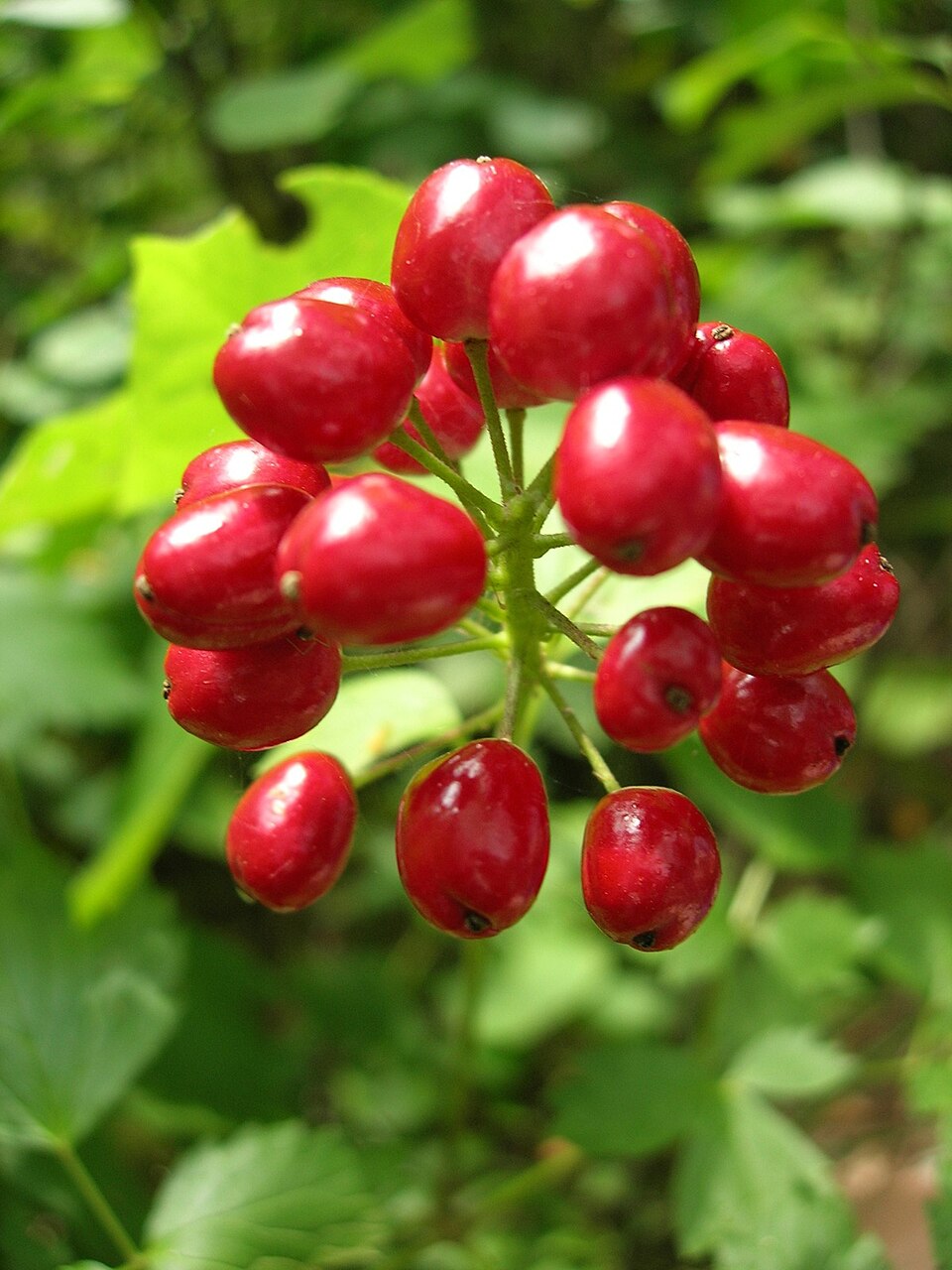
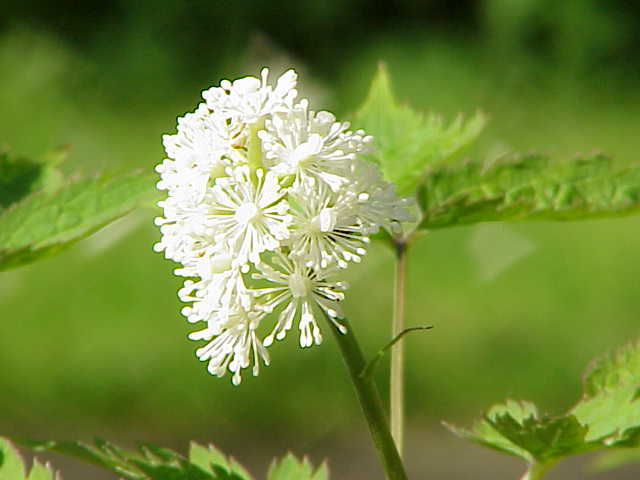
Baneberry ☠️ Deadly poisonous
Actaea rubra · Buttercup family
Glossy red (or white) berries on thick stalks; highly toxic. A handful can kill a child.
Baneberry ☠️ Deadly poisonous
Glossy red (or white) berries on thick stalks; highly toxic. A handful can kill a child.


What it is
A woodland plant with lacy leaves and a tight cluster of glossy red (sometimes white “doll’s-eyes”) berries on thick red stalks.
How to identify
- Leafy perennial, 1 to 3 ft, with large, toothed, sharply divided leaves.
- A tight cluster of glossy berries on thick, often reddish, stalks.
- Berries shiny red, or white with a dark eye (doll’s-eyes), each with a dark dot.
- Grows in shaded, moist forest.
Where & when
Shaded, moist forest and streamsides, mid elevation.
☠️ Edibility
Highly toxic. The berries and roots can cause cardiac arrest; a small handful of berries can be fatal to a child. Never eat. Learn to recognize it.
Lookalikes & cautions
The glossy berries on thick stalks separate it from soft-clustered edible berries; the whole plant is in the buttercup family and is poisonous.
Field notes
The bright, candy-like berries are the danger, especially to children; teach kids to recognize and avoid it.
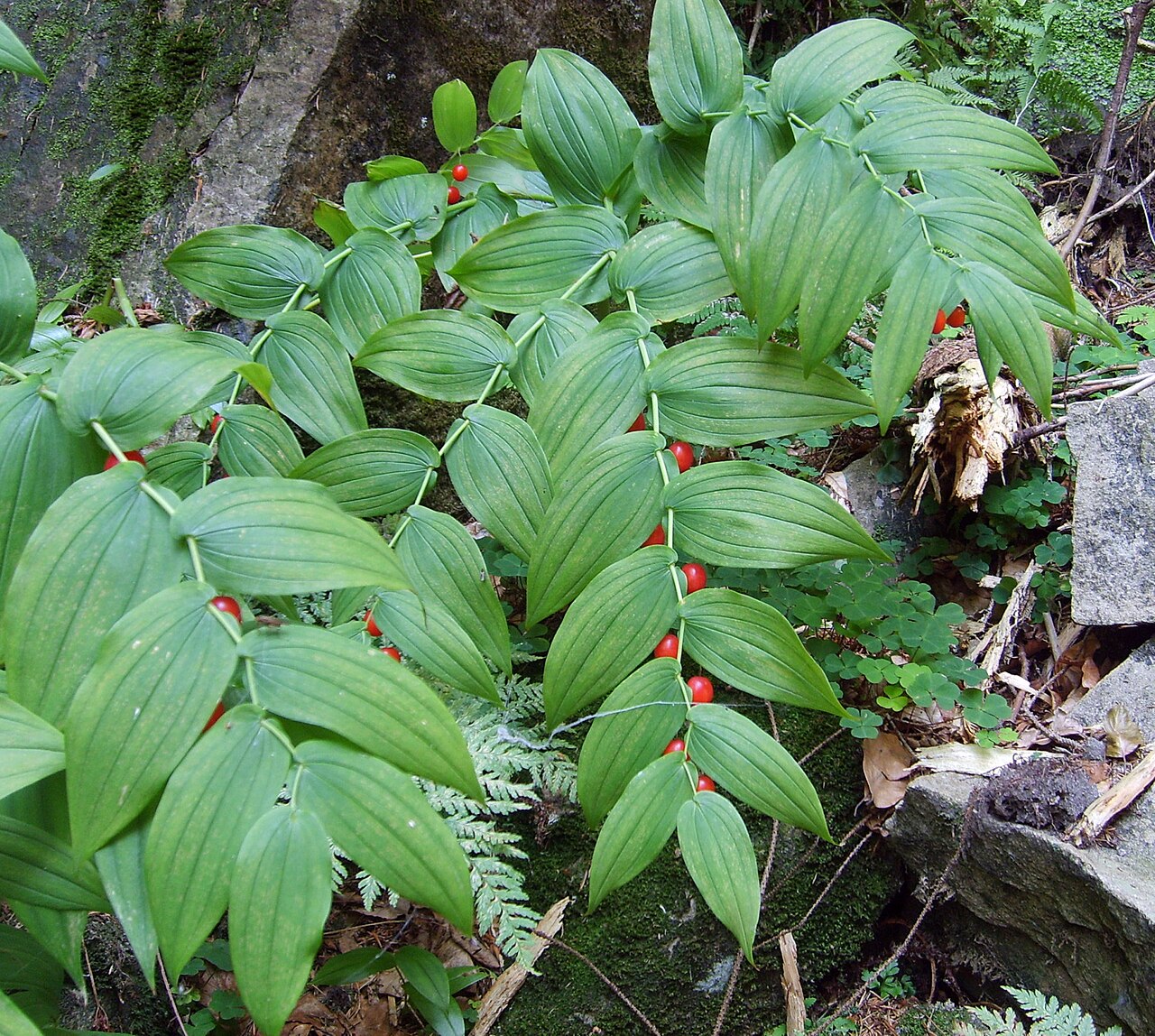
Claspleaf Twisted-stalk ⚠️ Edible, easily confused
Streptopus amplexifolius · Lily family
Arching kinked stems with red berries dangling on twisted stalks; edible but for experts only.
Claspleaf Twisted-stalk ⚠️ Edible, easily confused
Arching kinked stems with red berries dangling on twisted stalks; edible but for experts only.


What it is
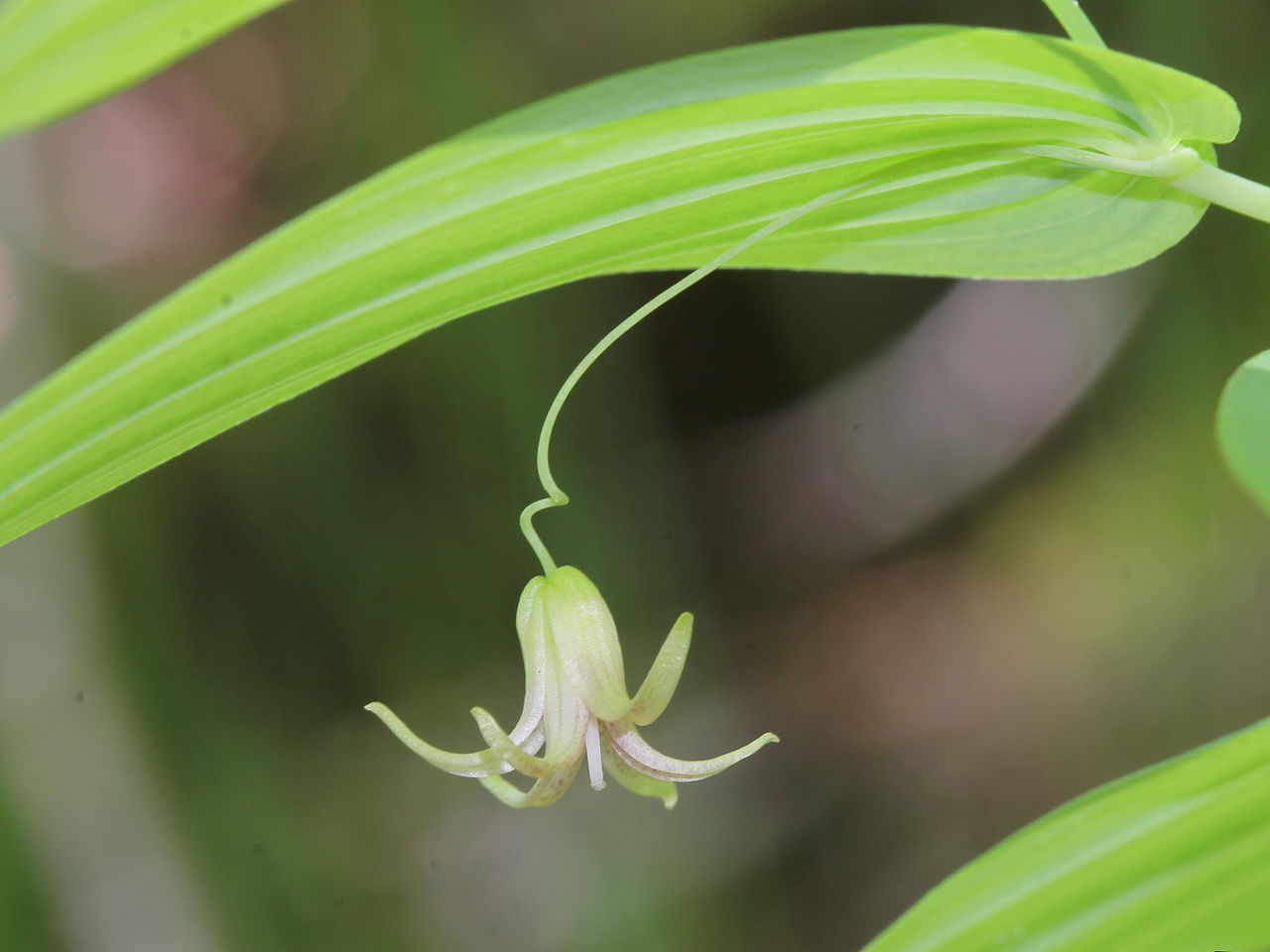
An arching, kinked stem with clasping leaves and small red-orange berries dangling on twisted stalks beneath, in wet forest.
How to identify
- Arching stem with a distinctive zig-zag “kink” at each leaf node.
- Leaves clasp the stem and are arranged in two ranks.
- Small greenish-white bell flowers, then berries, hang below the stem on sharply twisted stalks.
- Red to orange translucent berries.
Where & when
Wet, shaded forest and streamsides, mid to high elevation.
⚠️ Edibility
Young shoots and berries are edible with a cucumber taste, but the plant resembles toxic lookalikes when not in fruit. For experts only.
Lookalikes & cautions
Out of fruit it can resemble false hellebore and other toxic lilies; only harvest when the twisted, dangling berries confirm the ID.
Field notes
The “twisted stalk” name comes from the sharp bend in each fruit stalk, a reliable ID feature once berries form.
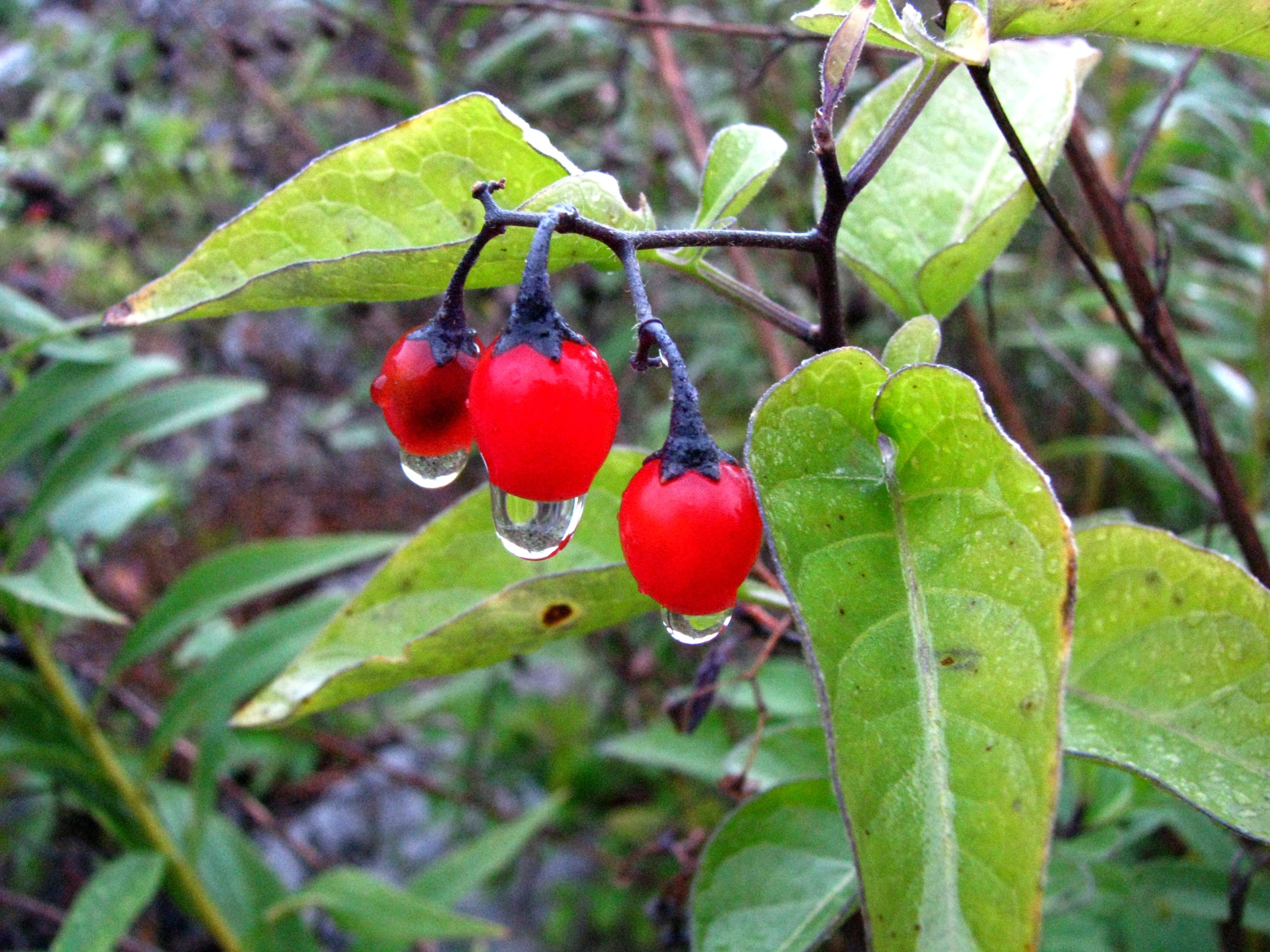
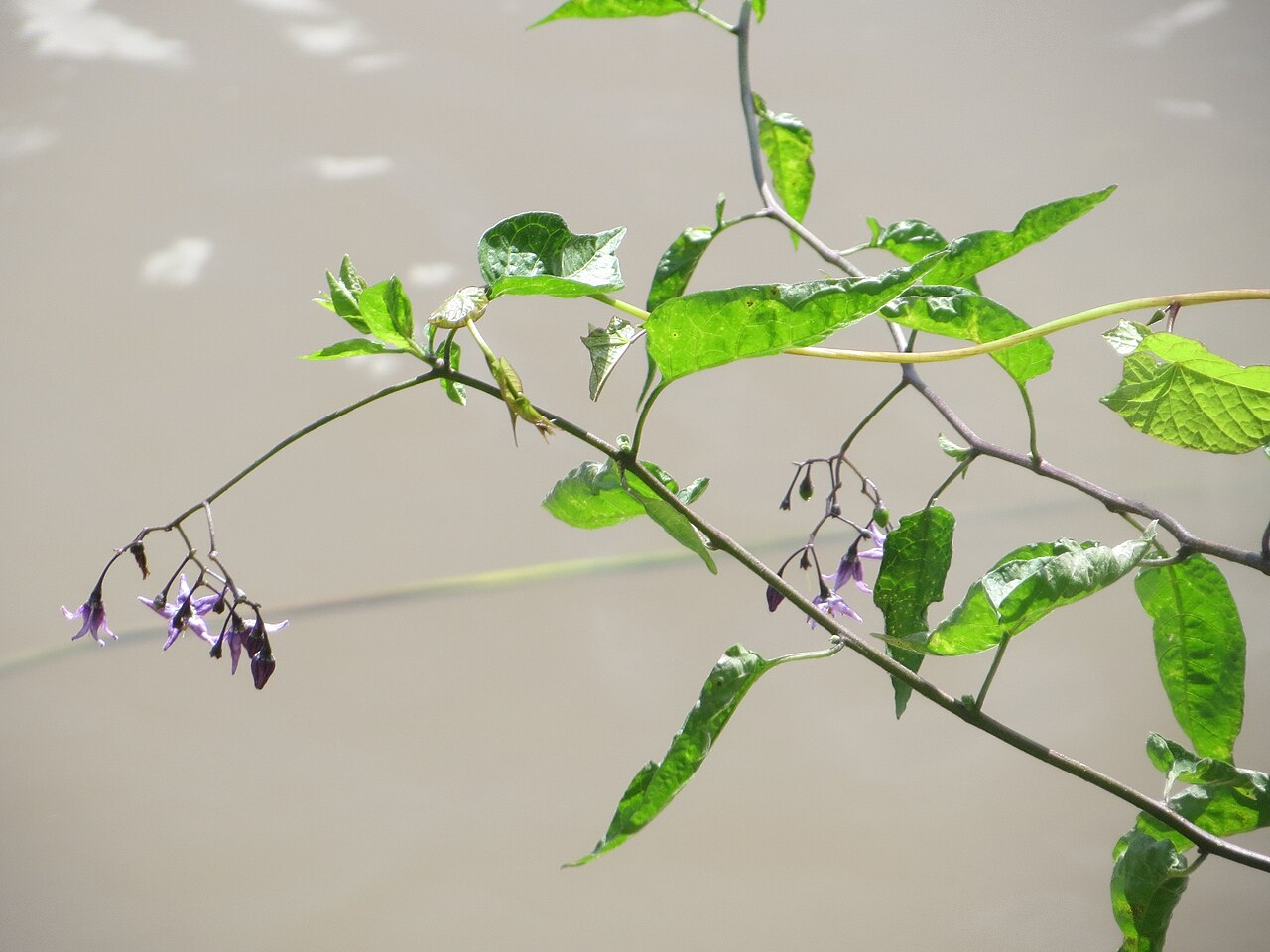
Bittersweet Nightshade ☠️ Poisonous
Solanum dulcamara · Nightshade family
A sprawling vine with purple star flowers and red berries; all parts are toxic.
Bittersweet Nightshade ☠️ Poisonous
A sprawling vine with purple star flowers and red berries; all parts are toxic.
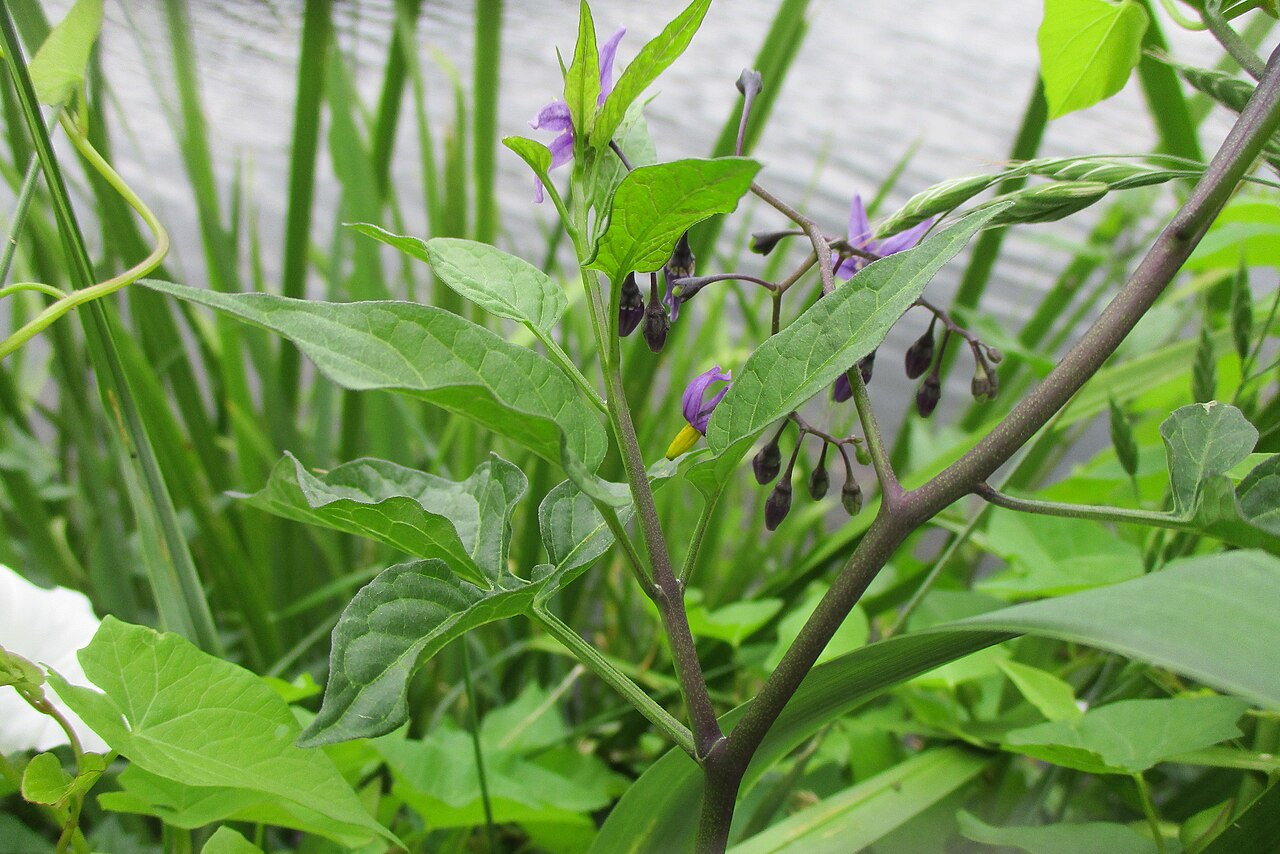
What it is
A sprawling vine with purple star flowers and dangling clusters of egg-shaped berries that ripen green to bright red, in damp, disturbed ground.
How to identify
- Sprawling or climbing vine with slightly lobed leaves.
- Flowers purple, star-shaped, with backswept petals and a protruding yellow “beak” of fused anthers.
- Berries egg-shaped, dangling in clusters, ripening green to glossy red.
- Damp, disturbed ground and thickets.
Where & when
Damp, disturbed ground, thickets, and stream edges, low to mid elevation.
☠️ Edibility
Poisonous. All parts, especially the unripe berries, contain toxic solanine-type alkaloids. This introduced nightshade and its native cousins (such as cutleaf nightshade) are all to be treated as toxic. Do not eat.
Lookalikes & cautions
The purple star flower with a yellow beak and dangling red berries is distinctive; do not confuse the red berries with any edible fruit.
Field notes
An introduced Eurasian relative of tomato and potato; the “bittersweet” name is from the taste of the toxic stems, not an invitation to try them.
Flowers
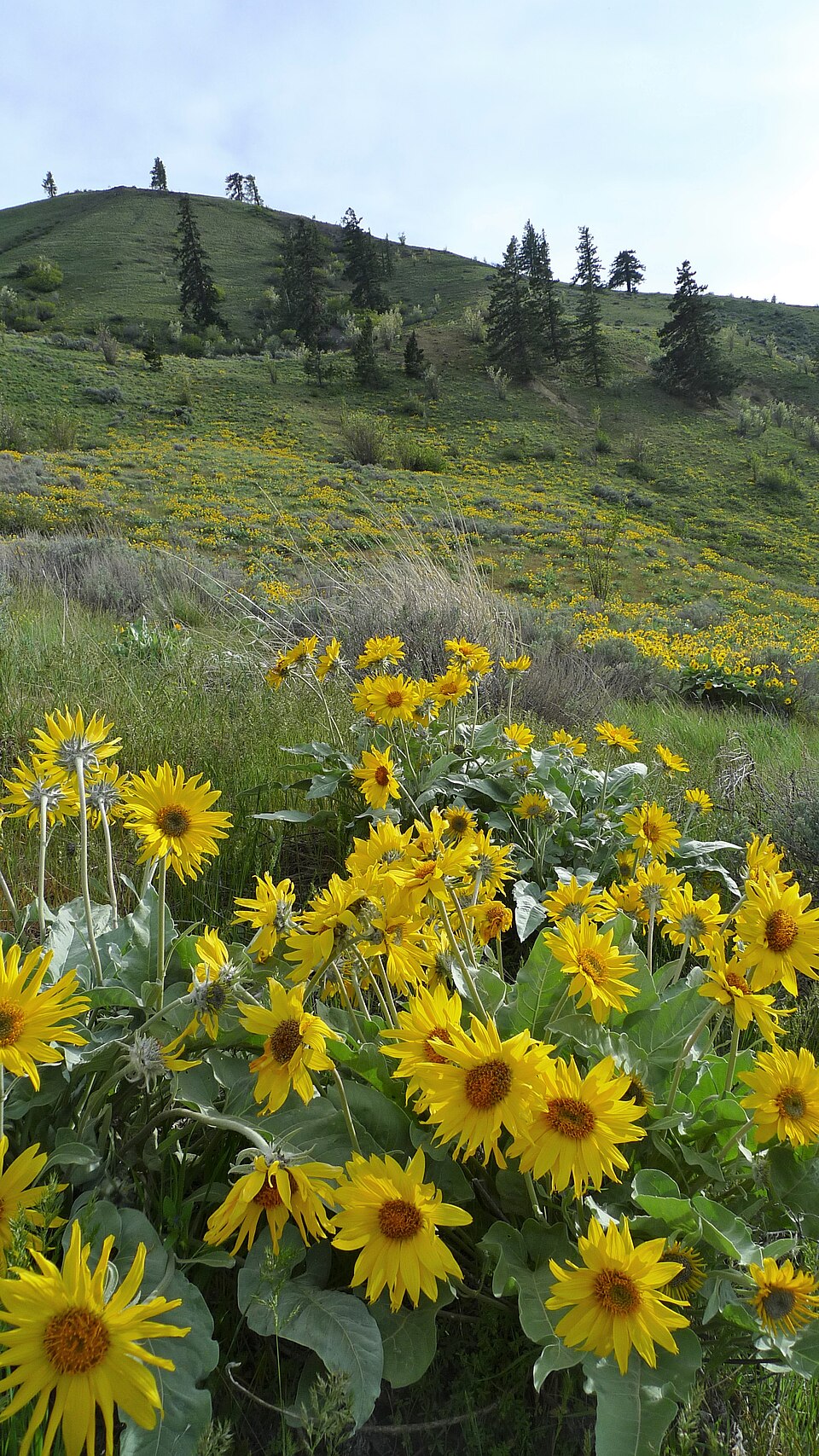
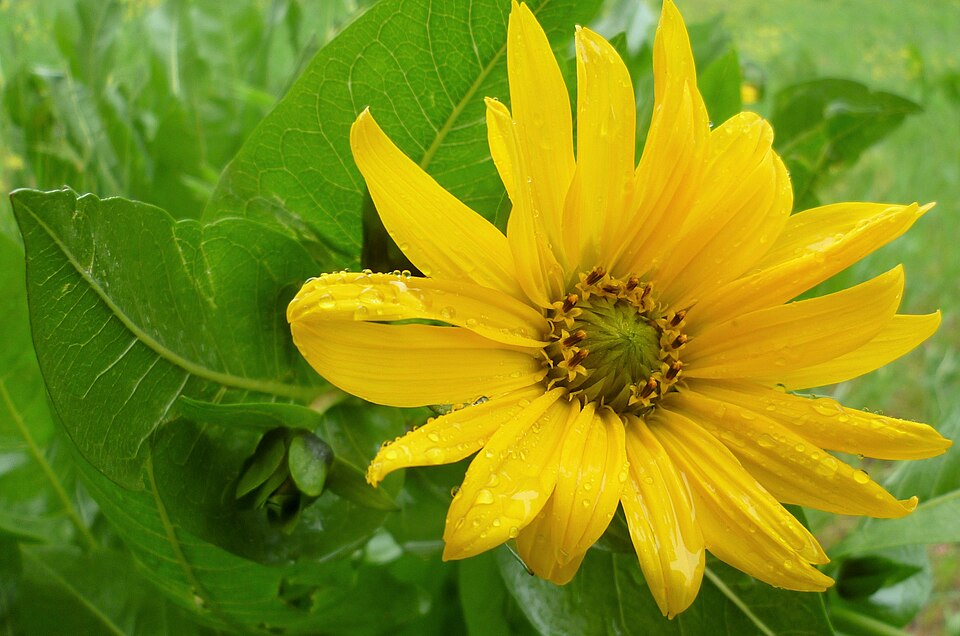
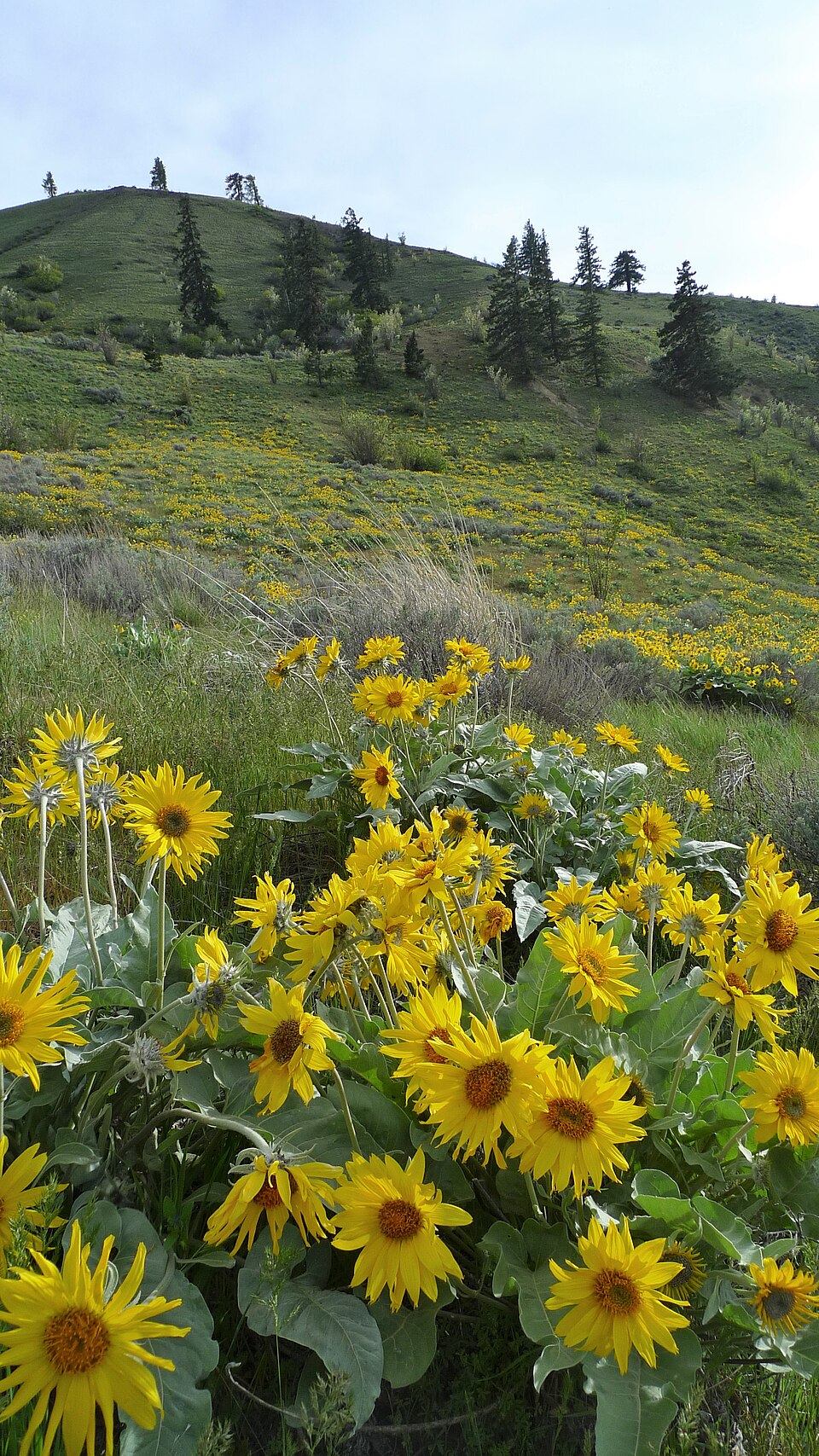
Arrowleaf Balsamroot ✅ Edible (traditional food)
Balsamorhiza sagittata · Sunflower family
The golden sunflower that turns the foothills yellow in May; a traditional food from root to seed.
Arrowleaf Balsamroot ✅ Edible (traditional food)
The golden sunflower that turns the foothills yellow in May; a traditional food from root to seed.


What it is
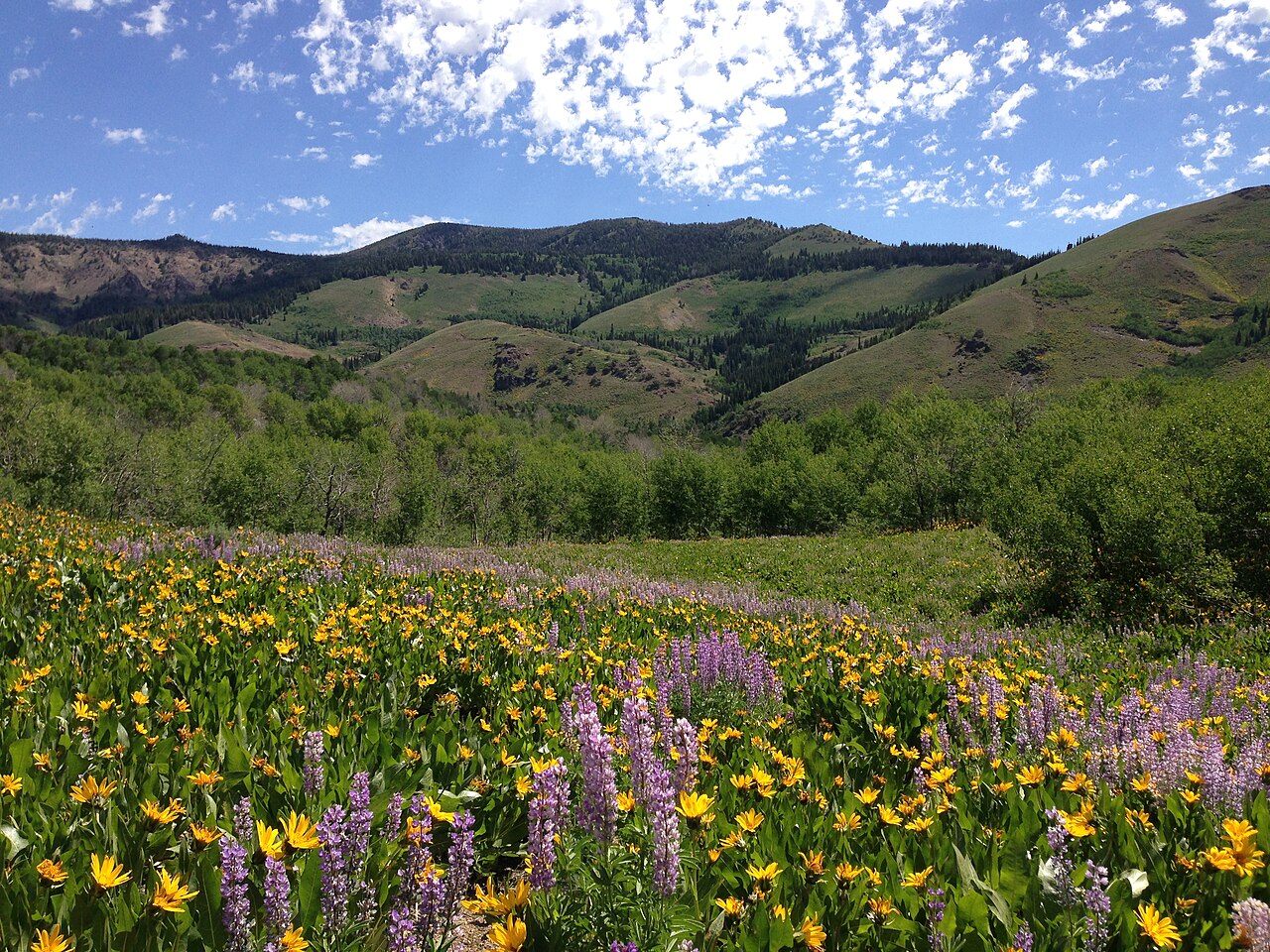
The big golden sunflower that washes entire foothills yellow in May, over large silver arrowhead leaves, a cornerstone food of Native peoples.
How to identify
- Clump-forming perennial, 1 to 2 ft, from a deep woody taproot.
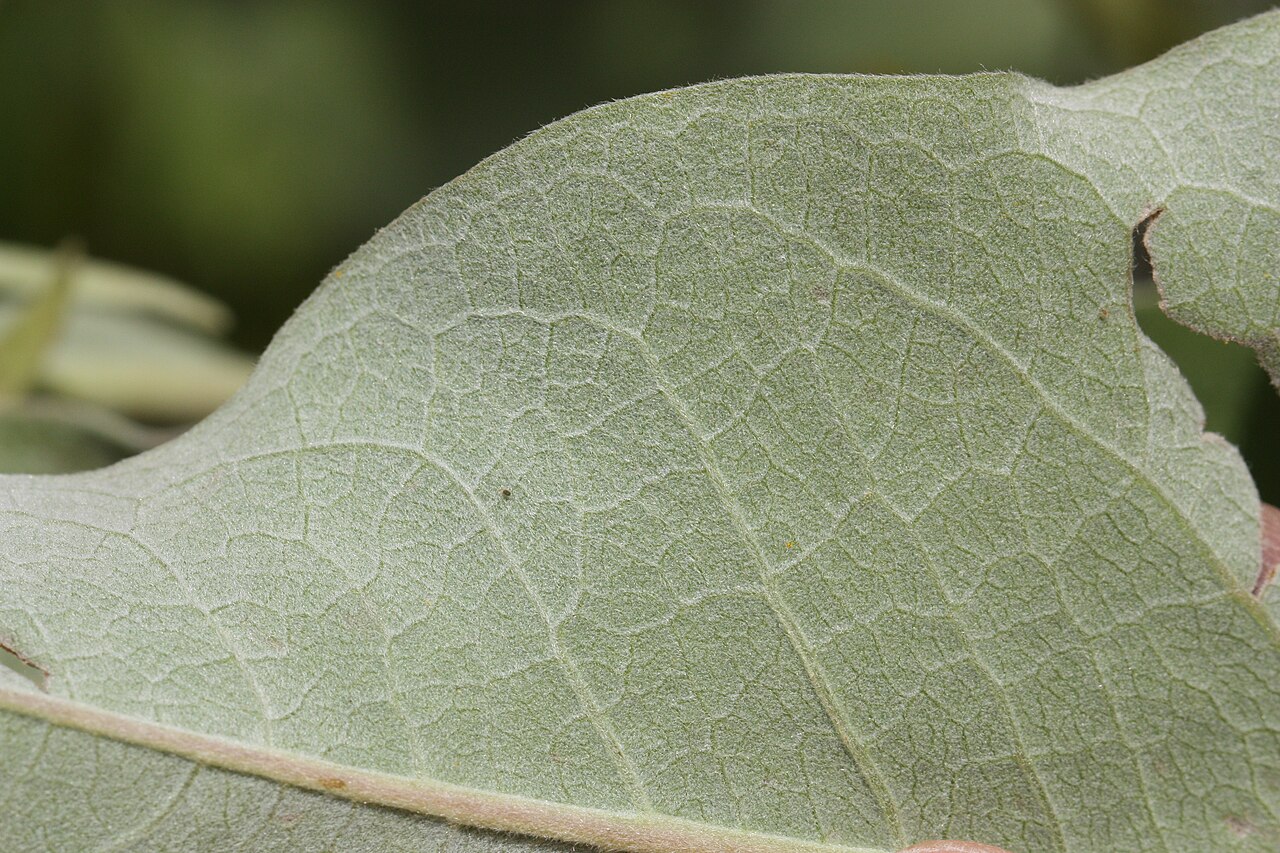
- Leaves basal and large (up to a foot), triangular and arrowhead-shaped, gray-green and softly hairy (silvery).
- Sunflower-like heads 3 to 4 in across, bright yellow rays around a yellow center, usually one per stalk.
- Blooms in a spectacular foothill display.
Where & when
Dry sagebrush foothills, open hillsides, and juniper edges, low to mid elevation. Peak bloom in May.
✅ Edibility
Widely used traditionally: young leaves and flower stalks as cooked greens, seeds roasted (oily, sunflower-seed-like), and the large taproot pit-roasted. Bitter but genuinely edible.
Lookalikes & cautions
Mule’s ears grows alongside and looks similar but has glossy green (not silvery arrowhead) leaves and is not a food. Both are harmless to touch.
Field notes
A drought-hardy native; the deep taproot lets it green up early. Don’t dig the root casually, it takes years to regrow.
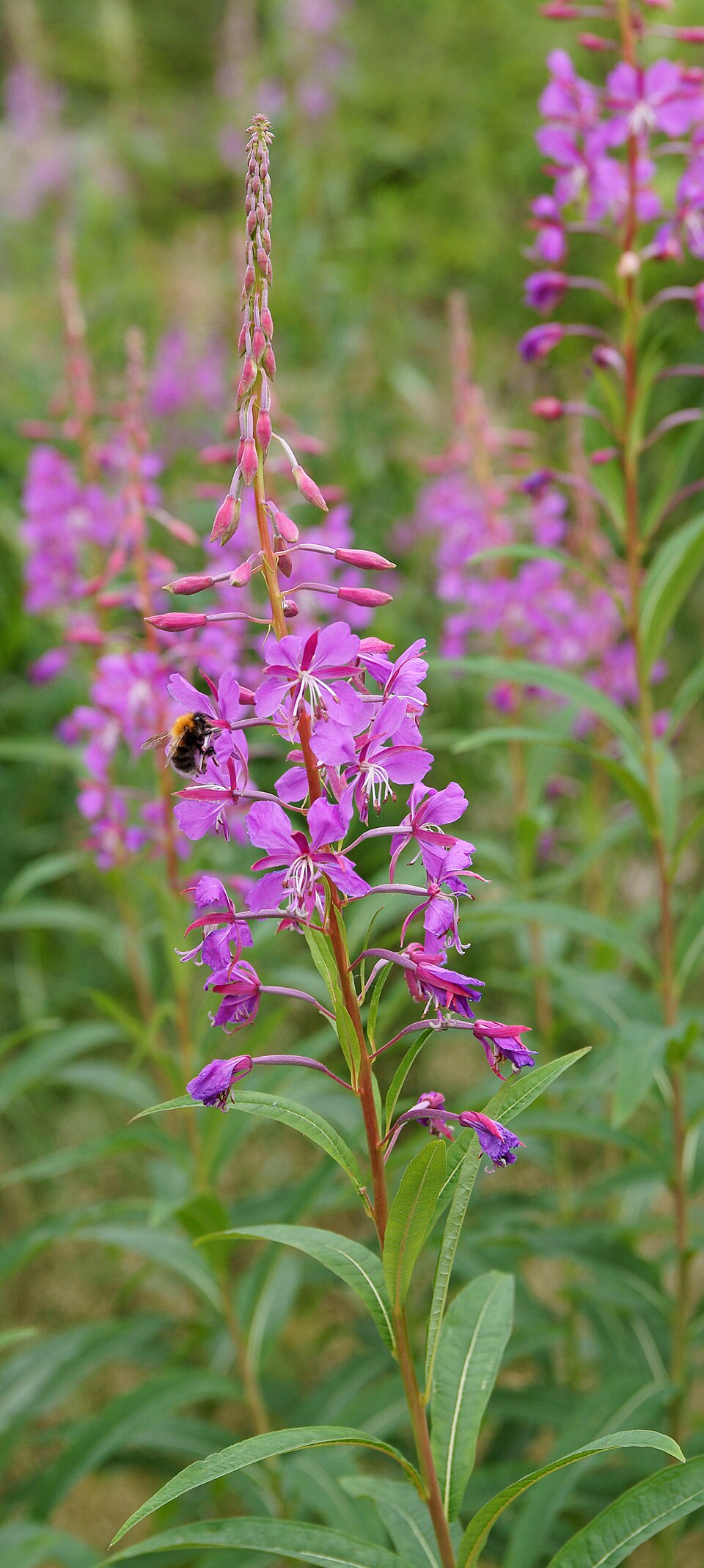
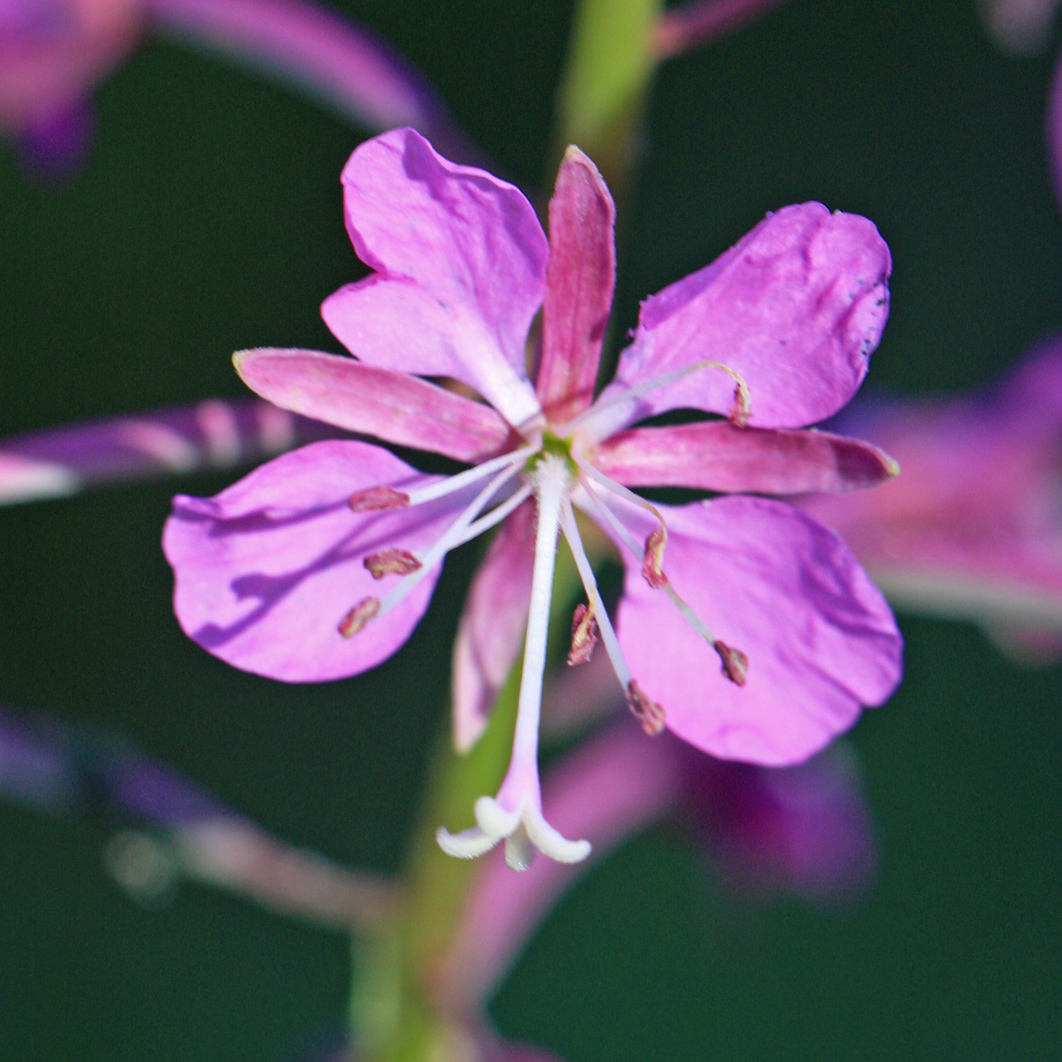
Fireweed ✅ Easily edible
Chamerion angustifolium · Evening primrose family
Tall magenta-pink spikes that blanket burned and cleared ground; a reliable, friendly wild green.
Fireweed ✅ Easily edible
Tall magenta-pink spikes that blanket burned and cleared ground; a reliable, friendly wild green.


What it is
Tall spikes of magenta-pink flowers that blanket burned and cleared ground, a signature of recovering mountain slopes.
How to identify
- Tall, single, unbranched stalk 2 to 6 ft high.
- Willow-like narrow leaves with a pale midvein; veins loop and do not reach the leaf edge.
- A long spike of four-petaled magenta-pink flowers that opens from the bottom up.
- Later forms slender pods that split into silky, wind-borne seed fluff.
Where & when
Burns, clearings, roadsides, and open slopes, low to high elevation.
✅ Edibility
Young spring shoots are eaten like asparagus, the leaves make a well-known tea, and the flowers are edible. A reliable, friendly wild green.
Lookalikes & cautions
The looping leaf veins and bottom-up magenta spike are diagnostic; no toxic lookalike shares this exact form.
Field notes
Named for the way it floods in after wildfire; a classic pioneer that heals scorched ground.
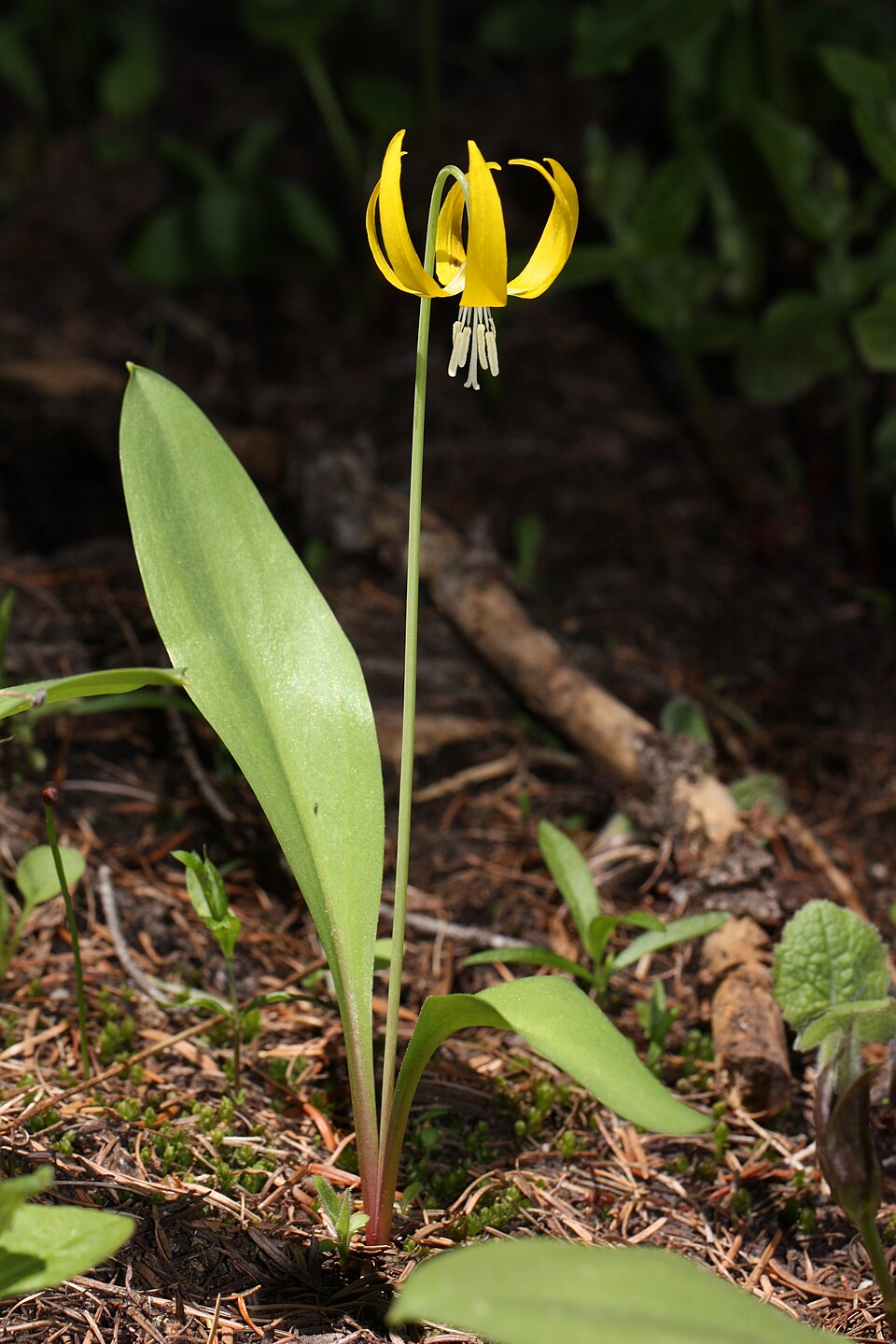
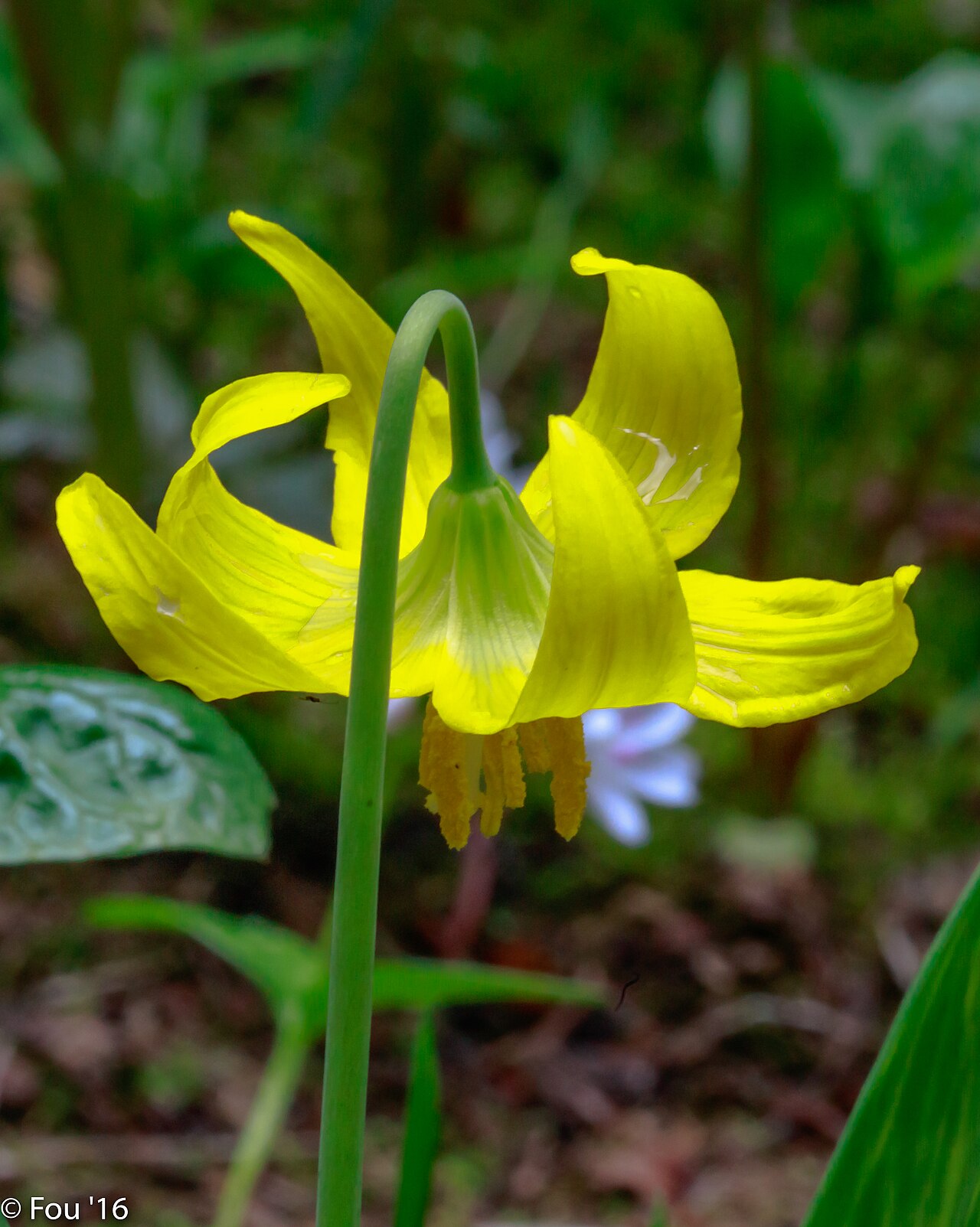
Glacier Lily ⚠️ Edible in moderation
Erythronium grandiflorum · Lily family
Nodding yellow lilies at the edge of melting snow; edible, but don’t dig them.
Glacier Lily ⚠️ Edible in moderation
Nodding yellow lilies at the edge of melting snow; edible, but don’t dig them.


What it is
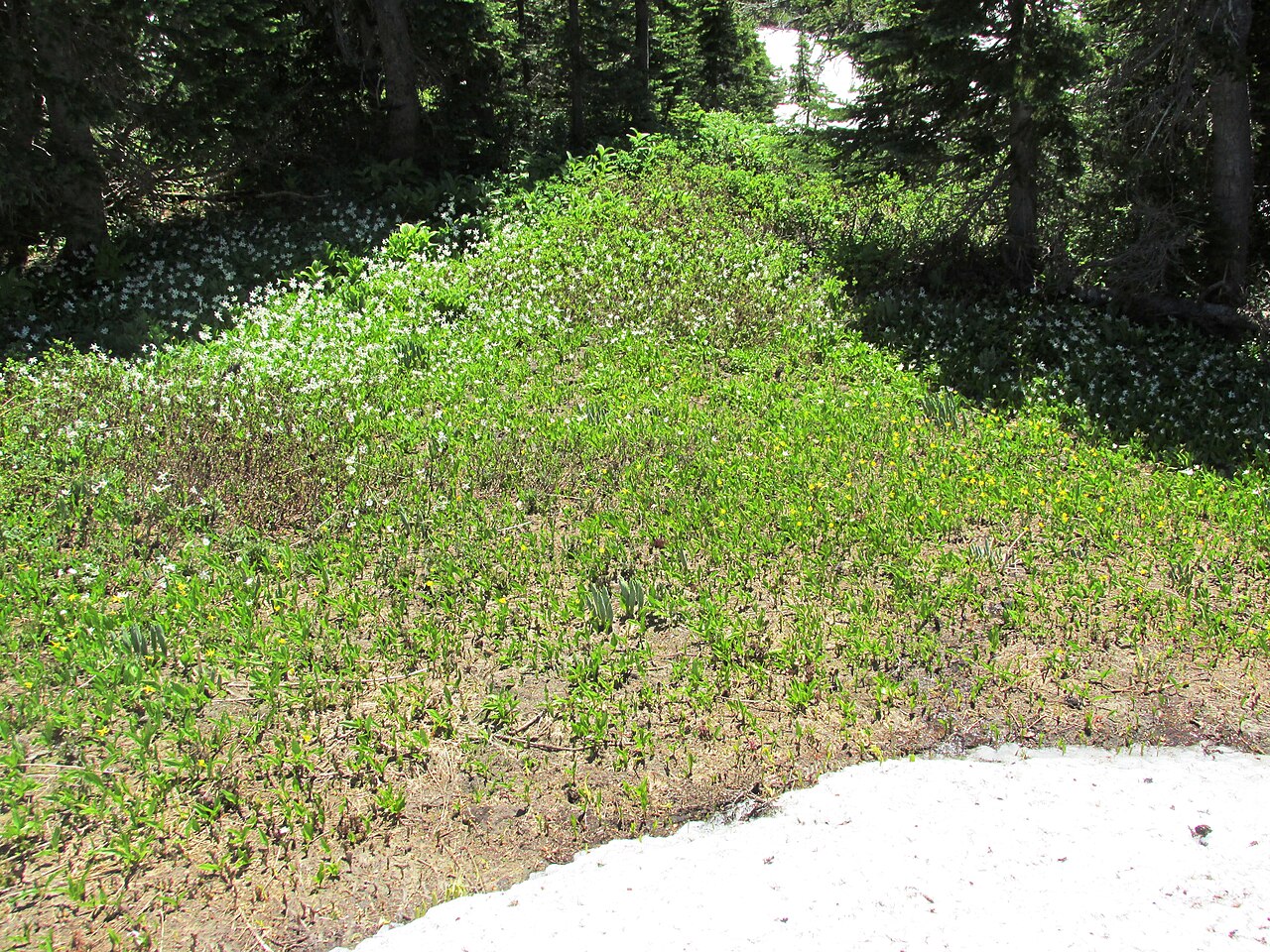
Nodding, swept-back yellow lilies that bloom at the edge of melting snowfields, one of the first flowers of the high country.
How to identify
- A pair of broad, glossy, basal leaves at ground level.
- A single nodding flower (sometimes two or three) with six bright yellow, swept-back tepals.
- Blooms right as the snow melts, often in drifts.
- Grows from a deep bulb.
Where & when
Moist meadows and slopes at the edge of receding snow, mid to high elevation, spring.
⚠️ Edibility
Leaves, flowers, and bulbs are edible and were dug by Native peoples and bears, but large amounts of raw bulb can cause nausea. Don’t dig them, they’re slow to recover.
Lookalikes & cautions
The nodding yellow lily with swept-back tepals is distinctive; unlike wild bulbs to avoid, but still harvest only with certainty.
Field notes
Also called dogtooth violet or avalanche lily; grizzlies dig the bulbs on high slopes in spring.
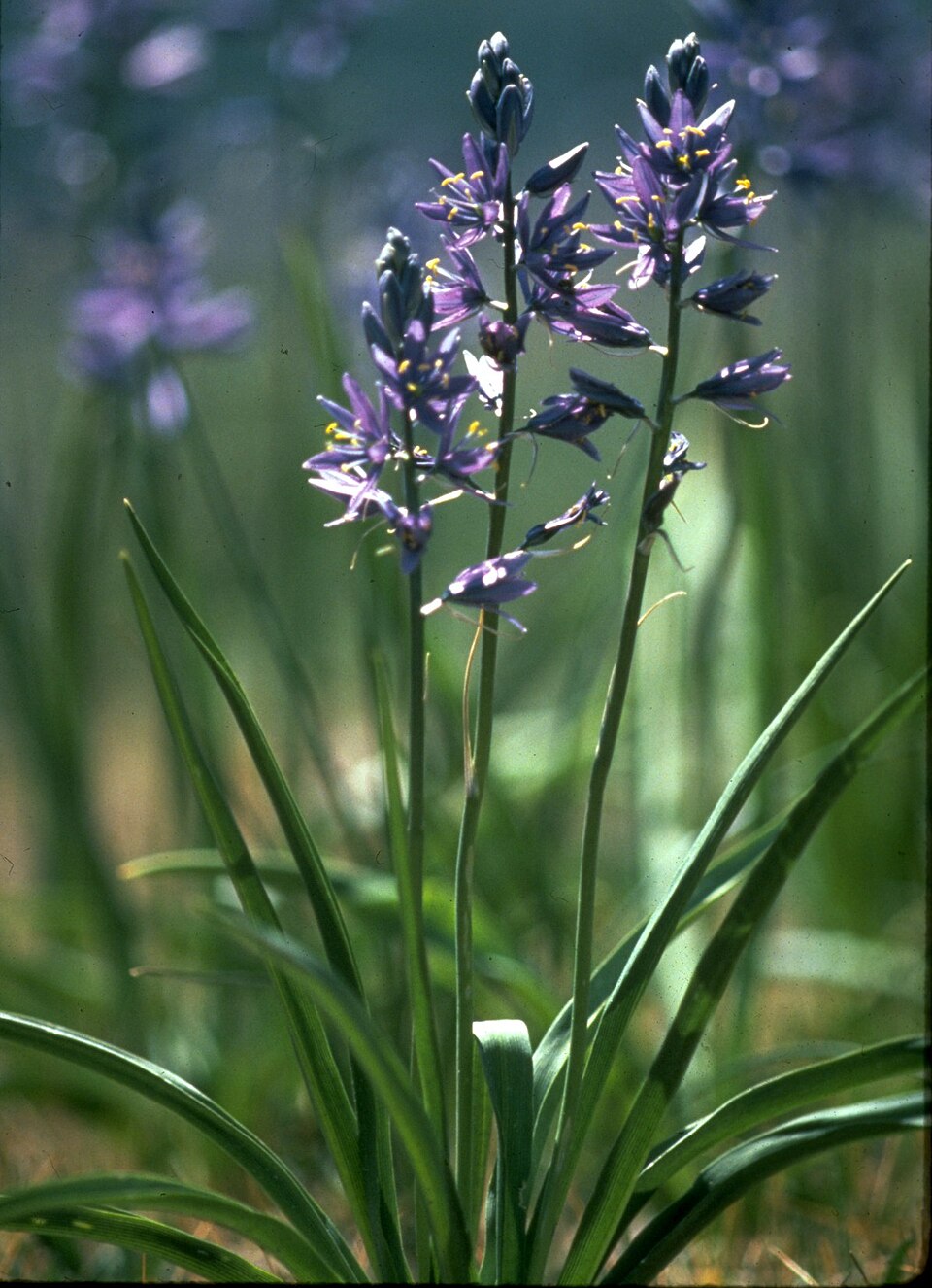
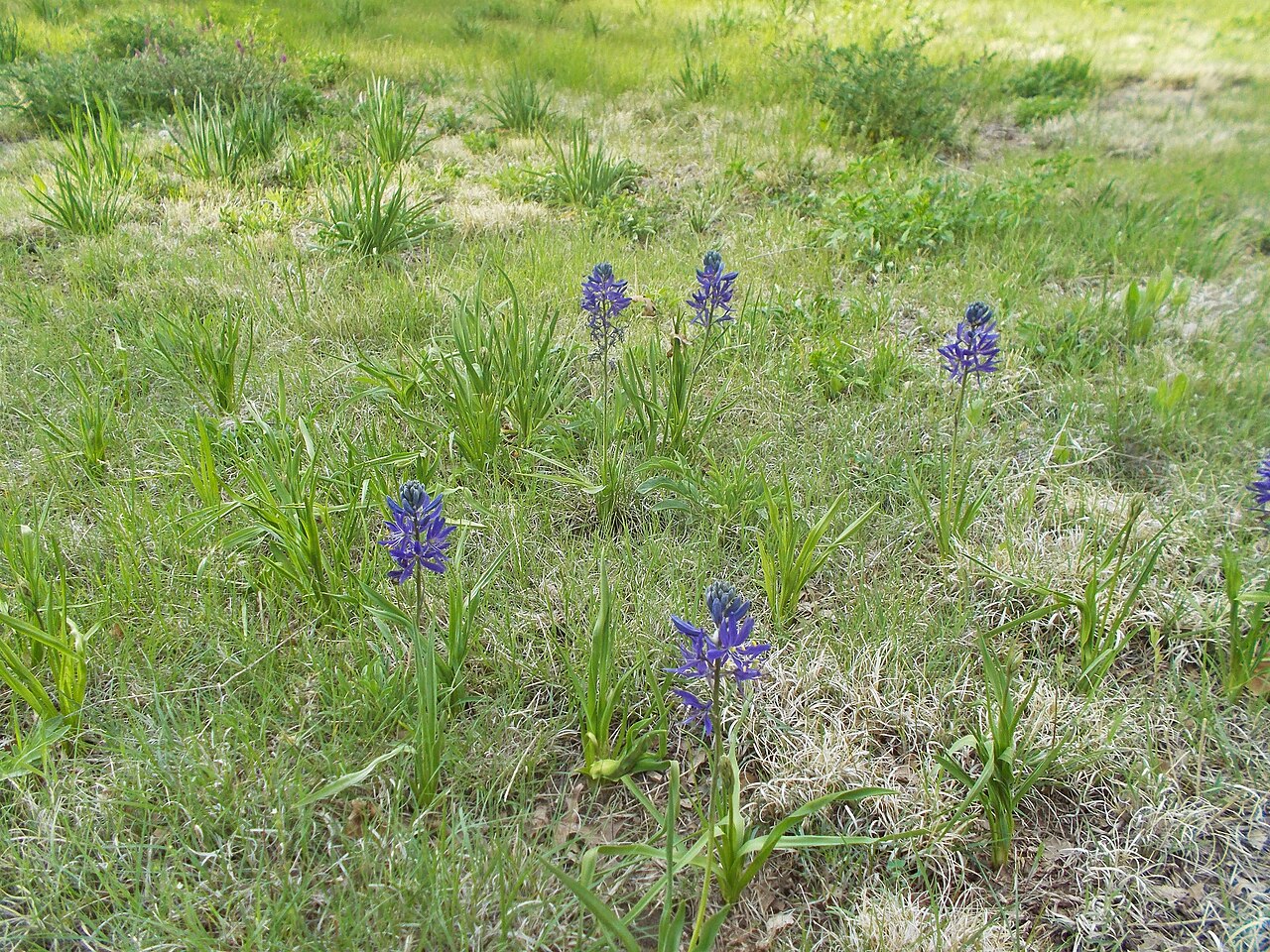
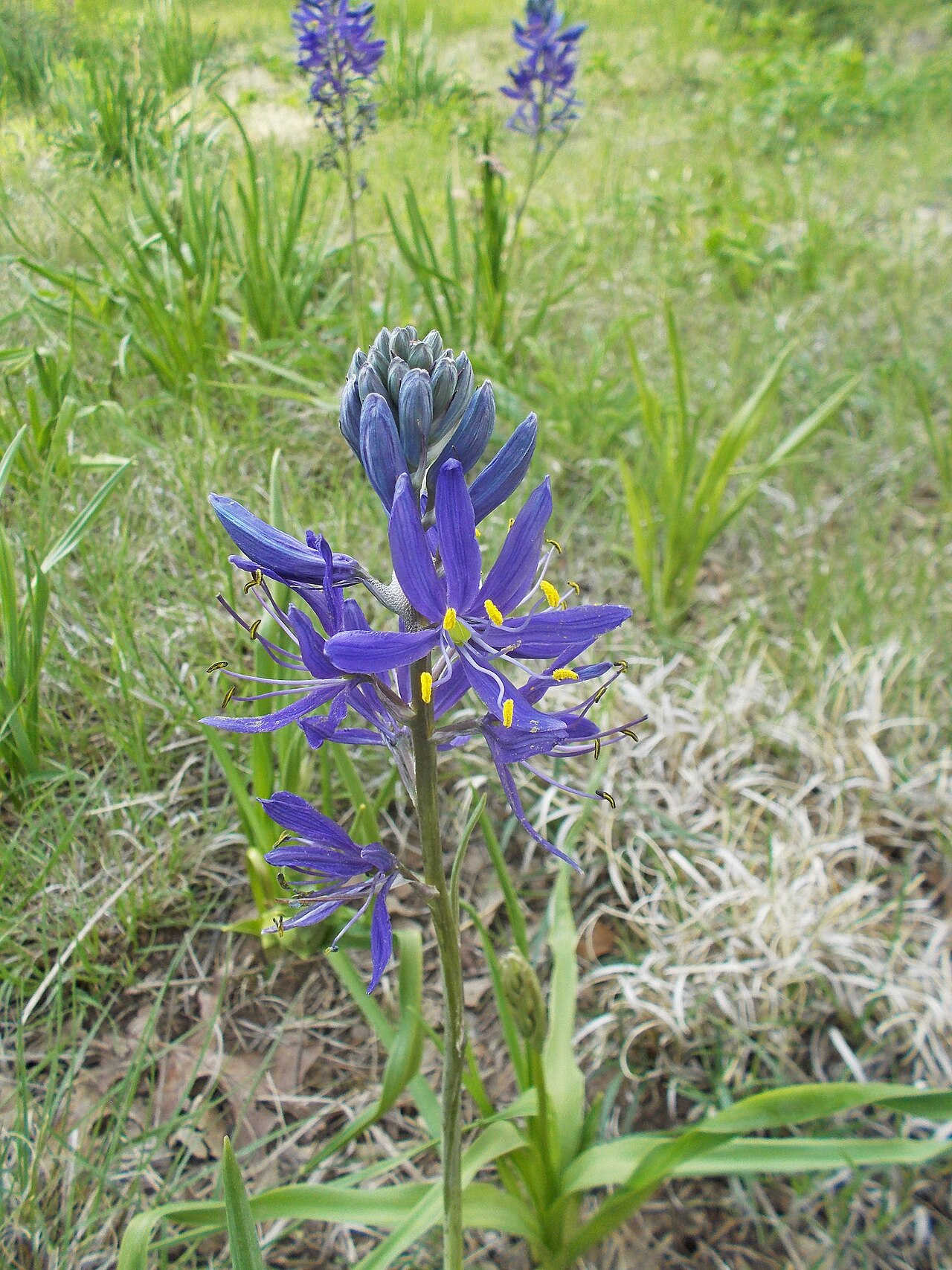
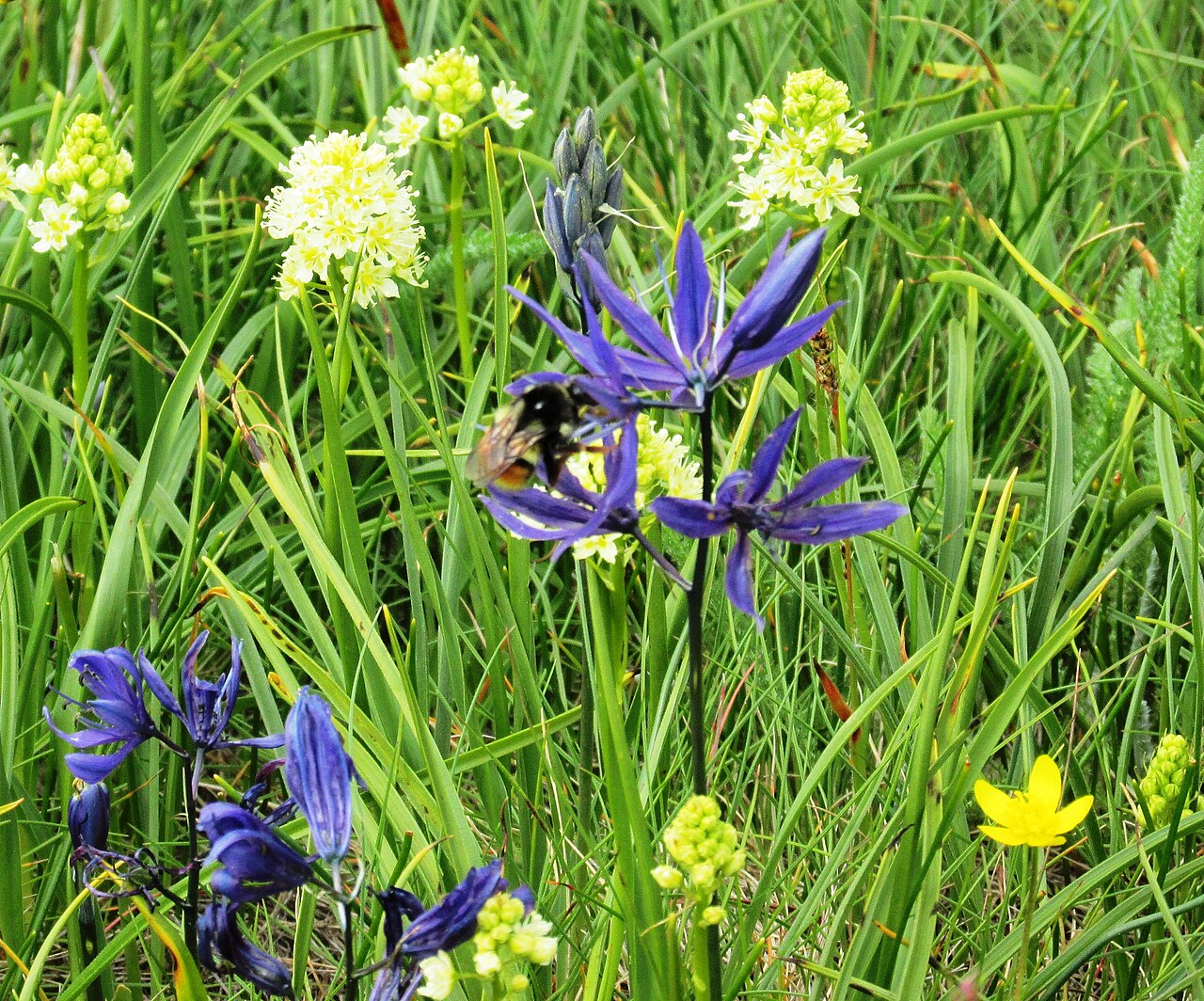
Common Camas ⚠️ Edible, DEADLY twin
Camassia quamash · Asparagus family
A famous edible bulb, but it grows mixed with lethal death camas. Only harvest in flower.
Common Camas ⚠️ Edible, DEADLY twin
A famous edible bulb, but it grows mixed with lethal death camas. Only harvest in flower.


What it is
Star-shaped blue-purple flowers that turn wet mountain meadows into lakes of blue in early summer, a historically vital food bulb.
How to identify
- Grass-like basal leaves from a deep bulb.
- A stalk topped with a spike of blue to blue-purple, six-tepaled star flowers.
- Turns wet meadows solid blue when blooming in early summer.
- Grows in the same meadows as deadly death camas.
Where & when
Wet meadows and moist grassy slopes, low to mid elevation, early summer.
⚠️ Edibility
The cooked bulb is a famous, nourishing food, but it grows mixed with lethal death camas and the bulbs are nearly identical out of bloom. Only harvest when the blue flower is present and you are certain. Beginners: don’t.
Lookalikes & cautions
Blue flowers = camas; creamy-white flowers = deadly death camas. The bulbs cannot be told apart, so harvest only in full bloom.
Field notes
Camas fields were so valued that they were tended and fought over; the bulbs were pit-roasted for days to turn starch into sweet sugar.
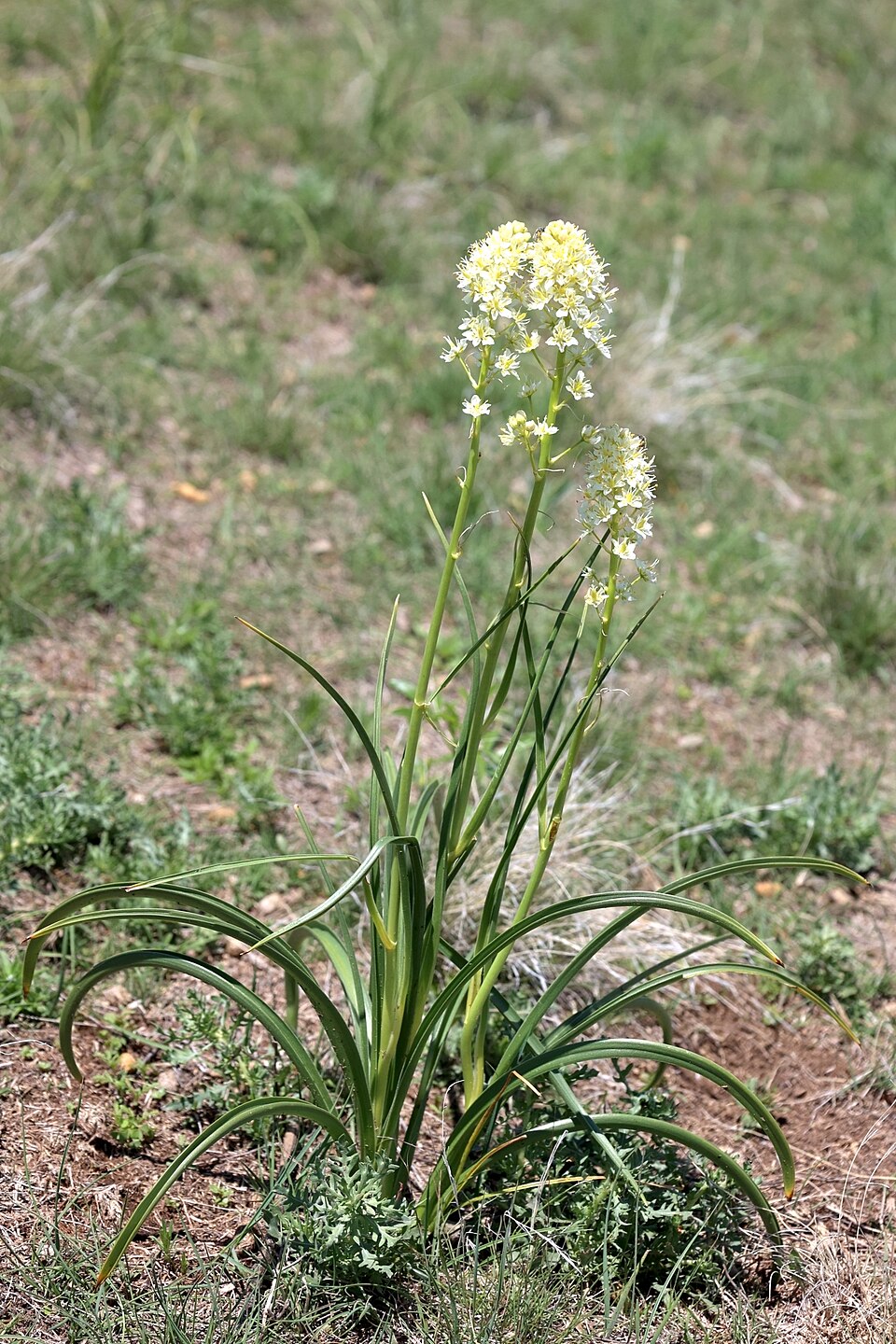
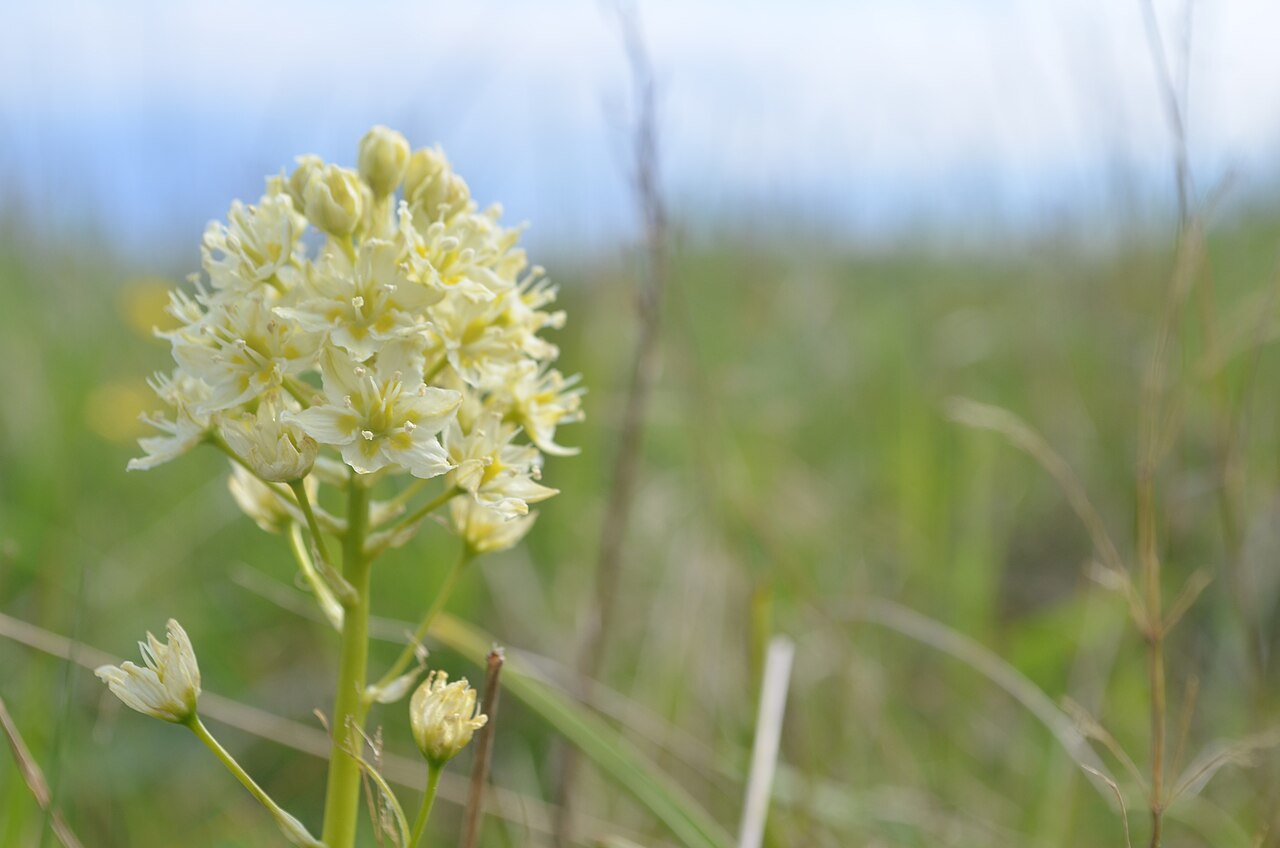
Meadow Death Camas ☠️ Deadly poisonous
Toxicoscordion venenosum · Bunchflower family
One of Idaho’s deadliest plants; its bulb is mistaken for wild onion or camas every year.
Meadow Death Camas ☠️ Deadly poisonous
One of Idaho’s deadliest plants; its bulb is mistaken for wild onion or camas every year.


What it is
A grass-like meadow lily and one of the deadliest plants in Idaho, whose bulb is mistaken for wild onion or edible camas, sometimes fatally.
How to identify
- Grass-like, V-creased basal leaves from an onion-like bulb, but with no onion smell.
- A stalk 8 to 24 in tall topped with a tight cluster of creamy-white to greenish six-tepaled flowers.
- Each flower has a small greenish gland at the base of each tepal.
- Blooms spring to early summer, often with blue camas.
Where & when
Meadows, grassy slopes, and sagebrush openings, low to mid elevation, often mixed with camas and wild onion.
☠️ Edibility
Do not eat any part. It contains zygacine and related alkaloids; even a small amount of bulb can cause vomiting, collapse, and death. There is no safe preparation.
Lookalikes & cautions
Looks like wild onion (but no onion smell) and, out of bloom, like edible blue camas (whose flowers are blue-purple, not creamy-white). Never harvest a wild bulb unless the plant is in flower and positively identified.
Field notes
Also poisons livestock, hence the name. Learning to recognize it on sight is one of the most valuable field skills in these mountains.
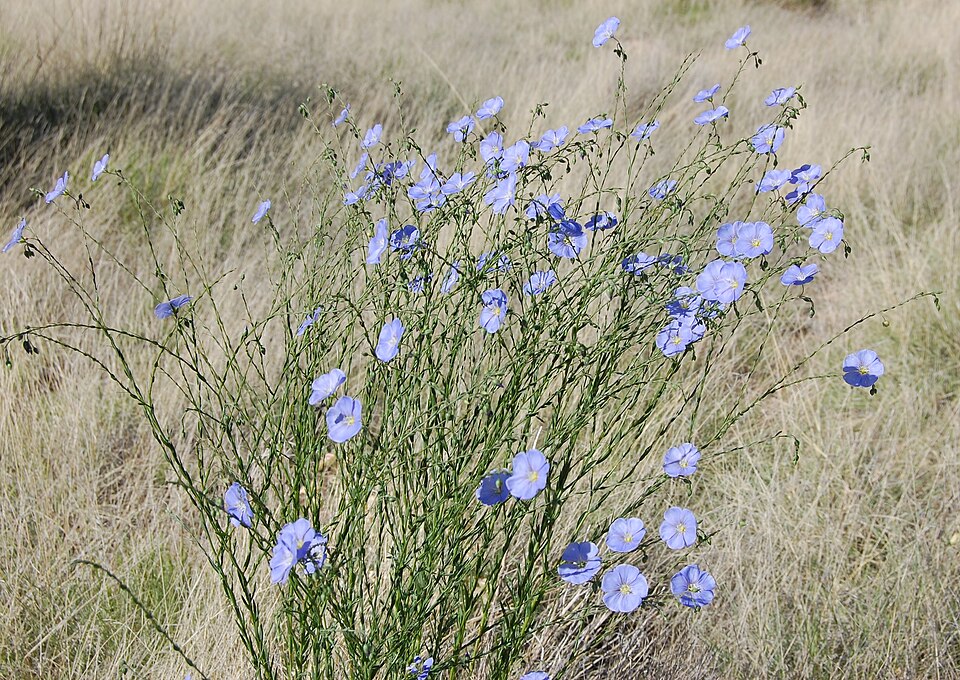
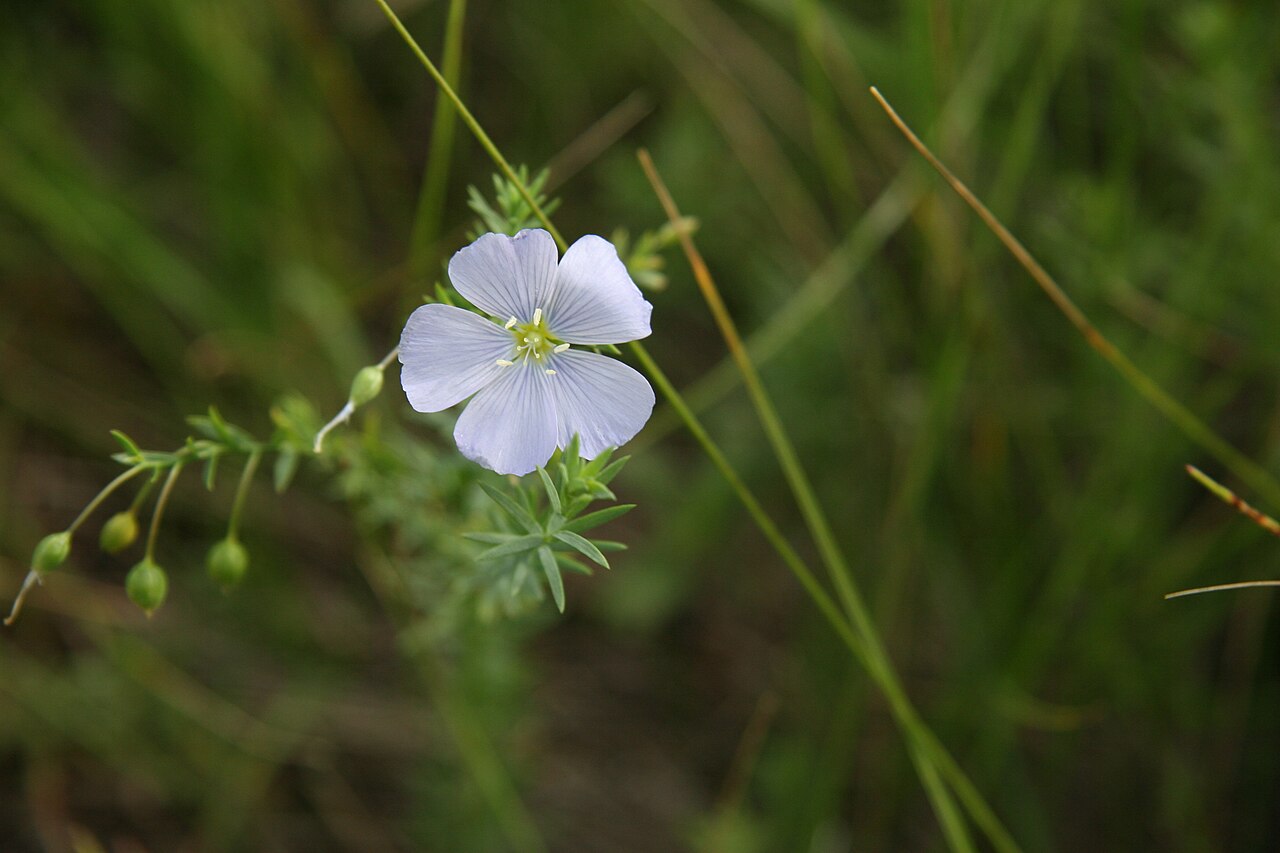
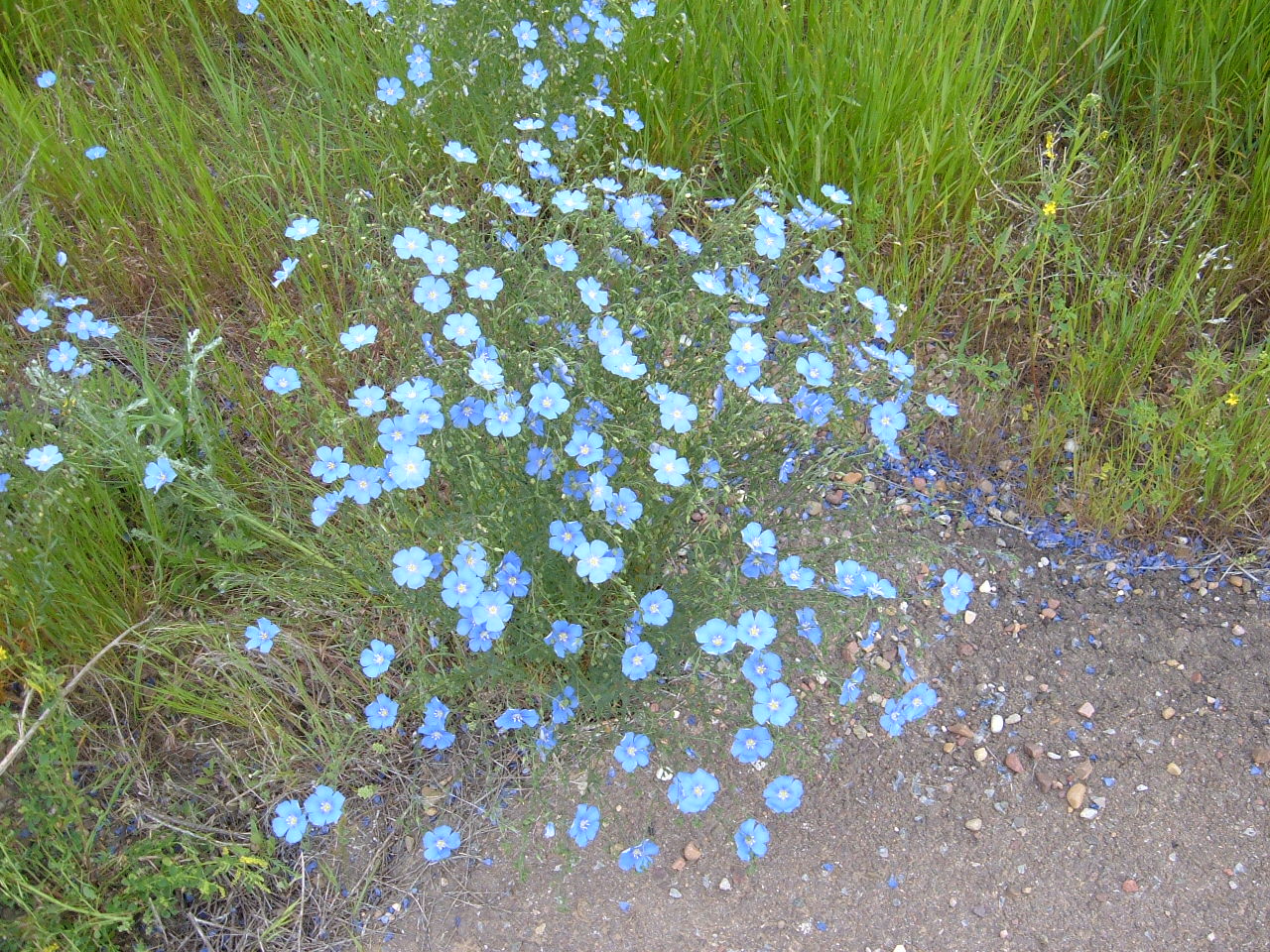
Wild Blue Flax ⚠️ Seeds only, prepared
Linum lewisii · Flax family
Delicate sky-blue flowers on wiry stems; ripe seeds edible, but raw seeds are best avoided.
Wild Blue Flax ⚠️ Seeds only, prepared
Delicate sky-blue flowers on wiry stems; ripe seeds edible, but raw seeds are best avoided.


What it is
Delicate sky-blue five-petaled flowers on slender, wiry stems, opening in the morning and dropping their petals by afternoon.
How to identify
- Slender, wiry stems 1 to 2 ft tall.
- Many small, narrow, alternate leaves.
- Sky-blue, five-petaled flowers that open in the morning and shed petals by afternoon.
- Round dry seed capsules follow.
Where & when
Dry open slopes, meadows, and roadsides, low to high elevation.
⚠️ Edibility
Ripe seeds are edible and nutritious like commercial flax, but raw seeds contain cyanogenic compounds, so eat in moderation and ideally cooked. The foliage is not food.
Lookalikes & cautions
The fleeting sky-blue flowers on wiry stems are distinctive; only the ripe seeds are used.
Field notes
A tough native wildflower named for Meriwether Lewis; the strong stems yielded cordage and the seeds an oil.
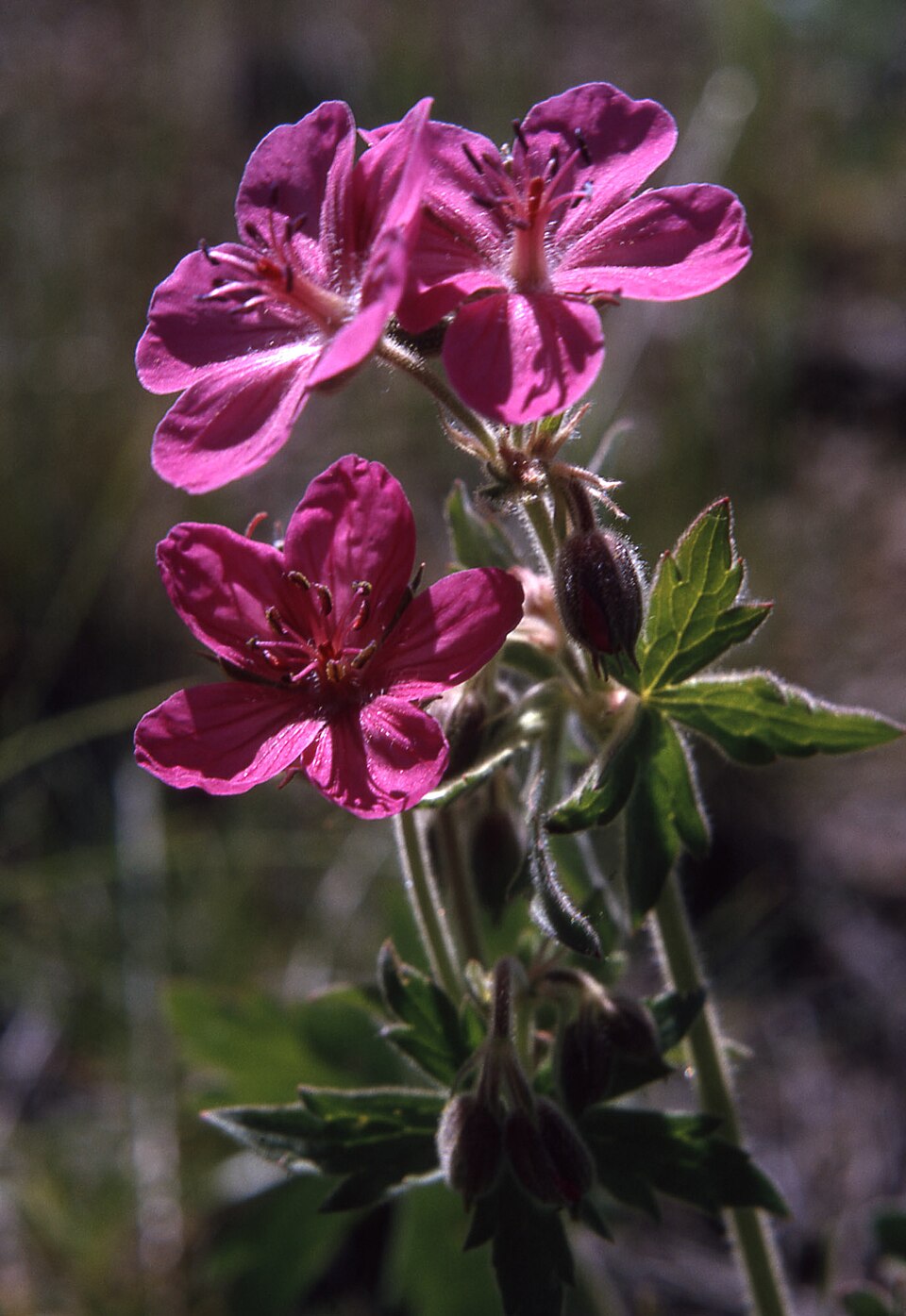
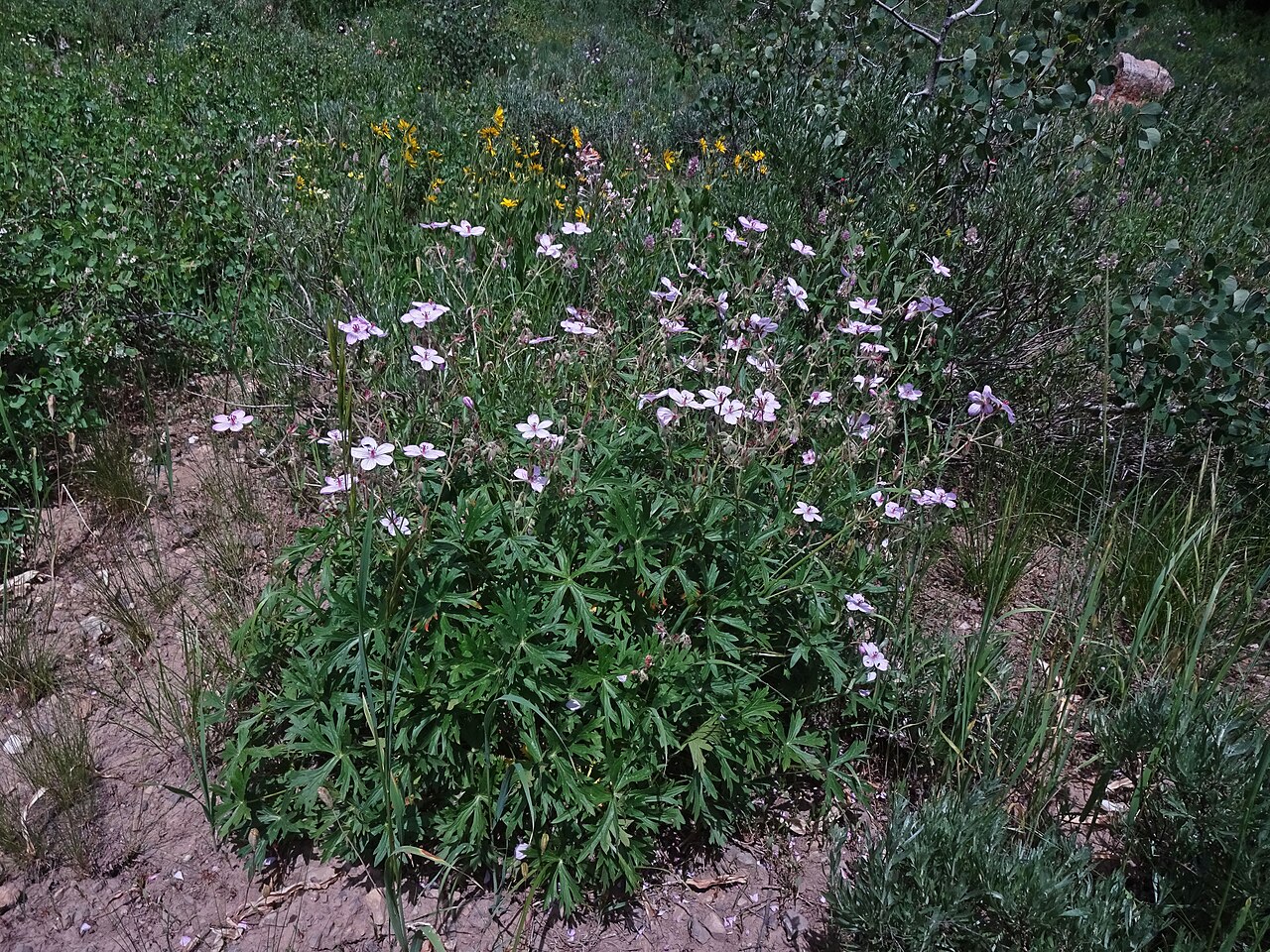
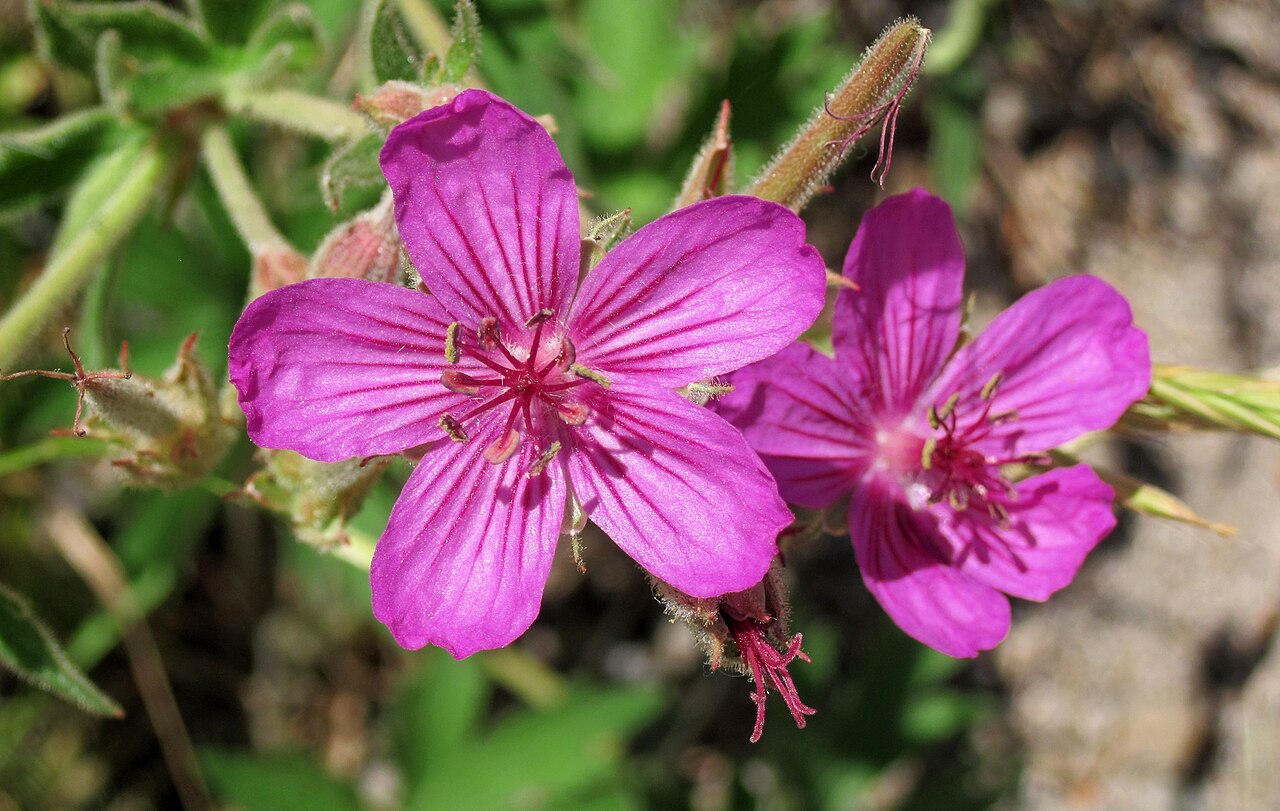
Sticky Purple Geranium 🚫 Not really edible
Geranium viscosissimum · Geranium family
Pink-purple veined flowers over sticky lobed leaves; a garnish at most, not food.
Sticky Purple Geranium 🚫 Not really edible
Pink-purple veined flowers over sticky lobed leaves; a garnish at most, not food.


What it is
Pink-purple five-petaled flowers with dark veins, over deeply lobed sticky leaves, common in aspen groves and meadows.
How to identify
- Bushy perennial 1 to 2 ft tall with sticky (glandular) hairs throughout.
- Leaves deeply palmately lobed and toothed.
- Pink to magenta flowers with darker purple veins.
- Beaked “cranesbill” seed pods that fling seeds when ripe.
Where & when
Aspen groves, meadows, and open slopes, low to mid elevation.
🚫 Edibility
Not a food plant. The flowers are a harmless edible garnish, but the leaves and roots are astringent medicine, not eating.
Lookalikes & cautions
The sticky lobed leaves and cranesbill seed pods are diagnostic; harmless but not a foraging target.
Field notes
The dark veins act as nectar guides, steering bees to the flower’s center.
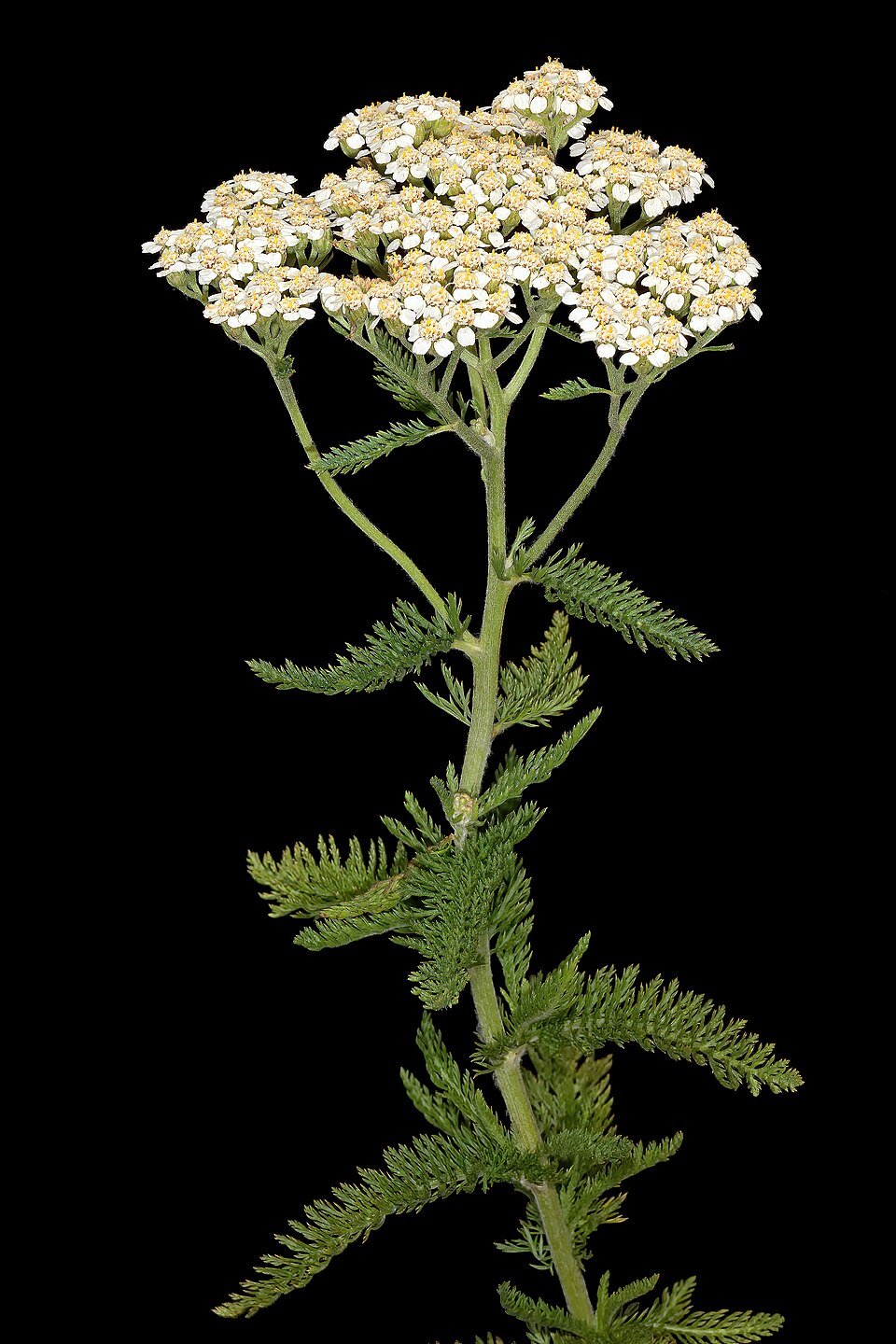
Yarrow ⚠️ Medicinal, small amounts
Achillea millefolium · Sunflower family
Flat white flower clusters over feathery leaves; a classic wound herb, strongly medicinal.
Yarrow ⚠️ Medicinal, small amounts
Flat white flower clusters over feathery leaves; a classic wound herb, strongly medicinal.
What it is
Flat-topped clusters of tiny white flowers over feathery, fern-like leaves, one of the most widespread plants in the mountains.
How to identify
- Upright plant 1 to 2 ft with a single stem.
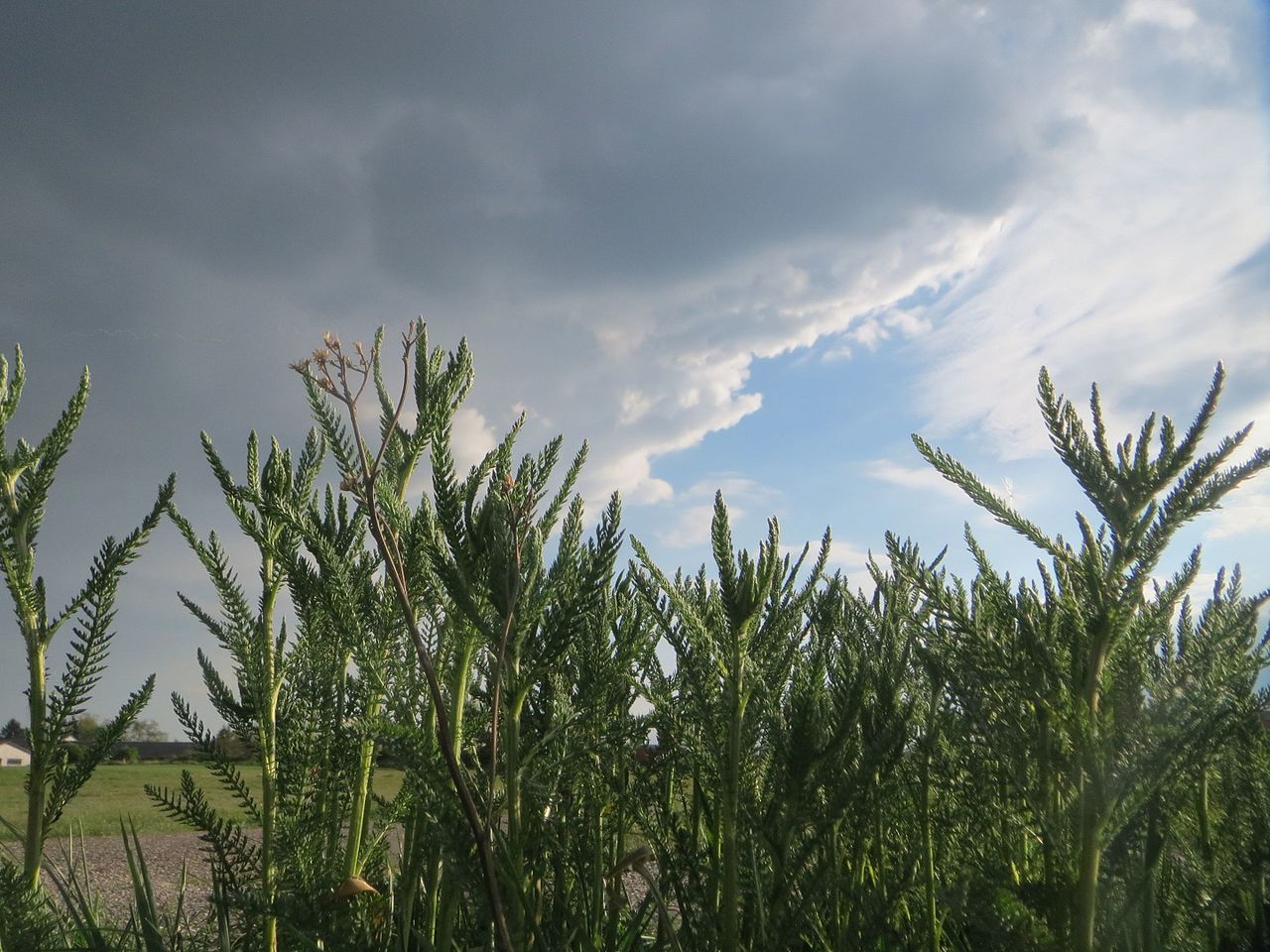
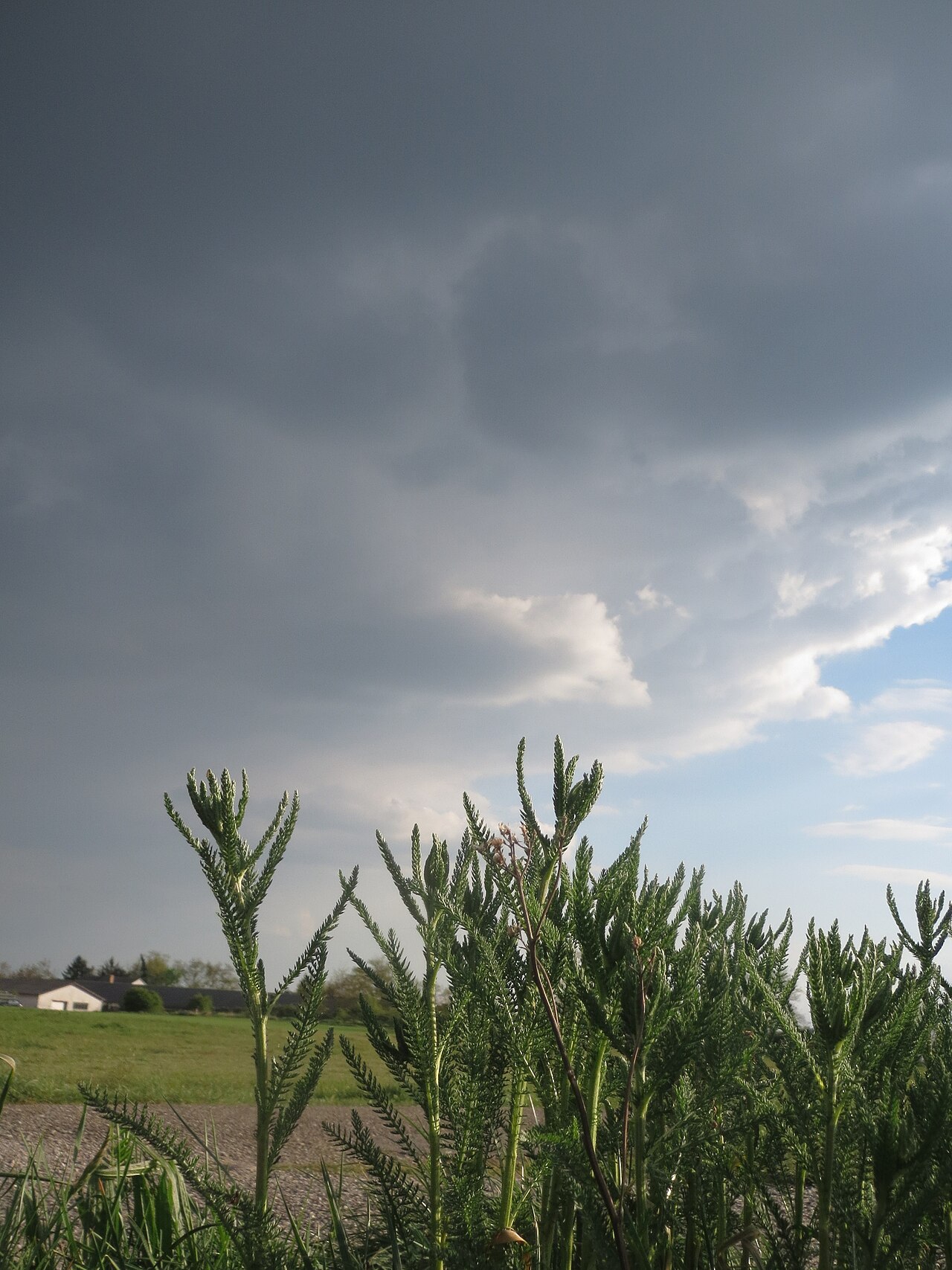
- Leaves soft, very finely divided and feathery (millefolium means thousand-leaf), aromatic.
- Flat-topped clusters of many small white (rarely pink) flower heads.
- Strong, sweet-medicinal smell when crushed.
Where & when
Meadows, roadsides, slopes, and open forest, low to high elevation.
⚠️ Edibility
Leaves are edible in small amounts as a bitter herb or tea and are a classic wound remedy, but it’s strongly medicinal, not a salad green. Avoid in pregnancy.
Lookalikes & cautions
The feathery aromatic leaves separate it from toxic white-flowered carrot-family plants, which have broader leaflets and hollow stems.
Field notes
Named for Achilles, who legend says used it to staunch soldiers’ wounds; a genuine traditional first-aid plant.
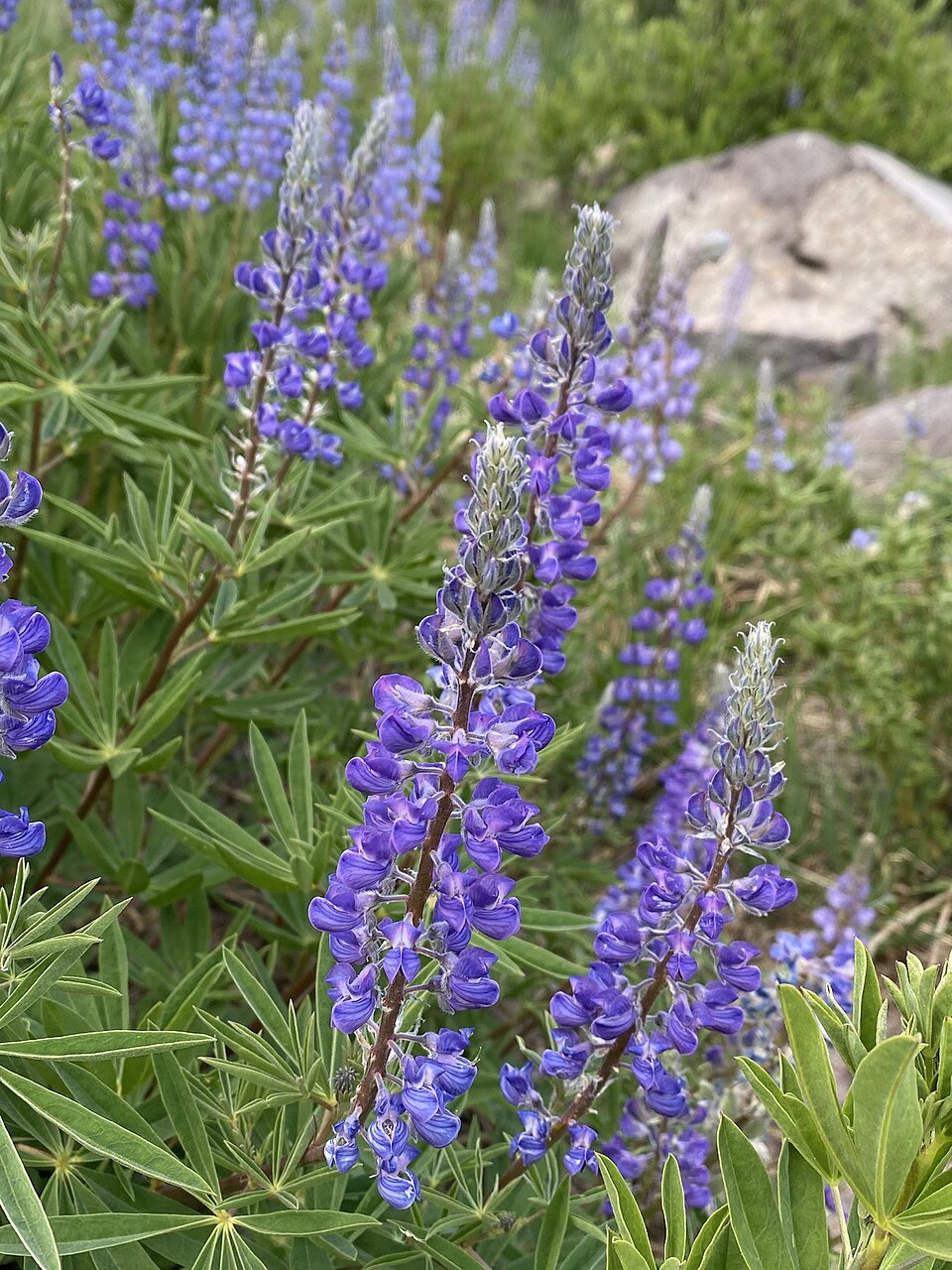
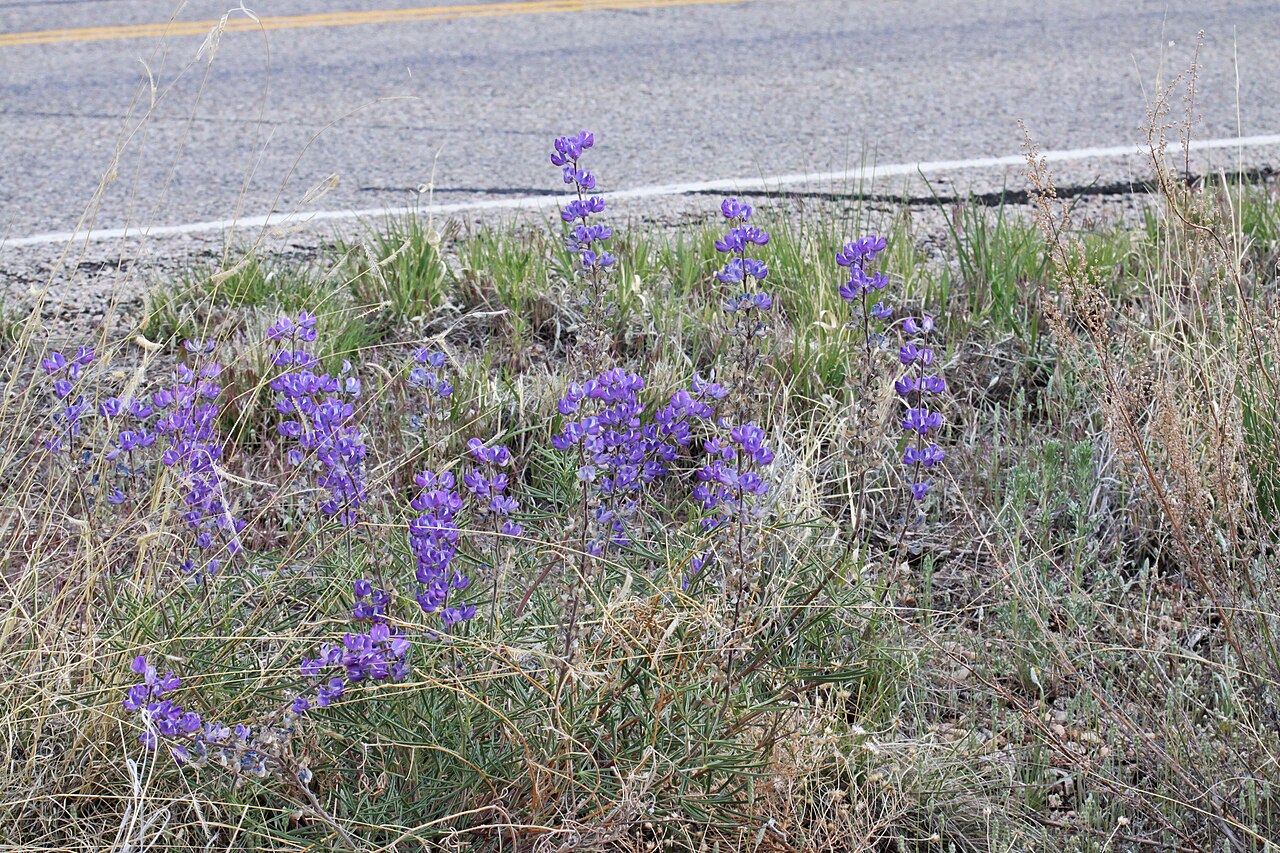
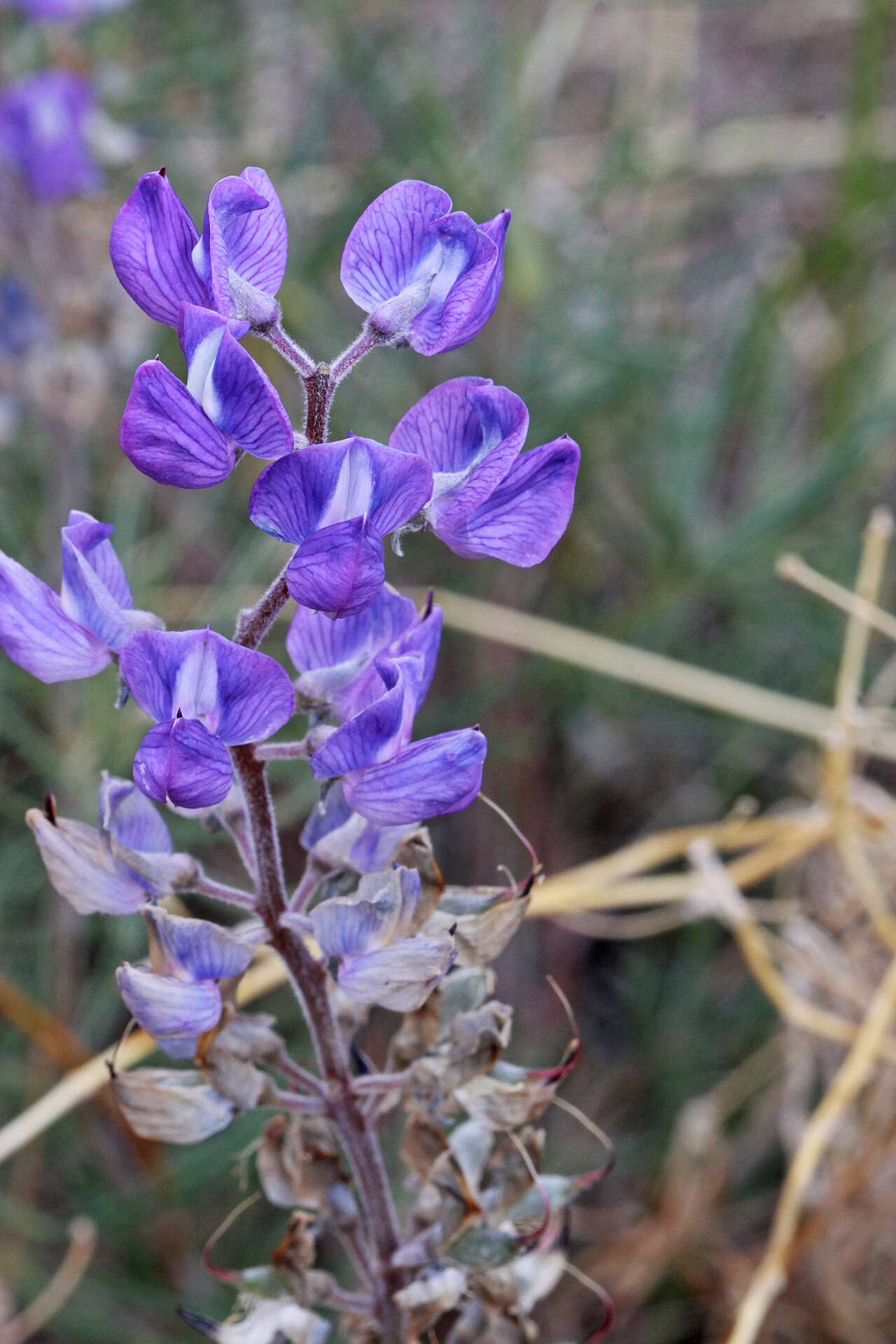
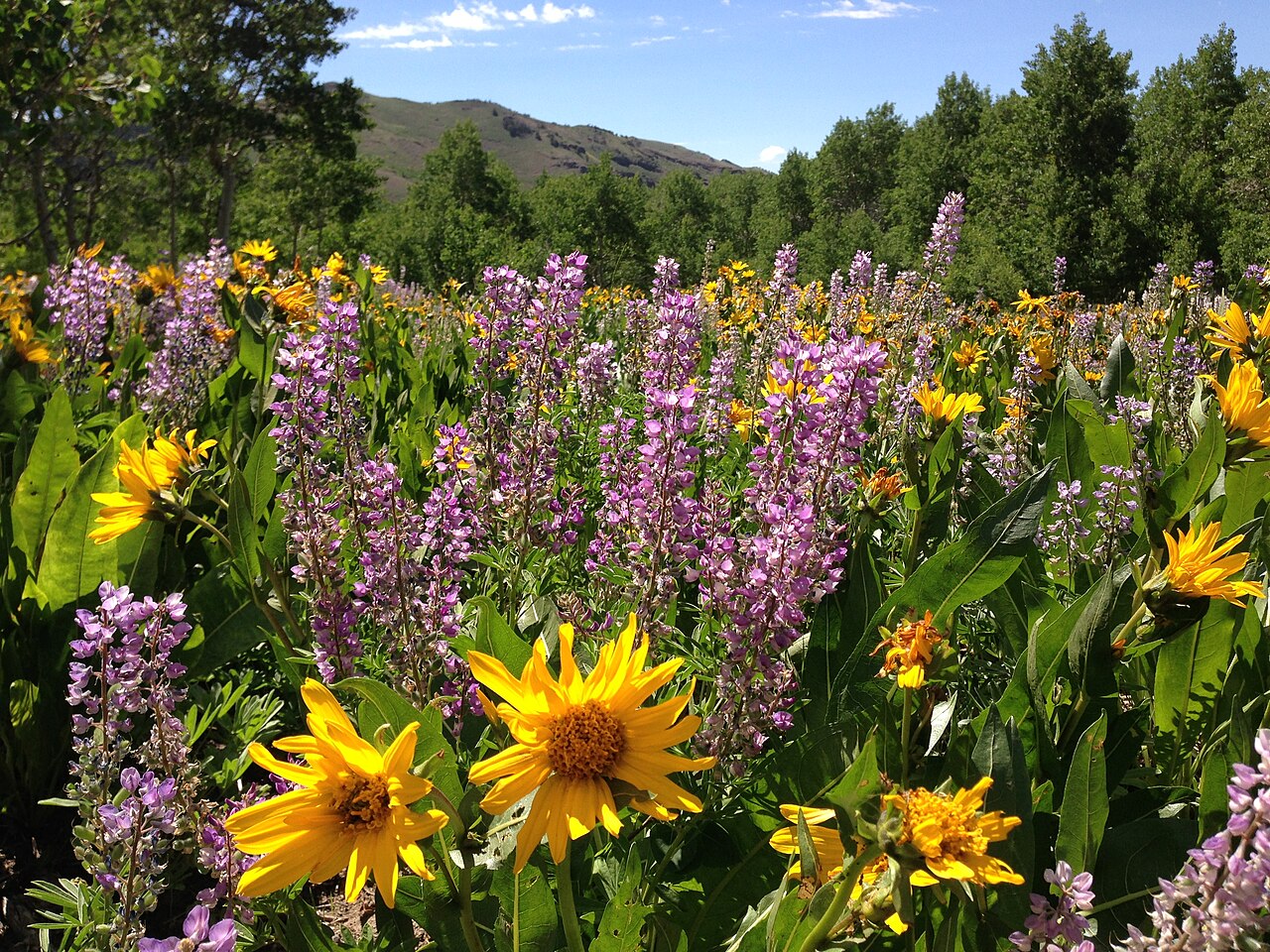
Silvery Lupine ☠️ Poisonous
Lupinus argenteus · Pea family
Beautiful blue-purple pea spikes over silvery hand-shaped leaves, and toxic in every part.
Silvery Lupine ☠️ Poisonous
Beautiful blue-purple pea spikes over silvery hand-shaped leaves, and toxic in every part.


What it is
Spikes of blue-purple pea flowers over silvery, hand-shaped leaves, beautiful and everywhere in summer meadows.
How to identify
- Bushy perennial with silvery-hairy foliage.
- Leaves palmately compound, the leaflets radiating from one point like fingers of a hand.
- Tall spikes of blue-purple pea-type flowers.
- Fuzzy pea pods follow.
Where & when
Meadows, open slopes, and roadsides, low to high elevation.
☠️ Edibility
Wild lupines contain toxic alkaloids, especially in the seeds and pods, and can poison people and livestock. Do not eat any part.
Lookalikes & cautions
The hand-shaped (palmate) leaves distinguish lupine from harmless clovers and vetches; do not treat wild lupine seeds as edible beans.
Field notes
A nitrogen-fixer that enriches mountain soil, but a well-known cause of livestock poisoning and birth defects in grazing animals.
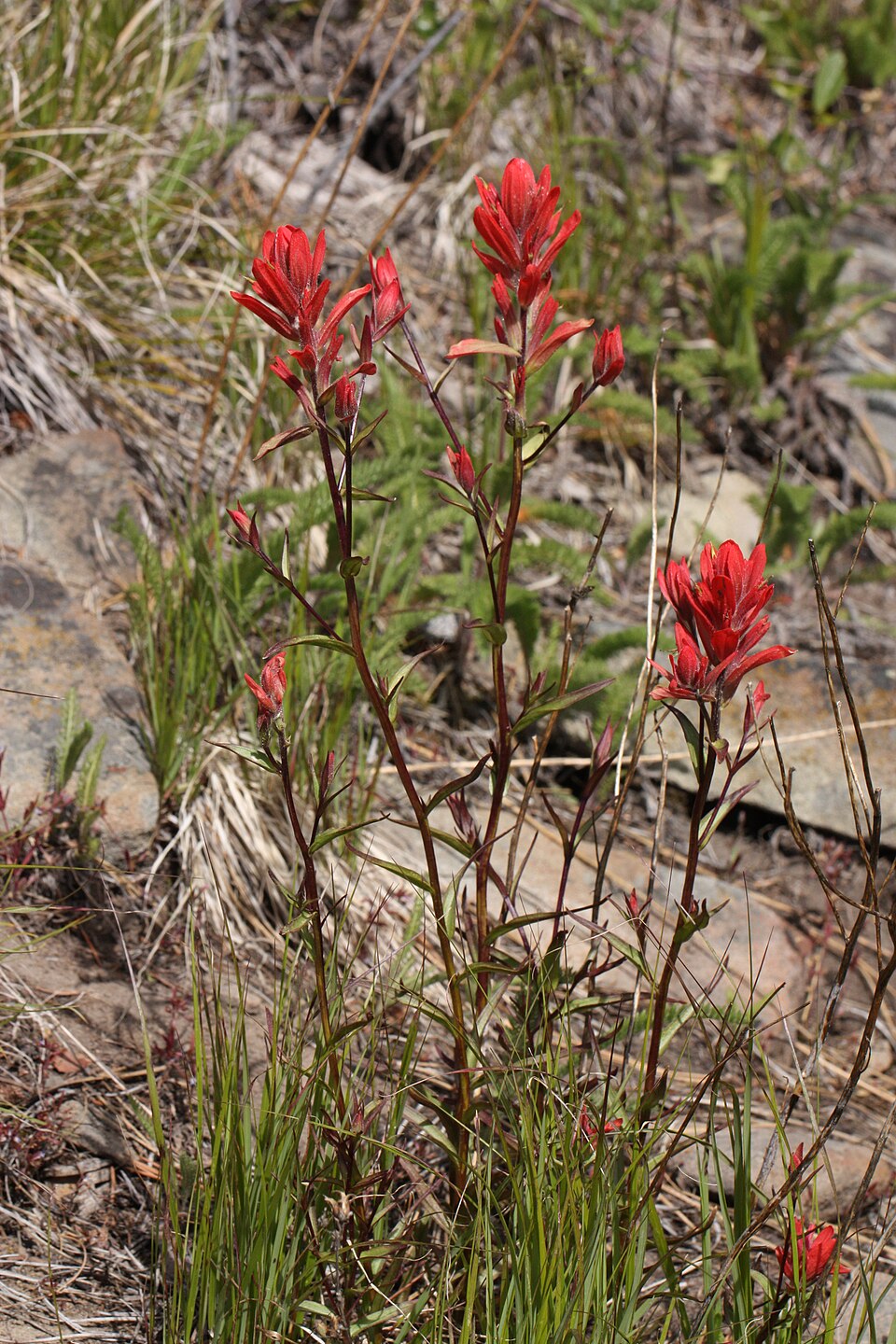
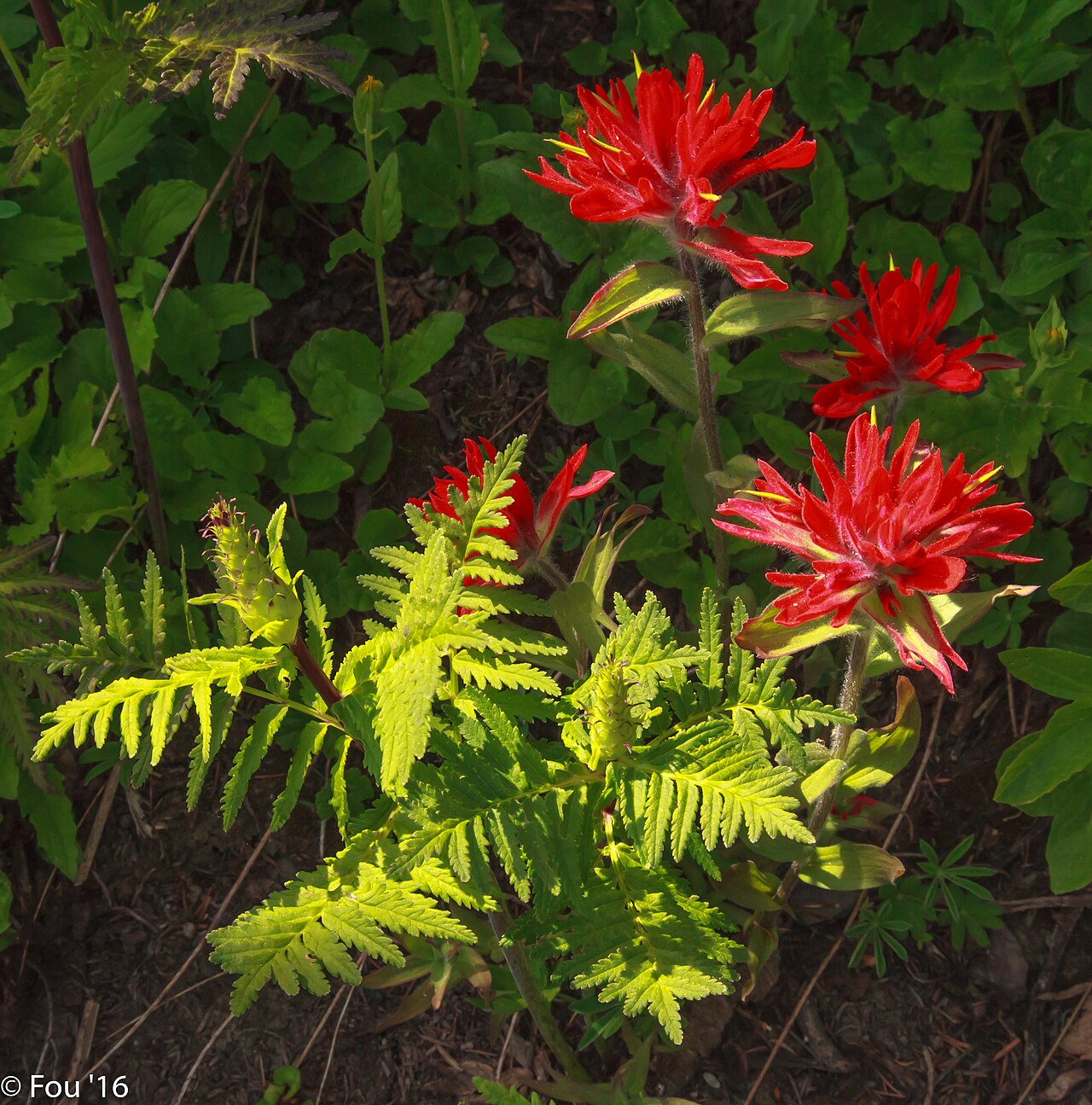
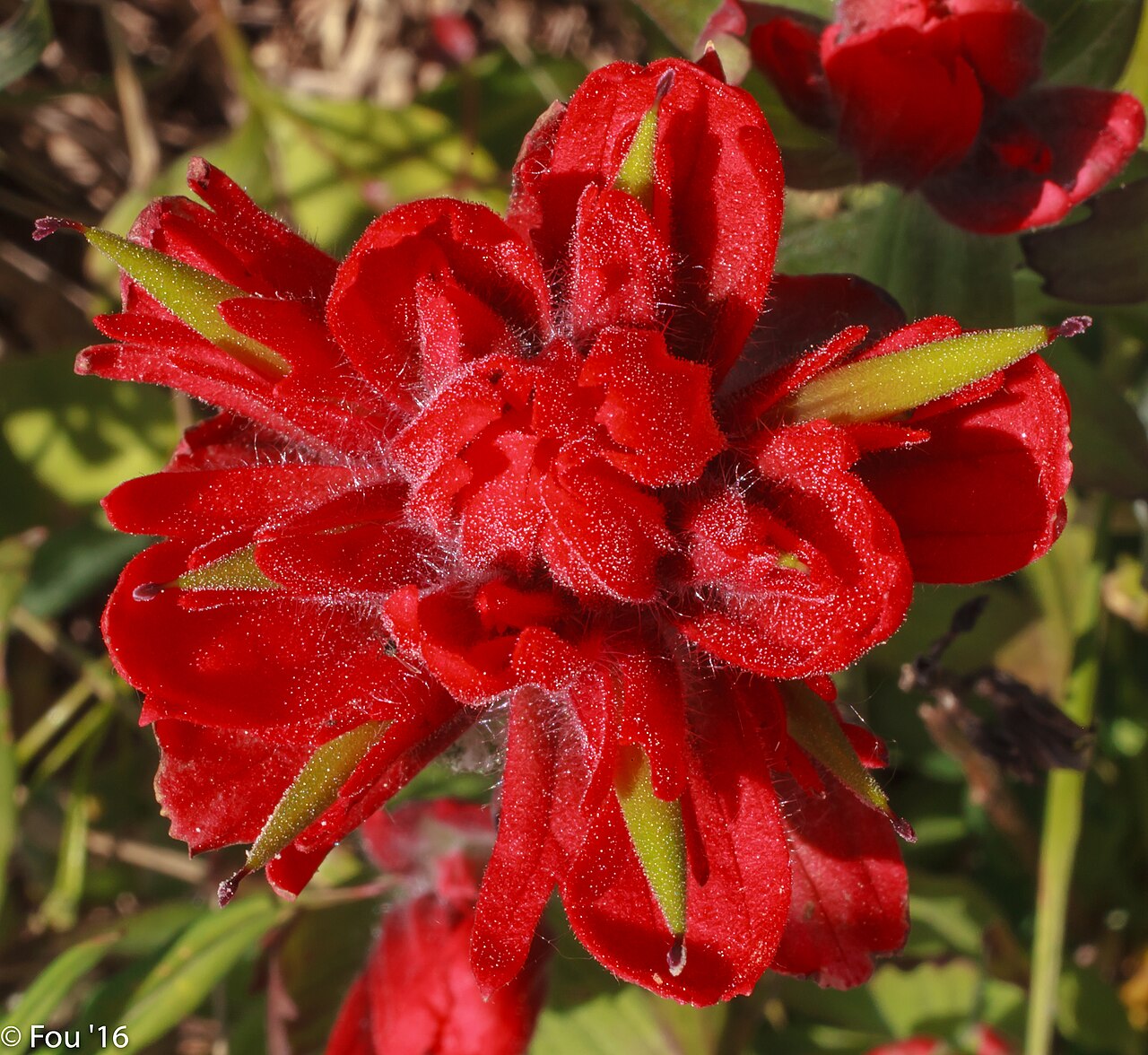
Indian Paintbrush ⚠️ Flowers only, sparingly
Castilleja miniata · Broomrape family
The flame-red “brush dipped in paint” of mountain meadows; flowers edible only in tiny amounts.
Indian Paintbrush ⚠️ Flowers only, sparingly
The flame-red “brush dipped in paint” of mountain meadows; flowers edible only in tiny amounts.
What it is
The flame-red brush of mountain meadows, where the color comes from leafy bracts rather than true petals.
How to identify
- Clumped stems 1 to 2 ft tall.
- The showy red-orange color is from leafy bracts, not petals; the true flowers are green tubes hidden among them.
- Narrow, often three-lobed leaves.
- A partial root-parasite that taps neighboring plants.
Where & when
Meadows, streamsides, and open slopes, mid to high elevation.
⚠️ Edibility
The flowers are edible in small amounts, but the plant can concentrate selenium from the soil to toxic levels, so never eat the greens or roots and don’t make a meal of it.
Lookalikes & cautions
The colored bracts (not petals) and root-parasite habit are distinctive; enjoy the color rather than foraging it.
Field notes
Because it borrows from its neighbors’ roots, it can pull up toxins (like selenium) they contain, which is why it is not a reliable edible.
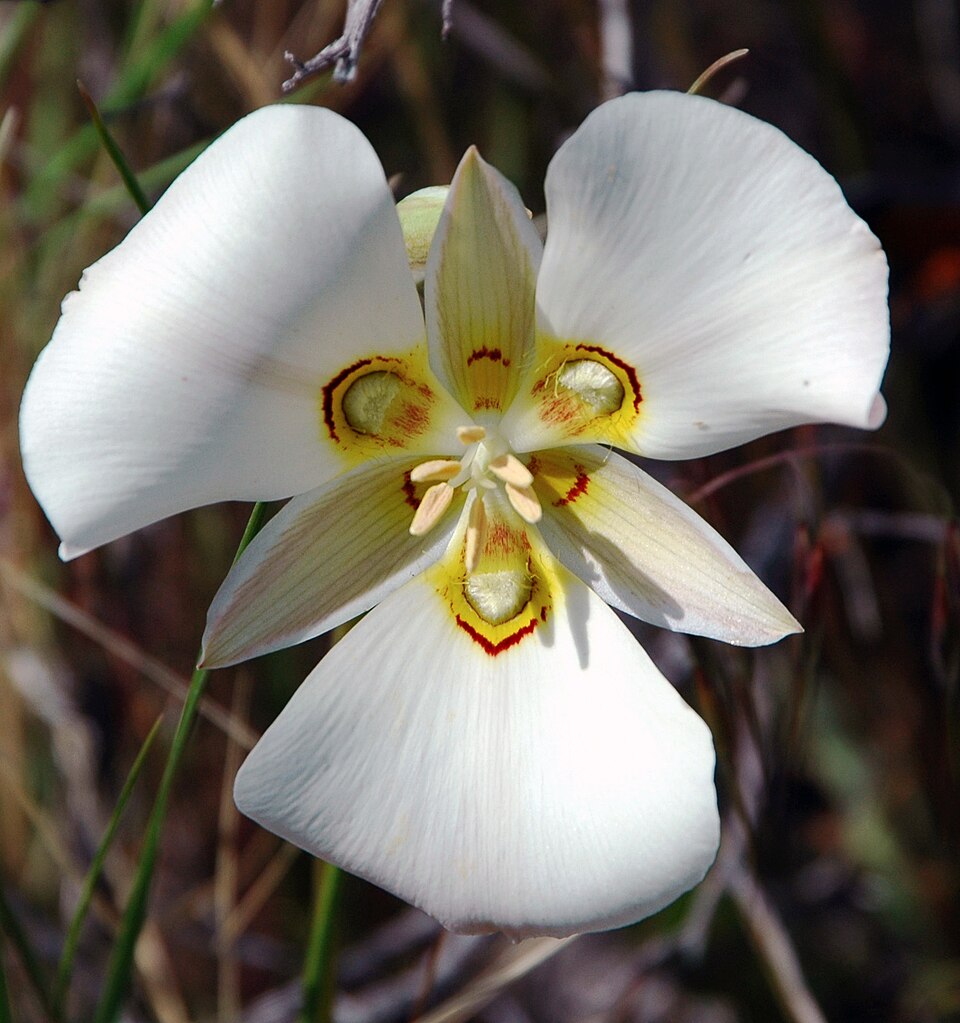
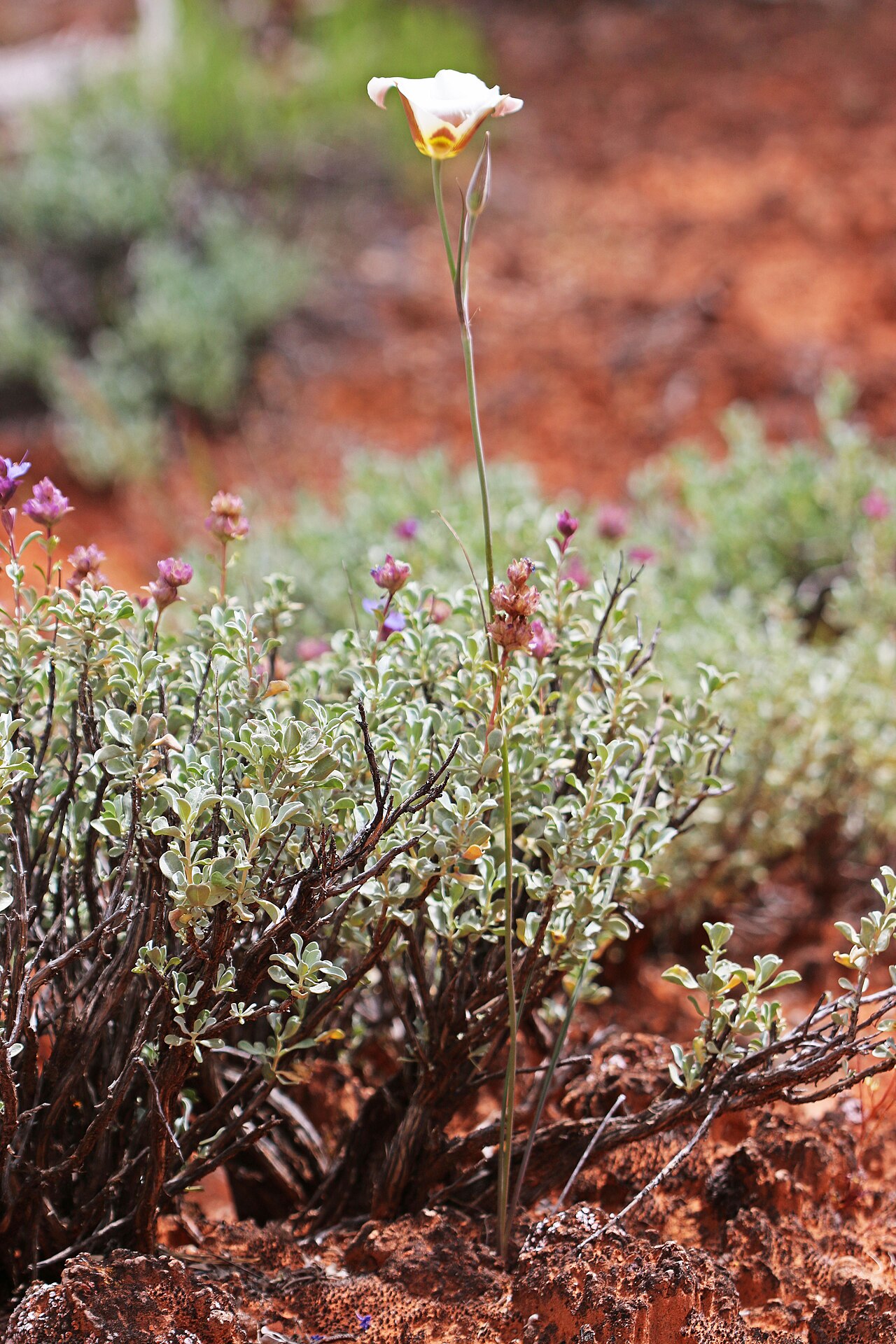
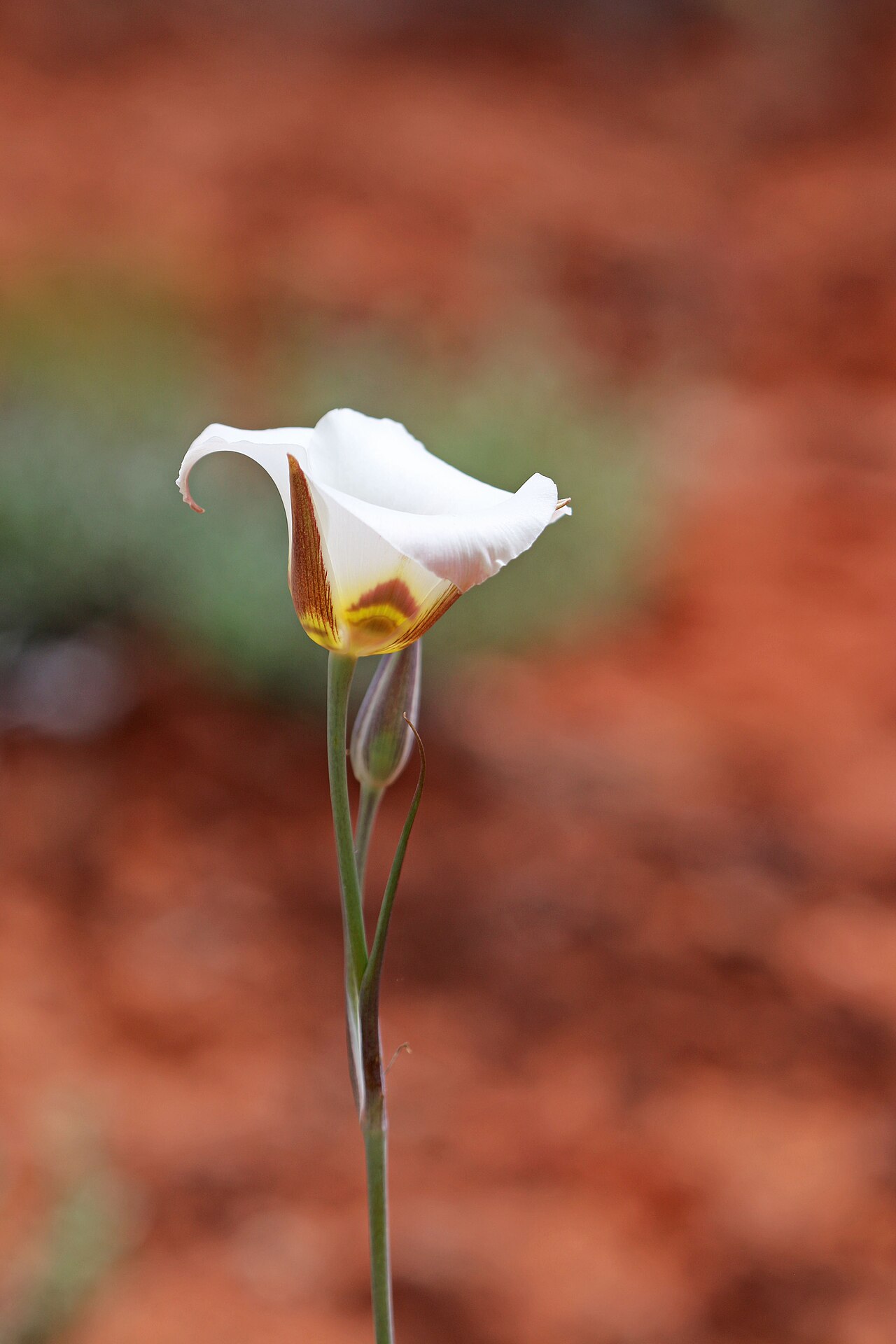
Sego Lily ⚠️ Edible bulb, don’t dig
Calochortus nuttallii · Lily family
An elegant white cup with a painted center; edible bulb that once saved settlers, but leave it.
Sego Lily ⚠️ Edible bulb, don’t dig
An elegant white cup with a painted center; edible bulb that once saved settlers, but leave it.


What it is
An elegant white three-petaled cup with a yellow-and-purple center, on a thin stem in dry foothills, and a regional icon.
How to identify
- Slender stem 6 to 18 in with a few grass-like leaves.
- A single upward-facing cup of three broad white (sometimes lilac) petals.
- A yellow band and a dark purple spot mark the base of each petal.
- Grows from a small edible bulb.
Where & when
Dry foothills, sagebrush, and open slopes, low to mid elevation.
⚠️ Edibility
The bulb is edible and famously kept pioneers alive during famine, but the flowers are uncommon and slow to grow. Admire, photograph, and leave it.
Lookalikes & cautions
The painted three-petaled white cup is unmistakable; unlike deadly wild bulbs, but rare enough that it should not be dug.
Field notes
Utah’s state flower, honored for feeding Mormon settlers during crop failures; too special now to harvest casually.
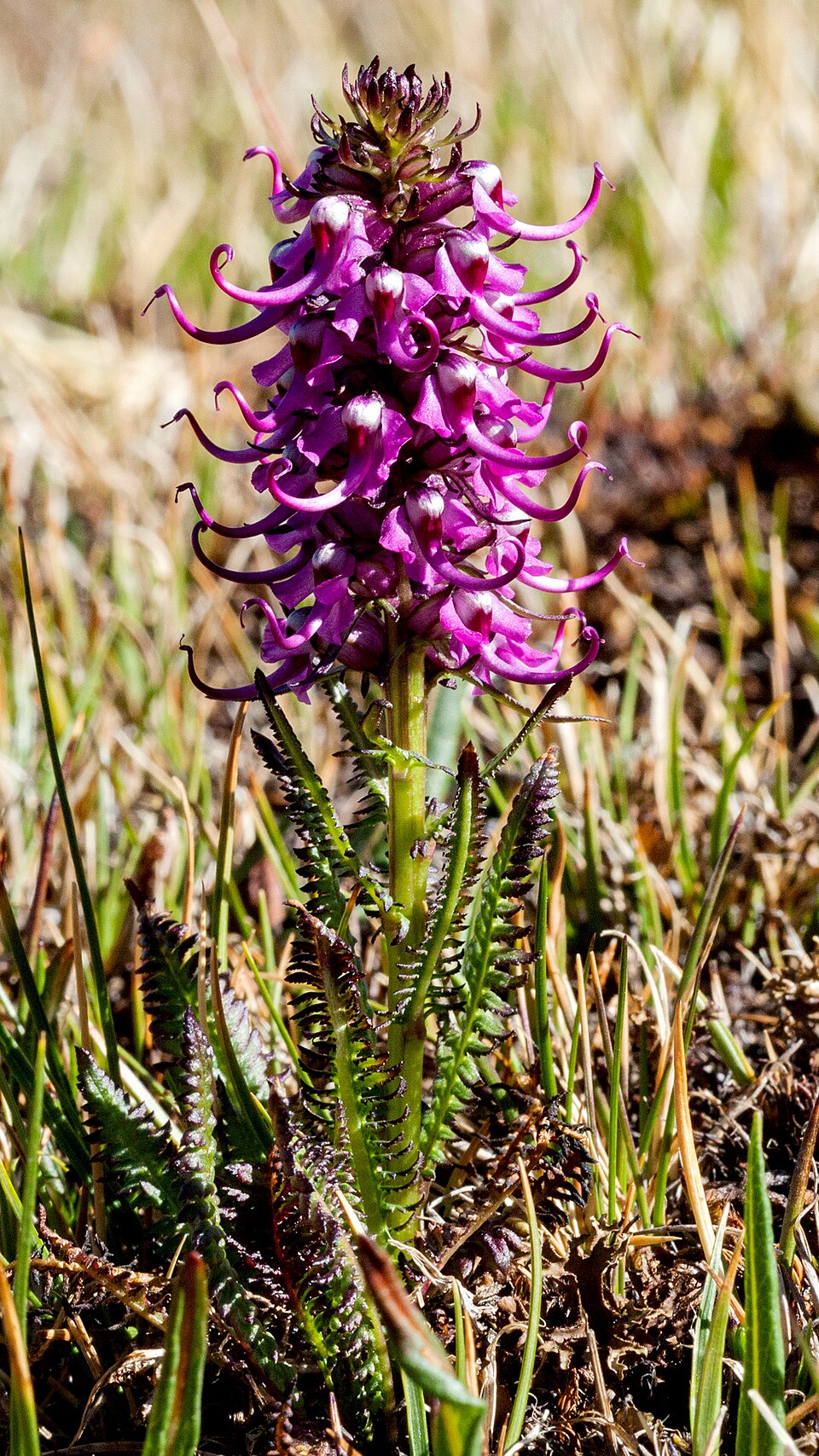
Elephant’s Head 🚫 Not recommended
Pedicularis groenlandica · Broomrape family
Pink flower spikes shaped like tiny elephant heads, trunk and all. Enjoy, don’t eat.
Elephant’s Head 🚫 Not recommended
Pink flower spikes shaped like tiny elephant heads, trunk and all. Enjoy, don’t eat.


What it is
Unmistakable pink flower spikes where each tiny bloom is shaped like an elephant’s head, trunk and all, in wet subalpine meadows.
How to identify
- Stalk of densely packed pink-purple flowers.
- Each flower genuinely resembles an elephant’s head, with two ears and an upcurved trunk.
- Fern-like, finely divided leaves, often reddish.
- Grows in wet meadows and along cold streams.
Where & when
Wet subalpine meadows, streambanks, and seeps, mid to high elevation.
🚫 Edibility
A root parasite that can draw toxins from neighboring plants; treated as non-food. Enjoy it purely for the remarkable flowers.
Lookalikes & cautions
The elephant-head flowers are impossible to confuse; a photography subject, not a food.
Field notes
Like paintbrush, it is a partial root-parasite, which is why it is not considered a safe edible.
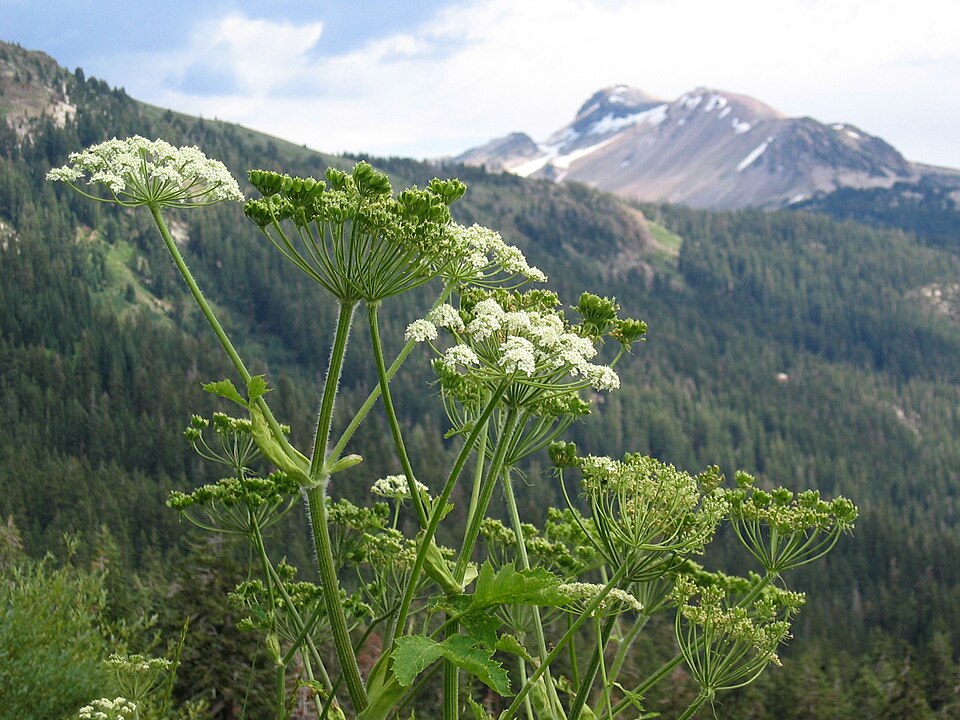
Cow Parsnip ⚠️ Edible but risky
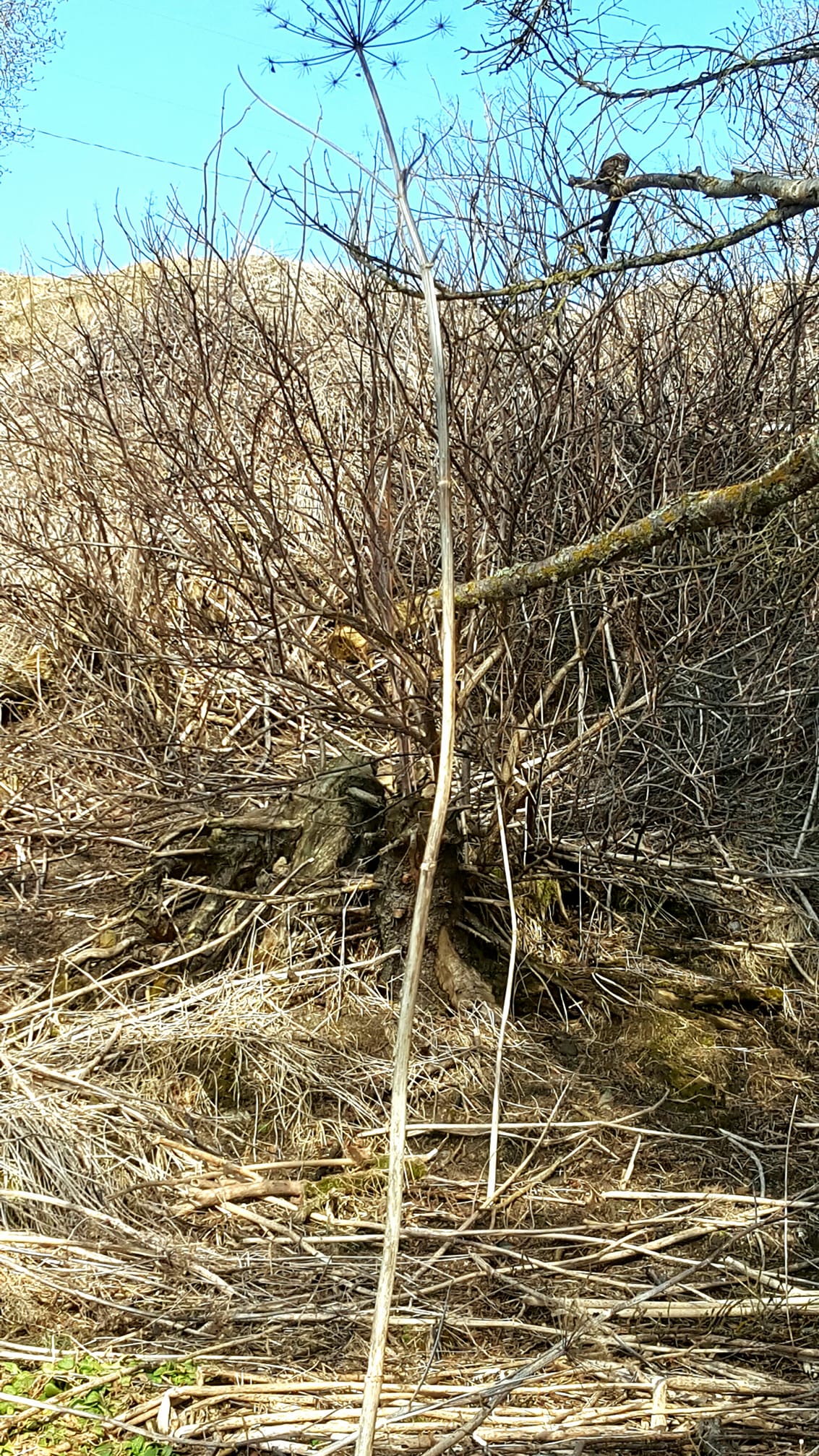
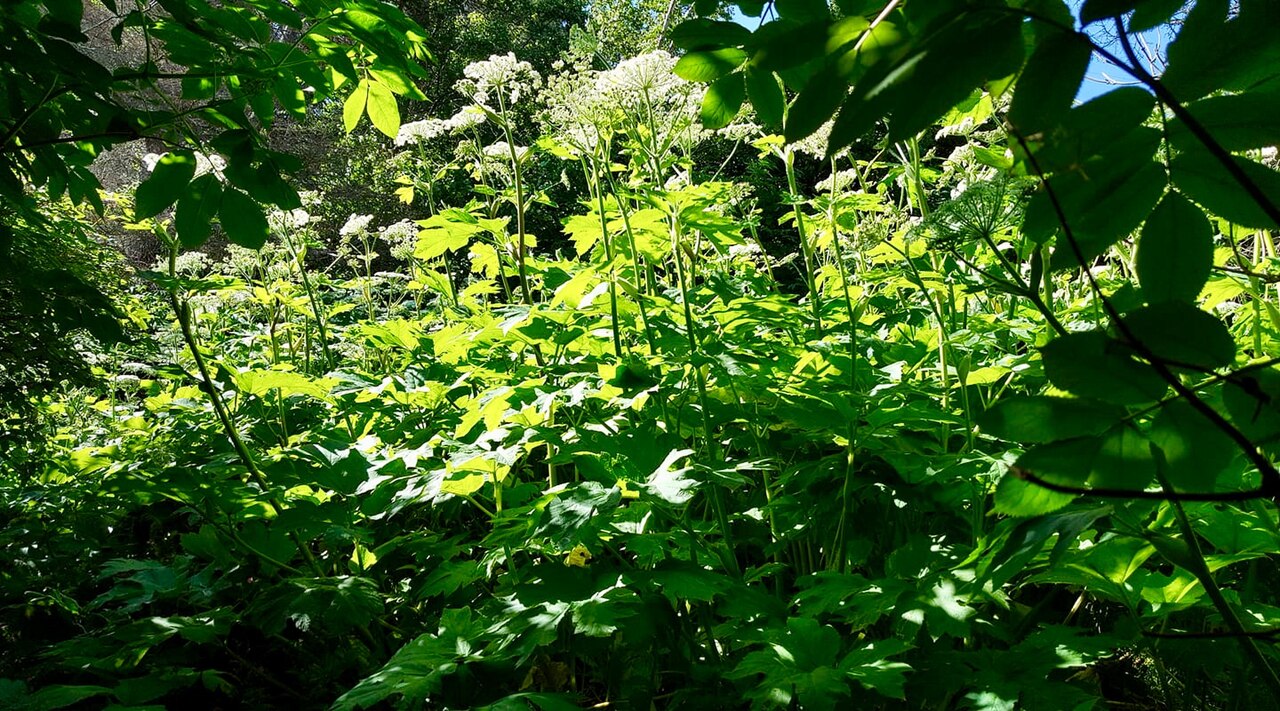
Heracleum maximum · Carrot family
A giant white-umbrella herb; young stalks are edible cooked, but the sap burns and hemlocks look alike.
Cow Parsnip ⚠️ Edible but risky
A giant white-umbrella herb; young stalks are edible cooked, but the sap burns and hemlocks look alike.
What it is
A giant of wet meadows and creeksides: huge maple-like leaves and broad white umbrella flower heads on stalks taller than a person.
How to identify
- Very large plant, often 4 to 8 ft tall, with a stout, ridged, hollow stem.
- Enormous maple-like leaves, often a foot or more across, in threes.
- Broad, flat-topped white flower umbrellas up to a foot wide.
- Watery sap.
Where & when
Wet meadows, streamsides, ditches, and shaded draws, low to mid elevation.
⚠️ Edibility
Young peeled stalks are edible cooked, BUT the sap causes severe sun-triggered skin burns, and it lives among deadly water hemlock and poison hemlock lookalikes. Not a beginner plant.
Lookalikes & cautions
Resembles the deadly water hemlock and poison hemlock; cow parsnip is much larger with huge leaves, but do not eat any carrot-family plant without expert confirmation. Wear sleeves; the sap plus sunlight blisters skin.
Field notes
The largest native member of the carrot family here; handling it on a sunny day can leave lasting burn marks (phytophotodermatitis).
Western Monkshood ☠️ Deadly poisonous
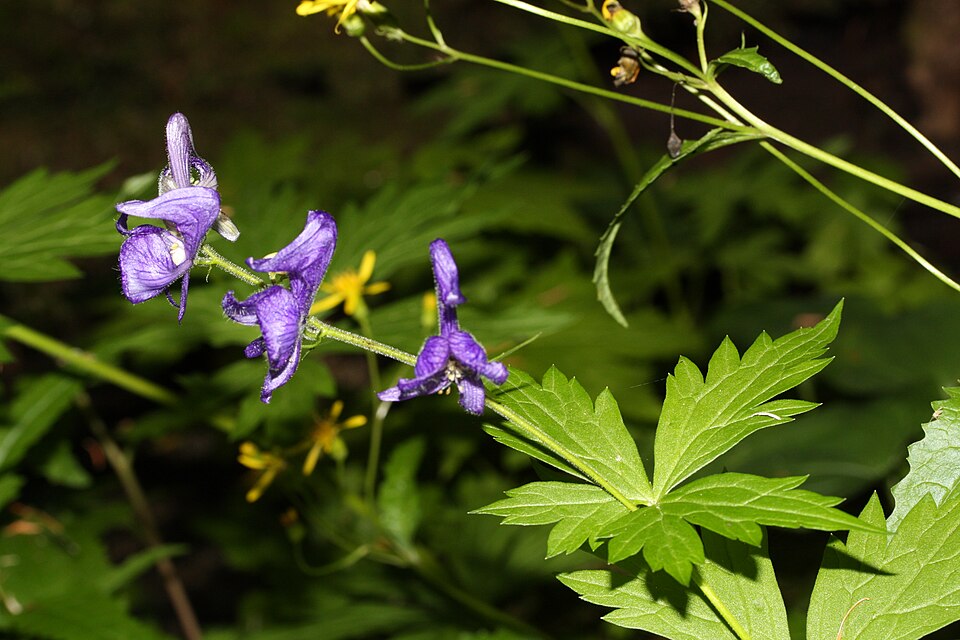
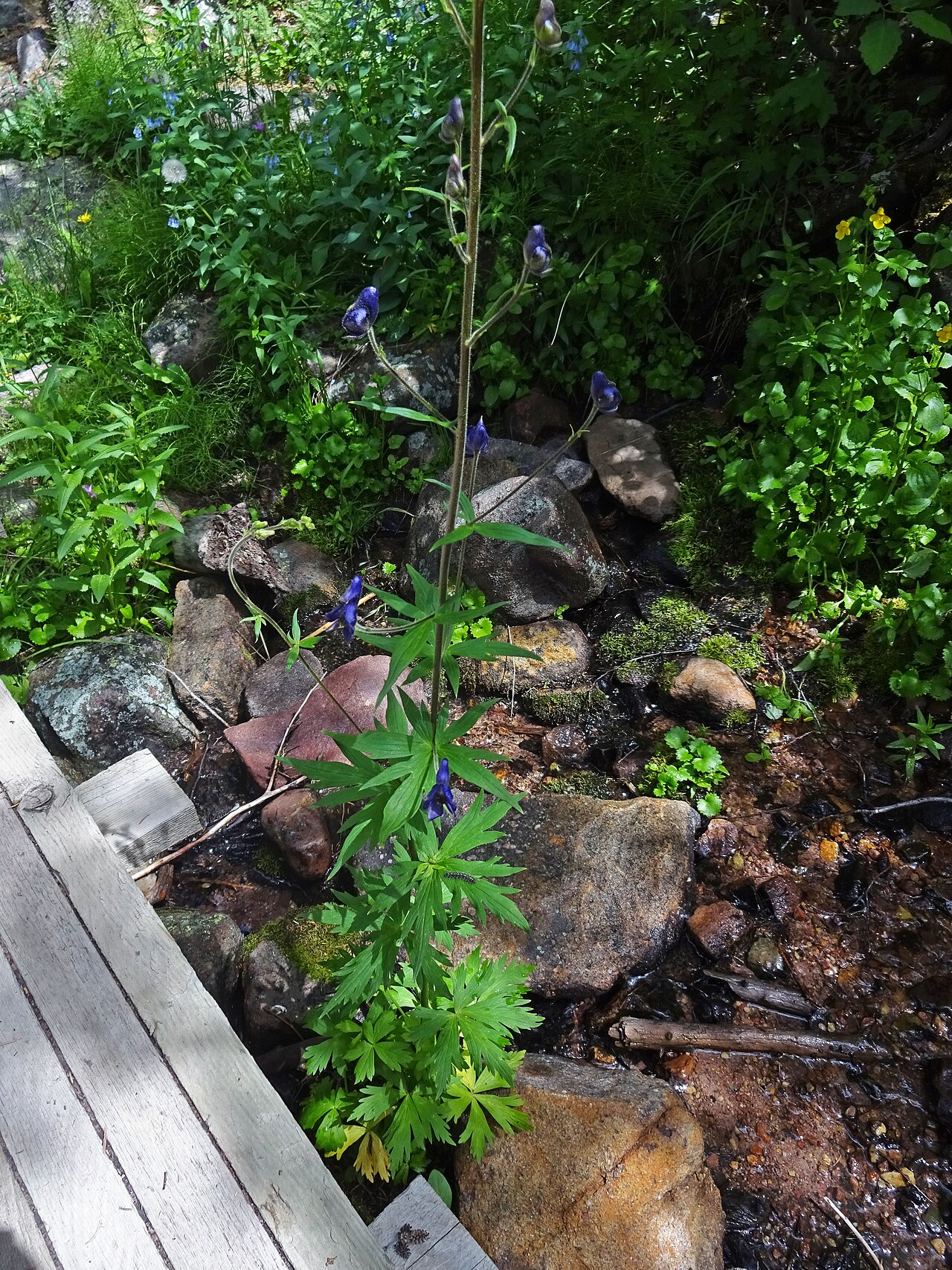
Aconitum columbianum · Buttercup family
Deep blue hooded flowers; every part is deadly, and the poison even absorbs through skin.
Western Monkshood ☠️ Deadly poisonous
Deep blue hooded flowers; every part is deadly, and the poison even absorbs through skin.


What it is
Deep blue-purple flowers, each with a distinctive hood shaped like a monk’s cowl, on tall stalks in wet mountain meadows.
How to identify
- Tall leafy stalk 2 to 6 ft high.
- Deeply lobed, sharply toothed maple-like leaves.
- Deep blue-purple flowers, each with an unmistakable arched hood (like a monk’s cowl).
- Wet meadows and streamsides.
Where & when
Wet meadows, streambanks, and shaded seeps, mid to high elevation.
☠️ Edibility
Every part is dangerously toxic (aconitine) and the poison can even absorb through the skin. Never eat it, and wash your hands if you handle it. Do not confuse young plants with edible greens.
Lookalikes & cautions
The hooded flower is diagnostic; young non-flowering plants resemble larkspur and other buttercup-family greens, all of which are toxic here.
Field notes
Historically a poison for arrows and pests; one of the most toxic plants in the mountains, so admire from a distance.
Western Water Hemlock ☠️ Deadliest plant here
Cicuta douglasii · Carrot family
The most poisonous plant in North America; a single bite of root can kill. Learn this one.
Western Water Hemlock ☠️ Deadliest plant here
The most poisonous plant in North America; a single bite of root can kill. Learn this one.
What it is
A wetland member of the carrot family and the deadliest plant in the region, whose root can kill an adult within hours.
How to identify
- Stout plant 2 to 6 ft tall, always in wet ground.
- Stem hollow, often purple-streaked or mottled near the base.
- Leaves twice or thrice compound with sharply toothed leaflets; the veins run to the notches between the teeth, not the tips.
- Cut stem base shows chambered cross-partitions and oily sap.
Where & when
Ditches, stream edges, marshes, and wet meadows, always in or beside water.
☠️ Edibility
Never eat, taste, or even handle then touch your mouth. It contains cicutoxin; a single bite of root can be fatal, causing violent seizures. There is no antidote and no safe part.
Lookalikes & cautions
Resembles cow parsnip, water parsnip, and wild carrot, some edible. Because this family holds both good food and the deadliest plants, never eat any wild carrot-family plant without expert-confirmed identification.
Field notes
If you learn only one dangerous plant in these mountains, learn this one. The veins-to-the-notches leaf clue is a classic tell.
Mule’s Ears 🚫 Not edible
Wyethia amplexicaulis · Sunflower family
Big glossy mule-ear leaves and yellow sunflowers; bitter and not a food, unlike look-alike balsamroot.
Mule’s Ears 🚫 Not edible
Big glossy mule-ear leaves and yellow sunflowers; bitter and not a food, unlike look-alike balsamroot.
What it is
Big, glossy, mule-ear-shaped leaves and large yellow sunflower blooms that cover hillsides, often confused with balsamroot.
How to identify
- Clump of large, glossy, green (not silvery) leaves shaped like a mule’s ear.
- Several large yellow sunflower heads per clump (balsamroot usually has one per stalk).
- Leaves clasp the stem (amplexicaulis) and are resinous and shiny.
- Grows in dense colonies on hillsides.
Where & when
Moist meadows, open slopes, and foothills, low to mid elevation.
🚫 Edibility
Bitter and resinous; not a food plant, unlike the balsamroot it resembles. The seeds saw only minor traditional use.
Lookalikes & cautions
The key contrast with edible arrowleaf balsamroot: mule’s ears has glossy green (not silvery), stem-clasping leaves and multiple flower heads.
Field notes
Often forms solid stands that outcompete grass; livestock avoid its bitter, resinous foliage.
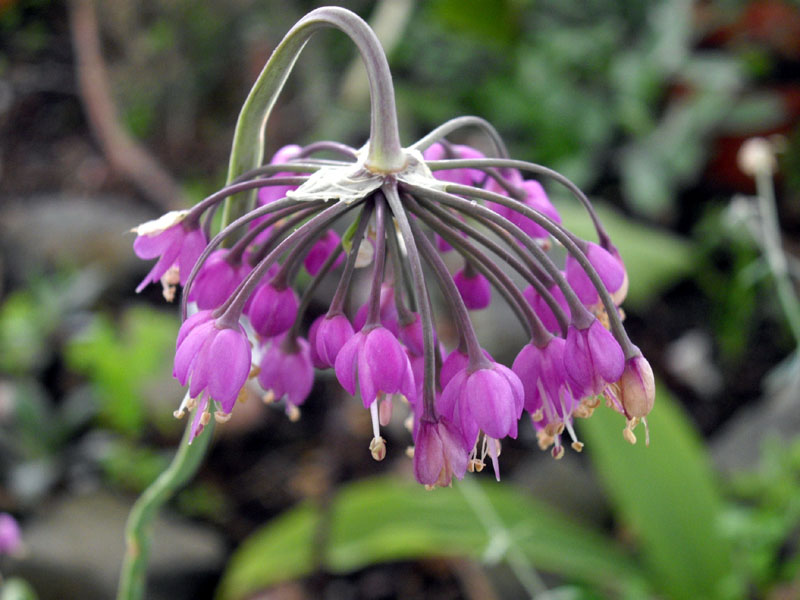
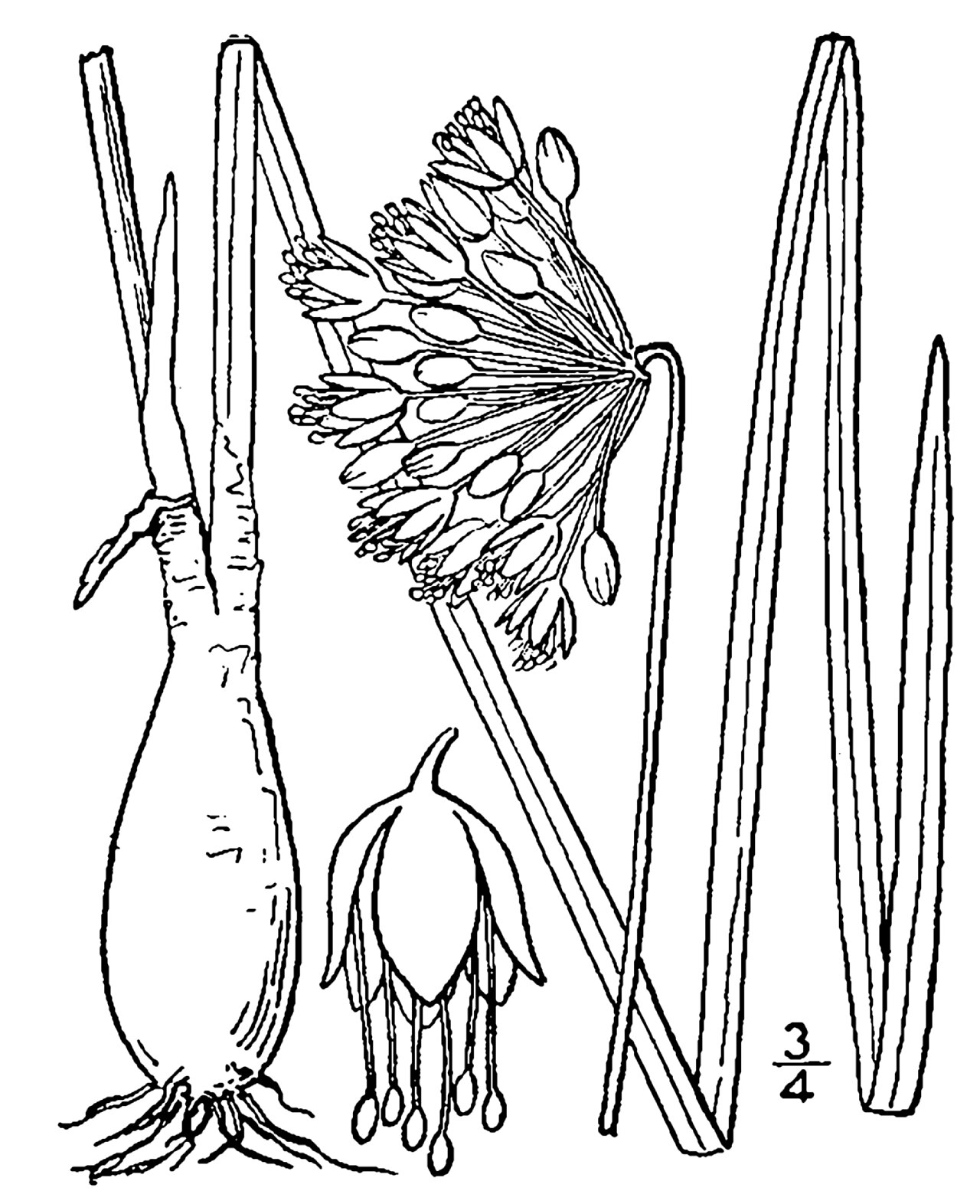
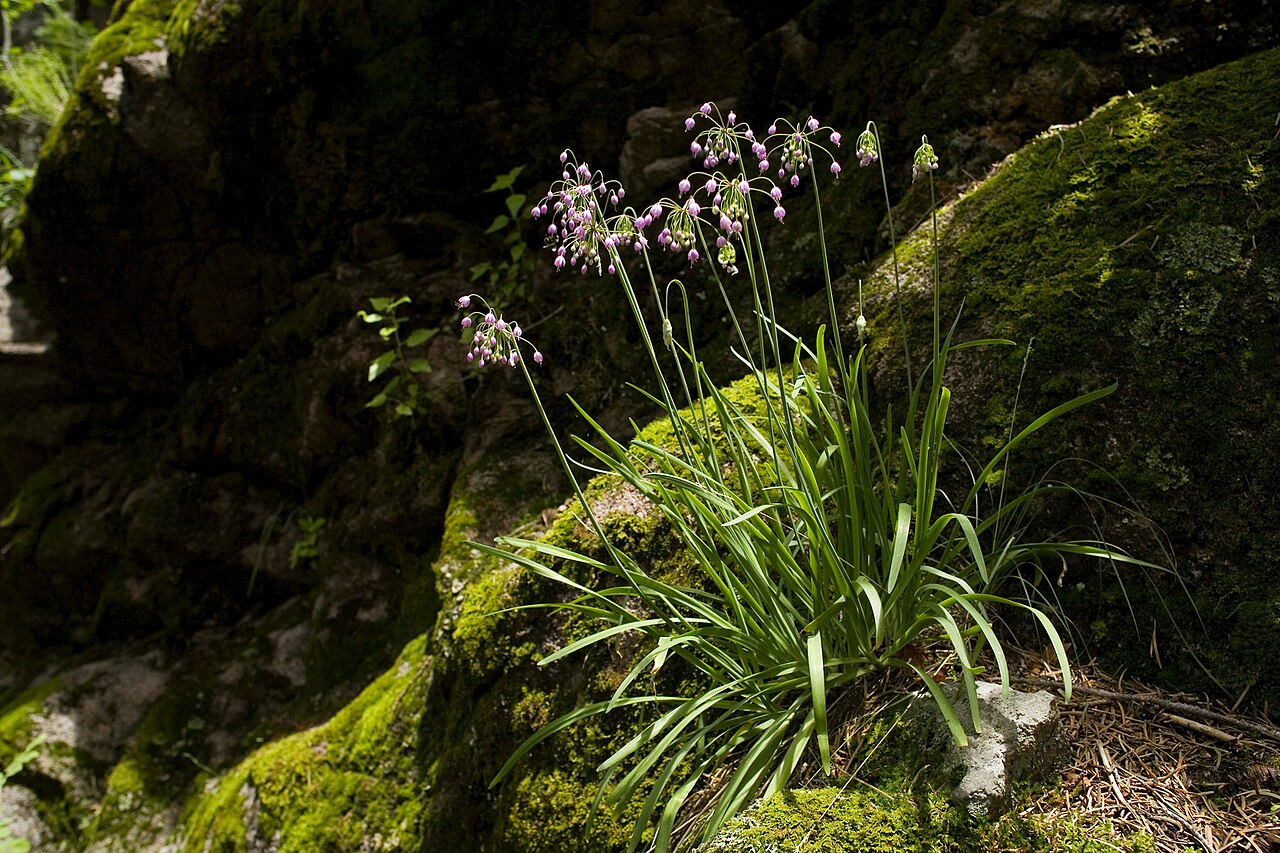
Wild Onion (Nodding Onion) ⚠️ Edible, always smell-test
Allium cernuum · Amaryllis family
A real wild onion, edible after the smell test, because its deadly twin grows right beside it.
Wild Onion (Nodding Onion) ⚠️ Edible, always smell-test
A real wild onion, edible after the smell test, because its deadly twin grows right beside it.
What it is
A true wild onion of meadows and rocky slopes, and the single most important edibility lesson in these mountains.
How to identify
- Grass-like, flat basal leaves rising from a small bulb.
- A single leafless stalk 6 to 18 in tall ending in a nodding cluster of pink-to-white star flowers.
- The whole plant smells strongly of onion or garlic when crushed; this smell is the test.
- Grows in meadows and on rocky slopes.
Where & when
Moist to dry meadows, open woods, and rocky slopes, spring into mid-summer.
⚠️ Edibility
Bulb and greens are edible and good, raw or cooked, but only after the smell test. If a crushed bulb or leaf does not smell like onion or garlic, it is not an onion. Never taste-test to decide.
Lookalikes & cautions
Death camas shares the grass-like leaves and bulb and can kill; it has NO onion smell and creamy-white upright flowers (not nodding pink). Out of flower, the smell is your only safe test, so if in doubt, leave it.
Field notes
Foraging wild bulbs is the most dangerous common mistake in the region. Learn onion and death camas as a pair, in flower, with an expert, before digging a bulb.
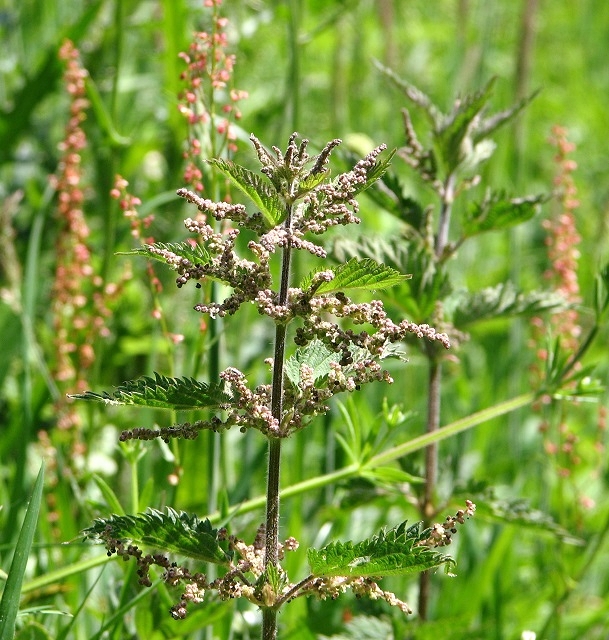
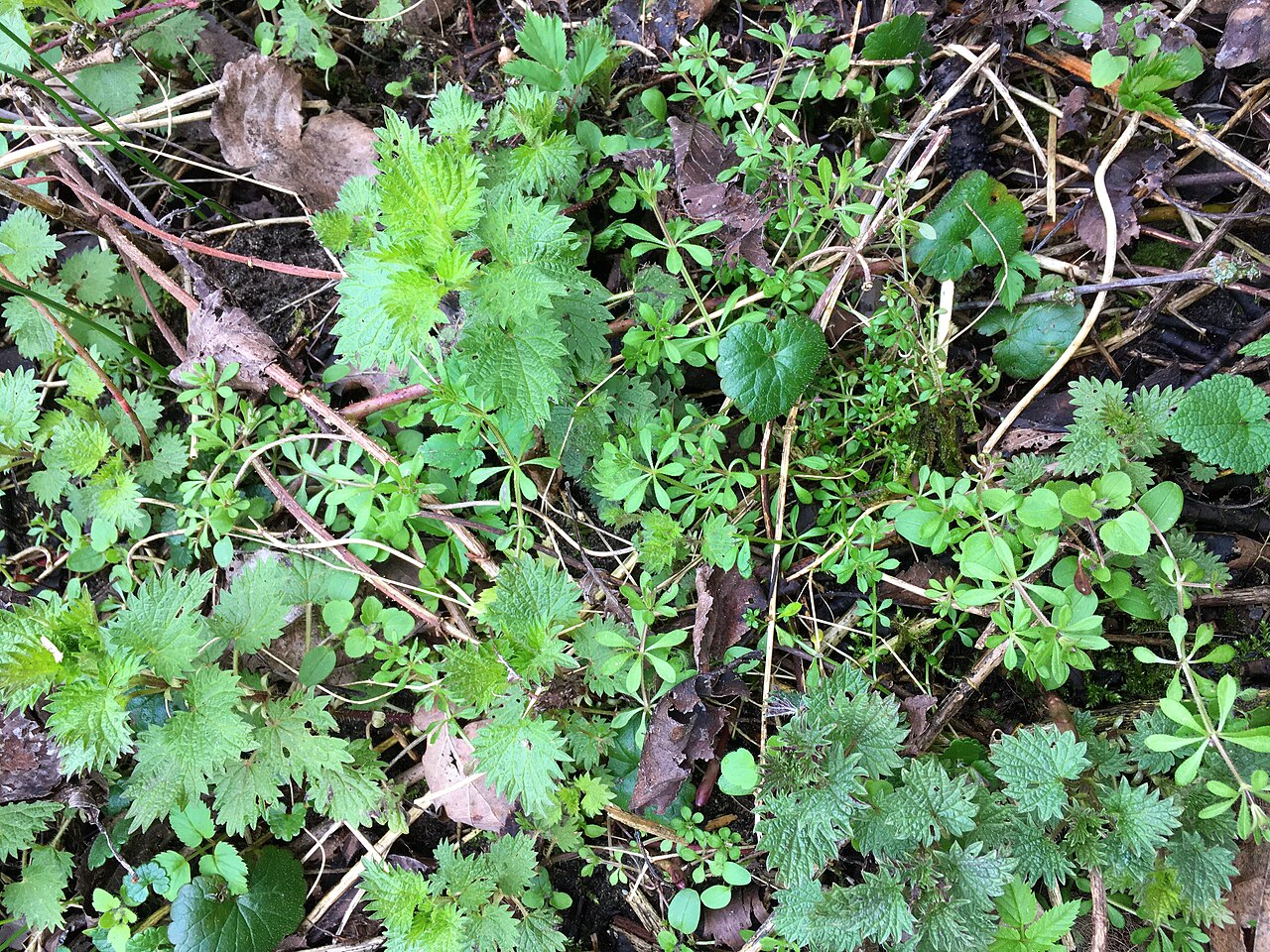
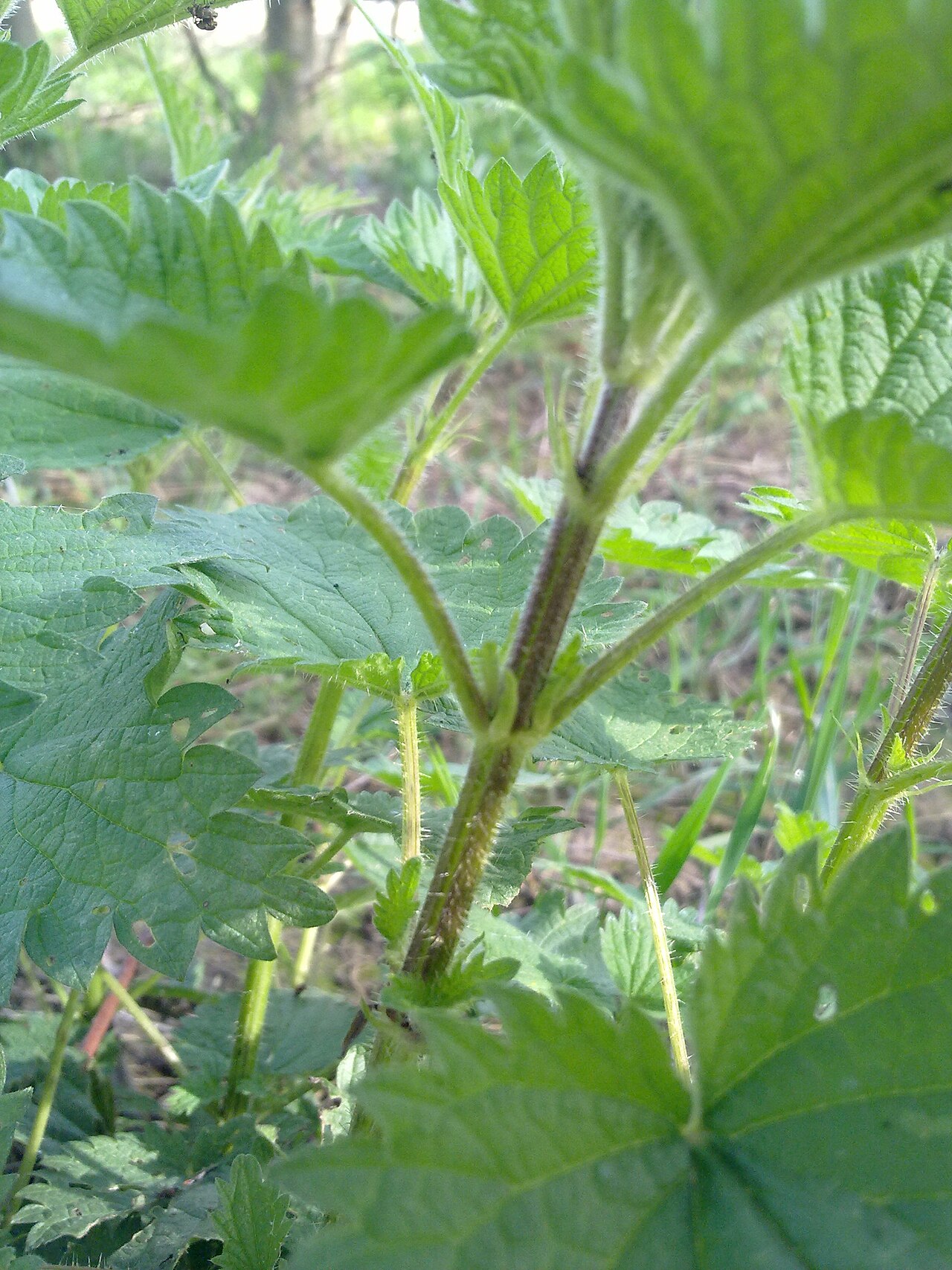
Stinging Nettle ⚠️ Edible cooked
Urtica dioica · Nettle family
One of the best wild greens once cooked; the raw sting is real, but dock growing nearby soothes it.
Stinging Nettle ⚠️ Edible cooked
One of the best wild greens once cooked; the raw sting is real, but dock growing nearby soothes it.
What it is
Upright square stems and toothed, arrowhead leaves covered in fine stinging hairs, in moist rich soil. Brush against it bare-skinned and you will not forget it, but cooked it is one of the finest wild greens in these mountains.
How to identify
- Upright plant 2 to 6 ft with a square stem.
- Opposite, toothed, arrowhead-shaped leaves that taper to a point.
- Fine stinging hairs bristling on the stems and leaf undersides.
- Tiny greenish flowers in dangling, tassel-like clusters from the leaf axils.
Where & when
Moist, rich soil along creeks, in aspen groves, and disturbed shady ground, low to mid elevation, often in dense patches.
⚠️ Edibility
One of the best wild greens once cooked, steamed, or dried, which completely destroys the sting; raw leaves deliver a painful, welting sting. Harvest the top few inches of young plants with gloves. Rich in iron, protein, and vitamins.
Lookalikes & cautions
The sting is the real hazard: the hollow hairs work like tiny needles, injecting formic acid, histamine, and other irritants the instant you touch them, raising burning, itchy welts that can last several hours. Handle only with gloves, and do not rub or scratch a sting, which only spreads it. To treat: rinse with cool water and a little soap without rubbing, then leave it alone; a cool compress eases the burn, which fades on its own within a few hours. The square stem and opposite toothed leaves confirm the plant.
Field notes
The classic trailside antidote is dock, which conveniently grows in the same damp ground: crush a dock leaf and rub its cool juice on the welts (jewelweed works too). Cooking, steaming, or thoroughly drying removes the sting entirely, turning nettle into a powerhouse wild food and spring tonic; the tough stem fibers were even spun into cordage and cloth.
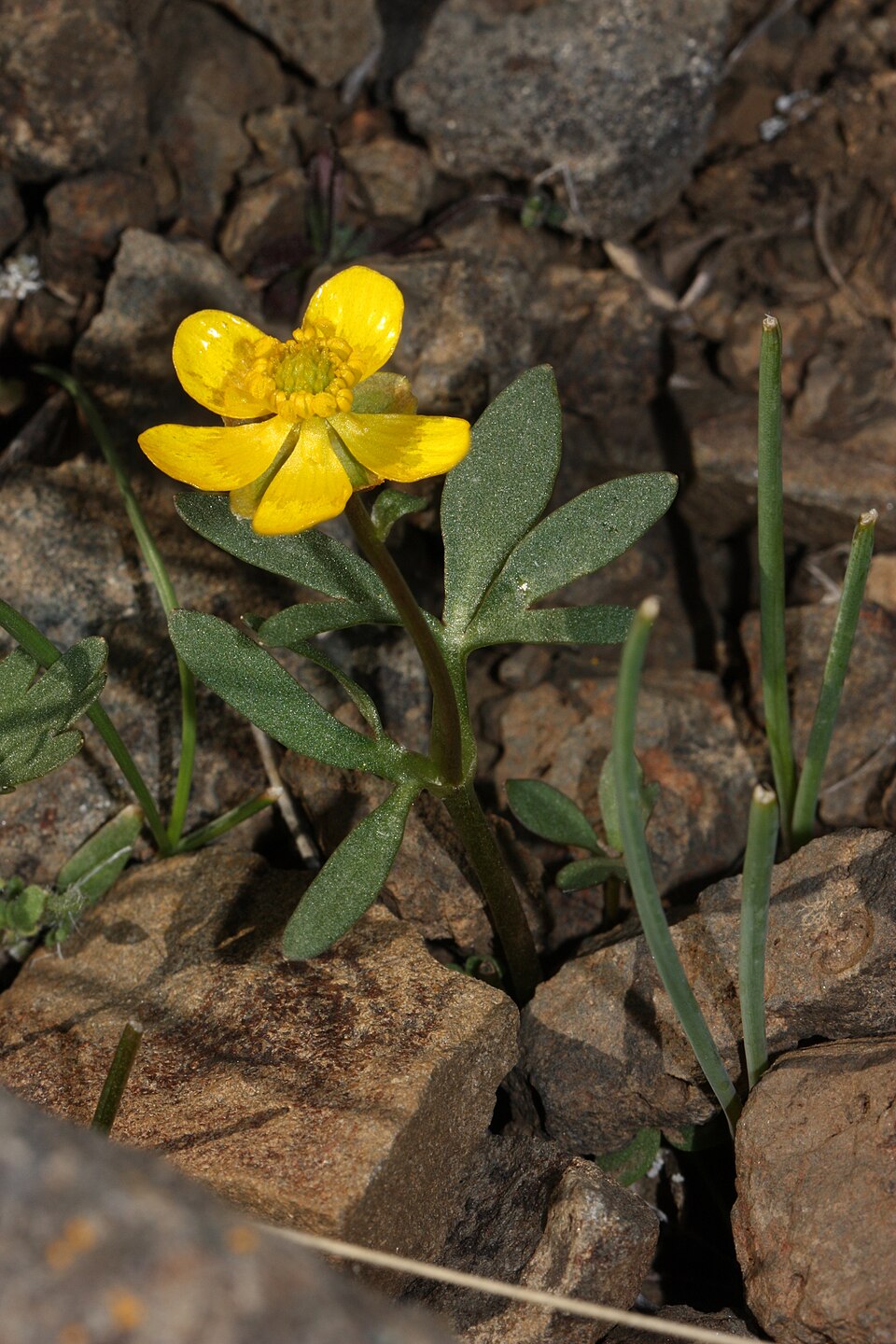
Sagebrush Buttercup ☠️ Poisonous
Ranunculus glaberrimus · Buttercup family
Glossy yellow among the first spring blooms of the foothills, and toxic. Do not eat.
Sagebrush Buttercup ☠️ Poisonous
Glossy yellow among the first spring blooms of the foothills, and toxic. Do not eat.


What it is
Glossy, deep-yellow five-petaled flowers, among the very first blooms to appear as the snow leaves the sagebrush foothills.
How to identify
- Low plant, only a few inches tall, blooming very early.
- Glossy, waxy, deep-yellow five-petaled flowers that look varnished.
- Basal leaves rounded to lobed.
- Among the first flowers of spring in the sagebrush.
Where & when
Sagebrush foothills and open slopes, low to mid elevation, very early spring.
☠️ Edibility
Toxic. Buttercups contain protoanemonin, which blisters the skin and mouth and sickens grazing animals. Not deadly the way monkshood is, but never eat it.
Lookalikes & cautions
The varnished yellow petals mark it as a buttercup; the whole family is acrid and toxic, so treat all wild buttercups as not-food.
Field notes
A cheerful sign that spring has arrived; the acrid taste keeps most animals from eating enough to be harmed.
Wild Mint (Field Mint) ✅ Easily edible
Mentha arvensis · Mint family
The one strongly mint-scented plant here; edible and wonderful for tea.
Wild Mint (Field Mint) ✅ Easily edible
The one strongly mint-scented plant here; edible and wonderful for tea.
What it is
The one truly minty-smelling plant of these mountains: square stems, opposite toothed leaves, and small lilac flower clusters in wet ground.
How to identify
- Square stem (like all mints).
- Opposite, toothed, aromatic leaves that smell strongly of mint when crushed.
- Small lilac to white flower clusters tucked where the leaves meet the stem (not at the tip).
- Always in wet ground.
Where & when
Streamsides, wet meadows, ditches, and springs, low to mid elevation.
✅ Edibility
Edible and wonderful for tea; the powerful mint smell is your confirmation. Native field mint; garden escapees like spearmint and peppermint turn up near old homesteads too.
Lookalikes & cautions
The strong mint smell plus square stem confirms it; look-alike square-stemmed mints without the smell are not true mint but are not dangerous here.
Field notes
A refreshing trailside tea and a traditional remedy for upset stomach.
Curly Dock ⚠️ Edible in moderation
Rumex crispus · Buckwheat family
A rusty-brown seed stalk over wavy leaves; edible greens and seeds, and the classic nettle-sting antidote.
Curly Dock ⚠️ Edible in moderation
A rusty-brown seed stalk over wavy leaves; edible greens and seeds, and the classic nettle-sting antidote.
What it is
A tall stalk of rusty-brown papery seed clusters over long, wavy-edged leaves, conspicuous by late summer. Introduced but naturalized everywhere.
How to identify
- Tall (2 to 4 ft) single seed stalk turning rust-brown.
- Long, lance-shaped leaves with distinctly wavy, curled edges.
- Dense clusters of small papery, rust-colored seeds.
- A thin papery sheath (ocrea) wraps the stem at each leaf base (a buckwheat-family trait).
Where & when
Disturbed ground, fields, roadsides, ditches, and meadows, low to mid elevation.
⚠️ Edibility
Young leaves are edible cooked and the seeds are edible ground; like spinach and rhubarb it is high in oxalic acid, so eat in moderation, especially raw. Native docks share the look.
Lookalikes & cautions
The wavy leaf edges and rust-brown seed stalk are diagnostic; native docks are similar and also edible.
Field notes
A cosmopolitan weed and a classic wild green; the seeds can be winnowed and ground into a flour extender. Dock is also the traditional on-the-spot remedy for a stinging-nettle sting: crush a leaf and rub the cool juice on the welts. Handily, it grows in the same damp, disturbed ground as nettle, so the cure is usually within arm’s reach of the sting.
Black-eyed Susan 🚫 Not edible
Rudbeckia hirta · Sunflower family
A golden daisy with a dark dome; here mostly planted or roadside, not native mountain flora.
Black-eyed Susan 🚫 Not edible
A golden daisy with a dark dome; here mostly planted or roadside, not native mountain flora.


What it is
Golden-yellow daisy petals around a dark chocolate-brown dome. Worth knowing, but not a native of these mountains: mostly a planted and roadside species here.
How to identify
- Coarse, bristly-hairy plant 1 to 3 ft tall.
- Golden-yellow ray petals around a raised dark brown-black center dome.
- Rough, hairy, lance-shaped leaves.
- Common on roadsides and in plantings rather than wild high country.
Where & when
Roadsides, plantings, and disturbed ground, low to mid elevation (not truly montane here).
🚫 Edibility
Not edible (mild traditional medicine only). The native East Idaho look-alike is blanketflower; the native green-domed relative is western coneflower.
Lookalikes & cautions
The native yellow-daisy look-alikes are blanketflower (red-and-gold) and western coneflower (green dome); this one is largely introduced or planted.
Field notes
A prairie and garden favorite that turns up along Western roads, but it is not a native mountain wildflower.
Red Clover ⚠️ Edible in moderation
Trifolium pratense · Pea family
Rose-pink clover heads on roadsides; introduced, edible in moderation.
Red Clover ⚠️ Edible in moderation
Rose-pink clover heads on roadsides; introduced, edible in moderation.


What it is
Rounded rose-pink flower heads over leaves marked with a pale V, along roadsides and field edges. An introduced European forage plant.
How to identify
- Sprawling to upright plant with three-part (clover) leaves, each leaflet often marked with a pale V or crescent.
- Rounded rose-pink to magenta flower heads.
- Soft-hairy stems.
- Along roadsides, fields, and trail edges, more in valleys than high country.
Where & when
Roadsides, fields, pastures, and trail edges, low to mid elevation.
⚠️ Edibility
Flowers and leaves are edible in moderation, best cooked or dried (large raw amounts can cause bloating). The native mountain versions are clovers like longstalk clover.
Lookalikes & cautions
The pale-V leaflets and pink round heads are distinctive; native mountain clovers fill the same role up high.
Field notes
An introduced forage and cover crop, valued by bees and as a nitrogen-fixer, now naturalized across the West.
Blanketflower 🚫 Not edible
Gaillardia aristata · Sunflower family
A native red-and-gold daisy of dry slopes; the true mountain counterpart to black-eyed Susan.
Blanketflower 🚫 Not edible
A native red-and-gold daisy of dry slopes; the true mountain counterpart to black-eyed Susan.
What it is
A showy native daisy with red-and-gold rays, like a woven blanket, ringing a domed brown-purple center, on dry foothill slopes.
How to identify
- Native perennial 1 to 2 ft tall with grayish, hairy leaves.
- Ray petals gold at the tips and red or maroon toward the center, three-lobed at the outer edge.
- A rounded brown-purple central dome.
- Dry foothill slopes and meadows.
Where & when
Dry foothills, open slopes, and meadows, low to mid elevation.
🚫 Edibility
Not a food plant (some traditional medicinal use). Included as the native, mountain-belonging version of the black-eyed-Susan look.
Lookalikes & cautions
The red-and-gold rays separate it from the all-yellow black-eyed Susan; this is the genuine native of the two.
Field notes
A drought-hardy native wildflower and a favorite of native-plant gardeners and pollinators alike.
Common Mullein 🚫 Not a food
Verbascum thapsus · Figwort family
The fuzzy ground rosette many call “lamb’s ear,” dock-like at first, then a tall yellow spike.
Common Mullein 🚫 Not a food
The fuzzy ground rosette many call “lamb’s ear,” dock-like at first, then a tall yellow spike.
What it is
In its first year, a flat rosette of large, soft, silver-woolly leaves that look a lot like a dock plant; in its second year it shoots up a tall yellow spike. The very fuzzy plant many people here call “lamb’s ear.”
How to identify
- First year: a flat ground rosette of big, soft, densely woolly (fuzzy) pale-green leaves.
- Second year: a single tall spike, 3 to 7 ft, of yellow five-petaled flowers.
- The whole plant is felted with soft hairs.
- All over foothills, roadsides, and old burns.
Where & when
Disturbed ground, roadsides, foothills, and burns, low to mid elevation.
🚫 Edibility
Not eaten. The leaves and flowers are a traditional cough and chest tea, and the big soft leaves earned the nickname “cowboy toilet paper,” but the fuzzy hairs irritate the throat. Medicinal, not food.
Lookalikes & cautions
Often mistaken for garden lamb’s ear because of the fuzzy leaves; the ground rosette also resembles a dock plant before it bolts.
Field notes
An introduced Eurasian biennial; the dried flower stalks were once dipped in tallow and burned as torches.
Western Wallflower ☠️ Toxic, do not eat
Erysimum capitatum · Mustard family
A showy yellow mustard of the foothills, but the wallflower exception: toxic, do not eat.
Western Wallflower ☠️ Toxic, do not eat
A showy yellow mustard of the foothills, but the wallflower exception: toxic, do not eat.


What it is
A showy spring bloomer of the foothills: a tight, rounded head of bright yellow four-petaled flowers over narrow, willow-like leaves.
How to identify
- Upright single stalk 1 to 2 ft tall.
- A rounded cluster of bright yellow (sometimes orange) flowers, each with four petals in a cross (a mustard-family mark).
- Narrow, willow-like leaves.
- Long, slender seed pods (siliques) point upward along the stem as it ages.
Where & when
Dry foothills, open slopes, and rocky ground, low to mid elevation, spring.
☠️ Edibility
It looks like an edible wild mustard, but wallflowers are the exception: they contain cardiac glycosides that act on the heart. Enjoy the color and leave it alone.
Lookalikes & cautions
Four-petaled yellow flowers mark it as a mustard, but unlike most edible mustards, wallflower is cardiotoxic, so do not eat it.
Field notes
A cheerful, common spring wildflower that is best admired rather than foraged.
Rock Clematis (Blue Clematis) ☠️ Poisonous
Clematis columbiana · Buttercup family
A delicate native vine with nodding blue lantern flowers; pretty, but toxic.
Rock Clematis (Blue Clematis) ☠️ Poisonous
A delicate native vine with nodding blue lantern flowers; pretty, but toxic.
What it is
A delicate native climbing vine that scrambles through streamside shrubs, hung with solitary, nodding, lantern-shaped blue flowers.
How to identify
- Slender climbing or scrambling vine, often draped over shrubs.
- Solitary nodding flowers of four pointed blue-purple sepals that curl back at the tips (no true petals).
- Paired, divided leaves.
- Feathery, plume-tailed seed heads follow.
Where & when
Streamside thickets, rocky slopes, and open forest, mid elevation.
☠️ Edibility
Toxic, like other clematis and its buttercup-family relatives: it contains protoanemonin, which blisters skin and mouth. Do not eat.
Lookalikes & cautions
The nodding four-sepal blue lantern on a vine is unmistakable; also called Columbian virgin’s bower (syn. Clematis occidentalis).
Field notes
One of the prettiest wild vines in these mountains, best admired in place; the silky seed plumes are nearly as showy as the flowers.
Columbine ⚠️ Flower nibble only
Aquilegia coerulea · Buttercup family
Nodding, long-spurred blue-and-white (or red) flowers of mountain woods; the flower is a sweet nibble, the rest is toxic.
Columbine ⚠️ Flower nibble only
Nodding, long-spurred blue-and-white (or red) flowers of mountain woods; the flower is a sweet nibble, the rest is toxic.


What it is
An elegant wildflower with nodding, five-spurred blooms, blue-and-white in the high country (Colorado columbine) or red-and-yellow lower down (western red columbine, Aquilegia formosa), in open forest and on rocky slopes.
How to identify
- Distinctive flowers with five petals each drawn back into a long, hollow spur, behind five flat, petal-like sepals.
- High-country form is large, blue-purple and white; the lower-elevation form is red and yellow and strongly nodding.
- Lacy, blue-green leaves divided into rounded, three-part leaflets (like a fine meadow-rue).
- 1 to 2 ft tall in open woods, meadows, and rocky slopes.
Where & when
Open forest, rocky slopes, streamsides, and meadows, mid to high elevation.
⚠️ Edibility
The flowers, especially the sweet nectar in the spur tips, are edible in small amounts and a pleasant trailside nibble. But the seeds and roots contain toxic compounds (cyanogenic and others) and must never be eaten. Enjoy the flower, skip the rest.
Lookalikes & cautions
The spurred, nodding flower and lacy three-part leaves are distinctive. Out of bloom the foliage resembles meadow-rue and the young greens of toxic monkshood and larkspur, so know it in flower.
Field notes
A hummingbird magnet, especially the red form. Colorado columbine (Aquilegia coerulea) is Colorado’s state flower and graces Idaho’s high country too; it is slow to establish, so admire it rather than dig it.
Photographs are used from Wikimedia Commons under the licenses noted with each image. This guide is an educational overview, not a substitute for a field guide or expert instruction, and does not cover every plant or every risk. When in doubt, don’t eat it.