


Bucket List by cheyennepeterson1991
first prev 1 next last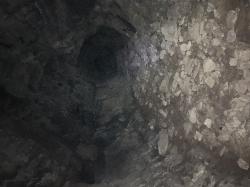
Owl Cave
Fuller, Idaho
6.2 miles N of Fuller, IdahoOwl Cave is one of the most important archaeological sites in the American West, a collapsed lava tube on the volcanic Snake River Plain about 20 miles west of Idaho Falls, Idaho. Part of the Wasden Site, a cluster of three collapsed lava-tube caves (Owl Cave, Dry Cat Cave and Coyote Cave), it has yielded an extraordinary record of Ice Age animals and some of the oldest human artifacts in the region. It is a place of genuine scientific significance, and understanding what it is also means understanding why it is not an open recreational cave.
The discoveries here are remarkable. Excavated on and off between 1965 and 1977 by the Upper Snake River Prehistoric Society and Idaho State University, Owl Cave produced a dense bison bone bed with more than 6,000 faunal elements, radiocarbon-bracketed roughly between 7,800 and 8,200 years before present, along with deeper layers holding the remains of dire wolf, camel and Columbian mammoth. The oldest, deepest deposits date back around 14,000 years. Excavators recovered human objects too, including Folsom projectile points and even a carved doll's head, making the cave a touchstone for understanding the earliest peoples of the Snake River Plain.
The essential thing to know is that Owl Cave sits on private land and is a protected, nationally recognized archaeological site, not a cave open for casual exploration. It is not a drop-in destination, and disturbing or trespassing on an archaeological site is both illegal and destructive of an irreplaceable record. We list it for its history and significance, not as a place to go poke around.
The good news for anyone drawn to the story is that the discoveries are accessible in the best possible way. The remarkable Wasden collection of Ice Age fossils and artifacts has found a home at the Museum of Idaho in Idaho Falls, where the finds can be seen and understood in context, which is a far richer experience than the cave itself would offer even if it were open.
The surrounding Snake River Plain is stark, fascinating volcanic country, and the broader region offers plenty of legitimately open lava tubes and public lands for those wanting to explore caves and the Great Rift landscape responsibly.
Treat Owl Cave as what it is: a window into 14,000 years of life on the Snake River Plain, best honored by visiting the collection at the Museum of Idaho, supporting the researchers who protect it, and leaving the site itself undisturbed. Its value lies in what it can still teach, and that depends on it being left intact.


