


737 Bucket List by gnau
first prev 1 next last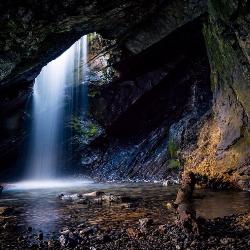
Donut Falls
Salt Lake City, Utah
14.9 miles SE of Salt Lake City, UtahDonut Falls is one of the most popular family hikes in the Salt Lake City area — a short, scenic walk in Big Cottonwood Canyon to a genuinely unusual waterfall. The “donut” name comes from the falls itself: Mill D South Fork Creek pours through a hole it has worn in the roof of a rock grotto, so the water appears to vanish into a doughnut-shaped opening in the cave ceiling before dropping into the chamber below. It's a favorite first hike for newcomers to the outdoors and an easy, rewarding escape for locals trading city bustle for pine forest and rushing water.
From the trailhead, a well-marked path winds through cool evergreen forest and open meadow, following the creek up toward the falls. The last stretch involves a bit of a rock scramble up slick, stream-polished stone to reach the mouth of the grotto and get the classic view up into the donut — go slowly here, as the wet rock is genuinely slippery and causes plenty of scrapes and turned ankles. Climbing on top of the cave for a photo down through the hole is especially dangerous: the mossy lip is treacherously slick, and falls from the top have caused several deaths over the years. The classic — and far safer — view is from below, looking up into the donut.
The total distance depends on the season and how far up you can drive. From about July 1 through October 31, you can usually drive the extra 0.8-mile dirt road past the large lot to the upper trailhead, shrinking the hike to as little as 1.4–1.5 miles round trip; the rest of the year (and whenever the upper road or the highway gate is closed by snow) it stretches to roughly 3 to 3.5 miles. Either way it's a gentle grade suitable for kids, and in winter it becomes a lovely, easy snowshoe. In early spring, count on lingering snow and ice — especially on the final rock scramble to the falls, which turns slick and tricky — and note that the restrooms and upper parking often aren't open yet.
One crucial thing to know: Big Cottonwood Canyon is a protected drinking-water watershed for the Salt Lake Valley, and its watershed rules are strict and firmly enforced: under them, dogs are not allowed anywhere in the canyon and swimming or wading is prohibited, even on a hot day, so plan to leave the pup at home. These rules keep the water clean for the hundreds of thousands of people who drink it downstream.
Because it's so beloved and so close to the city, the small dirt parking area fills fast; in summer, come at first light or on a weekday to find a spot and beat the crowds. Bring water, wear shoes with real traction for the wet final scramble, and pack a camera for the falls and the forest. Check current road and gate status in Big Cottonwood Canyon before heading up, especially outside of summer, and enjoy one of the Wasatch's classic little adventures.
Y-Mountain Summit Trail
Provo, Utah
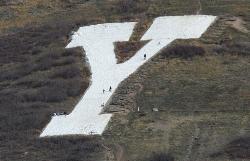
2.8 miles E of Provo, UtahY Mountain is located directly east of Brigham Young University (BYU) in Provo, Utah, United States. The Slide Canyon/Y Mountain Trail leads to a large block Y located 1.2 miles (1.9 km) from a parking area at the mountain's base. This hillside letter was built over a hundred years ago as the insignia for BYU. For years the trail to the Y has been one of the most hiked trails in Utah Valley and provides a beautiful view of Provo and Orem, the rest of the many cities in Utah Valley and Utah Lake. The trail is also regularly used by hikers, bikers, paragliders and hunters to access the backcountry in the Slide Canyon area.
The large white Y on the side of the mountain has become the nationally recognized insignia for BYU and the reason why BYU is often called "the Y". It is made of concrete and is 380 feet high and 130 feet wide (116 by 40 m). The Y is even larger than the "Hollywood Sign" in Los Angeles.
There are 14 strands of lights placed around the perimeter of the Y, which are lit five times a year by the Intercollegiate Knights. It is lit for Freshman Orientation, Homecoming, Y Days, and graduation in April and August.
Fifth Water Hot Springs
Provo, Utah
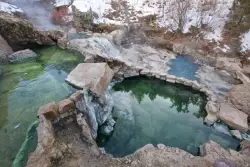
19.0 miles SE of Provo, UtahFifth Water Hot Springs — better known to generations of Utahns as Diamond Fork Hot Springs — is one of the most beloved soaks in the state: a series of steaming, blue-green mineral pools tucked beside a waterfall in a pretty canyon southeast of Provo. A scenic drive up Diamond Fork Canyon and a riverside hike of about 2.5 miles each way lead to the reward, where hot water tumbles down a travertine hillside into a staircase of rock pools ranging from pleasantly warm to a toasty 105–110°F at the source.
The pools sit right where Fifth Water Creek meets a small waterfall, and part of the fun is choosing your spot. As you come into view of the falls you'll see a few pools perched just above the creek; more line the base of the waterfall, including shallow soakers and spots where you can nudge the rocks around to mix hot spring water with cool creek water and dial in your own temperature. Wander behind and beyond the waterfall and you'll find a couple of quieter, more secluded pools — just watch the slick, mineral-coated rock, which can be treacherously slippery. The water carries a faint sulfur smell and stains everything a milky blue-green; it's all part of the character.
A few practical notes make the trip smoother. There's nowhere private to change at the springs, so most people hike in their swimwear (and on a sunny day you'll dry off easily on the walk out). Bring water shoes or sandals if your feet are tender — the rocky pool bottoms and short scrambles are much friendlier with something on your feet. This is a relaxed, come-as-you-are place with a longstanding clothing-optional streak, so groups with kids may occasionally encounter suit-free soakers, especially on quiet weekdays.
Timing matters more here than at most hikes. The Diamond Fork Road gate closes for winter (typically from around November into late spring), and when it's shut the hike balloons to roughly 12–13 miles round trip — a popular but serious snowshoe or ski outing rather than a casual stroll. When the road is open, it's about a 5-mile round trip. Fall, winter, and spring are the sweetest seasons: cooler air makes the hot water far more inviting and the crowds thinner. The springs are busiest on weekends and holidays, so go early or midweek if you can, and note that a trailhead parking fee has been proposed for this popular spot, so come prepared for one.
Come prepared and tread lightly. Rattlesnakes are active along the sun-warmed trail in the warmer months — on a hot day you may well spot several snakes, most of them harmless, so simply watch where you step and reach. Carry plenty of drinking water — a long hot soak is dehydrating — and pack out everything you bring; broken glass and litter have been a real problem here, and keeping this gem clean is on all of us. Dogs are welcome on the trail. With a little planning, Fifth Water rewards you with one of the finest hot-spring soaks in the Wasatch — a waterfall at your back, canyon walls above, and warm mineral water swirling all around.


