Mount Baldy Beach
Michigan City
Hike and Swim
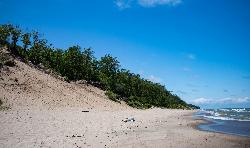
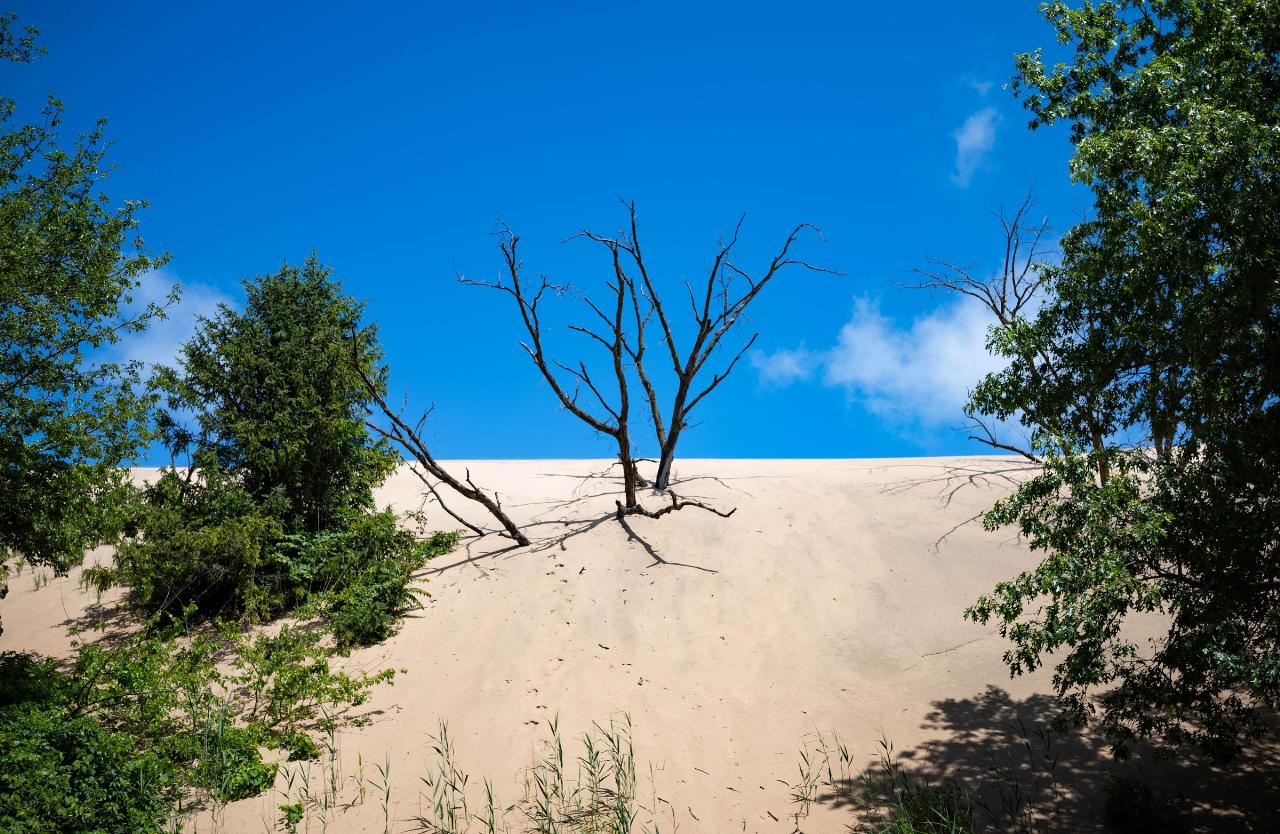
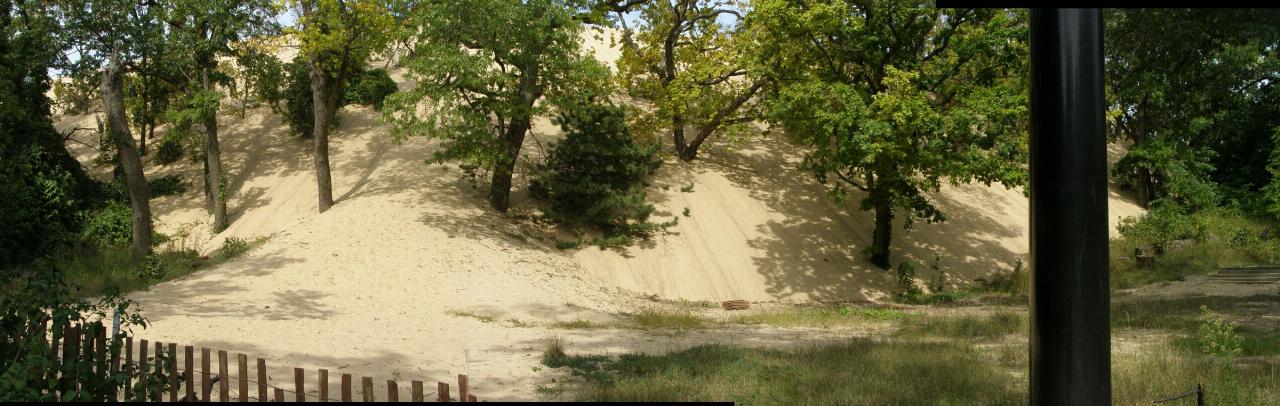
Mount Baldy is a 120 foot sand dune at the far eastern end of Indiana Dunes National Park, rising straight off the Lake Michigan shore about two miles west of downtown Michigan City. It is the largest moving dune on the Indiana coast, and the word moving is literal. Sand blows off the beach, climbs the windward face and spills over the crest, shoving the whole landform inland roughly four feet a year and burying the oak and pine woods behind it. Trees along the back edge stand dead and half swallowed. The dune began building about 4,000 years ago on an old shoreline geologists call the Tolleston Beach.
Read the access rules before you load the car, because half of this place is off limits. In 2013 a small boy fell into a cylindrical shaft near the summit and was buried in an 11 foot pit; crews dug him out alive after roughly three hours. The shafts turned out to be voids left behind where buried black oak trees had rotted away, a process nobody had documented before. Researchers named it a dune decomposition chimney in 2016. The summit has been closed to independent climbing ever since, and the dune face remains closed. The only legal way to the top is with authorized park staff, on ranger led daytime and sunset hikes offered weekends through the summer and occasionally off season. Dates are posted on the park calendar.
The beach is a separate story, and it is open. The Beach Trail carries no restrictions: 0.75 miles round trip, about 75 feet of elevation change, roughly an hour. It swings around the west side of the dune, then drops steeply through loose sand to the water a third of a mile from the lot. The only way back is up that same slope, so leave the heavy cooler in the car.
No lifeguards work this beach. Swim at your own risk. Lake Michigan records more drownings and more rip current rescues than any other Great Lake, and wind driven waves at this end of it build quickly, so check conditions and stay out when warnings are posted. The water runs cold well into summer. In winter, shelf ice piles along the shore and hides gaps that people fall through; look at it from dry sand and nothing more.
Parking sits at 101 Rice Street off U.S. Highway 12, a paved lot with 92 spaces, three of them oversized, plus year round restrooms, drinking water and a picnic shelter. It fills on hot weekends. Gates open daily 6:00 a.m. to 11:00 p.m. An entrance pass is required to park: $25 per private vehicle or $20 per motorcycle for seven days, $15 per person arriving on foot or by bicycle, or $45 for the park annual pass. Leashed pets are welcome. Glass and fires are banned on the beach, and ticks and poison ivy are around the lot.
More Information
Be courteous, informed, and prepared. Read trailhead guidelines, stay on the trail, and don't feed the wildlife.
Read More
- Plan Ahead and Prepare
- Travel & camp on durable surfaces
- Dispose of waste properly
- Leave what you find
- Minimize campfire impacts
- Respect wildlife
- Be considerate of other visitors
Directions
From Michigan City
- Head east on E Homer St toward Lafayette St (377 ft)
- Turn left onto Lafayette St (0.6 mi)
- Turn right onto E 8th St (0.1 mi)
- Sharp left onto E Michigan Blvd (0.5 mi)
- Turn left onto W Michigan Blvd (0.8 mi)
- Continue onto US-12 W/
W 4th St Continue to follow US-12 W(1.2 mi) - Sharp right onto Rice St (0.1 mi)
- Turn leftDestination will be on the right(23 ft)
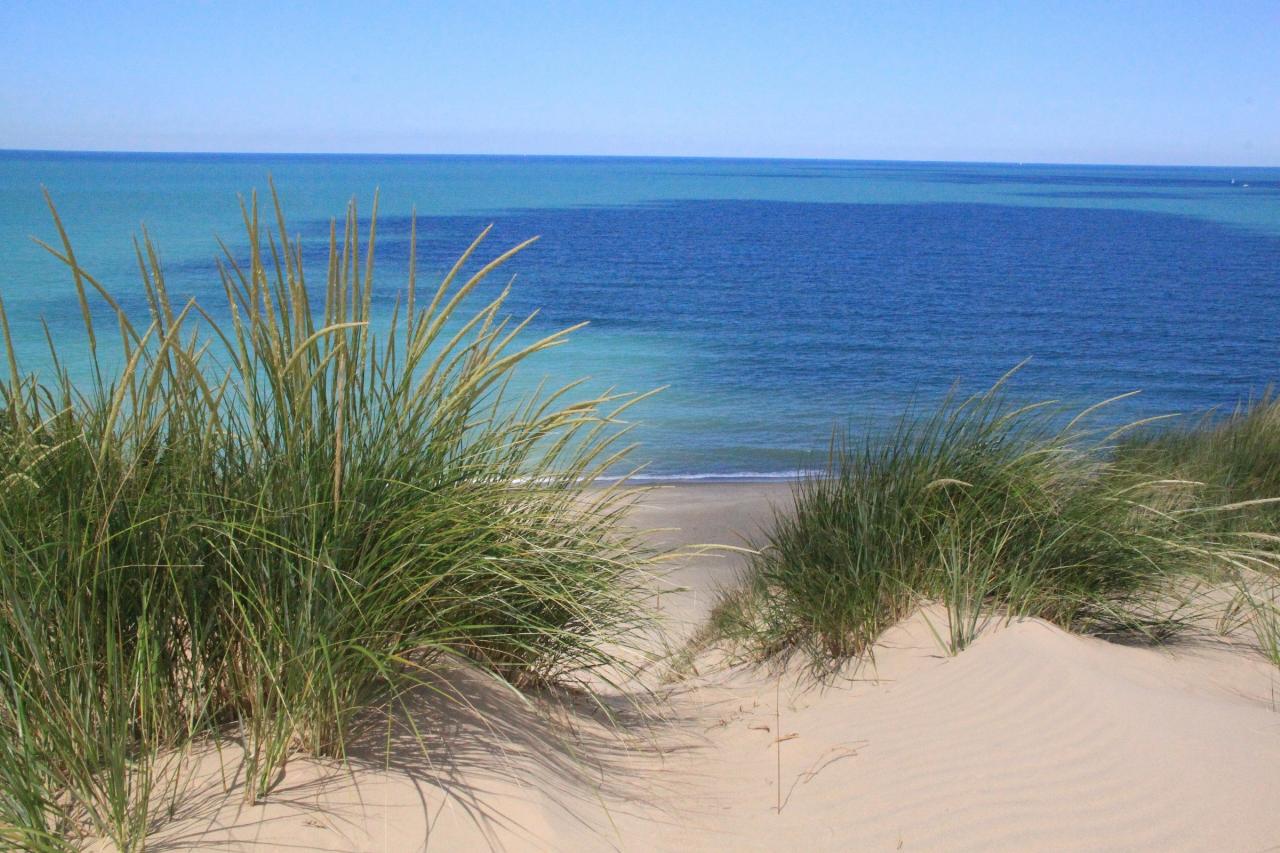
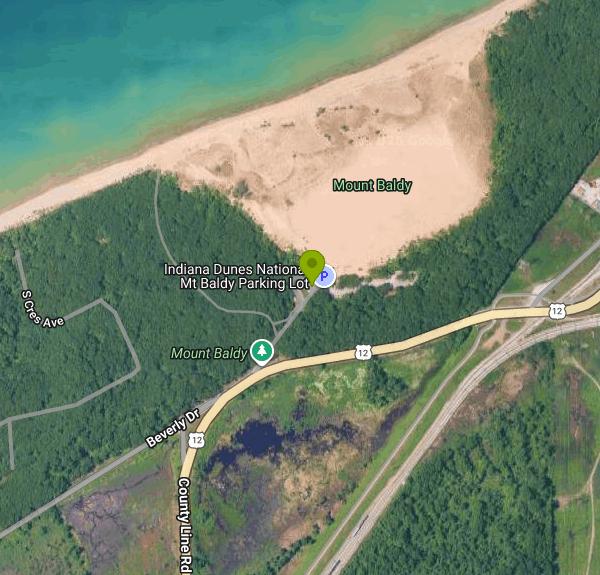 The Lake Michigan beach at the foot of Mount Baldy, reached by the unrestricted Beach Trail.
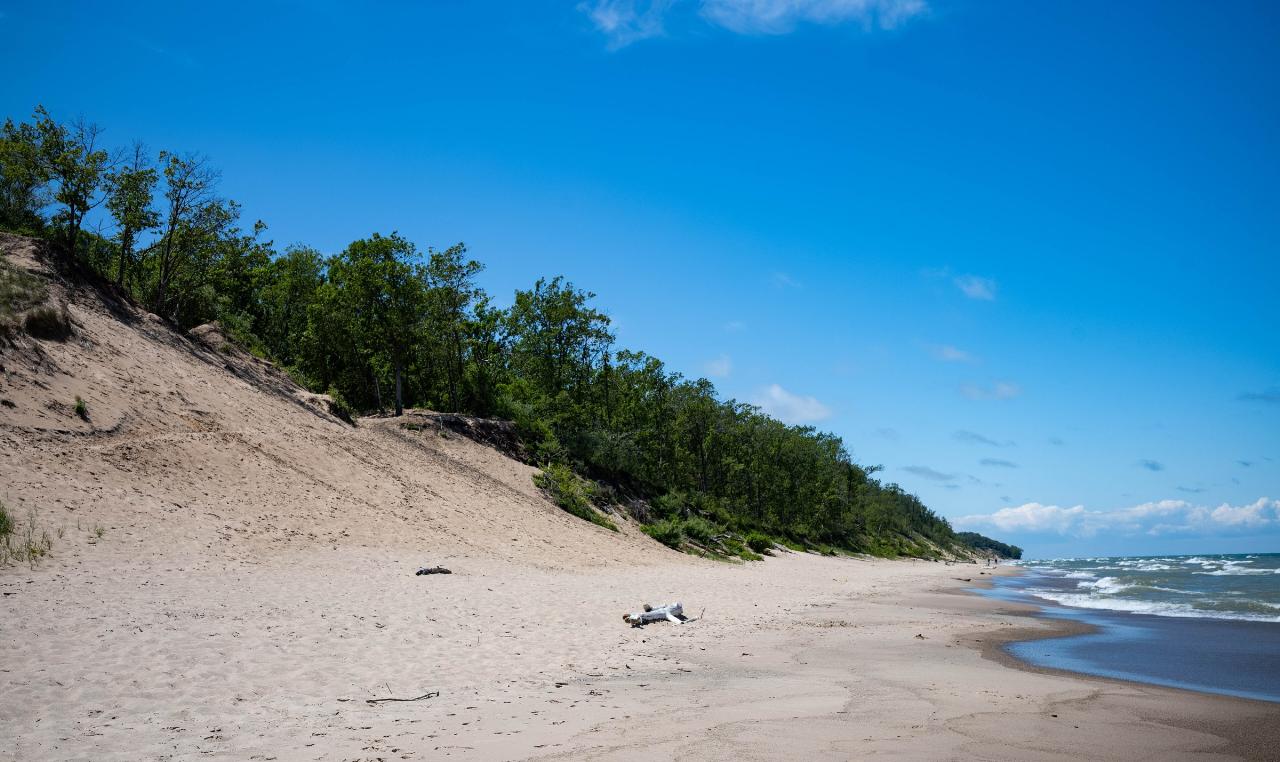
 Mount Baldy rising from the shoreline at the eastern end of Indiana Dunes National Park. courtesy of rboed*↗ (CC BY 2.0↗)
 The largest living dune in the park, migrating inland roughly four feet each year. courtesy of Indianadunes↗ (CC BY-SA 4.0↗)
 Sand advancing inland off the crest, burying the trees standing in its path. courtesy of Indianadunes↗ (CC BY-SA 4.0↗)
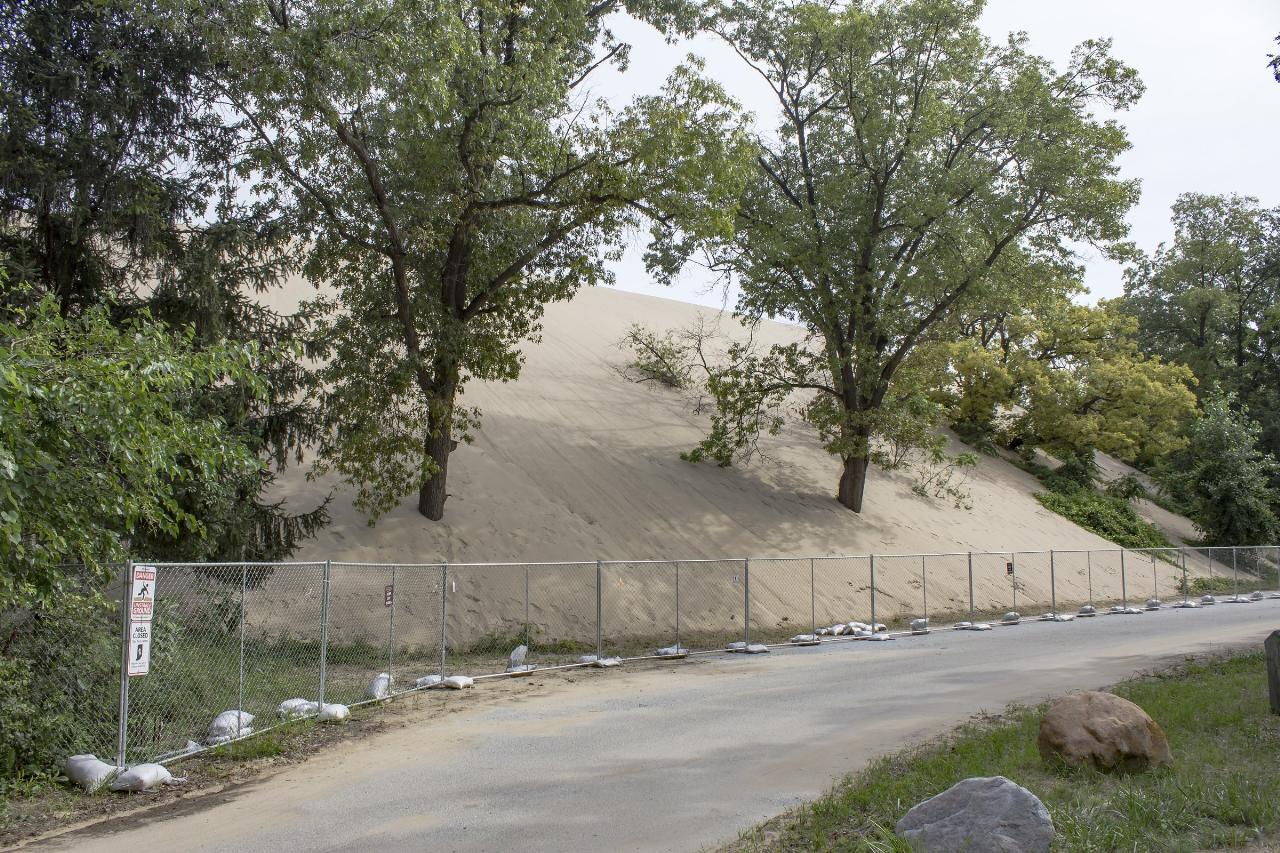
 The south side dune climb area, closed to independent climbing since 2013. courtesy of Chris Light↗ (CC BY-SA 4.0↗)
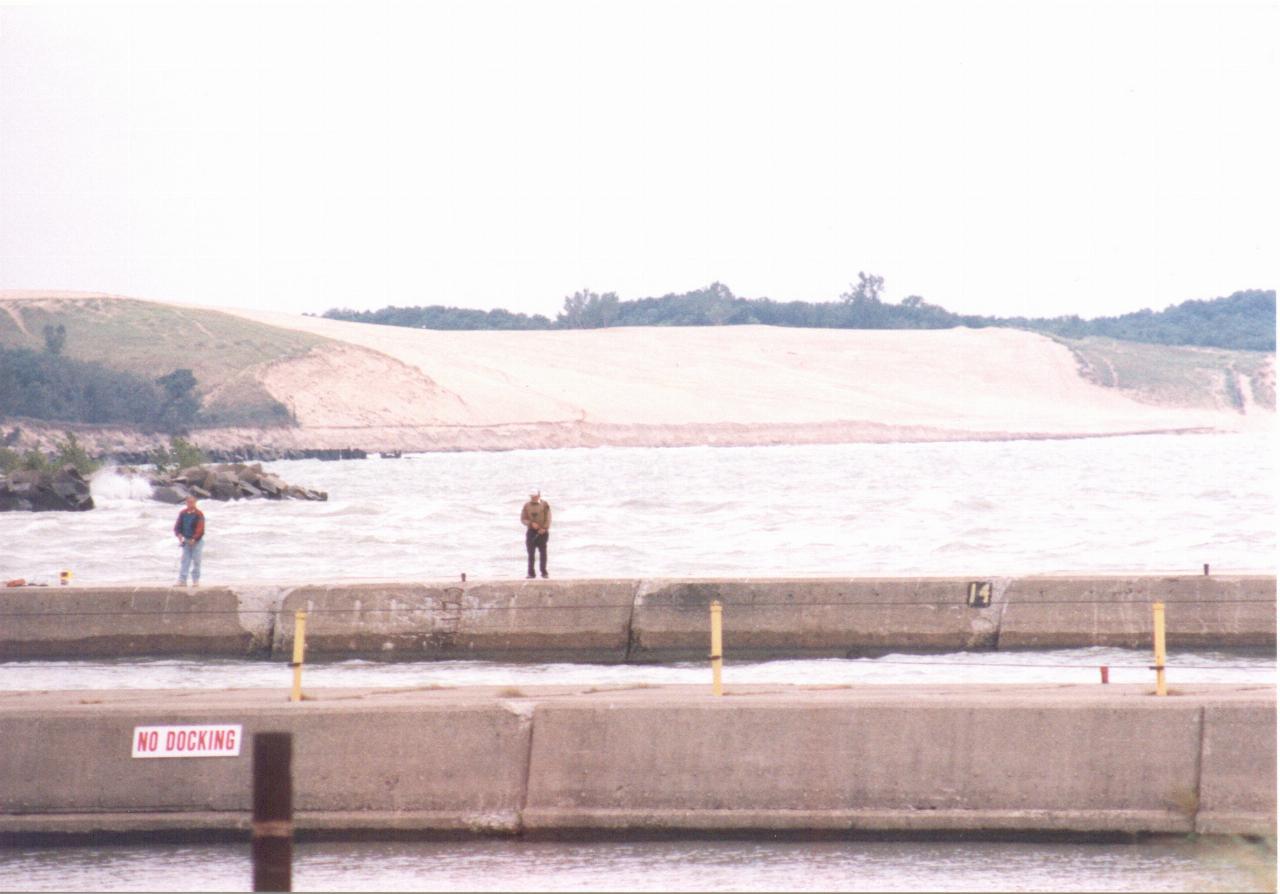
 Mount Baldy seen across the water from the Michigan City breakwall at Trail Creek. courtesy of Chris Light↗ (CC BY-SA 4.0↗)