


Refine Search
- hike 154
- swim 106
- camp 48
- mountain bike 28
- backpack 23
- kayak 20
- sled 17
- canoe 17
- cave 15
- dive 13
- skateboard 10
- horseback 9
- cross-country ski 8
- hot springs 8
- snowshoe 8
- rock climb 5
- disc golf 4
- paintball 3
- airsoft 3
- canyoneer 2
- whitewater 1
273 locations
Add Location
 Full Listing
Show more
Camp
 Full Listing
Show more
Camp
 Full Listing
Show more
Camp
 Full Listing
Show more
Camp
 Full Listing
Show more
Camp
 Full Listing
Show more
Camp
 Full Listing
Show more
Swim
0.0-0.7 mi
 Full Listing
Show more
Hike, Mountain Bike
Hidden Valley Trails
Rexburg, Idaho
1.3 miles E of Rexburg, IdahoRight on the edges of town outside of the Hidden Valley subdivision, you'll find this fun little set of trails that's pretty good for mountain bikes. What was once just dirt roads and a dirt bike playground is now a fantastic mountain bike trail network.
West Side:
The West Side is what's commonly referred to as Hidden Valley Trails. It is a well-developed trail network with good signage and a few parking spots. It includes a variety of downhill trails and easy climbs, each between 0.3-0.4 mi long.
- High Road is a wide cut trail from old double track. Pretty straight with a few floater style roller jumps. It's also a popular climbing trail with a fairly gradual grade once you get past the climb at the start.
- Flow State is a meandering flow trail with several berms.
- Surge is a fairly straight shot jump line
- Sage Runner is a swoopy trail that mostly follows the contour of the hill with a little up around many of the turns. This trail is not heavily bermed.
- The Draw is a wide cut trail from old double track. Pretty straight with several large floater style roller jumps. It's also a popular climbing trail with a fairly gradual grade until you're almost to the top.
- Other trails:Rusty Ridge, The Drop Zone, Lil' Sendy, The Good, The Bad, The Ugly, Pulse, A-Fib, Neature Walk
East Side: the undeveloped east half of the valley (Hidden Valley Singletrack and Dr. Jekyll) is listed separately as East Hidden Valley.
PLEASE NOTE: This is private property that the owners are kind enough to permit use right now. Please respect their surrounding fields and stay on the trails that are already there. Please respect the residents near the trailhead and don't block driveways.
1.3 mi
 Full Listing
Show more
Hike, Swim
Rainbow Falls
Lake Toxaway, North Carolina
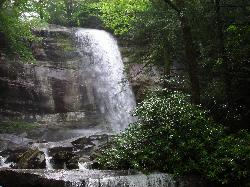
3.4 miles SW of Lake Toxaway, North CarolinaRainbow Falls is one of the most spectacular waterfall settings in the Blue Ridge Mountains of North Carolina. This 150-ft. tall waterfall is impressive, especially after rainy weather that swells the Horsepasture River. The best feature of Rainbow Falls is the ability for visitors to experience the falls from the front, bottom, side and top! Located in the Pisgah National Forest, adjacent to Gorges State Park, Rainbow Falls is just one of a series of cascades and waterfalls on a two-mile stretch of the river. The park is in the Sapphire community, near Lake Toxaway, and about 55 miles from downtown Asheville. Courtesy of romanticasheville.com
St. Mary Campground
Glacier National Park
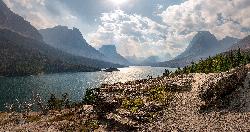
15.6 miles E of Glacier National ParkSt. Mary Campground is the main campground on the drier east side of Glacier National Park, set just half a mile from the St. Mary Entrance at the foot of St. Mary Lake, where the plains meet the mountains. As the eastern gateway campground it is a natural base for exploring the Going-to-the-Sun Road from the east, and it has the big-sky, wind-swept character that sets the east side apart from the lush west.
The campground has about 148 sites, roughly two dozen of which can take RVs up to 35 feet, with flush toilets and drinking water; coin-operated showers and a camp store are available nearby at St. Mary. Sites come with picnic tables, fire rings and bear-resistant food storage, and the campground is on the reservation system, so summer nights should be booked in advance. It sits at the transition zone between forest and prairie, so it can be notably breezy and open compared with the sheltered west-side campgrounds.
Just up the Going-to-the-Sun Road are some of the park's signature sights: the Wild Goose Island overlook on St. Mary Lake, the waterfalls of the St. Mary and Virginia Falls area, and the long climb to Logan Pass. Boat tours run on St. Mary Lake, and the campground is well placed for reaching the Many Glacier valley to the north. With its east-side scenery, full front-country facilities and prime position on the Sun Road, St. Mary is one of the park's most useful and scenic campgrounds.
Rising Sun Campground
Glacier National Park
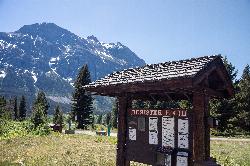
12.9 miles E of Glacier National ParkRising Sun Campground sits on the north shore of St. Mary Lake about six miles inside the St. Mary Entrance on the east side of Glacier National Park, part of the small Rising Sun hub along the Going-to-the-Sun Road. It is a mid-sized, first-come, first-served campground of about 83 sites, a handful of which can fit RVs up to 25 feet, with flush toilets and drinking water.
The setting is the draw: the campground looks out toward St. Mary Lake and the surrounding peaks, and the Rising Sun area has a camp store, a motor inn, a nearby restaurant and coin-operated showers, along with the boat dock where scenic cruises depart onto the lake. That makes it an unusually convenient primitive-fee campground, with services close at hand in an otherwise wild stretch of the east side.
Rising Sun is an excellent base for east-side hiking and sightseeing. The trail to St. Mary and Virginia Falls begins a short drive up the road, the Wild Goose Island overlook is nearby, and the full length of the Going-to-the-Sun Road climbs west from here toward Logan Pass. Being first-come, first-served, it requires an early arrival on busy summer days, but for campers who want lakeside scenery with a few creature comforts on the quieter east side of the park, Rising Sun is hard to beat.
Apgar Campground
Apgar Village, Glacier National Park
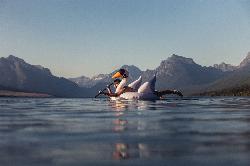
0.5 miles SE of Apgar Village, Glacier National ParkApgar Campground is the largest campground in Glacier National Park and, for many visitors, the most convenient, sitting just inside the West Entrance near Apgar Village at the foot of Lake McDonald. With about 194 sites, including roughly two dozen that can accommodate RVs up to 40 feet, it is the park's most developed front-country campground, with flush toilets, drinking water and an RV dump station.
Its appeal is location and ease of access. Apgar Village, a short walk away, has a visitor center, a camp store, boat and bike rentals, food and a beach on Lake McDonald, and the campground sits right at the western start of the Going-to-the-Sun Road and on the free park shuttle line, making it a practical base for exploring the whole west side without fighting for trailhead parking. Because it is large, it also tends to have availability when smaller campgrounds are full, though the best sites still go quickly and much of the campground is on the reservation system.
Lake McDonald, the largest lake in the park, is the centerpiece: its clear water and famous multicolored pebbles, the classic view up the lake toward the Continental Divide, and easy paddling and lakeshore strolling are all right at hand. Gentle trails wind through the forest around Apgar, and the village makes it easy to catch a ranger program or a boat tour. It is a comfortable, family-friendly introduction to the park rather than a wilderness experience, and that is exactly why it stays popular.
Kintla Campground
Glacier National Park
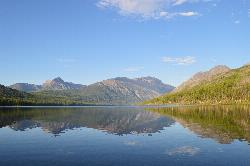
22.6 miles NW of Glacier National ParkKintla Lake Campground is the most remote drive-in campground in Glacier National Park, sitting at the foot of Kintla Lake at the literal end of the road in the far northwest corner of the North Fork region, hard against the Canadian border. Getting there means about 40 miles of slow travel north from the West Entrance on the unpaved North Fork Road and the rough road past Polebridge, a drive that is not suitable for RVs or trailers and that deters all but the most determined, which is exactly why the campground is so quiet and wild.
It is a tiny, primitive, first-come, first-served campground of only about 13 sites, with vault (pit) toilets and a hand pump for water; there are no hookups, no dump station and no other services, so visitors must be entirely self-sufficient. Sites have picnic tables, fire rings and bear-resistant food storage, and because there are so few of them, the campground can fill even in this hard-to-reach location.
Kintla Lake itself is a long, deep, exceptionally clear glacial lake reaching back toward the crest of the Livingston Range, and it is a legendary paddling destination: motorized boats are prohibited, so canoes and kayaks have the water to themselves, and paddlers can continue up-valley toward Upper Kintla Lake and deep backcountry. This is true grizzly country with no cell service and no crowds. For paddlers, backpackers and campers seeking Glacier at its most serene and undeveloped, Kintla is the end-of-the-road prize.
Avalanche Campground
Glacier National Park
5.8 miles S of Glacier National ParkAvalanche Campground sits about 16 miles up the Going-to-the-Sun Road from the West Entrance, in a magnificent stand of old-growth western red cedar and hemlock along Avalanche Creek, roughly midway between Lake McDonald and Logan Pass. Its location makes it one of the most sought-after campgrounds in Glacier: it puts you right on the Sun Road corridor and steps from two of the park's best short hikes.
The campground has about 87 sites, some of which can take RVs up to 26 feet, with flush toilets and drinking water available. Sites include picnic tables, fire rings and bear-resistant food storage, and the campground is on the reservation system, so booking ahead is strongly advised in the busy summer season. It typically opens only once the Going-to-the-Sun Road has been plowed and cleared, usually not until June, and closes in early fall.
Right from the campground you can walk the Trail of the Cedars, a flat, wheelchair-accessible boardwalk loop through towering ancient cedars, and from it branch onto the Avalanche Lake Trail, a moderate two-mile climb to a stunning cirque lake ringed by waterfalls pouring off the Sperry Glacier basin. The area is thick, green and often cool and damp, a striking contrast to the park's alpine heights, and it is excellent for spotting wildlife. Being mid-corridor on the Sun Road, it is also a convenient base for riding the free park shuttle up to Logan Pass without dealing with the notorious parking crunch.
Beaver Creek Dispersed Camping
Rimrock, Arizona
3.8 miles NE of Rimrock, ArizonaThis free dispersed camping area sits on the cliffs above Wet Beaver Creek in the Coconino National Forest of central Arizona, in the red-rock and juniper country near Rimrock and Camp Verde, not far south of Sedona. Perched on the rim overlooking the creek, it offers exactly what desert dispersed camping should: a free, quiet, scenic spot to pitch a tent or park a rig under big Arizona skies, with one of the region's best swimming and hiking creeks right below.
The setting is the draw. The sites sit up on the cliffs and benches above Wet Beaver Creek, reached by the forest roads (the FR618 corridor) that thread this stretch of the Coconino, with sweeping views over the creek's green ribbon and the surrounding high desert. It's a popular free alternative to the developed campgrounds nearby, and it puts you within easy reach of the water and trails for the cost of nothing but a tank of gas.
Wet Beaver Creek itself is the reason many people come. The cool, clear waters are an excellent place to swim, wade, fish, hike and birdwatch, a genuine desert oasis, and the nearby Wet Beaver Wilderness and the famous swimming holes along the creek (including the well-known "Crack") give campers a real destination just below their tents. Cottonwoods and Arizona sycamores line the creek, a welcome contrast to the dry rim above.
This is undeveloped dispersed camping, so it's a fully self-supported outing: there is no water, no toilets and no trash service, and standard Coconino dispersed-camping rules apply, including stay limits and fire restrictions that are common and strictly enforced in this fire-prone country, so always check current fire status before lighting anything. The clifftop sites also mean watching footing and keeping an eye on kids and pets near the edges.
Fall through spring is the comfortable season here, since summer in the Verde Valley is genuinely hot, though the creek below offers relief; spring brings green and flowing water, and the shoulder seasons are ideal for both camping and the creek. Come with all your own water, a plan for packing out every bit of trash, a shovel and fire knowledge, sun protection, and sturdy footwear for the rimrock. For free, scenic, cliff-top dispersed camping above one of central Arizona's finest creeks, this is a rewarding spot.
1.1-4.6 mi
 Full Listing
Show more
Dive, Hike, Swim
Fossil Creek Dam (Toilet Bowl)
Pine, Arizona
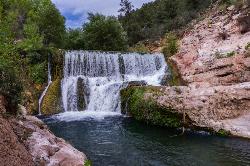
6.6 miles W of Pine, ArizonaHidden in the high desert between Pine and Camp Verde, Fossil Creek is one of Arizona's two federally designated Wild and Scenic rivers — a spring-fed, travertine-blue oasis that pours some 20,000 gallons a minute out of the ground and brings its canyon vividly to life. Along its course lie several beloved swimming and hiking destinations, including two waterfalls; this one, the “Toilet Bowl,” is the swimming hole at the old Fossil Creek dam.
Despite the unglamorous nickname, it's a gorgeous spot. The name comes from a round, natural chute on the side of the river: jump or slide in and the swirling water spins you around the “bowl” before flushing you out into the deep main pool at the base of the falls. There's even a shallow cave beside the pool where swimmers duck out of the desert sun. It's a favorite with cliff-jumpers and swimmers, though water levels and submerged hazards change from year to year, so it's always worth checking the depth and conditions carefully before you leap.
The dam is reached by hiking in on the Flume Trail from the west or the Fossil Springs Trail from the east. Come prepared either way: the trails are hot and exposed, and the climb back out — especially via Fossil Springs — is long and strenuous, gaining well over a thousand feet in the desert heat. Carry far more water than you think you'll need, and remember that the creek water is not safe to drink without purification.
A permit is required to visit from April 1 through October 1, and the Coconino National Forest enforces it strictly. Each permit covers one vehicle at a designated lot and is reserved in advance through Recreation.gov; group size is capped (currently 12 people), drivers must reach the access point by early afternoon (the entry gate closes at 3 p.m.), and there is no camping within the permit area during the season. Book ahead, because permits for this popular spot go fast. Outside the permit season no permit is needed, but the access roads and weather can be far less forgiving.
The dam is a relic of history. For most of the twentieth century, Fossil Creek's water was diverted through a flume to a small hydroelectric plant — one of Arizona's first — leaving the creek bed nearly dry. In 2005 the dam was decommissioned and the springs' full flow was returned to the channel; the creek's travertine pools and lush greenery came roaring back to life, in one of the West's great river-restoration stories.
Plan for a full desert day: sturdy shoes, sun protection, plenty of food and water, and a dry bag for valuables. Be especially careful of the heat in summer, when midday temperatures in the canyon can be genuinely dangerous, and pack out every bit of trash to protect this fragile, precious oasis. With a permit in hand and an early start, the Toilet Bowl rewards you with one of the most memorable swimming holes in all of Arizona.
1.3-3.5 mi
 Full Listing
Show more
Hike, Swim
Seven Falls
Tucson, Arizona
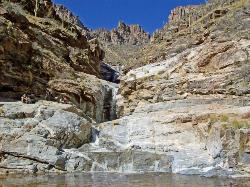
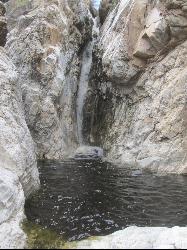
8.6 miles NE of Tucson, ArizonaSeven Falls is one of the most rewarding hikes in the Tucson area — a desert oasis of tiered waterfalls and clear pools tucked into Bear Canyon within the Sabino Canyon Recreation Area of the Coronado National Forest. When the water is running, the creek spills down a series of seven ledges into inviting pools at the base of the canyon, a startling splash of blue and green against the saguaro-studded slopes of the Santa Catalina Mountains. It's regularly listed among the very best outdoor outings in southern Arizona.
The classic route heads up Bear Canyon and crosses the stream seven times on the way to the falls — wet feet are part of the experience when the water is high. From the main visitor center it's roughly an 8.4-mile round trip, but you can trim it substantially by riding the Bear Canyon shuttle to the trailhead, which cuts off about 1.8 miles each way (leaving around a 4.5-mile round trip on foot). At the falls, the pools are a popular place to cool off and picnic on the warm rocks before the walk back.
Timing is everything here, because the falls are seasonal. They're fed by snowmelt and rain in the high country, so they run best from late winter into spring (roughly October through April is the prime window); by early summer they can slow to a trickle or dry up entirely. Check recent conditions before you make the trip — a flowing Seven Falls is a completely different experience from a dry one.
Come prepared for the desert. As with most Tucson-area hikes, summer is dangerously hot — midday temperatures on this largely shadeless trail can be brutal, so avoid it in the heat of summer and start early no matter the season. Carry far more water than you think you'll need, wear sun protection and sturdy shoes, and be mindful that flash floods can turn the stream crossings dangerous during and after storms, when fast-moving water becomes a serious and sometimes deadly hazard. Rattlesnakes are also active on warm days.
The falls themselves are the payoff: seven tiers of water sliding over smooth granite into a chain of pools, the largest deep enough for a refreshing dip when flows are strong. It's a magical, unexpectedly green pocket of the desert, and the surrounding canyon teems with life — watch for bighorn sheep on the high cliffs, javelina and deer in the brush, lizards on the sun-baked rock, and hawks riding the thermals overhead. Give yourself time to linger at the water before the long walk back.
A few fees apply. The Sabino Canyon Recreation Area charges an amenity fee (around $8 per vehicle), payable at the parking entrance or covered by an America the Beautiful pass. The shuttle to the Bear Canyon trailhead is a separate, optional cost (roughly $8 for adults and $5 for children; rates change yearly), well worth it if you'd rather spend your energy on the canyon than on the approach road. With good timing and plenty of water, Seven Falls delivers a genuinely special reward — a lush, pool-filled canyon in the heart of the Sonoran Desert.
0.5 mi
 Full Listing
Show more
Hike, Swim
Tanque Verde Falls
Tucson, Arizona
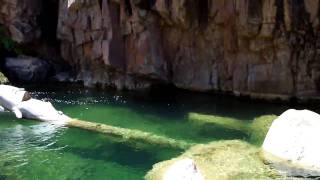
15.4 miles E of Tucson, ArizonaTanque Verde Falls are a set of waterfalls and pools inside of Tanque Verde Canyon near Tucson, Arizona. The canyon is located within Coronado National Forest. There is a parking area on the side of the road, near a trailhead. From there, it's a short hike to the water. An optional trail leads directly to the falls themselves, although this portion is a slightly more difficult climb due to boulders and such along the path. Due to the short hike distance, this is a popular location to cool off.
The best time to go is from September through May, avoiding the summer heat.
This area is considered the "most dangerous" waterfall hike in Arizona, as there have been around 30 deaths since 1971 due to flash flooding and cliff jumping. The area is at high risk for flash floods during monsoon season, and the water level varies, so be very cautious. Pay attention to local weather conditions, stay away from slippery rocks, and don't jump if you're unsure of how deep the pool is.
0.2-0.6 mi
 Full Listing
Show more
Dive, Hike, Swim
Ellison Creek Falls
Payson, Arizona
9.1 miles N of Payson, ArizonaEllison Creek provides 4 beautiful waterfalls in this area, each with their own swimming and diving opportunities. There are even fishing spots where trout can be caught. Since the falls are close to parking lots, this is a popular destination, especially on the weekends. There are several day use sites here, collectively known as the "Water Wheel;" The cold water of the river and the falls make for a refreshing break from the summer heat. There are swimming holes all along the creek, but the most popular is Ellison Creek Falls, due to the relatively short distance to the swimming area from the parking lot.
Take care to watch the weather during monsoon season, since this area is at risk for flash flooding. The site has reopened for use since the 2017 flash flood.
There is a $6 drop box fee, so be sure to bring exact change.
1.1 mi
 Full Listing
Show more
Hike, Mountain Bike, Swim
Gordon Creek Falls
Helper, Utah
6.8 miles SW of Helper, UtahGordon Creek Falls is a refreshing pair of waterfalls tucked into the high desert canyons near Helper, Utah, in the Carbon County backcountry. With an accessible lower falls and a more remote upper falls, it's a fun, scenic outing for hikers, mountain bikers, and ATV riders looking to chase some flowing water in an otherwise dry landscape.
The lower falls is the main draw and the easier to reach — roughly a mile from the Trestle Road trailhead along a route popular with hikers, bikers, ATVs, and horses. From there, the upper falls lies about a mile and a half further along the trail for those wanting more adventure (and a historic cabin awaits even deeper in, around 6.4 miles round trip). The falls are at their most impressive in spring and early summer, when snowmelt sends the water roaring.
You can get right up close and even dip your toes at the top of the falls, but take real care here: this is a flash-flood-prone canyon, so never venture in when rain threatens, and watch your footing — the rocks around the falls are slippery and the water moves faster than it looks. Keep kids close and stay back from the edges.
Spring and early summer bring the fullest flow; the route can be hot and exposed in midsummer. The road in toward the creek gets steep and soft, so a capable high-clearance or four-wheel-drive vehicle (or your own two feet) is the way to go. Dogs are welcome on the trail. Bring plenty of water, watch the weather, and pack out your trash — Gordon Creek Falls is one of Carbon County's most rewarding little adventures.
0.8-1.8 mi
 Full Listing
Show more
Hike, Swim
Kinder Crossing Trail #19
Happy Jack, Arizona
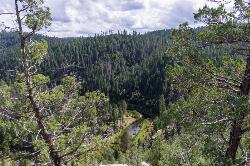
18.9 miles SE of Happy Jack, ArizonaKinder Crossing Trail #19 is a short but thrilling hike down to the cool, clear waters of East Clear Creek on the Mogollon Rim near Happy Jack, Arizona — a favorite summer escape for those looking to swim and play in a hidden canyon pool deep in the Coconino National Forest. Originally a route for driving sheep through the rugged canyons, today it's the quickest way to reach some of the prettiest swimming holes on the Rim.
Don't let the short distance fool you: the trail is steep, dropping nearly 500 feet in about three-quarters of a mile along the crumbling, fossil-laden limestone walls of Yeager Canyon (roughly 2.9 miles round trip in all). The reward at the bottom is East Clear Creek and its inviting pools — including a large swimming hole near the creekside campsite, about the size of a baseball infield and perfect for a refreshing dip beneath the canyon walls.
A few practical notes. A high-clearance vehicle is recommended for the drive in on Forest Road 95T, which gets very slick when wet and is closed during winter snows. Some stretches near the creek require a bit of bushwhacking, so wear sturdy shoes and long pants. As always on the Rim, be alert to fast-changing weather and the real risk of flash flooding in the canyon after storms.
Late spring through early fall is the season, when the road is open and the creek is inviting (summer afternoons can bring monsoon storms, so watch the sky). Bring plenty of water for the steep climb back out, pack out all your trash, and Kinder Crossing rewards you with one of the Mogollon Rim's most refreshing hidden swimming holes.
0.4 mi
 Full Listing
Show more
Canyoneer, Hike, Swim
Christopher Creek Gorge
Payson, Arizona
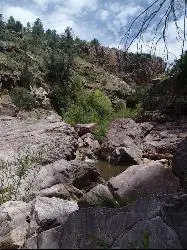
16.4 miles E of Payson, ArizonaChristopher Creek Gorge is a fun swimming or canyoneering destination located in Christopher Creek, just outside of Payson, Arizona. To get there, you have to hike from the Christopher Mountain trailhead next to the freeway, and then you can rappel down the various waterfalls and swimming holes. The water is cold year-round, which is nice during the summer, but a wetsuit is advised if going during the colder months. The rocks are slippery when wet, so be cautious and safe.
There is no fee for accessing the gorge, except for parking as explained below in the directions. If you do choose to park at the campground, there are restrooms available there.
14.8-15.1 mi
 Full Listing
Show more
Hike, Hot Springs
Mr. Bubbles Hot Spring
Old Faithful, Yellowstone National Park
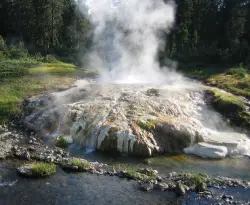
24.0 miles SW of Old Faithful, Yellowstone National ParkMr. Bubbles is one of the very few places in Yellowstone National Park where you can legally and safely soak in naturally heated water — a rare treat in a park where hot springs are usually deadly rather than inviting. It sits deep in the Bechler region in Yellowstone's remote southwest corner, an area known as “Cascade Corner” and one of the park's best-kept secrets: far from the paved roads, boardwalks, tour buses, and gift shops, reached only by miles of backcountry trail.
The soak itself is a natural mixing pool. A hot spring wells up into the cold Ferris Fork of the Bechler River, and where the scalding spring water blends with the cold river it reaches a blissfully soakable temperature — while gas bubbling up from below gives the spot its playful name. That mixing is also the key to why soaking here is allowed: getting into Yellowstone's thermal features is strictly forbidden, but the Park Service permits soaking where hot water has already blended with a river or stream. Enjoy the warm water where it mixes, and stay well clear of the undiluted hot source.
You'll find it roughly halfway between the Bechler Ranger Station and Old Faithful along the Bechler River Trail. This is genuine backcountry — most visitors reach it on a multi-day backpacking trip, walking singletrack dirt trails past waterfalls and meadows and seeing wildlife well outside the safety of a car. Be bear-aware and give bears, moose, and bison plenty of space. To camp along the way you'll need a backcountry permit, reserved through the park's backcountry office.
The journey is a huge part of the reward. The Bechler is nicknamed Cascade Corner because it holds more waterfalls than anywhere else in Yellowstone — the trail near Mr. Bubbles strings together beauties like Colonnade, Iris, and Ouzel Falls, and nearby Union Falls is one of the park's most spectacular. For backpackers, a soak at Mr. Bubbles makes the perfect midpoint of a waterfall-studded wilderness traverse.
A few life-or-death cautions. Thermal water temperatures here change without warning and are not always safe — the National Park Service advises checking with a ranger station on current conditions before you plan a trip. And never hike through Yellowstone's thermal areas at night: even experienced hikers have broken through thin crust and been scalded to death in unexpected hot ground. Always review the park's swimming-and-soaking guidance for current closures, regulations, and conditions before you go.
Timing matters in the Bechler. It's the wettest corner of Yellowstone, with numerous river fords that run dangerously high during spring and early-summer snowmelt, so the backcountry here is generally best from late summer into early fall, once the water drops. Come prepared for remoteness, river crossings, mosquitoes, and sudden mountain weather — and you'll be rewarded with a genuinely wild Yellowstone soak that few visitors ever experience.
0.1 mi
Little Jamaica aka Desert Springs
Littlefield, Arizona
0.8 miles NE of Littlefield, ArizonaCLOSED.
Full Listing
Show more
Hike, Swim
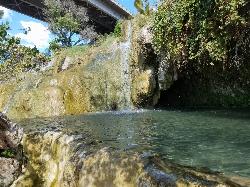
Little Jamaica, also known as Desert Springs or Littlefield Springs, was for years one of the most beloved little swimming holes in the Arizona Strip, a surprising desert oasis along the Virgin River near Littlefield, Arizona, about a 30-minute drive from St. George. A short quarter-mile walk led to a man-made pool fed by a warm mountain spring, with small waterfalls trickling through a lush pocket of green in the stark desert landscape. It earned its nickname for that unexpectedly tropical feel, and it was a favorite quick escape for students and families from St. George and Mesquite.
The important thing to know now is that Little Jamaica is closed. As of May 2022, the Arizona Department of Transportation closed off access to the area below where the man-made pool sat, and the swimming hole itself appears to have been dismantled. If you've come across older guides or videos showing the oasis and its waterfalls, this is the update that matters: it is no longer an open, accessible destination, and the pool that made it special is gone.
We're keeping this listing to make that status clear rather than to send anyone down to a closed site. Please respect the ADOT closure and do not trespass to reach it. Beyond the access issue, the setting always carried its own hazards, slippery, algae-slicked rock around the spring and pool, and the closure removes any safe, legal way to enjoy it.
The history is worth remembering fondly. Fed by a genuine mountain spring emerging into a built pool along the Virgin River, Little Jamaica was a rare desert water feature, cool and green amid red rock and creosote, close enough to the freeway to be an easy after-class or after-work stop. For a long time it was one of those word-of-mouth local treasures that made the Arizona Strip feel full of secrets.
For visitors still hoping to find water in this corner of the desert, the wider region offers legitimate, open alternatives: the developed and dispersed recreation along the Virgin River Gorge, the water features and parks around St. George and Mesquite, and the many open swimming and hiking spots of nearby southern Utah. Seeking those out is a far better plan than making the trip to a dismantled, closed site.
Treat Little Jamaica as a closed chapter, a fondly remembered desert oasis that is, for now, off the map. Respecting the closure is the right call, and it keeps the focus on the many places in the region that are still open, still watered, and still worth the drive.
5.7-8.1 mi
 Full Listing
Show more
Cross-country Ski, Mountain Bike
Space Cruz
Ririe, Idaho
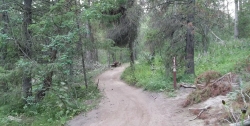
9.0 miles E of Ririe, IdahoThe trail starts out with a really flowy singletrack then connects up to some ATV trails. On the single track, just stay on the main trail. There are several little splits several you can take that all come back together. If it splits off hard, stay on the main trail. These other routes aren't really optional challenges, just different routes. At the end of the singletrack section, there'll be a cattle guard and you'll come to a 'T'. Go left, then immesiately right. The trail is mostly downhill but there are a couple of pretty good climbs at this point. There are a lot of junctions but if you keep right at all of them from here, you'll make it out just fine. There are several small jumps on the trail. All in all, it's a pretty flowy track with some great berms. Don't run into any cows and go fast through the thistle patch near the top (it'll hurt less that way).
7.2 mi
 Full Listing
Show more
Hike, Mountain Bike, Snowshoe
White Rock Loop
Syracuse, Utah
10.5 miles SW of Syracuse, UtahThe White Rock Loop is a scenic backcountry trail on Antelope Island State Park, the largest island in Utah's Great Salt Lake, just a causeway drive from Syracuse. Winding through rolling grasslands with sweeping views of the lake, the island's peaks, and the eerily beautiful White Rock Bay, it's a wonderful way to experience this unique island sanctuary on foot, bike, or horseback.
The loop runs about 7.3 miles with a modest 700 feet of climbing — long but not steep, making it a moderate outing suitable for hikers, mountain bikers, trail runners, and equestrians alike (leashed dogs are welcome). The route climbs gentle hills above the White Rock Bay Campground for big views toward Buffalo Point and the island's rugged interior before looping back past the quiet, photogenic bay.
The island's famous wildlife is part of the experience — and calls for caution. Antelope Island is home to a large free-roaming herd of bison, often seen along this very trail. Give them a very wide berth: if a bison notices you, you're too close, so be ready to turn back and find another route rather than crowd them. Pronghorn, bighorn sheep, and abundant birds also roam the island.
A few practical notes: there's a state-park entrance fee, the trail is fully exposed with no shade (bring lots of water and start early), and the island's notorious biting gnats (“no-see-ums”) can be fierce, so pack repellent and consider a head net in warmer months. Cooler seasons, roughly fall through spring, are most comfortable. Bring water, sun protection, and your camera, mind the bison, and pack out everything. For wide-open scenery and unforgettable wildlife, the White Rock Loop is a Great Salt Lake gem.
Blackwater River State Park
Milton, Florida
10.9 miles NE of Milton, FloridaBlackwater River State Park is a Florida Panhandle treasure near Milton, built around one of the purest sand-bottom rivers in the country. The Blackwater River winds through the park in tea-colored, tannin-stained water against brilliant white sandbars — a striking, beautiful contrast that makes this one of the finest spots in Florida for swimming, paddling, and lazy days by the water.
The river is the star. Shallow and clear (averaging only a couple of feet deep in many spots), with a clean white sandy bottom and broad sandbars, it's ideal for cooling off, splashing with the kids, and floating the afternoon away. White-sand beaches and sandbars line the banks, shaded by cypress trees leaning over the water, and rope swings tempt the adventurous. It's a quintessential, easygoing Southern river swim.
Paddling is just as popular. Canoes, kayaks, and tubes glide down the gentle current — a classic trip runs the 7 miles from Kennedy Bridge down to Deaton Bridge, ending right at the park — and local outfitters offer rentals and shuttles. Anglers and campers love it too, with shaded riverside campsites a short walk from the water.
Summer is prime for swimming and floating, when the river is warm and the sandbars inviting; spring and fall are lovely for paddling in milder weather. There's a small per-vehicle entrance fee. As with any river, keep an eye on the current and depth (it rises after heavy rain), watch children closely, and pack out everything you bring in. For a classic, scenic Florida river day, Blackwater River State Park is hard to beat.
×


